Let me help put a few things into perspectives.
If you lead your broadcast with “breaking news” – it isn’t.

What the Whut?
Yes. Breaking news should break into an already running newscast.

Now let’s get back to just the news.

Let me help put a few things into perspectives.
If you lead your broadcast with “breaking news” – it isn’t.
What the Whut?
Yes. Breaking news should break into an already running newscast.
Now let’s get back to just the news.
From FEMA Disaster Operations:
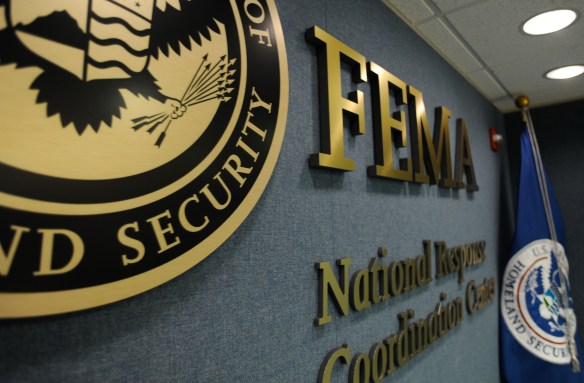
Washington, DC, Part of the DHS seal, the FEMA logo and the DHS Flag, on the wall in the National Response and Coordination Center. FEMA/Bill Koplitz
“Today, the National Response Coordination Center, in coordination with Region IV and field leadership, transitioned from Level II activation to an Enhanced Watch.”

Sunday Comms:
(Pertaining to Hurricane Matthew operations) “…you can anticipate onward movement and integration into the operations supporting one of our impacted states – FL, GA, SC, or NC.”
Numerous Federal assets are deployed out.
Safe travels for those deployed/deploying out and I hope survivors have heeded all warnings of the bad weather are sheltered out of harms way.
From a friend in the USMS who is deployed out in Lumbarton, North Carolina.


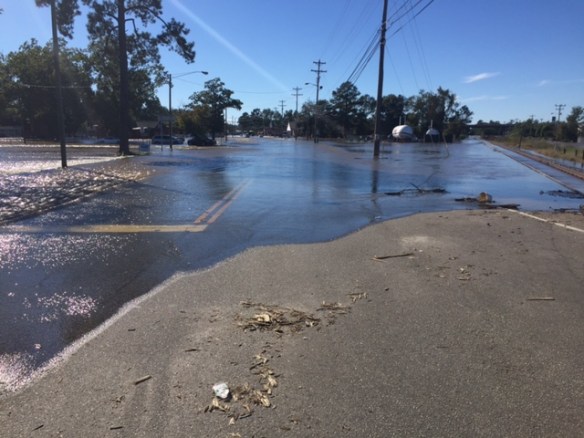
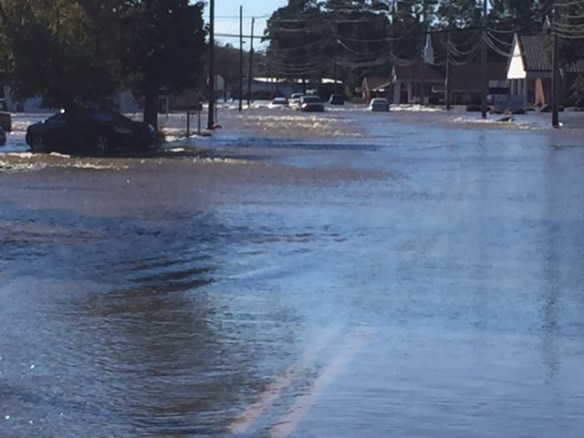
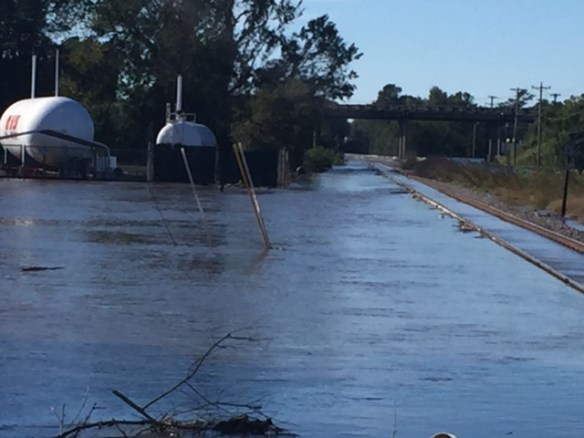
Few pictures from FEMA and one of the 10 USAR teams who are deployed out in Lumbarton, North Carolina.

FEMA Federal Emergency Management Agency Page Liked · 2 hrs · FEMA Urban Search and Rescue Search f Lumberton, NC, USA–FEMA’s Urban Search and Rescue Teams from Missouri Task Force 1 look for residents that may be stranded in a neighborhood that was flooded following Hurricane Matthew. Jocelyn Augustino/FEMA
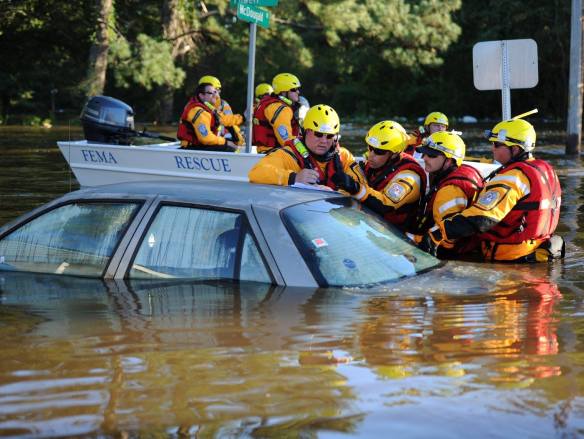
FEMA Urban Search and Rescue Search f Lumberton, NC, USA–FEMA’s Urban Search and Rescue Teams from Missouri Task Force 1 look for residents that may be stranded in a neighborhood that was flooded following Hurricane Matthew. Jocelyn Augustino/FEMA
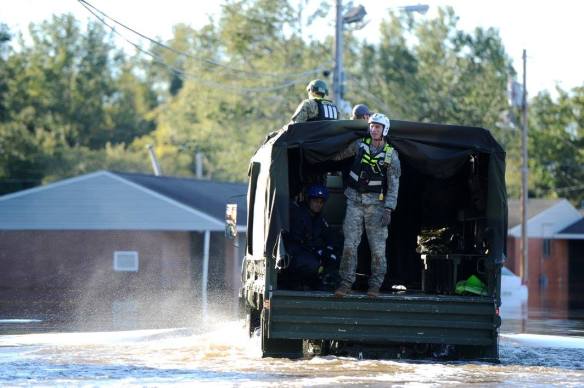
FEMA Urban Search and Rescue Search f Lumberton, NC, USA–FEMA’s Urban Search and Rescue Teams from Missouri Task Force 1 look for residents that may be stranded in a neighborhood that was flooded following Hurricane Matthew. Jocelyn Augustino/FEMA
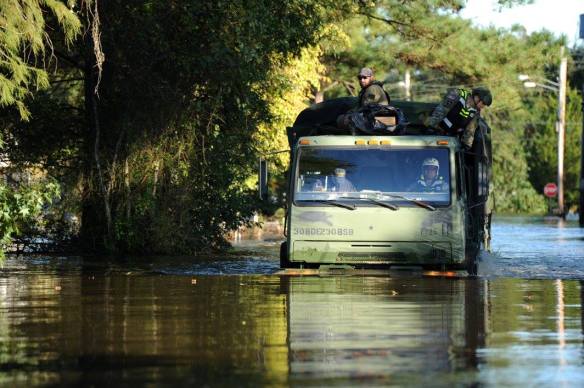
FEMA Urban Search and Rescue Search f Lumberton, NC, USA–FEMA’s Urban Search and Rescue Teams from Missouri Task Force 1 look for residents that may be stranded in a neighborhood that was flooded following Hurricane Matthew. Jocelyn Augustino/FEMA
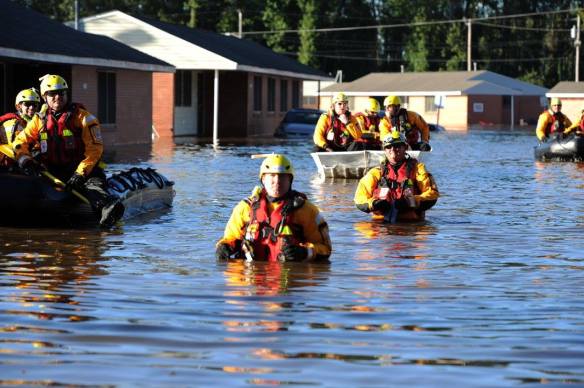
FEMA Urban Search and Rescue Search f Lumberton, NC, USA–FEMA’s Urban Search and Rescue Teams from Missouri Task Force 1 look for residents that may be stranded in a neighborhood that was flooded following Hurricane Matthew. Jocelyn Augustino/FEMA

FEMA Urban Search and Rescue Search f Lumberton, NC, USA–FEMA’s Urban Search and Rescue Teams from Missouri Task Force 1 look for residents that may be stranded in a neighborhood that was flooded following Hurricane Matthew. Jocelyn Augustino/FEMA

FEMA Urban Search and Rescue Search f Lumberton, NC, USA–FEMA’s Urban Search and Rescue Teams from Missouri Task Force 1 look for residents that may be stranded in a neighborhood that was flooded following Hurricane Matthew. Jocelyn Augustino/FEMA
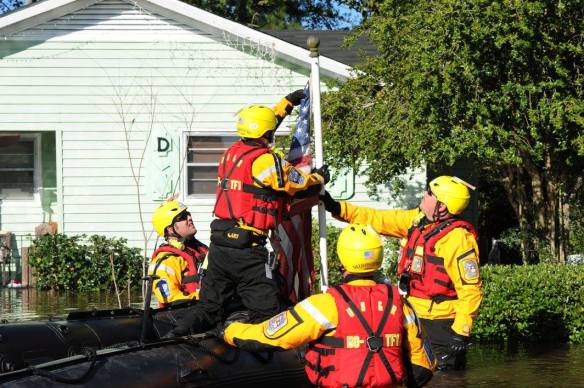
FEMA Urban Search and Rescue Search f Lumberton, NC, USA–FEMA’s Urban Search and Rescue Teams from Missouri Task Force 1 look for residents that may be stranded in a neighborhood that was flooded following Hurricane Matthew. Jocelyn Augustino/FEMA
For those that wanted to know, here’s my disaster deployment stuff ready to go.
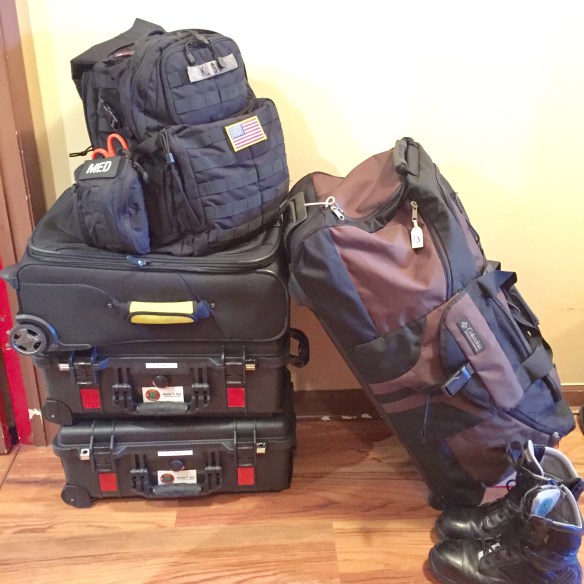
Backpack: 511Tactical RUSH 24-hour.
Rollerboard: Travel Pro MaxLite-3
Pelican case(s): 1510 Pelican cases (both admissible as carry on luggage on any domestic airline)
Large rolling duffel: Columbia Storm Chaser. Normally, I put the boots in the outside boot pocket of the large duffel, but I wanted to give you some size context.
Hope this helps out.
Third and final day of the Ohio EMA ICS-300 course at Belmont College.
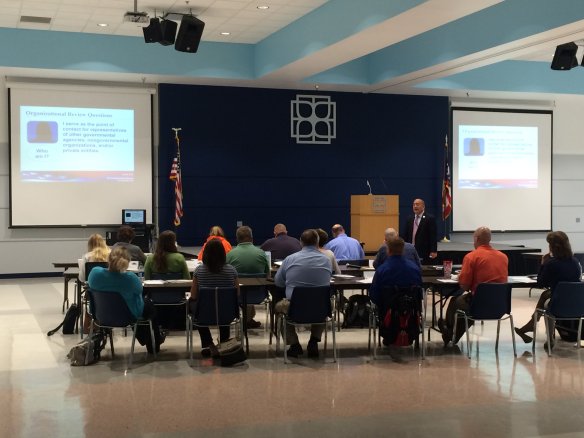
PhotoCredit: @BelmontCollege
Mid morning, we had lots of great discussion for formal demobilization plans as well priority release procedures.
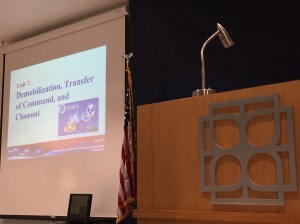
Our class had some serious discussion on cost vs expectations on resources. If you’ve ever been deployed to a disaster, you know exactly what I’m talking about.
Rounding out to the last module, almost test time!

After the class was over, I was able to score a visit to Belmont County 911 dispatch center for our class. So I invited the whole class to attend too!
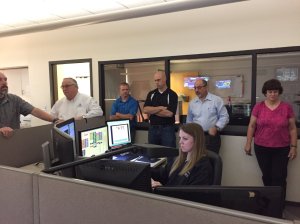
Special thanks to Mr. Hudak for the tour and detailed explanation on normal operations in their Public Safety Answering Point (PSAP) / 911 call center.

Our class then moved over to the Belmont County Emergency Management Agency where our class was given a formal tour of their Emergency Operation Center (EOC).
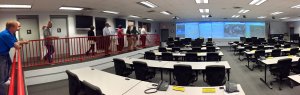
They just happen to be monitoring Hurricane Matthew – so that made it even better for all participants to see how this EOC can monitor any situation in real time. Thank you Belmont County EMA!

Positions ready…Executive Policy Room ready…ARES Comms center ready…fully operational…who could ask for anything more?!!?!? Even the bonus resources they have were great to see how they could support operations and paint a better picture to increase situational awareness / common operating picture (SA/COP).
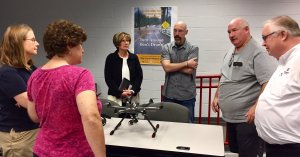
Gah, I see this EOC being a great resource for many all hazards partners in public safety.
Great to showcase the efforts of local emergency management professionals and how they pair with Ohio Emergency Management Agency (OEMA).
Special thanks to Glenn Trudo and Belmont College for being such gracious hosts for the OEMA ICS-300 class.
Day-2 of the Ohio EMA ICS-300 course at Belmont College (Ohio).
Participants completed several exercises with S.M.A.R.T. Objectives, finding the right strategy with the right tactic to complete the objective with the right resource – all part of the Planning-P.
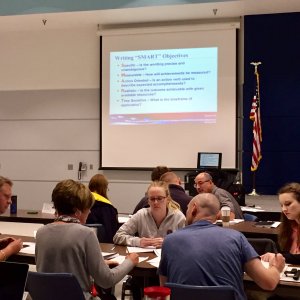
These kinds of activities during non-emergency times will help increase skills of any public safety provider as we look to coordinate all-hazards response prior to a disaster or emergency. Additionally, I was able to showcase the PIO function as it pertains to a school fire (this is an exercise).
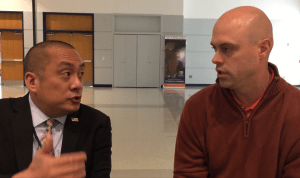
So many different agencies in this class!
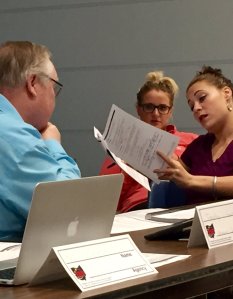
Great partnerships collaborating together before an emergency!
First day of Ohio EMA’s ICS-300: Intermediate ICS for Expanding Incidents class.

With so many VIPs here from various agencies, I’m on my best behavior. Participants from three different states (Ohio, Indiana, and West Virginia). Numerous higher education staff, Fire/EMS and law enforcement, Health Department, VOAD, and Federal agencies like the Department of Justice US Marshal Service.

Special thanks to the senior administration from Belmont College for hosting this state class.
Lots of engagement and spirited discussion esp focused on college campus safety. Outstanding!

Solid debate on unified command as well as resource ordering.
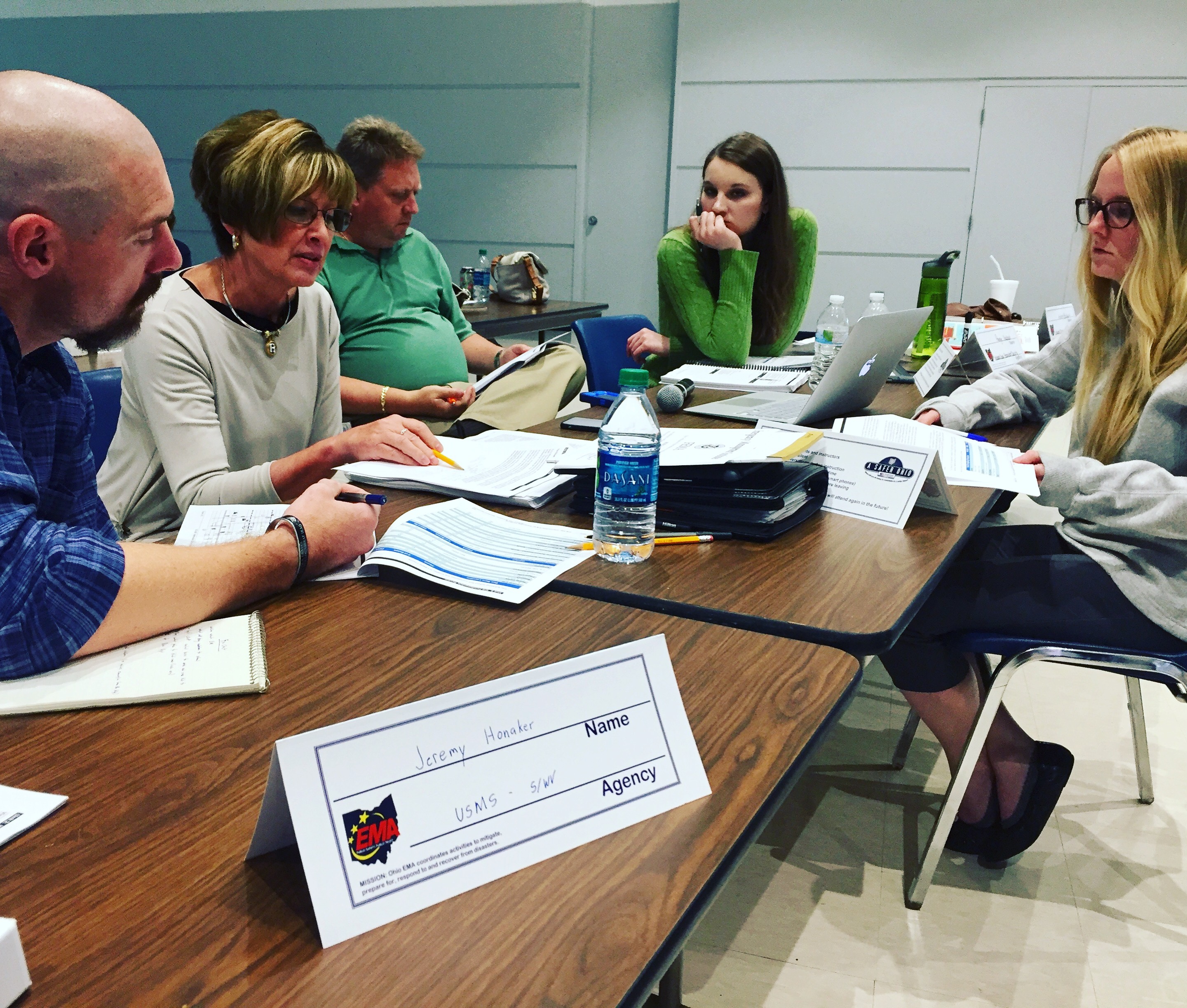
Trying to get “stuff” to support operations is tough. Delicate balance between command and general staff is important and critical.

But more importantly, we are building relationships before an event, an emergency, or a disaster.
Doing some long gun work today.

Today’s training: working on transitions and equipment failures.
Training for complications in the field will allow for a seamless correction while deployed out. Inevitably, stuff will not always go 100% – so we must prepare for all contingencies.
Hoping to do more in 4Q and more training in 2017.
I field numerous questions about flashlights. Like alotta.
“Do you really need more than one flashlight?”
“Do I have to purchase an expensive flashlight?”
“Does a good flashlight make a difference?”
“Does your daughter even have her own flashlight?”
Let me be clear and answer all of the above. Yes x4.
Because equipment needs will vary depending on the user, find flashlights that work best for you.

Big or small, size doesn’t matter.
Make sure you and your family are prepared for any disaster or emergency with rugged flashlights.
@rusnivek
 Where is @rusnivek?