Well technically, it is my final “Right Seat Ride” right George? Awww yeah!
Tag Archives: seat
Did you participate in National Child Passenger Safety Week? #NatlPrep #Prepared2014
It is the start of the fourth week of 2014 National Preparedness Month
“Be Disaster Aware, Take Action to Prepare”
For me, it’s Sunday in PA!
This week’s theme is consistent with FEMA’s National Preparedness Campaign: Practice for an emergency
#21: Did you get your child secured in your vehicle? National Child Passenger Safety Week – Thanks @UHRainbowBabies #Prepared2014 #NatlPrep
September 13th through September 20th = National Child Passenger Safety Week. Various agencies are promoting in-vehicle safety for children across the country. In the United States, motor vehicle crashes are a leading cause of death among children. Data show that:
Risk Reduction for Every Age
Buckling children in age- and size-appropriate car seats, booster seats, and seat belts reduces the risk of serious and fatal injuries:
- Car seat use reduces the risk for death to infants (aged <1 year) by 71%; and to toddlers (aged 1–4 years) by 54% in passenger vehicles.
- Booster seat use reduces the risk for serious injury by 45% for children aged 4–8 years when compared with seat belt use alone.
- For older children and adults, seat belt use reduces the risk for death and serious injury by approximately half.
Scope of the Problem
- In the United States during 2011, more than 650 children ages 12 years and younger died as occupants in motor vehicle crashes,5 and more than 148,000 were injured.
- One CDC study found that, in one year, more than 618,000 children ages 0-12 rode in vehicles without the use of a child safety seat or booster seat or a seat belt at least some of the time.
- Of the children who died in a crash in 2011, 33% were not buckled up.
Risk Factors for Children and Teens
- Of the children who died in a crash:
- More black (45%) and Hispanic (46%) children were not buckled up compared with white (26%) children (2009-2010).
- More of the older children (45% of 8-12 year olds) were not buckled up compared with younger children (one-third of 1-7 year olds; one-fourth of infants under 1) in 2011.
- From 2001 to 2010, approximately 1 in 5 child passenger (<15 years old) deaths in the U.S. involved drunk driving; 65% of the time, it was the child’s own driver that had been drinking (BAC ≥ 0.08 g/dl).
- Most child passengers (<15 years old) of drunk drivers (61%) were not buckled up in the fatal crash.
- Restraint use among young children often depends upon the driver’s seat belt use. Almost 40% of children riding with unbelted drivers were themselves unrestrained.
- Child restraint systems are often used incorrectly. One study found that 72% of nearly 3,500 observed car and booster seats were misused in a way that could be expected to increase a child’s risk of injury during a crash.
Preventing Motor Vehicle Injuries in Children
- Based on strong evidence of effectiveness, the Community Preventive Services Task Force recommends car seat laws and car seat distribution plus education programs to increase restraint use and decrease injuries and deaths to child passengers.
- Car seat distribution plus education programs are also recommended in a more recent review for increasing restraint use.
- A recent study of five states that increased the age requirement to 7 or 8 years for car seat/booster seat use found that the rate of children using car seats and booster seats increased nearly three times and the rate of children who sustained fatal or incapacitating injuries decreased by 17%.
Read the recent Morbidity and Mortality Weekly Report (MMWR announcements) or the Centers for Disease Control and Prevention feature story, and CDC’s Vital Signs on child passenger safety to learn more about buckling the ones you love in age- and size-appropriate car seats, booster seats, or seat belts.
And you bet I got my munchkin secured in the seat!
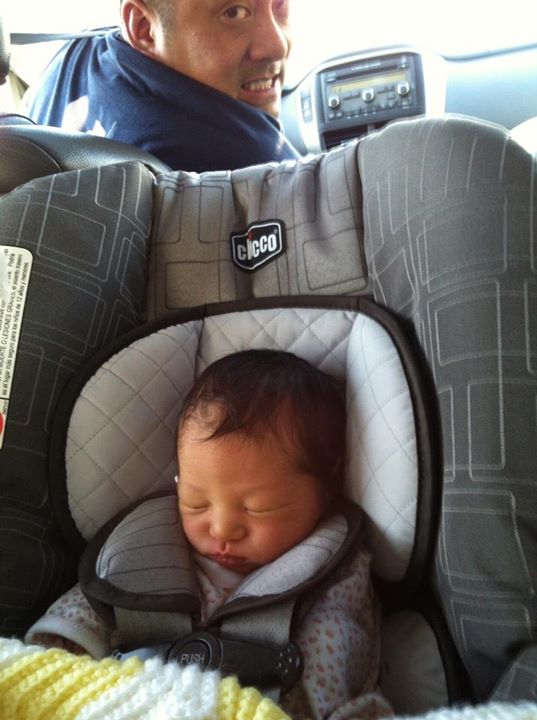
Safety first for kids!
Special thanks to UH Rainbow Babies & Children’s Hospital for helping put my car seat in for FREE!
Right Arden?
Oh munchkin!
Structure vs Ambo – as usual, structure won #EMS
City & County of Honolulu: Ambulance accident w/ patient on 07-12-14.
Here’s the initial picture from the incident.
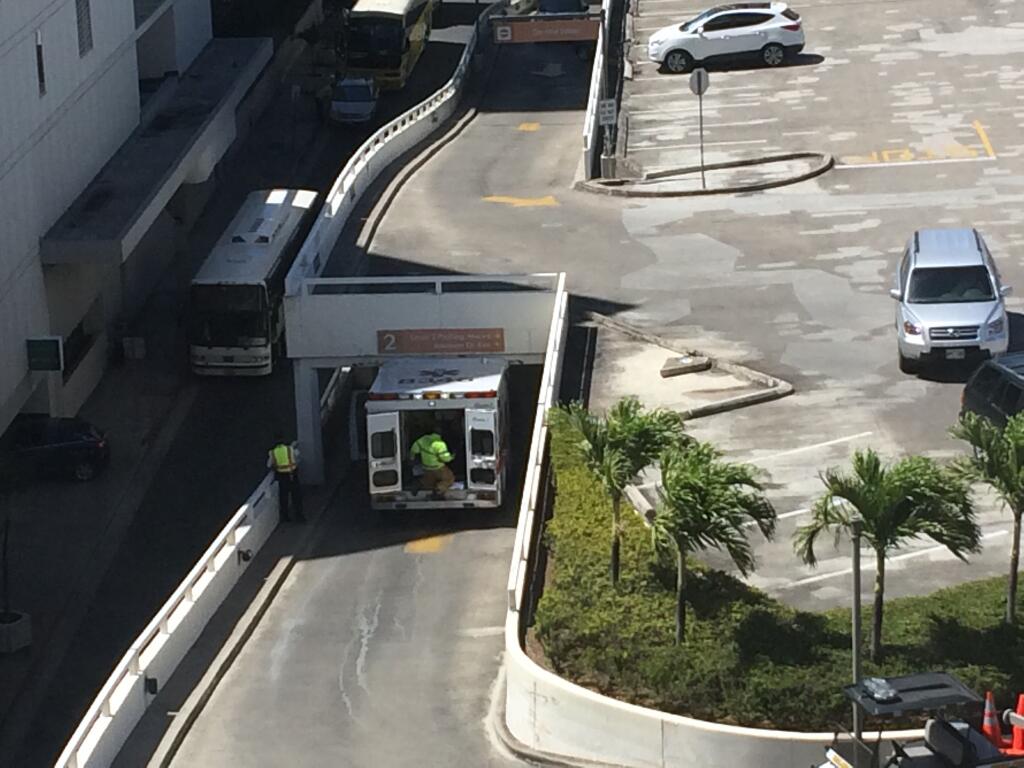
Few things to review:
1. Good reminder to check your “Maximum height is ****” plate on your rig.
2. Law enforcement officials should really know the area, including height clearances.
3. Even if Police are leading you out, Fire/EMS should always be aware of your surroundings.
4. Social media is fast and information pertaining to your ongoing situations will always be faster than a PIO.
5. I can already see it now: “Dear Chief, I don’t know what happened…”
6. Crews should have their seatbelts on at all times while the vehicle is moving.
Thoughts and prayers to the initial victim of the first emergency call.
I hope the leadership in Honolulu figure out the issues at hand. Emergency Service Professionals need some rest.


