Flashlights keeps your family together after a disaster #NatlPrep #Prepared2014

Rainy/gloomy Saturday, and I’m closing out the first week of 2014 National Preparedness Month!

“Be Disaster Aware, Take Action to Prepare”

Saturday Stuff right?

This week’s theme is consistent with FEMA’s National Preparedness Campaign: Reconnect with Family After a Disaster.

#6: Have at least two (2) flashlights w/ batteries to help navigate in the dark & keep your family together #NatlPrep #Prepared2014
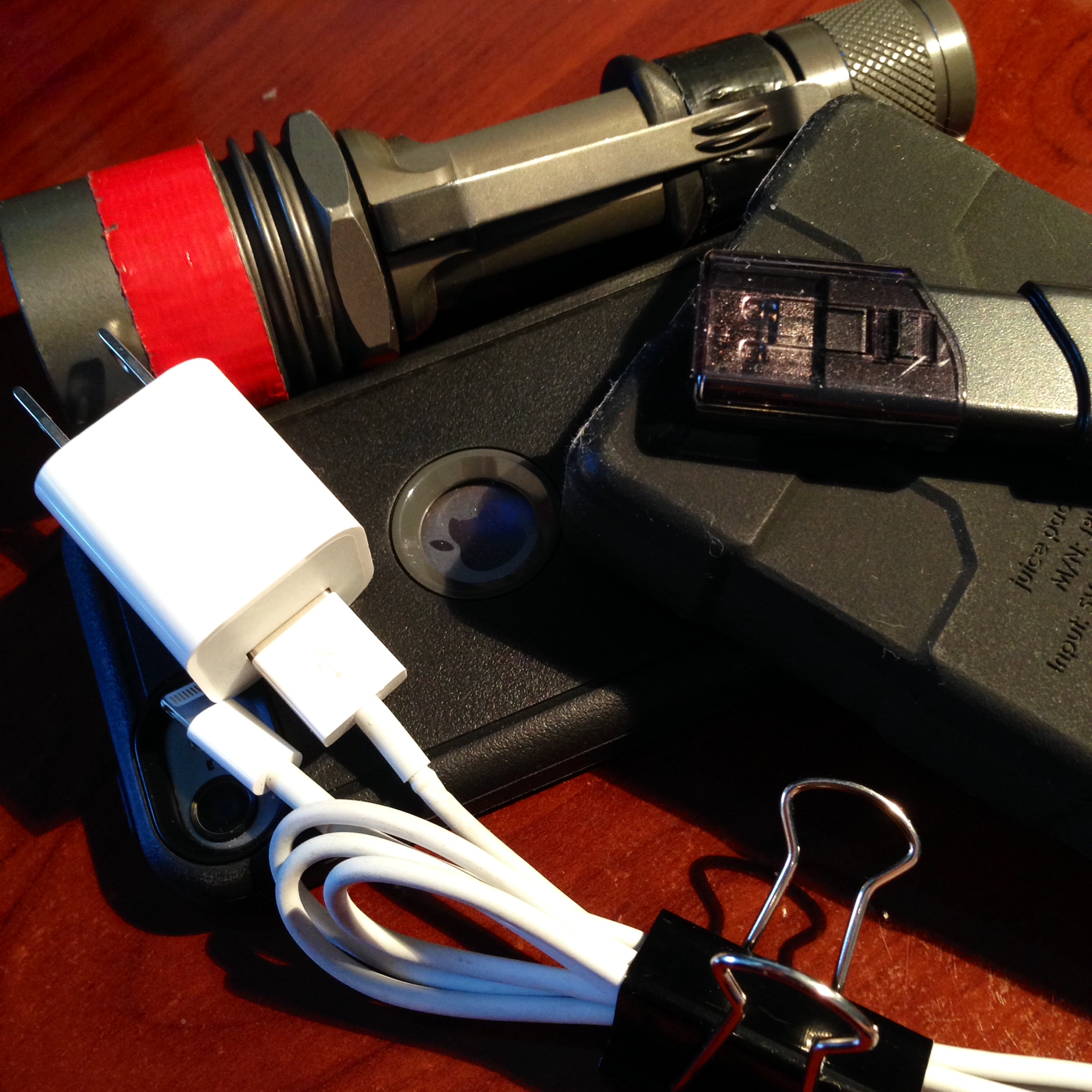
Week-01-Reconnect-CommunicationsGear

Pictured above is just one of the three flashlights that I keep in my everyday bag.

Reconnecting with my family after a disaster means that I have preparedness items for them too. It would be worth noting that each flashlight uses the same type of batteries and all operate/function the same (rear push button and twist-on action). This brand and similar power source compatibility allows everyone to have the same gear.

2 is 1 and one is none right? Well, I guess in this case, it’s 3 is 1 and one is none.

For those inquiring on my equipment specifics, I have a Surefire M2 Centurion, a Surefire A2 Aviator, and a Surefire G2 Nitrolon.

Also, a simple red tape marking allows us to easily identify what equipment is ours.

At night, a great flashlight allow you to quickly identify your family members amongst the sea of cheap weaker flashlights in the neighborhood. Trust me, at night, you want the best most powerful flashlights around.

mass_blaster_flashlight

So have flashlights and batteries ready for all members of your family.

Keeping tools ready for your family is another important parts of keeping your family together during and after a disaster.

@rusnivek

Aloha – Need some Hurricane Iselle shelter options?

Aloha – Need some Hurricane Iselle shelter options?

Here is a free easy read shelter map for Oahu.

http://cchnl.maps.arcgis.com/apps/OnePane/basicviewer/index.html?appid=d06eeca5c9a84d1c95944ea8a92f9b7b

1. Find the shelter location nearest to you.

2. Have a plan and several routes planned out on how to get there during heavy traffic.

3. Ready your emergency preparedness kit w/ medications, flashlights, Family Communications plan, and supplies.

aaaaaaaa

Be akamai peeps.

@rusnivek

Is this flooded roadway safe? You tell me…. #TADD #Prepared2014

This week is National Flood Safety Awareness Week (March 16 – 22, 2014).

To help clarify some misconceptions about water and flooding, let me make it very clear – NEVER drive through flooded roads. Here’s a great example. We were dispatched after a few reported calls of a flooded roadway. Looks innocent enough right?

OLYMPUS DIGITAL CAMERA

Just because it’s downhill does NOT mean it is any safer…in fact, it is more dangerous.

  1. Gravity will move/flow the water faster.
  2. More water will cause you to lose control of your vehicle or possibly sink your vehicle and/or drown you.
  3. More water will remain at the bottom of the hill will definitely cause damage to your vehicle.

So how can you share this safety message with others?

  • Continue to share the message of Turn Around, Don’t Drown = #TADD (National safety campaign phrase)
  • Flash flooding can occur anywhere – even within metropolitan and urban areas.
  • Avoid areas that are frequently flooded.
  • Always follow instructions from your local emergency service professionals.
  • Report any flooded roadways to the proper authorities.
  • NEVER drive through flooded roads.

It’s really bad news if we have to meet like this…

DVC00088

If you were wondering, that’s me on the right

Do your part in #Prepared2014 by being safe this year.

@rusnivek

2014 National Flood Safety Awareness Week #TADD #Prepared2014

This week is National Flood Safety Awareness Week (March 16 – 22, 2014).

Did you know that floods are the #1 natural disaster in the US? Just within the past five years, all 50 states have experienced floods or flash floods.

No%20Drowning

How can you help?

Share these easy safety tips with your constituents on flood safety:

  • Turn Around, Don’t Drown = #TADD (National safety campaign phrase)
  • Flash flooding can occur anywhere. If there is a possibility of a flash flood, move to higher ground. Always follow instructions from your local emergency service professionals.
  • NEVER drive through flooded roads.
  • Use local alerts and warning systems (like iPAWS and WEAs) which can send localized information about your immediate area.
  • Stay away from damaged areas unless your assistance has been specifically requested by police, fire, or relief organization.
  • Just a few inches of water from a flood can cause thousands of dollars in damages.
  • Do you know if you live in a flood zone? Find out here for free.

FloodSafety_poster_date

So check your emergency preparedness kits and make sure you are ready!

10012615_10100544482624277_989186021_n

@rusnivek

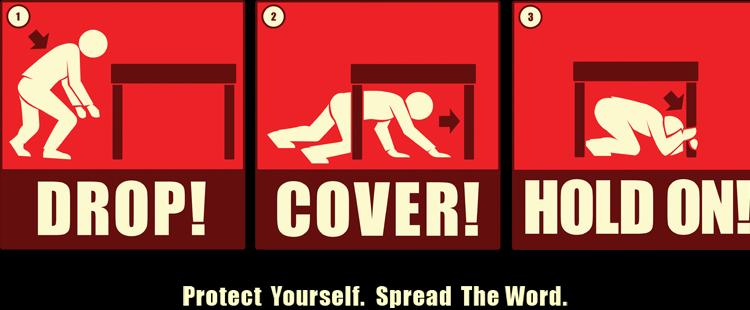
Today at 10:17am, you should practice these 3 easy steps… #ShakeOut

After the most recent events that just occurred in the Philippines on Tuesday, I highly recommend that you participate in today’s Earthquake ShakeOut exercise.

“This isn’t California…Ohio doesn’t have earthquakes…”

WRONG McFly! The Ohio Department of Natural Resources (ODNR) have recorded six earthquakes so far this year: three earthquakes in March and three earthquakes in July. Ohio had a total of four earthquakes in 2012.

Surprised? I know you are.

So on Thursday October 17, 2013 at 10:17am – practice your earthquake safety procedures with 9 other states in our region using these three easy steps:

Drop-Cover-and-Hold-On

1. DROPto the ground 

2. Take COVERunder a sturdy table or desk, if possible, and protect your head and neck

3. HOLD ONuntil the shaking stops

Following these 3 easy steps will help protect and you during an earthquake.

ShakeOut is coordinated by the Central U.S. Earthquake Consortium and the states of Alabama, Arkansas, Illinois, Indiana, Kentucky, Mississippi, Missouri, Ohio, Oklahoma and Tennessee.

See, even the cool kids are doing it.

image_173314_4

Stay safe!

@rusnivek