On the scene, tagging a hydrant. Wait a minute….
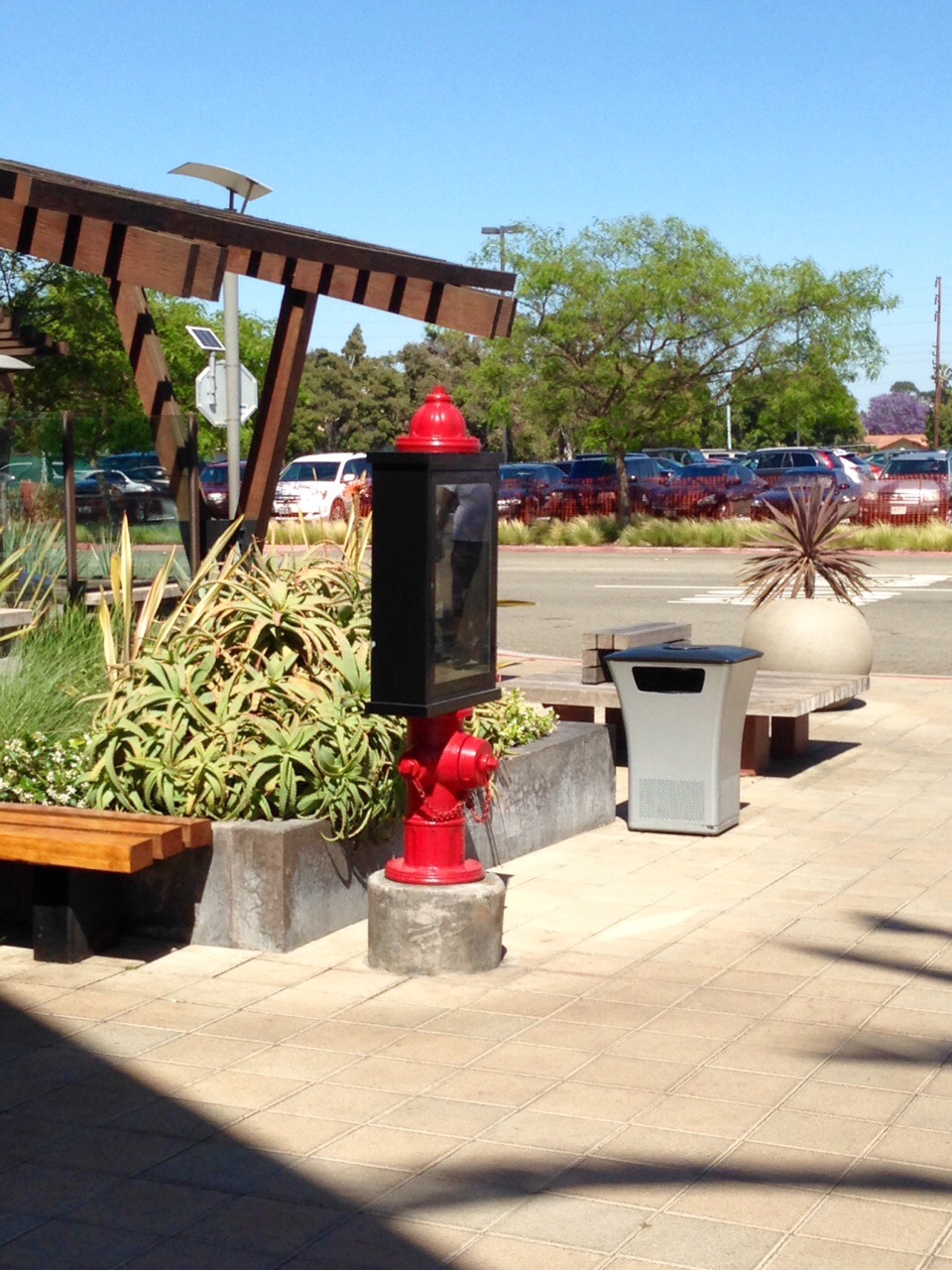
Preplan your AORs because businesses do creative things with stuff.

On the scene, tagging a hydrant. Wait a minute….
Preplan your AORs because businesses do creative things with stuff.
| 14-008: No complaining – offer solutions | |
| Agency: Long Beach Fire | Topic(s): Public Perception and Solutions |
| Date: Fall 2014 | Platform: Twitter |
Complaining or venting on social media is fairly common. However, as an official agency, public displays of affliction does not portray the best image. Long Beach Fire expressed some displeasure on Twitter when discussing the their pilot program.
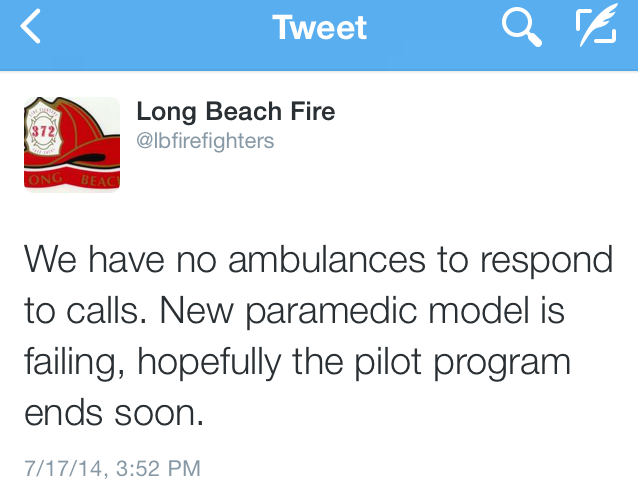
After reading this tweet, the public’s perception is that if 9-1-1 is called, no ambulances will respond. This is irresponsible and wrong. (Almost all emergency services have mutual aid agreements or memorandum of understandings in place.)
Positioning your agency as a fear mongerer or the Harbinger of Evil will only further distance yourself from people who would be willing to help your cause. Inform them of dangers, but more importantly, engage them publically on social.
If there is internal displeasure with the new staffing models, be proactive and offer transparent solutions in the tweet. Cite websites that provide industry information. Publically share statistical data that supports changes with current programs. These online tactics will help direct and educate the general public on how to be better informed on other program and possible other options yet unexplored.
Additionally you can rally your constituents behind better initiatives by engaging with them publically via social media. It demonstrates that your department’s community involvement is a key part of a better solution.
As an official account, Twitter’s 140-character limit is really no place to moan/groan.
A more effective tweet could have read:
| LBFD resources are maxed out. #Firefighters cannot provide adequate #Paramedic service to our communities. Help us find a solution <insert link here> |
By phrasing it this way:
Time is valuable, so tweet good stuff.
***To download this as a single-page printable format, click this file:
I had a great time teaching at the Pennsylvania Emergency Management Agency (PEMA) 2014 Emergency Management Conference.
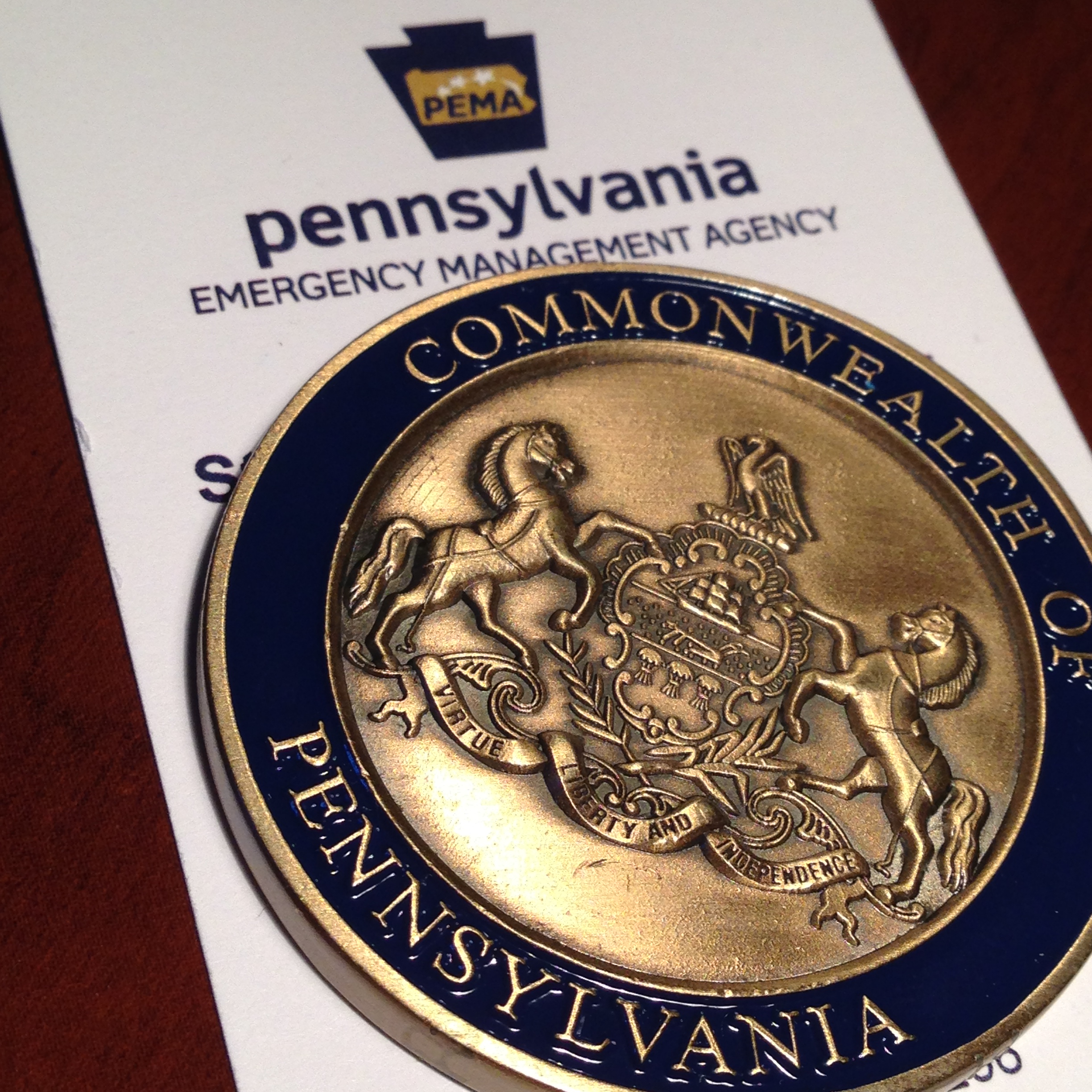
Learned a TON of stuff and terminology too.
Special thanks to PEMA Director Glenn Cannon, Chief Deputy Director Robert Full, Director Norm Auvil, Acting STO Stephen Michelone Jr, EM Spec Graham Hess, and all the Area Directors for the hospitality.
Also glad to finally meet the FEMA Region III Training and Exercise Team.
It is outstanding to see such solid partnerships with Keystone Emergency Management Agency (KEMA) and the Pennsylvania Emergency Management Agency (PEMA) esp when it comes to the organization of such a large event.
Mahalos!
|
14-003: Write for Different Platforms |
|
|
Agency: Rocky Mountain Area IMT |
Topic(s): Social Media Platform Specific Messaging |
|
Date: Summer 2014 |
Platform(s): Press Release vs Twitter |
Despite the message being essentially the same, every communications platform is different.
Speed is important, but correctly addressing your audience is critical in the world of public information.
On July 1, 2014, this tweet was posted on the Rocky Mountain Area Incident Management Team’s feed during the Eightmile Fire while deployed in Canon City, Colorado.

“FOR IMMEDIATE RELEASE” In all caps? All caps use on social media portrays yelling. Professionals should portray calm/control.
Twitter’s social media platform premise is a fast microblog service focusing on immediate information. This templated press release lingo (FOR IMMEDIATE RELEASE) is not necessary. Every tweet is automatically time/date stamped including matching the recipients’ time zone. Do not waste your valuable 140 characters.
To me, this was a cut-and-paste action, or even worse yet, they just linked the agency’s Facebook and Twitter accounts together. No time was spent in addressing the various platforms used to push this valuable information. Remember, PIO actions on each platform in social media are not generic, they are specific. We talk about safety to kids differently than we inform adults on safety right? Likewise, we should address our audiences on social media accordingly to the platform they use.
A more effective tweet could have read:
“Updated information & stats on the #Eightmile Fire ongoing in Colorado can be found here fb.me/6KArLmgFr ”
By phrasing it this way:
Know the differences in mainstream social media platforms because what will work on one old platform (press release) will NOT work on newer platforms (Facebook, Twitter, Instagram, etc…) Know social media and use their amenities to your advantage.
Time is valuable, so post good stuff.
***To download this as a single-page printable format, click this: WriteForDifferentPlatforms-Safety-PIO-SM-14-003
Since this is a restricted area, I just asked the commanding officer of the USCG station if I could do the Firefighter cold water challenge here under the Golden Gate Bridge…they said no.

Don’t worry, I’ll keep trying.
Standby-1
@rusnivek
 Where is @rusnivek?