Unknown's avatar

About rusnivek

Emergency Services

Day-1 of ICS-300 class today in Southern Ohio

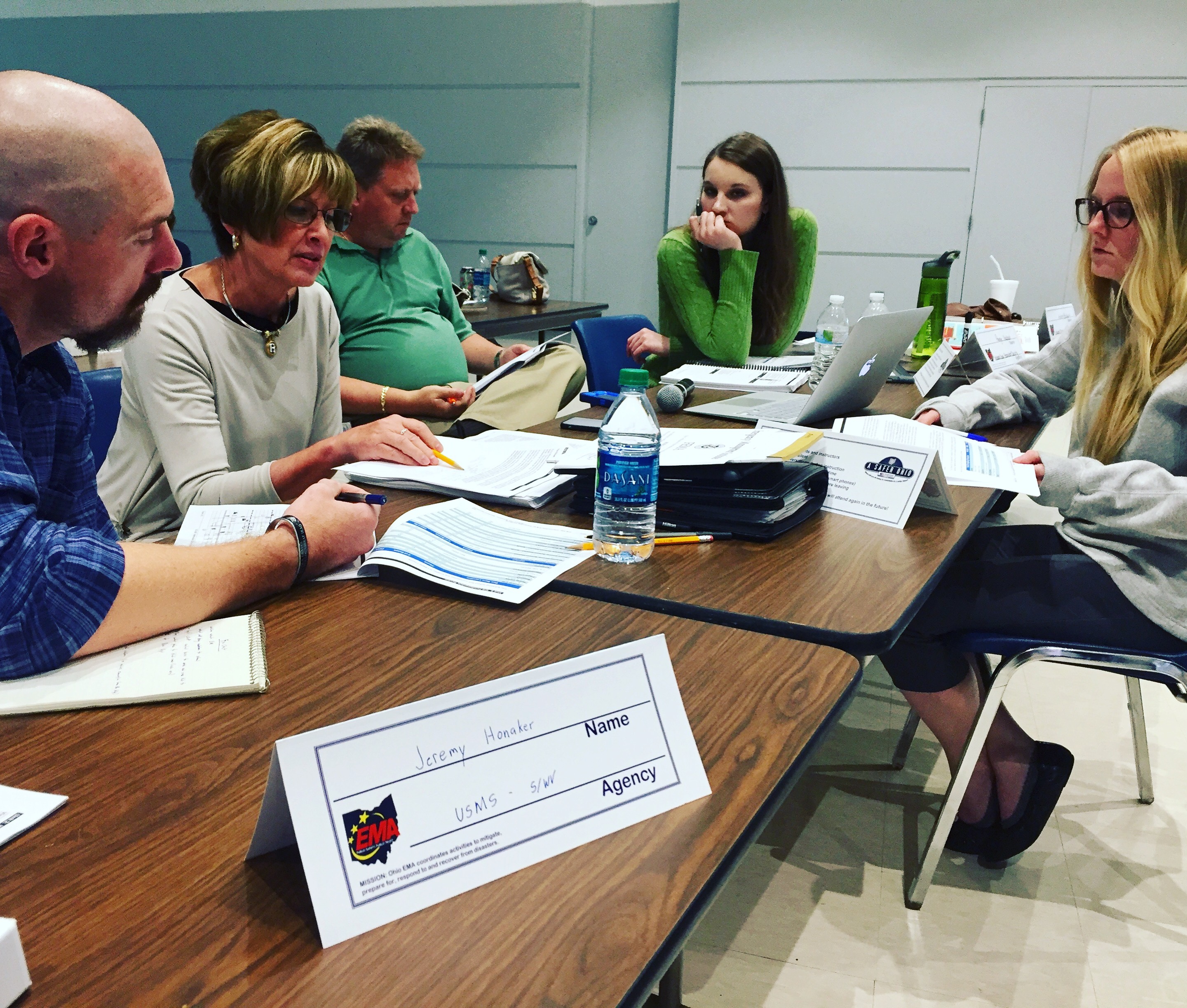
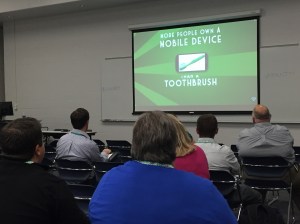
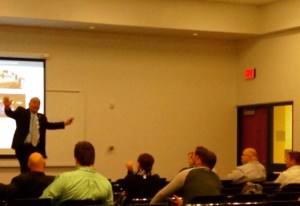
First day of Ohio EMA’s ICS-300: Intermediate ICS for Expanding Incidents class.


With so many VIPs here from various agencies, I’m on my best behavior. Participants from three different states (Ohio, Indiana, and West Virginia). Numerous higher education staff, Fire/EMS and law enforcement, Health Department, VOAD, and Federal agencies like the Department of Justice US Marshal Service.


Special thanks to the senior administration from Belmont College for hosting this state class. 


Lots of engagement and spirited discussion esp focused on college campus safety. Outstanding!


Solid debate on unified command as well as resource ordering. 


Trying to get “stuff” to support operations is tough. Delicate balance between command and general staff is important and critical. 


But more importantly, we are building relationships before an event, an emergency, or a disaster. 

@rusnivek

Lots of questions on flashlights #Preparedness

I field numerous questions about flashlights. Like alotta. 

“Do you really need more than one flashlight?”

“Do I have to purchase an expensive flashlight?”

“Does a good flashlight make a difference?”

“Does your daughter even have her own flashlight?”

Let me be clear and answer all of the above. Yes x4. 

Because equipment needs will vary depending on the user, find flashlights that work best for you. 


Big or small, size doesn’t matter. 

Make sure you and your family are prepared for any disaster or emergency with rugged flashlights.
@rusnivek

October is going to be fun!

September was busy thanks to National Preparedness Month but October is going to be super fun!

First week, I’ll be teaching ICS in Belmont County (Ohio). Bonus points because I’ll be in a suit on Tuesday!

Second week will be heavy planning/coordination for upcoming IMT OSC Course, PIO Workshop, and PIO Conference. (BTW: Save-the-date – Friday January 20th, 2017).

Third week will be reporting live at the International Association of Emergency Manager’s Annual Conference in Savannah, Georgia. Suit up lads because it’s IAEM baby!

Fourth week, I’ll be back in Marietta, Georgia teaching. Who’s showing the love for Region 4 this month?!? Meeeeeeeeeeeeeeeeeeeeeeeeee!

fema_regional_map


I wonder what my Halloween costume will be this year?

@rusnivek

Safety-PIO-SM 16-005: Inquiries during an emergency #Twitter #Media

16-005: Inquiries during an emergency
Agency: Irfan Khan and NBCLA Topic(s):       Twitter engagement & Crisis
Date: 09-30-16 Platform:       Twitter

After several Public Information Table Top Exercises and Social Media Workshops, many attendees have experienced reporters who have purposely bypassed officials for information and have directly contacted affected parties involved.

uclashootingmediainquiry

Social media has shortened the timeline for any news reporters – basically cutting INTO the chase. This can be exemplified by NBCLA Reporter Daniella Guzman’s reply on Twitter to Irfan Khan’s tweet he posted during an active shooter situation on UCLA’s campus in June 2016.

As you can tell by Irfan’s Tweet, raw parental emotion to protect his child who was hiding in a bathroom (from the shooter) is palpable. But what can Public Information Officers (PIOs) do about this? Not much since this social media platform lends itself to fairly open dialog for any ongoing emerging situations. Now, you could say that if the parent has enough time to tweet, that he/she has the right mindset to respond to reporters. However, when faced with a dire situation and the possible loss or death of an immediately family member –  most people do not respond well.

It is possible to deflect random victim/survivor inquiry attempts. PIOs could proactively monitor the common accounts or hashtags that emerge during the incident. In this situation, “#UCLA” was a common term that was used to associate tweets. Simply setting up a column in TweetDeck or HootSuite could provide another monitoring point for your Joint Information Center on redirecting inquiries. Once vetted, operations and tactics could use this information to increase Situational Awareness and Common Operating Picture (SA/COP).

For Irfan’s family, I am glad to report that Irfan’s daughter was found safe.

Three important tips to consider as soon as something kicks off:

  1. When an emergency occurs, setup a column in TweetDeck or HootSuite for the primary agency and mentions.
  2. Monitor common hashtags to help steer questions/inquiries into the Joint Information Center with trusted sources who can provide correct vetted information.
  3. People under duress may not respond well to random inquiries.

On Twitter, your public safety presence is important because you can help proliferate good sources of information by redirecting to official trusted sources.

Time is short, so Tweet good stuff!

@rusnivek


#CyberSecurity Conference in Lincoln for #NatlPrep #BadDayBag

Got invited to speak in Lincoln at the 2016 State of Nebraska Annual Cyber Security Conference. Great to have so many sponsors promoting CyberSecurity

img_9564

Incidentally, next month, October is National Cybersecurity Month.

Following the FBI is always a hard act to follow. Additionally, I was the after lunch speaker. Gish.

img_9563

Don’t worry, I’ll try to be serious. And yes, I’m wearing a tie.

img_9580

I’ll even play a few fun videos too.

img_9578

And they said try not to stand on any tables and chairs during class. CHALLENGE ACCEPTED~!

img_9591

Super fun time presenting to some new peeps including those who laughed at my new cat jokes. Special thanks to NIPC’s Leslie…

img_9562

…and Nebraska Emergency Management Agency’s Assistant Director Bryan and all the staff for the invite.

img_9574

Since it’s still September and still National Preparedness Month, don’t forget to have your #BadDayBag ready to go too.

BTW-people often ask what I do when I get stuck at an airport for 5+ hours.

img_9598

Hope this helps answer any questions.

@rusnivek


*TODAY* IPAWS National Test of the Emergency Alert System #NatlPrep

IPAWS National Test of the Emergency Alert System

Wednesday, September 28th, 2016 at 2:20pm EDT


FEMA’s IPAWS will hold a national test of the Emergency Alert System (EAS) on Wednesday, September 28th, 2016 at 2:20pm EDT.  The National Periodic Test (NPT) code, which is used to distribute the national test, is similar to the Regular Monthly test (RMT) code that generates a brief EAS message on radio, TV, and cable indicating a test of the EAS is in progress.  The NPT test code will be sent from FEMA’s alerting infrastructure, known as IPAWS, and relayed through all aspects of the EAS. The test message will be the same as a typical monthly EAS test message, with one exception: the word “National” will be added to the test message.


The goal of the mandatory test is to assess the operational readiness and effectiveness of the IPAWS infrastructure for distribution of a national-level message to the public.  A second goal is to implement a standard method for regular alert and warning tests which help to improve the national preparedness posture.  The test is expected to have limited impact on the public with only minor disruptions of radio and television programs.  Only the EAS will be tested in this nationwide test. Cell phone and other FEMA alerting capabilities will not be tested during this event.

chill

In the event of an unforeseen circumstance, such as a major weather event, the back-up date for the IPAWS National Test is Wednesday, October 5th at 2:20pm EDT.

NTED official = PER-344: Social Media Tools and Techniques course #NDPTC

It isn’t official until it’s DHS/FEMA NTED official #NDPTC

This….THIS!!!!!


I’m so happy right now.

surhappydance
Big mahalos to all the pros who have helped me through this process. I am fortunate to have your support in the course I created.

Yes indeed, this one is a big check mark off my career list.

@rusnivek

New Efforts to Increase National Preparedness by Building Community Capacity to Recover from Disasters

The White House
Office of the Press Secretary
For Immediate Release

FACT SHEET: Obama Administration Announces New Efforts to Increase National Preparedness by Building Community Capacity to Recover from Disasters

Over the last eight years, this Administration has focused not just on improving our ability to respond and recover from disasters, but also to expand resilience in our communities. The President believes that our ability to respond to and recover from disasters is predicated on building resilience to the wide range of natural disasters, technological hazards, and acts of terrorism that may impact our Nation. And each time we rebuild, we can do so in a way that makes our communities stronger and more resilience, to limit the impact the next disaster may inflict.

The impacts of climate change – including hotter temperatures, more extreme weather, sea level rise, and more severe drought – pose significant challenges for communities not prepared to adapt to these extreme conditions.  At the beginning of the month, the President declared September as National Preparedness Month.  In doing so, he called on community leaders across the country to develop capabilities to tackle vulnerabilities identified in the 2016 National Preparedness Report.

The Federal government is doing its part to address the vulnerabilities and areas for national improvement identified in the2016 National Preparedness Report.  Today, Federal agencies are announcing new actions to help build the capacity of state, local, tribal, territorial, private sector, and nonprofit stakeholders to recover from future disasters.

New Federal actions announced today include:

  • Federal Emergency Management Agency and U.S. Economic Development Administration:  Economic Recovery Training For Emergency Management and Economic Development Practitioners 
    The Federal Emergency Management Agency (FEMA), in collaboration with the U.S. Economic Development Administration announces the award of $1,506,000 training funds.  These funds will provide training for state, local, tribal, and territorial emergency managers and economic development professionals to proactively seek and undertake economic recovery and resilience initiatives.  More information may be found here.
  • Federal Emergency Management Agency with the U.S. Department of Commerce and the U.S. Small Business Administration:  Leaders in Business Community Resilience
    FEMA, with the U.S. Department of Commerce and the U.S. Small Business Administration, announces the Leaders in Business Community Resilience initiative which provides new guidance for state-level engagement with the private sector.  The initiative also creates a platform for businesses of all sizes to be recognized for building community resilience.  In addition, this effort equips businesses to take action in preparing their staff, mitigating risk for facilities and systems, building resilience into their supply chains, and serving their community through pre-disaster planning.  FEMA, SBA, and Commerce will convene joint events across the country over the next year to support local efforts to create preparedness partnerships between the private and public sectors.   More information may be found here.
  • U.S. Department of Housing and Urban Development:  Support Homeless Persons in Pre-Disaster Planning, Response, and Recovery
    The U.S. Department of Housing and Urban Development (HUD) announces release of a toolkit focused on the needs of homeless populations before, during, and after disasters.  The toolkit will help communities build resilience and capacity to more effectively support homeless persons in pre-disaster planning, response, and long-term recovery.  In addition, HUD will use the toolkit to enhance the Federal government’s coordination of program requirements to better align and improve disaster response planning and implementation focused on the needs and challenges of homeless populations post-disaster.  More information may be found here.
  • National Institute of Standards and Technology with the Community Resilience Panel:  Establish a “Built Environment” Resilience Gateway in the U.S. Climate Resilience Toolkit
    The National Institute of Standards and Technology (NIST)-sponsored Community Resilience Standards Panel with the National Oceanic and Atmospheric Administration and the U.S. Forest Service announce the creation of the Built Environment gateway in the U.S. Climate Resilience Toolkit which is the first dedicated to community resilience measures for urban communities and infrastructure. Areas of focus include buildings and structures, disaster planning, energy, water and wastewater, social equity, planning and land use, transportation, communications, and other related topics. The Built Environment gateway may be found here.
  • U.S. Department of Energy: Enhance Situational Awareness of Energy System Status
    The U.S. Department of Energy announces a new initiative to enhance the real-time monitoring and predictive capabilities of the Environment for Analysis of Geo-Located Energy Information (EAGLE-I) system.  By transitioning its operation to Oak Ridge National Laboratory (ORNL) in Tennessee, EAGLE-I will take advantage of ORNL’s world class capabilities and expertise in energy infrastructure assurance, geospatial data and analysis, and scalable high performance computing environments.  In doing so, EAGLE-I will become the authoritative source supporting state, local, tribal, and territorial stakeholders to track the status of energy systems throughout the Nation.  These enhancements will help target and efficiently mobilize public and private sector resources in support of whole community partners during post-incident recovery. More information may be foundhere.
  • U.S. Department of Homeland Security: Establish a National Network of Critical Infrastructure Security and Resilience Resources
    The U.S. Department of Homeland Security is announcing the establishment of a cadre of trained infrastructure recovery and resilience subject matter experts who can provide assistance to communities in disaster-impacted areas.  These subject matter experts will assist with the rebuilding following the historic August flooding in Louisiana.  When requested in future incidents, they will work in partnership with state, local, tribal, territorial; and private sector partners to enhance the resilience of area infrastructure by conducting post-incident security and resilience assessments, assisting with the prioritization of infrastructure reconstitution and redevelopment efforts, and identifying opportunities for future investments that can mitigate current and future threats.  For more information, please contactIDR@hq.dhs.gov.
  • Federal Emergency Management Agency:  Community Recovery Resource Portal
    FEMA announces its launch of a Community Recovery Resource Portal to assist community leaders in finding and accessing post-disaster recovery resources.   Embedded in the existingdisasterassistance.gov platform, the Community Recovery Resource Portal highlights ways in which community leaders can help lead, plan, and find resources for their recovery efforts.  This action also implements one of the recommendations from the Hurricane Sandy Rebuilding Task Force Report in establishing a “No Wrong Door” approach for assisting community leaders in their recovery efforts.  More information may be found here.
  • Heritage Emergency National Task Force and the National Endowment for the Humanities: New Training Opportunities to Aid Cultural Institutions in Disaster Preparedness
    The Heritage Emergency National Task Force and the National Endowment for the Humanities (NEH) announce a new webinar series which will provide practical training and guidance to emergency managers and cultural stewards on how to strengthen disaster preparedness in the cultural community.  More information may be found here.