A few easy tips…so you don’t get burned this summer

Summer JUST started but holy sunburn Batman!

  • Slow down: reduce, eliminate or reschedule strenuous activities until the coolest time of the day. Children, seniors and anyone with health problems should stay in the coolest available place, not necessarily indoors.
  • Dress for summer. Wear lightweight, loose fitting, light-colored clothing to reflect heat and sunlight.
  • Eat light, cool, easy-to-digest foods such as fruit or salads. If you pack food, put it in a cooler or carry an ice pack. Don’t leave it sitting in the sun. Meats and dairy products can spoil quickly in hot weather.
  • Drink plenty of water (not very cold), non-alcoholic and decaffeinated fluids, even if you don’t feel thirsty. If you on a fluid restrictive diet or have a problem with fluid retention, consult a physician before increasing consumption of fluids.
  • Use air conditioners or spend time in air-conditioned locations such as malls and libraries.
  • Use portable electric fans to exhaust hot air from rooms or draw in cooler air.
  • Do not direct the flow of portable electric fans toward yourself when room temperature is hotter than 90°F. The dry blowing air will dehydrate you faster, endangering your health.
  • Minimize direct exposure to the sun. Sunburn reduces your body’s ability to dissipate heat.
  • Take a cool bath or shower.
  • Do not take salt tablets unless specified by a physician.
  • Check on older, sick, or frail people who may need help responding to the heat. Each year, dozens of children and untold numbers of pets left in parked vehicles die from hyperthermia.  Keep your children, disabled adults, and pets safe during tumultuous heat waves.
  • Don’t leave valuable electronic equipment, such as cell phones and gps units, sitting in hot cars.
  • Make sure rooms are well vented if you are using volatile chemicals.

And of course: WEAR SUNSCREEN!!!!

Don’t get burned this summer….(<–see what I did there?!?)
@rusnivek

Second looks at my #Spectacles From #SnapChat Part-2

Here’s my second observation with SnapChat’s #Spectacles

Duh right?!?!

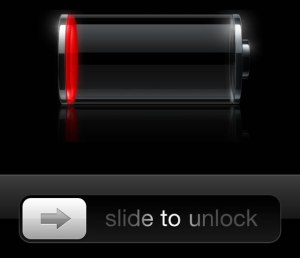
Additionally, I am sure you are downloading your content in HD so that drains the battery even more because you are transferring it over bluetooth.

Sucking it dry…with social media.

More tomorrow peeps.

@rusnivek


Are you serious? This is NOT Infinite power #NatlPrep #Power

This better not be your plan when the power goes out…

6007-590x444

One of the main reasons why people evacuate from the safety of their home is because they have no power source. For 2015 National Preparedness Month, here’s a few tips you can use before the power goes out:

  • Plan for batteries and other alternatives to meet your needs when the power goes out.
  • Ensure you have extra compatible batteries for any device that can run on battery power (i.e., cell phones, portable phones, medical or assistive devices, radios).
  • Consider purchasing hand-crank and solar-powered chargers.
  • Consider extra USB port battery packs so you are able to charge various devices.
  • Extra charging cables – and make sure they are over 5 ft long.

Because no one likes a dead cell phone or portable device right?

Don’t wait. Communicate. Make your emergency plan today.

CKYhdyqUMAQdNj1

Plug into knowledge…and get better prepared today.

Be powered and Ready by starting here!

@rusnivek

We got a #FacebookDown-Safety-PIO-SM-14-009

14-009: We got a FacebookDown
Agency: Los Angeles Sheriff’s Dept. Topic(s):         Non-related current event messages
Date: Fall 2014 Platform:        Facebook and Twitter

Just like any other service, social media platforms are bound to go down. And when that happens, a small amount of the population does NOT know how to react appropriately. Some residents of California decided that calling 9-1-1 was their only resort to getting logged back into Facebook.

IMG_5167

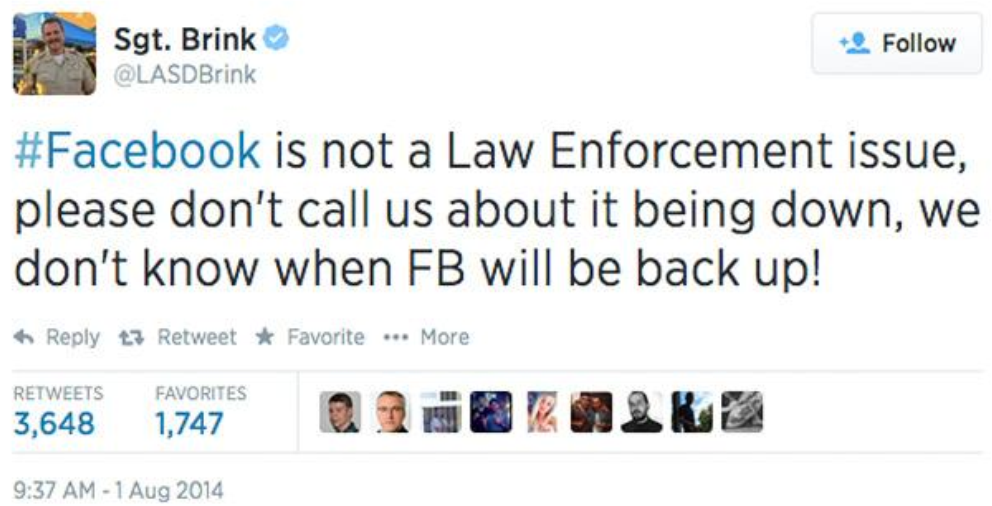
Ahem. Clearly, this is NOT an emergency. Sgt Brink is right in making it very clear to his audience (on Twitter) that Facebook’s non-service is not a Law Enforcement issue. Common sense right?

Most agencies should have an easy contingency plan when this type of situation happens. Social Media postings and engagement will help decrease calls to various public safety agencies…including during non-emergency times. So having this type of canned responses ready to push out when a major social media platform has the hiccups, might help your constituents navigate their (loss of) digital life. Additional use of a trending hashtag will bring more visibility to your post by informing others of actions, or in this case, non-actions.

A more effective tweet could have read:

#Facebook is NOT a law enforcement issue. Pls don’t call us about it being down, we don’t know when FB will be back up #facebookdown

By phrasing it this way:

  1. You sternly address that this social media platform is NOT a law enforcement matter (duh).
  2. You use a hashtags that is trending (#Facebookdown) that will help increase visibility in your tweets.
  3. You highlight the importance of being current and active on recent news/events.
  4. You stress the importance of engaging with your social media users on various social media platforms.

Time is valuable, so tweet good stuff.


@rusnivek


***To download this as a single-page printable format, click this file:

WeGotAFacebookDown-Safety-PIO-SM-14-009


Free safety tips for today’s severe weather inbound #OHWX

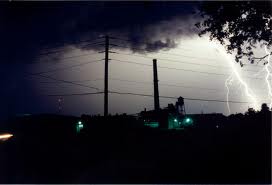
Got some bad weather heading to North East Ohio today.

imagesCA942DFB

Here’s a few free tips you can use to prepare for today severe weather:

  • Remove dead or rotting trees and branches that could fall and cause injury or damage during a severe thunderstorm.
  • Consider postponing outdoor activities.
  • Secure outdoor objects that could blow away or cause damage.
  • Break out your emergency preparedness kit and see if all flashlights are working. If not, get them in working order.
  • Charge all of your mobile devices including your cell phone now before the power goes out.

To get up to the minute updates during the Thunderstorm:

  • Use your battery operated NOAA Weather Radio for updates from the National Weather Service.
  • Cordless and wireless phones not connected to wall outlets are safe to use.

And after the storm passes, take these precautions as you survey the damage around your house:

  • Do NOT touch downed power lines. Assume all lines are charged and dangerous. Call your emergency services to handle safe removal of lines.
  • Wear log sleeved shirts and long pants with gloves and boots. Debris from storms are usually sharp and dangerous.
  • Power out? Check the power company’s website to see who else doesn’t have power here.
  • Never drive through a flooded roadway. Remember: Turn Around, Don’t Drown! #TADD

Feel free to share these tips with your neighbors too.

@rusnivek

Free tips and reminders for dealing with snow today

Hello snow!

NE Ohio had its first dose of snow last night. Started at about midnight, various reports have 2-8 inches on the ground.

IMG_8436 - Copy

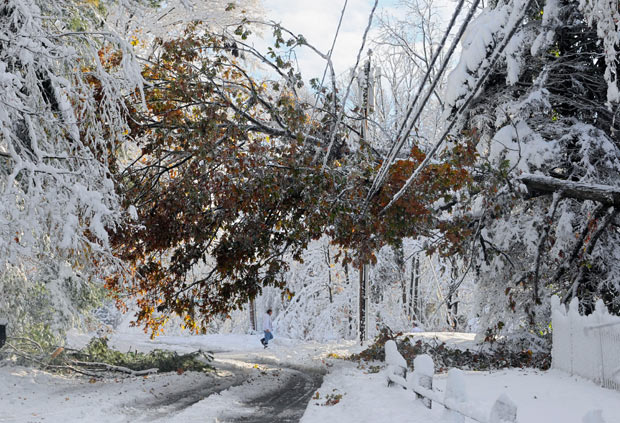
At this time, the National Weather Service Cleveland Office has issued a lake effect snow advisory in effect until 1300 EST (aka 1:00pm EST). Snow will be heavy with high water content. This can cause damage to trees and power lines.

conn-power-line_2041792i

There are some dangers associated with wintry weather. Here are a few free tips to keep in mind while dealing with snow.

  • Walk carefully on snowy, icy walkways.
  • Avoid overexertion when shoveling snow. Overexertion can bring on heart attack – a major cause of death in the winter. If you must shovel snow, stretch before going outside.
  • Keep dry. Change wet clothing frequently to prevent a loss of body heat. Wet clothes loses all of its insulating value and transmits heat rapidly.
  • Heavy snow will bring down trees and power lines. NEVER touch any downed power lines…even if you think they are safe, they are usually not. Keep everyone far away from downed lines.
  • Heavy snow will make trees sag and collapse. Be careful with trees are old or frail, they tend to collapse under the weight of the snow and have killed unknowing children.
  • Watch for signs of frostbite. These include loss of feeling and white or pale appearance in extremities such as fingers, toes, ear lobes, and the tip of the nose. If symptoms are detected, get medical help immediately.
  • Watch for signs of hypothermia. These include uncontrollable shivering, memory loss, disorientation, incoherence, slurred speech, drowsiness, and apparent exhaustion. If symptoms of hypothermia are detected, get the victim to a warm location, remove wet clothing, warm the center of the body first and give warm, non-alcoholic beverages if the victim is conscious. Get medical help as soon as possible.
  • And of course, don’t eat yellow snow.

heavy_ice_snow_NOAA_small

Use these tips to keep you and your family safe this fall….er….snowy season.

@rusnivek