Your pet needs an emergency preparedness kit too! Check out the one I have – ready to go #Prepared2014 #NatlPrep #Woof
It’s finally Friday in this third week of 2014 National Preparedness Month

“Be Disaster Aware, Take Action to Prepare”

#FridayFurDay right? Or is that #FridayFunday ?

This week’s theme is consistent with FEMA’s National Preparedness Campaign: Build an Emergency Kit

#19: Your pet needs an emergency preparedness kit too! Check out the one I have – ready to go #Prepared2014 #NatlPrep #Woof

Ab1WIEjCMAAiMsg

Dry dog food (3 days worth). I have Kacy’s food parceled out into individual easy servings. This way, we don’t over feed her.

IMG_7936

Two (2) bottles of water – which is enough for her for 3 days.

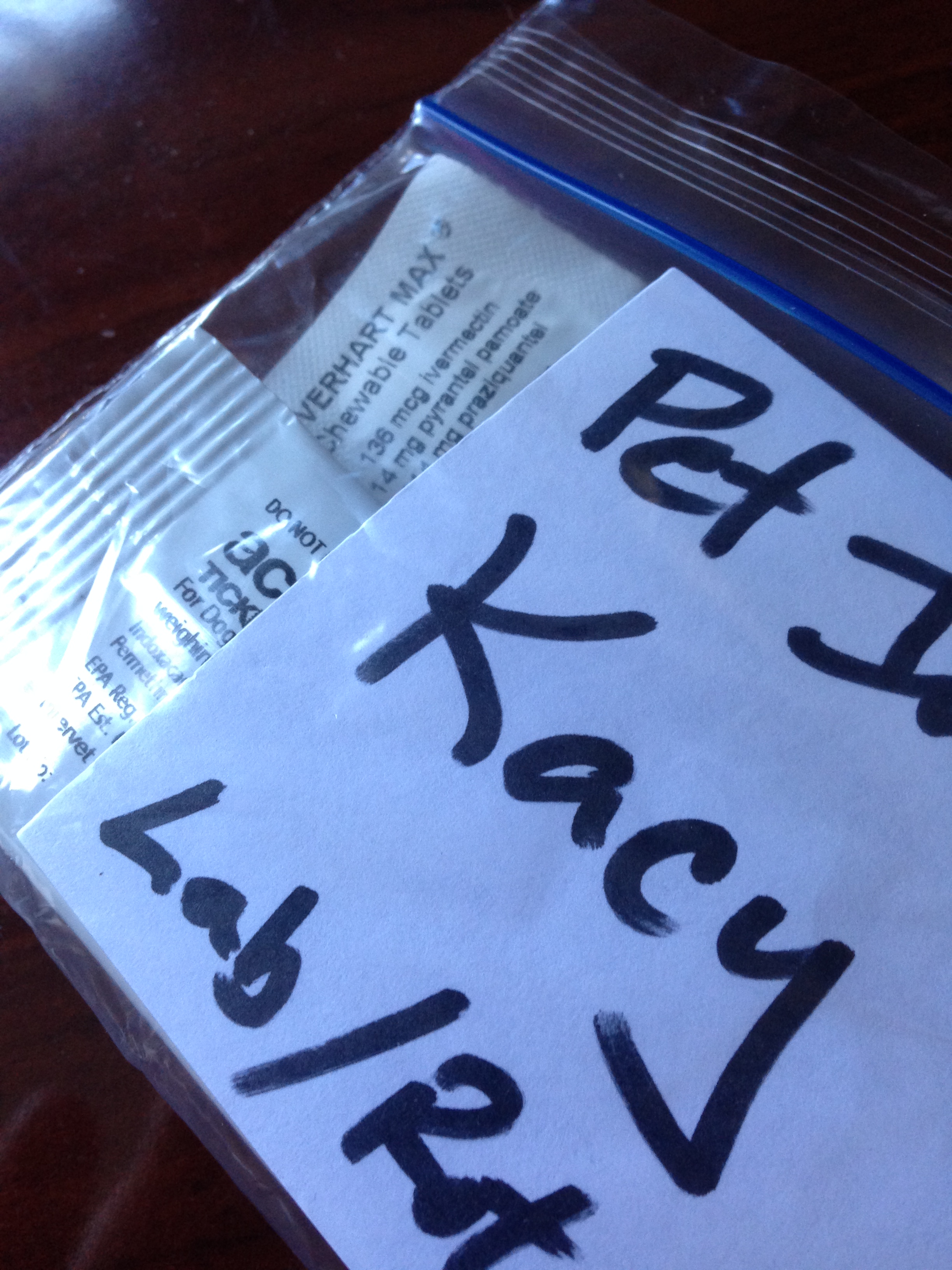
Pet identification (3×5 notecard in zip lock bag which makes this waterproof) which includes our contact cell phones and twitter handles, pet name, date of birth, current vaccinations, county dog registration, vet address, vet phone, and of course a short description of what she looks like. Also in the zip lock bag is Kacy’s pet medications (heart worm pills and flea and tick meds).
IMG_7934

Small bowl to eat and drink.

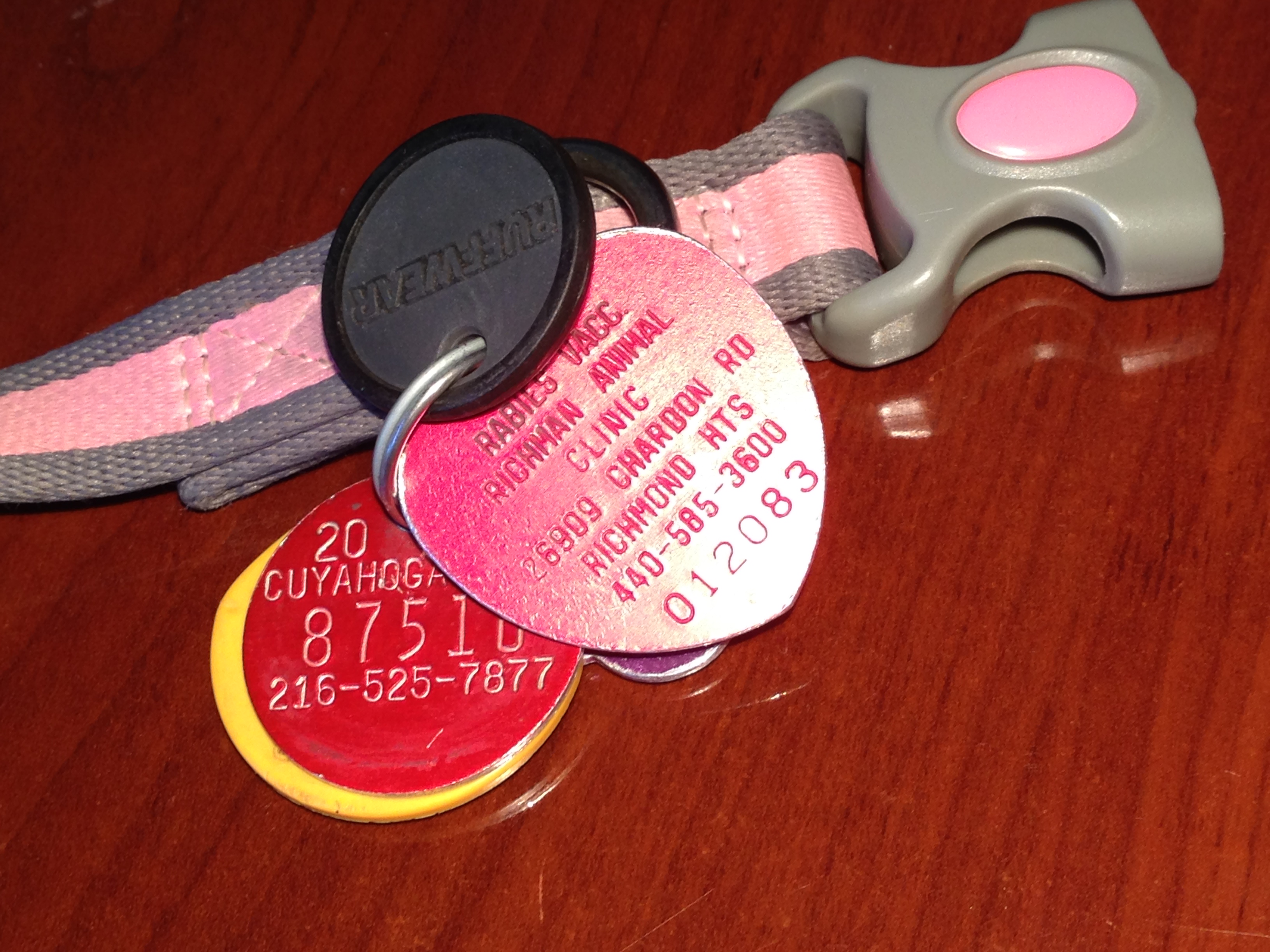
Dog identification tags that includes her name tag, county dog identification, rabies vaccination information, our contact information, and home address.
IMG_7937

Pet First Aid kit – I got this from a community fair thanks to the local health department. This is a necessity! It will make minor injuries easier to manage.

Extra static 6ft leash…and yes, it’s labeled w/ duct tape with her name on it.

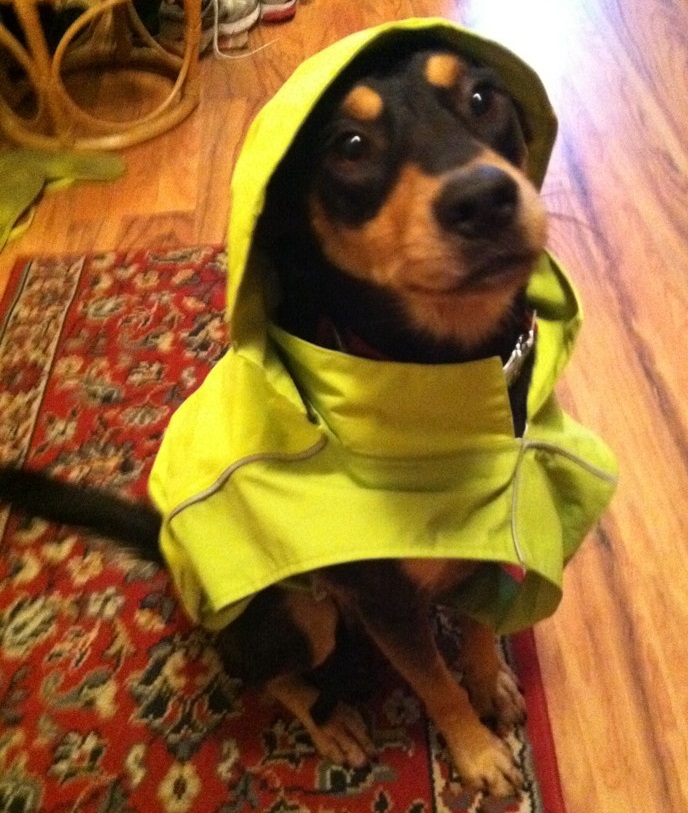
Packable raincoat because in case it rains, we are prepared for adverse weather! Also the “wet dog smell” isn’t the most fragrant aroma.
rgazc

Favorite pet toys for Kacy which includes two Nylabone chew toys and a bright orange rubber tennis ball from Target.

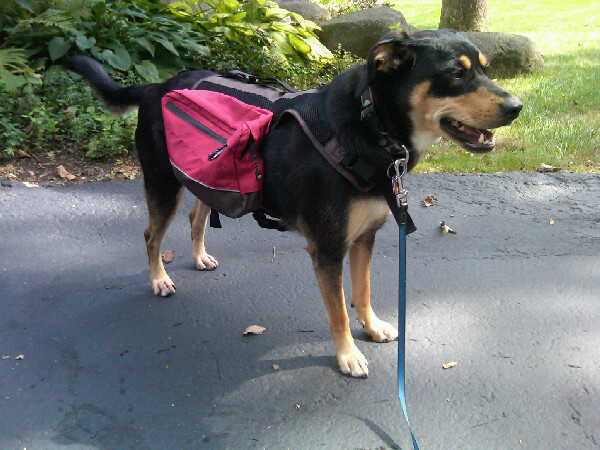
*******All of the above items fit nicely in a dog carry pack. *******

Ab1WIEjCMAAiMsg

Incidentally, this pack/harness has a handle on the topin case I need to emergently pick her up and go. I also have a green glow stick (break activation) that attaches via carabiner to the top for easy identification during night travel/evacuation.

The pack has several zippered outside pockets so I can separate the medications/Identification from the food.
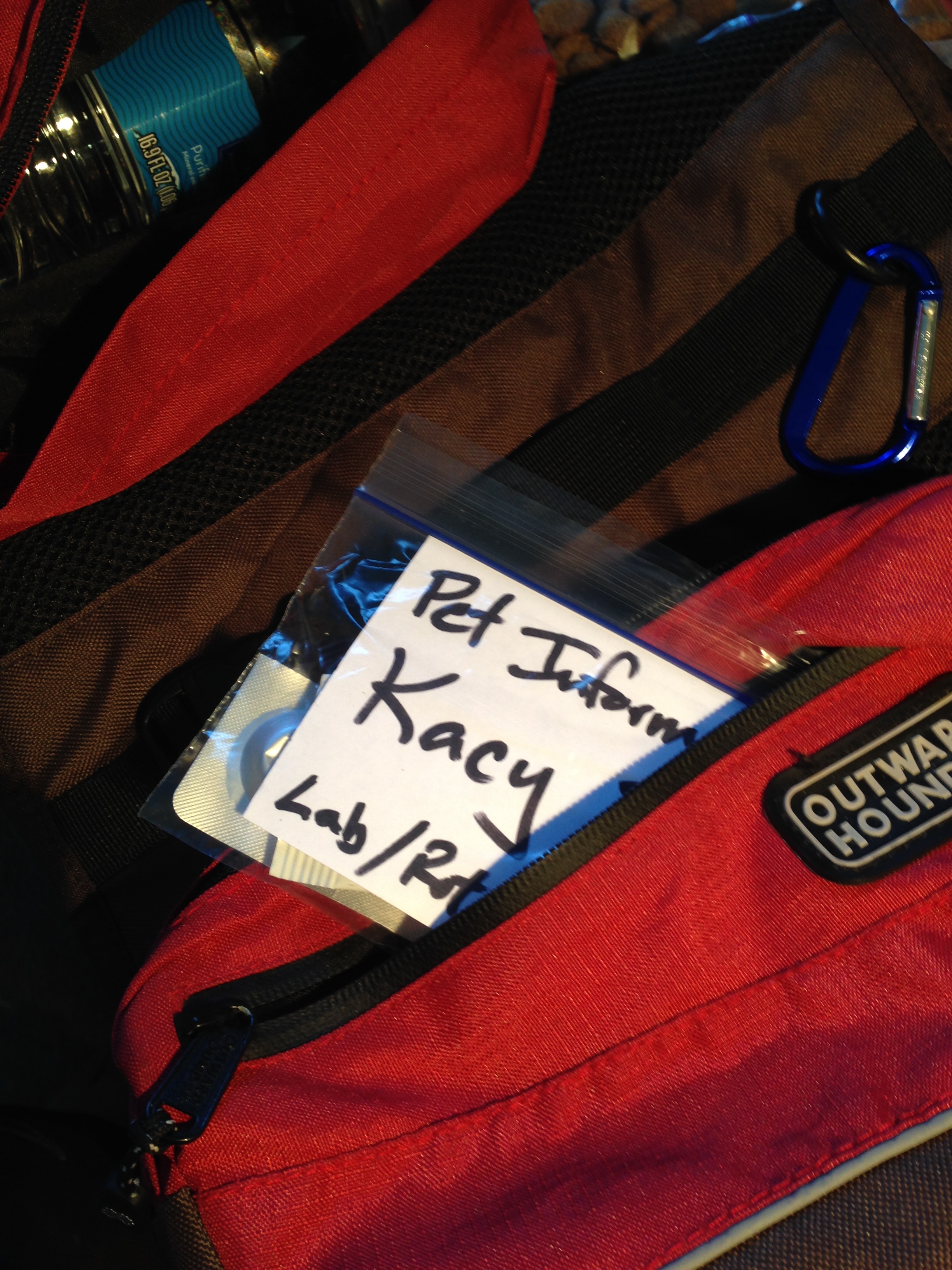
IMG_7938

These simple and easy basic supplies make up my pet preparedness kit. Keep in mind that everyone’s pet preparedness kits should be different depending on the size and breed of the animal…but it should have the basics like food, water, and medications.

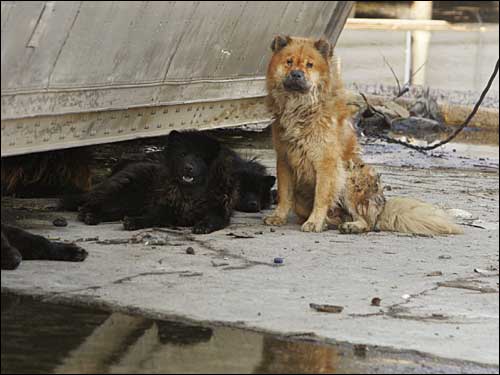
I was reminiscing about my deployment during Hurricane Katrina/Rita in 2005 – our Task Force saw SO many abandoned pets in Louisiana’s Lower 9th Ward.

Katrina_Ducey_animal_rescue_01-1

In case of an emergency or disaster, PLEASE take the time to prepare/evacuate with your pets as they are part of your family.
1126097966_0350

For more information on how you can put together your pet preparedness kit, check out this free FEMA Ready.Gov link on pet preparedness.

A3zo-HyCYAEABct

For those wondering, Kacy is a rescue dog. Best. Dog. Ever.

BSoqLQLCQAArvOz

Special thanks to my dog Kacy for helping out in today’s preparedness post. #woof

@rusnivek

This emergency preparedness kit multipurpose item literally sticks to everything #Prepared2014 #NatlPrep #TBT

It’s Thursday in the third week of 2014 National Preparedness Month

“Be Disaster Aware, Take Action to Prepare”

#TBT #TapeBackThursdays ? Or am I trying too hard to make fetch happen?

This week’s theme is consistent with FEMA’s National Preparedness Campaign: Build an Emergency Kit

#18: This emergency preparedness kit multipurpose item literally sticks to everything #Prepared2014 #NatlPrep #TBT

Duct-Tape-On-Windows-During-Sandy-By-Engineering-Express-538x218

Before a disaster, duct tape can be used to shore up many structural components as well as loose items around the house. This includes securing windows from cracking, enhancing doors, even sealing up the cracks in case you have to shelter-in-place duct tape does a lot!

U164P200T1D337691F16DT20100902231713

Now duct tape has been used for a few redic things too.

people-on-the-wall_1-jpg

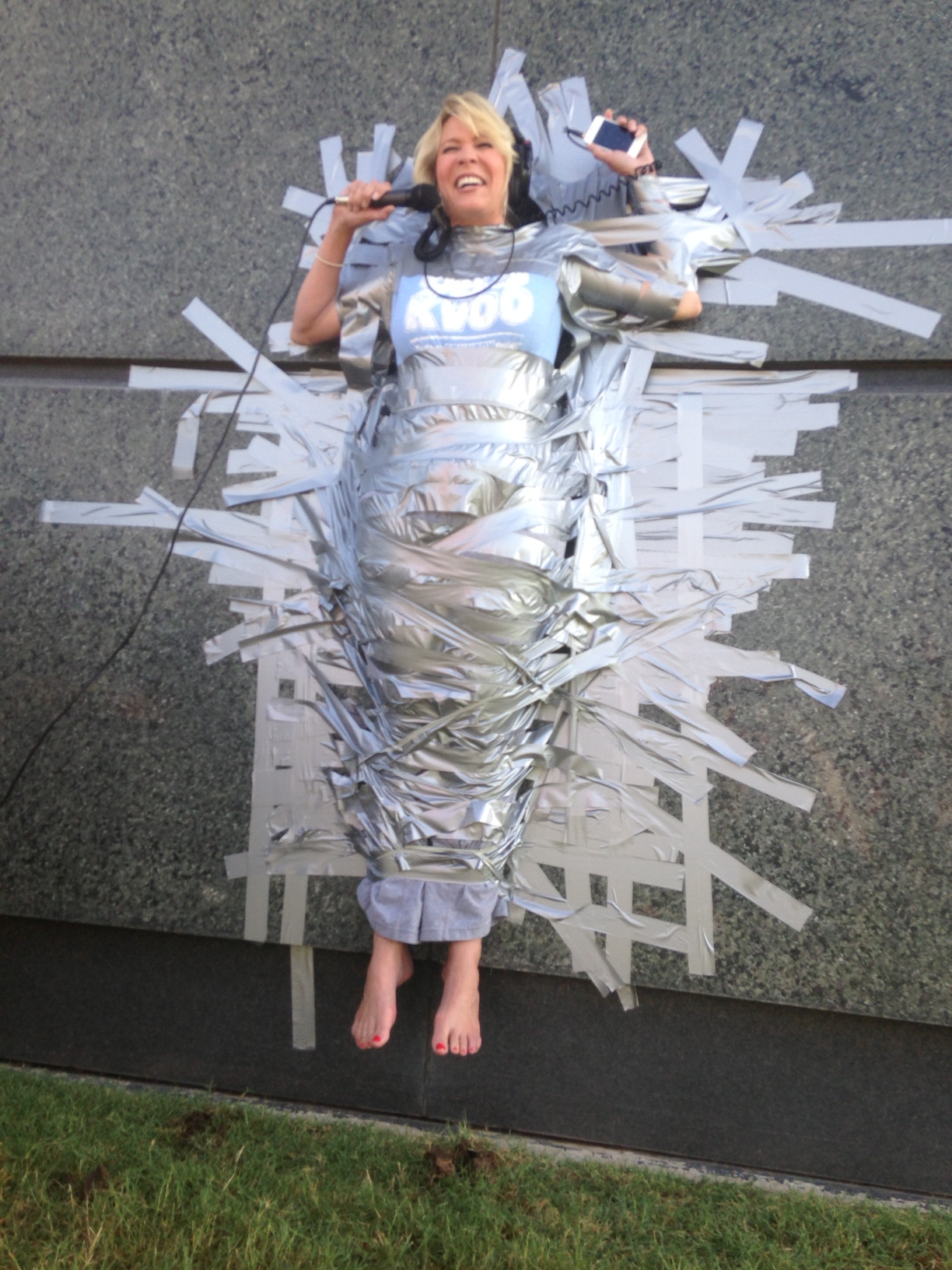
Great practical joke, but c’mon.

And trust me when I say every emergency manager has duct tape in their go kit. Therefore, you should too.

To aid in your preparedness, I would suggest having two rolls of duct tape in different colors. This way, you can distinguish your tape from others (i.e. layers) and also be able to use your duct tape as identification markers. Here’s an example of just one way to use duct tape to easily identify your stuff – my flat head ax.

IMGP5152

Um, I hear that the airline industry also uses duct tape for operations…I mean identification too.

37

However you use duct tape, keep at least two different color rolls in each emergency preparedness kit.

It would be worth noting that the Duck Tape Headquarters is located right here in NE Ohio and of course Avon Ohio is known as the Duck Tape Capital of the World.

untitled

During an emergency, stick together! (see what I did there?)

@rusnivek

A better whistle for your emergency preparedness kit #NatlPrep #Prepared2014

Halfway in the third week of 2014 National Preparedness Month.

“Be Disaster Aware, Take Action to Prepare”

Can you sorta hear me now?

This week’s theme is consistent with FEMA’s National Preparedness Campaign: Build an Emergency Kit

#17: A whistle, better yet, an air horn in your preparedness kit to call attention to your emergency #Prepared2014 #NatlPrep

article-1067549-02E2782400000578-681_468x306

Whistles will help call attention to your situation wherever you are. I have one attached to the vehicle preparedness kit.

I get that a whistle is small, lightweight…but is it enough?

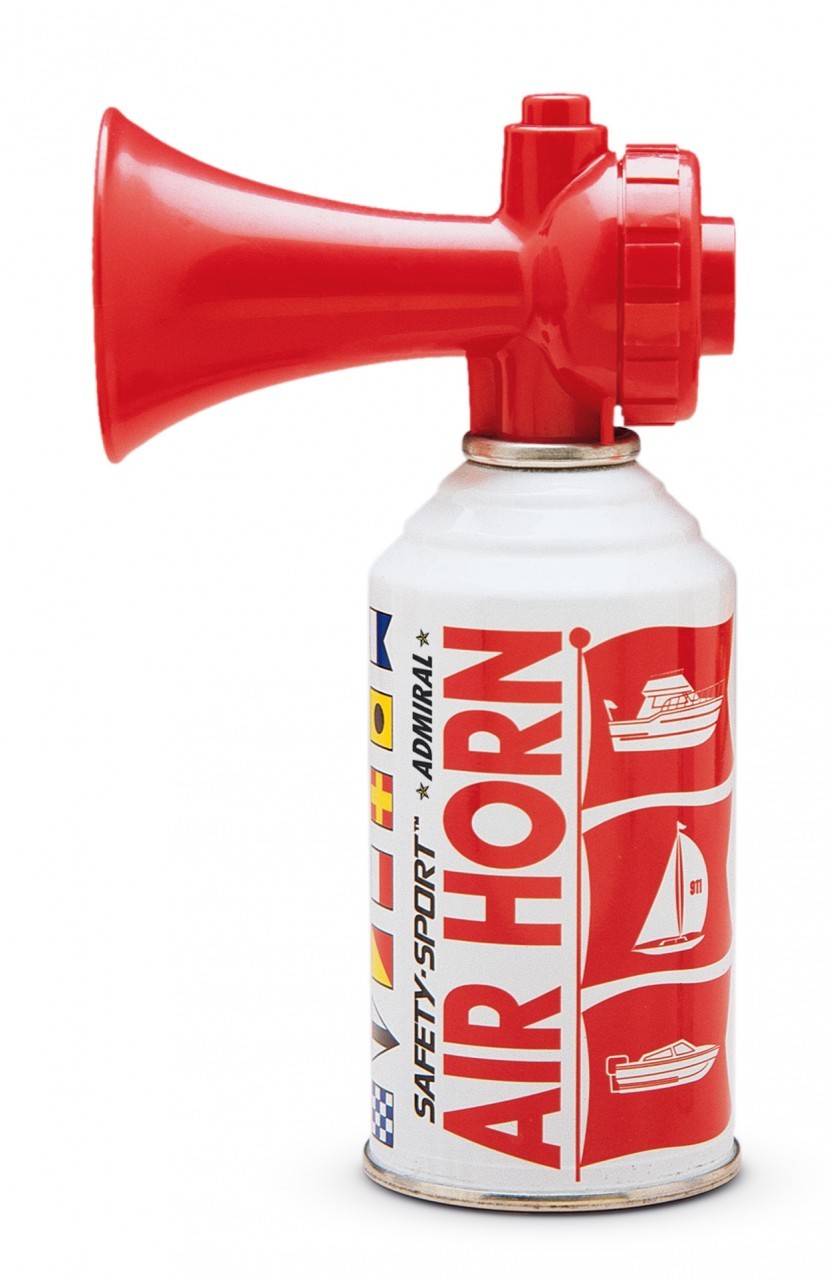
In retrospect, I purchased a few of these. An air horn. Not only is it easier to use, but also easier to activate and WAY louder too.

0075208000721_500X500

Note the line reading “Meets the USCG requirement for boats…”

I guess what I’m saying is that you can never be too loud huh?

loudiStock_000001851588XSmall

Expensive? Nope. I got my very own air horn from Wal-Mart for a whopping $5.

7660576

*Also a necessity in your practical joke kit too.

Ahem.

@rusnivek


One gallon of water per day per person – 48 bottles! #NatlPrep #Prepared2014

Midstream in the third week of 2014 National Preparedness Month.

“Be Disaster Aware, Take Action to Prepare”

Are you drowning in these preparedness tips yet?

This week’s theme is consistent with FEMA’s National Preparedness Campaign: Build an Emergency Kit

#16: One Gallon of water per day / per person. Calculated for you = 48 bottles of water per person in your #Prepared2014 kit! #NatlPrep

imagesZ30H6XK4

So let’s do some simple calculations now.

1 bottled water = 8 oz of water

16 ounces of water = 1 pint of water

8 pints of water = 1 gallon of water

The recommendation is that every person has a gallon of water per day per person.

*****That means you need at least 16 bottles of water per person per day.*****

imagesBNB4AKOL

If you just whispered ERMAHGERD….then you should buy some water today.

photo

This one is not negotiable…get it now. A case of bottled water is relatively cheap…like $3 for a case. Cheap. Do it.

Few tips once you get your water

  • Store your cases of bottled water in a cool dark place that is low to the ground.
  • So to keep your items fresh, make sure you rotate your bottled water regularly.
  • Not only for yourself, make sure you have enough water for your family.
  • I am not brand specific. Trust me, during an emergency, you will not be brand specific either.
  • Try to keep them in the shrink-wrapped. It’ll make it easier to move when needed.
  • Try to purchase clear bottles. It will help you see what’s inside.
  • Clear water bottles also can be used to amplify/diffuse a flashlight.

flashlight-lg

Keep in mind, during an emergency, this is a very common sight.

Empty-Shelves

So don’t let this happen to you.

target-water

Get your preparedness kit with water together today!

@rusnivek

Important parts of my emergency preparedness kit #NatlPrep #Prepared2014

Starting out the third week in the 2014 National Preparedness Month.

“Be Disaster Aware, Take Action to Prepare”

Monday morning with the most important stuff!

This week’s theme is consistent with FEMA’s National Preparedness Campaign: Build an Emergency Kit

#15: Your essential emergency preparedness kit should include flashlights & a cell phone charger #NatlPrep #Prepared2014

1486756_404385919664252_490171728_n

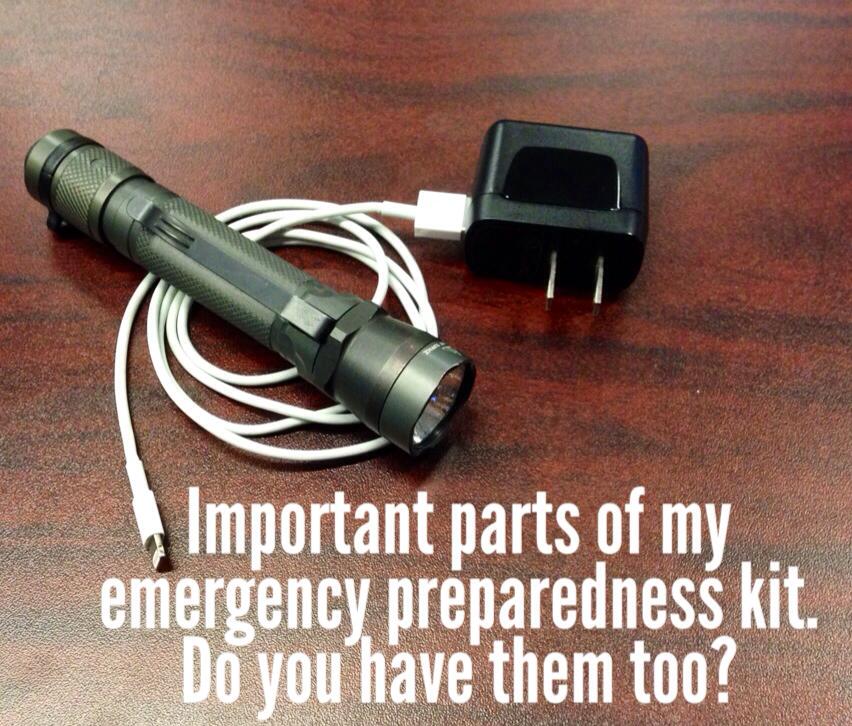
Today’s tip is an easy one – flashlights and phone charger. It takes 10 seconds to include them in your emergency preparedness kit. Do it now.

Also-it seems like we lose power so frequently…so don’t be left in the dark (see what I did there?).

Candles are dumb because you stand the possibility of burning your house down and killing your family. During an emergency, gas leaks are common. Obviously. Candles and a gas leak is a recipe for explosion. #Kaboom Soooooooooo DO NOT USE CANDLES.

Maslow’s hierarchy of needs have grown and now the base layer includes WiFi and phone power. Consider having a charging cable that has the ability to plug into a wall receptacle/plug or a USB charging point.

@rusnivek

3 days of food per person for your emergency preparedness kit #NatlPrep #Prepared2014

The start of the third week in 2014 National Preparedness Month.

“Be Disaster Aware, Take Action to Prepare”

Starting this week out with the good stuff!

This week’s theme is consistent with FEMA’s National Preparedness Campaign: Build an Emergency Kit

#14: Shelf stable foods (like MREs) for 3 days/person MUST be in your preparedness kit #NatlPrep #Prepared2014

MRE_contents

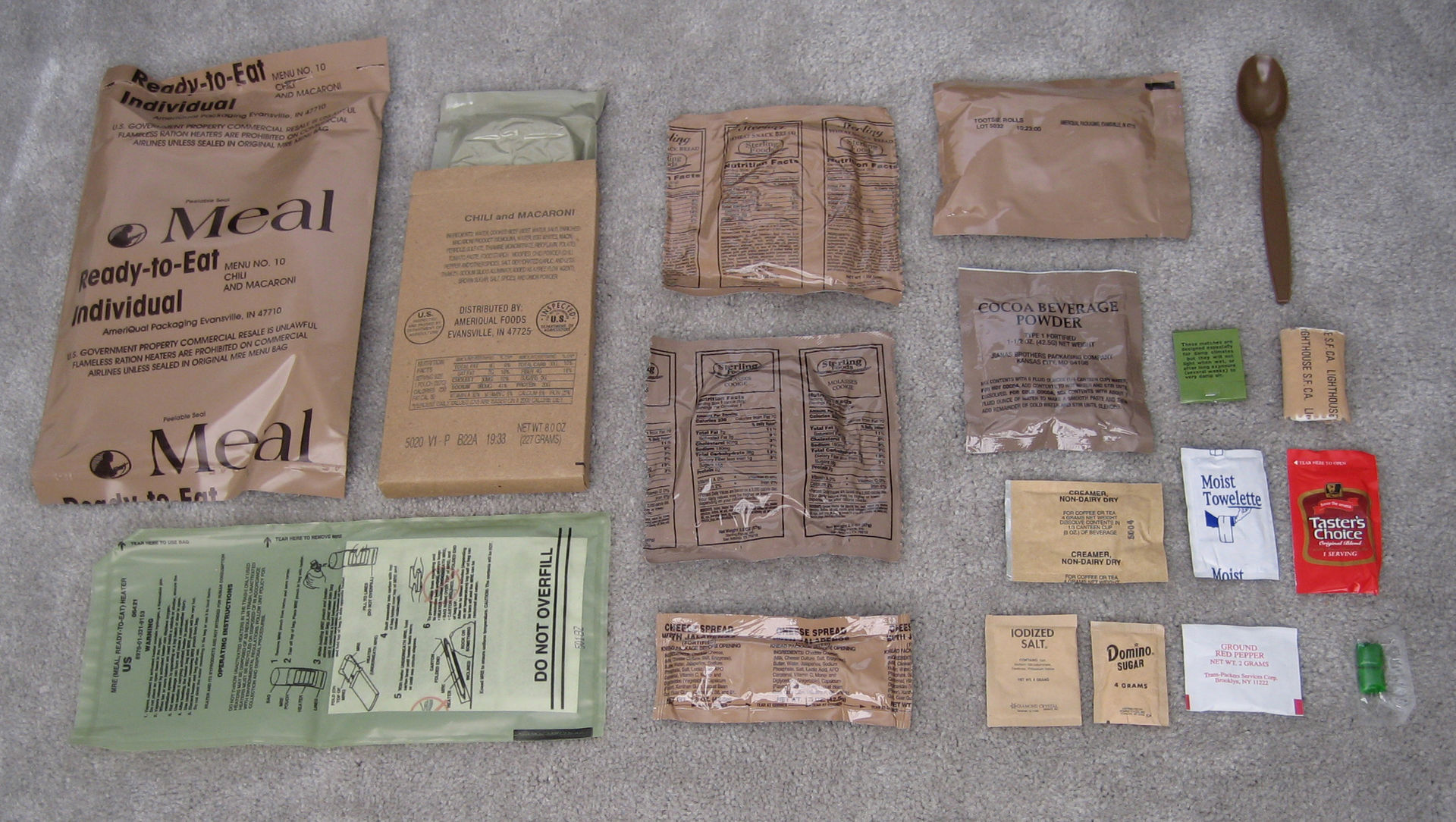
MREs or Meals Ready to Eat are really the “gold standard” in preparedness efforts. Now, I know what you’re thinking….gold standard = delicious. However, that is furthest from the truth. They are not as delicious as you think.

It would be worth noting that each of these MREs pack a whopping 2,200 calories. The idea behind the high calorie count is that a person who is working at maximum capacity (at war) does not have time to casually sit and enjoy three different meals a day. In just one meal, the MRE has relatively enough calories to push you through the day with only one “sitting”.

My “favorites” include

  • Chicken and rice
  • Pork with rice in BBQ sauce
  • Spaghetti with Meat & sauce

My MRE I really try to avoid?

  • Chicken Ala King
  • Beef Stew
  • Tuna with noodles

If you have never opened or used an MRE before, it would behoove you to do so before a disaster. For starters, there is a heating pack to warm your main entrée up (aka Flameless ration heater). This does require water for the thermal reaction to take place.

Flameless_ration_heater

Also seasonings like tabasco sauce, Xylitol chewing gum, and a moist towelette are considered to be the most sought after pieces of each MRE. Use/trade them sparingly.

img_1338

If you decide to go an alternate route and purchase a heater meal type or a bunch of Vienna sausage, make sure you try these products out before you have to use them during an emergency. Know your emergency supplies and rotate them out regularly.

IMG_2105

Gaaahhhhh! So many things to remember, but if you start out simple and check your food for three days per person…you’ll have your kit ready and be better prepared for an emergency.

@rusnivek

Its #EMSWeek2014 – We need your help in roadway safety #Paramedic #EMT #Firefighter

It’s #EMSWeek2014 – Stressing safety to everyone is an important part of our job.

We are seeing more car crashes due to distracted driving. Put down your phone and pay attention to the road. As emergency responders, I would hate to meet you for the first time like this…

P1210014

Worse yet, we don’t want to get hit.


Distracted driving can injure and kill. Remember, don’t text and drive.

Please, share this message with others and stress the importance of roadway safety.

And again, thank all your first responders for their dedicated service.

b34c63bf37814e9db7437c55e3da6be61

@rusnivek

By ground or by air, EMS does it all #EMSWeek2014

It’s #EMSWeek2014 – Did you know EMS uses many different vehicles/apparatus?

IMG01652-20100702-2001

By ground or by air, Emergency Medical Services Professionals care for the sick and injured in so many different ways.

Thank all your first responders for their dedicated service.

b34c63bf37814e9db7437c55e3da6be61

@rusnivek

December = Five Regions and completion of my PCP

Schnikies – it’s December.

And my assignment card seems to be fairly full. This month I’ll be in FEMA Region 10, 8, 9, 3, and of course Region-5.

fema_regional_map

Also this month, I should be submitting my paperwork for my FEMA Professional Continuity Practioner’s certification.

Looking forward to the change of scenery with my travels this month. As always, any peeps want to catch up or #Tweetup, let me know.

Happy holidays everyone!

@rusnivek


You should know about the Worcester-6 Cold Storage Warehouse Fire #W6

Take a few moments to learn about the now infamous Cold Storage Warehouse Fire in Worcester, Massachusetts.

fire1

Honor your fallen Firefighters who gave their life on December 3, 1999.

  • Worcester Fire Rescue-1 Firefighter Paul Brotherton
  • Worcester Fire Rescue-1 Firefighter Jeremiah Lucey
  • Worcester Fire Rescue-1 Lieutenant Thomas Spencer
  • Worcester Fire Ladder-2 Firefighter Timothy Jackson
  • Worcester Fire Engine-3 Firefighter James Lyons
  • Worcester Fire Engine-3 Firefighter Joseph McGuirk

***In my opinion, this fire is a defining moment in fire service history***

All Firefighters should know about this fire by heart.

Well, even if you don’t read the entire NIOSH report, at LEAST read the summary below.

SUMMARY

On December 3, 1999, six career fire fighters died after they became lost in a six-floor, maze-like, cold-storage and warehouse building while searching for two homeless people and fire extension. It is presumed that the homeless people had accidentally started the fire on the second floor sometime between 1630 and 1745 hours and then left the building. An off-duty police officer who was driving by called Central Dispatch and reported that smoke was coming from the top of the building. When the first alarm was struck at 1815 hours, the fire had been in progress for about 30 to 90 minutes. Beginning with the first alarm, a total of five alarms were struck over a span of 1 hour and 13 minutes, with the fifth called in at 1928 hours. Responding were 16 apparatus, including 11 engines, 3 ladders, 1 rescue, and 1 aerial scope, and a total of 73 fire fighters. Two incident commanders (IC#1 and IC#2) in two separate cars also responded.

Fire fighters from the apparatus responding on the first alarm were ordered to search the building for homeless people and fire extension. During the search efforts, two fire fighters (Victims 1 and 2) became lost, and at 1847 hours, one of them sounded an emergency message. A head count ordered by Interior Command confirmed which fire fighters were missing.

Fire fighters who had responded on the first and third alarms were then ordered to conduct search-and-rescue operations for Victims 1 and 2 and the homeless people. During these efforts, four more fire fighters became lost. Two fire fighters (Victims 3 and 4) became disoriented and could not locate their way out of the building. At 1910 hours, one of the fire fighters radioed Command that they needed help finding their way out and that they were running out of air. Four minutes later he radioed again for help. Two other fire fighters (victims 5 and 6) did not make initial contact with command nor anyone at the scene, and were not seen entering the building. However, according to the Central Dispatch transcripts, they may have joined Victims 3 and 4 on the fifth floor. At 1924 hours, IC#2 called for a head count and determined that six fire fighters were now missing. At 1949 hours, the crew from Engine 8 radioed that they were on the fourth floor and that the structural integrity of the building had been compromised. At 1952 hours, a member from the Fire Investigations Unit reported to the Chief that heavy fire had just vented through the roof on the C side. At 2000 hours, Interior Command ordered all companies out of the building, and a series of short horn blasts were sounded to signal the evacuation. Fire fighting operations changed from an offensive attack, including search and rescue, to a defensive attack with the use of heavy-stream appliances. After the fire had been knocked down, search-and-recovery operations commenced until recall of the box alarm 8 days later on December 11, 1999, at 2227 hours, when all six fire fighters’ bodies had been recovered. NIOSH investigators concluded that, to minimize the risk of similar occurrences, fire departments should

    • ensure that inspections of vacant buildings and pre-fire planning are conducted which cover all potential hazards, structural building materials (type and age), and renovations that may be encountered during a fire, so that the Incident Commander will have the necessary structural information to make informed decisions and implement an appropriate plan of attack

  • ensure that the incident command system is fully implemented at the fire scene

  • ensure that a separate Incident Safety Officer, independent from the Incident Commander, is appointed when activities, size of fire, or need occurs, such as during multiple alarm fires, or responds automatically to pre-designated fires

  • ensure that standard operating procedures (SOPs) and equipment are adequate and sufficient to support the volume of radio traffic at multiple-alarm fires

  • ensure that Incident Command always maintains close accountability for all personnel at the fire scene

  •  use guide ropes/tag lines securely attached to permanent objects at entry portals and place high-intensity floodlights at entry portals to assist lost or disoriented fire fighters in emergency escape

  • ensure that a Rapid Intervention Team is established and in position upon their arrival at the fire scene

  • implement an overall health and safety program such as the one recommended in NFPA 1500, Standard on Fire Department Occupational Safety and Health Program

  • consider using a marking system when conducting searches

  • identify dangerous vacant buildings by affixing warning placards to entrance doorways or other openings where fire fighters may enter

  • ensure that officers enforce and fire fighters follow the mandatory mask rule per administrative guidelines established by the department

  • explore the use of thermal imaging cameras to locate lost or downed fire fighters and civilians in fire environments


worc six


@rusnivek