When was the last time you saw one of these?!? (Bonus points for the double).
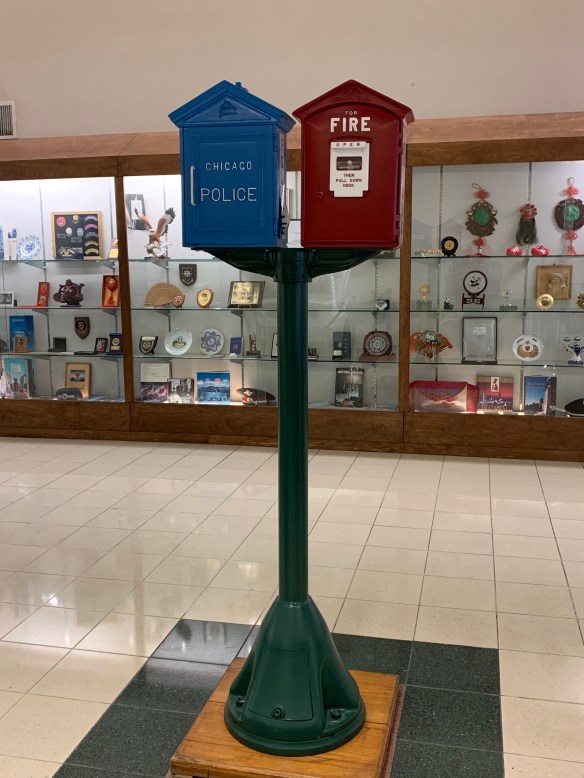
Nice work OEMC in restoring this historic piece.
Like the NE, I kinda wish Chicago had maintained these pull stations as a legacy backup for emergencies.

When was the last time you saw one of these?!? (Bonus points for the double).
Nice work OEMC in restoring this historic piece.
Like the NE, I kinda wish Chicago had maintained these pull stations as a legacy backup for emergencies.
Another feature of the FEMA App….free reminders to test your smoke detectors.

You know I did.
Good reminder FEMA!
| 14-006: Technical jargon and giving actionable information | |
| Agency: Chicago Fire Department | Topic(s): Industry codes / Actionable info |
| Date: Fall 2014 | Platform: Twitter |
Industry speak or technical jargon is part of what we do every day. But using technical terms on a social media platform will be confusing to those who are NOT in the fire service. That’s what the Chicago Fire Department did yesterday at their big 3-alarm fire when they tweeted technical jargon.


The use of technical jargon is rampant in emergency services but when speaking to the media or the general public, we need to remember that everyone did not grow up with a VOX alarm or SCU tones. In this case, a “311” or 3-11 alarm means that there are 11 engines, 5 Trucks, 2 Tower Ladders, 6 Battalion Chiefs, 1 Rescue Squad, 2 Ambulances, 2 Paramedic Chiefs, Deputy District Chief, Deputy Fire Commissioner, and the 1st Deputy Fire Commissioner are onscene. There is no way to include all that information in a tweet, but using more simple terms will help your audience understand the scale of your ongoing incident.
Before you post images, make sure your pictures are rotated correctly. I know accuracy is sometimes overlooked in lieu of speed, but it takes less than 5 seconds to orientate/rotate a picture (In this case, it was going to be a long operation). And note, by just rotating a picture does not equate that you are “doctoring up” photos. But a correctly posted photo will help media repost and format your information quicker to the masses.
During an emergency situation, your constituents need the information pushes to be actionable and specific to your audience. Not only inform them of the danger, but tell them what they can do about it.
A more effective tweet could have read:
| Chicago Fire: Large 3-alarm fire at Harrison St x Fifth Ave. Traffic delays-avoid the area. (insert two pictures) |
By phrasing it this way:
Time is valuable, so tweet good stuff.
***To download this as a single-page printable format, click this file:
TechnicalJargonAndGivingActionableInformation-Safety-PIO-SM-14-006
Last Alarm memorial service for two Toledo Firefighters who died in the line of duty.
Toledo Fire Department Engine-3, Firefighter Stephen Machcinski
Toledo Fire Department Engine-3, Firefighter James Dickman
Thursday January 30, 2014 starting at 1900
SeaGate Convention Center
401 Jefferson Ave in Toledo
Donations can be made at any PNC bank branch.
@rusnivek
It is National Fire Prevention Week (October 6-12, 2013).
To help you remember, feel free to include the picture below to push your messages of fire safety and fire prevention.
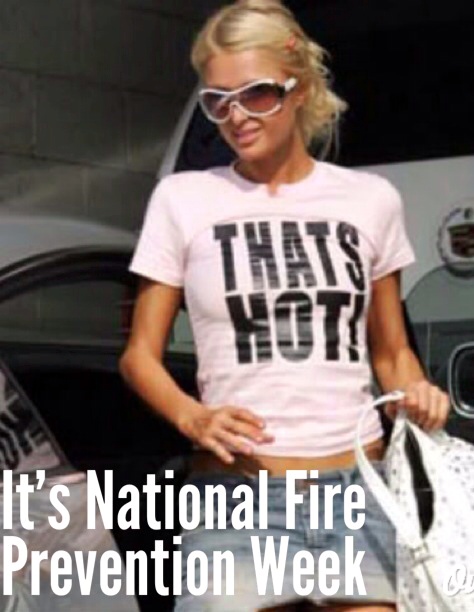
No one likes a disaster – Heh heh (I do enjoy when celebrities help push national initiatives).
4 easy steps to guide the general public this week:
1. Learn more about the smoke detectors, specifically the differences between ionization and photoelectric (from @OhioFire @OhioFireAcademy).
2. Make a family plan and upon evacuation, have a central meeting place to account for all family members.
3. Build an emergency kit that will help everyone during a disaster or emergency.
4. Interact and get involved within your community and push safety efforts with all public safety professionals.

Thanks to Tanya Ferraro for the inspiration for today’s post.
@rusnivek
October 6th – 12th is National Fire Prevention Week! Did you know there are many different brands of smoke alarms available on the market, but they fall under two basic types: ionization and photoelectric. It cannot be stated definitively that one is better than the other in every fire situation that could arise in a residence. Because both ionization and photoelectric smoke alarms are better at detecting distinctly different, yet potentially fatal fires, and because no one can predict what type of fire might start in a home, most firefighters recommend that every residence and place where people sleep be equipped with:
In addition to the basic types of alarms, there are alarms made to meet the needs of people with hearing disabilities. These alarms may use strobe lights that flash and/or vibrate to assist in alerting those who are unable to hear standard smoke alarms when they sound. Make sure you place them in strategic locations throughout the house. 
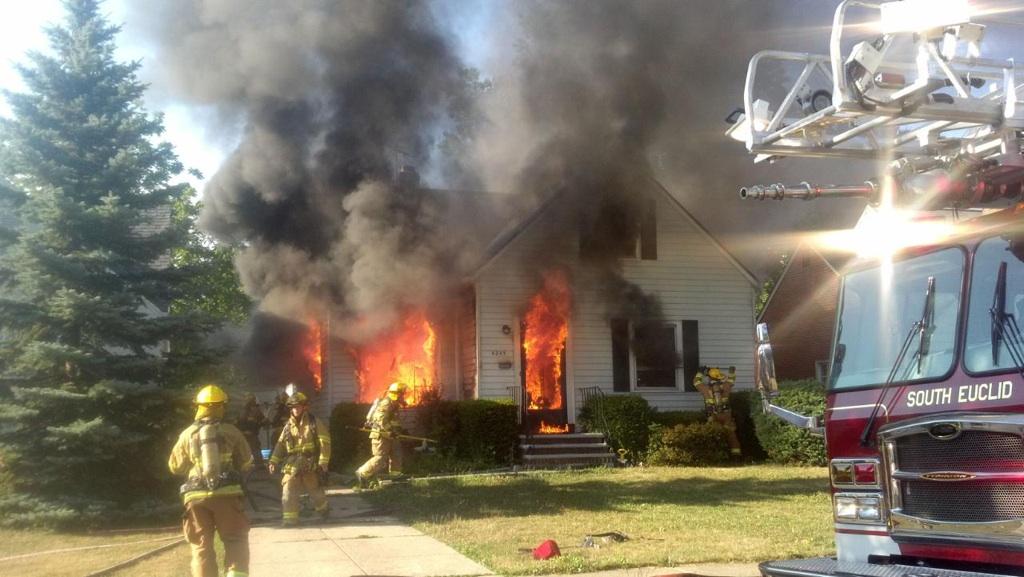
Step-1: Get an Ionization AND photoelectric smoke alarm or dual sensor smoke alarm. Step-2: Get it before this happens…
@rusnivek
 Where is @rusnivek?