Flashlights keeps your family together after a disaster #NatlPrep #Prepared2014

Rainy/gloomy Saturday, and I’m closing out the first week of 2014 National Preparedness Month!

“Be Disaster Aware, Take Action to Prepare”

Saturday Stuff right?

This week’s theme is consistent with FEMA’s National Preparedness Campaign: Reconnect with Family After a Disaster.

#6: Have at least two (2) flashlights w/ batteries to help navigate in the dark & keep your family together #NatlPrep #Prepared2014
Week-01-Reconnect-CommunicationsGear

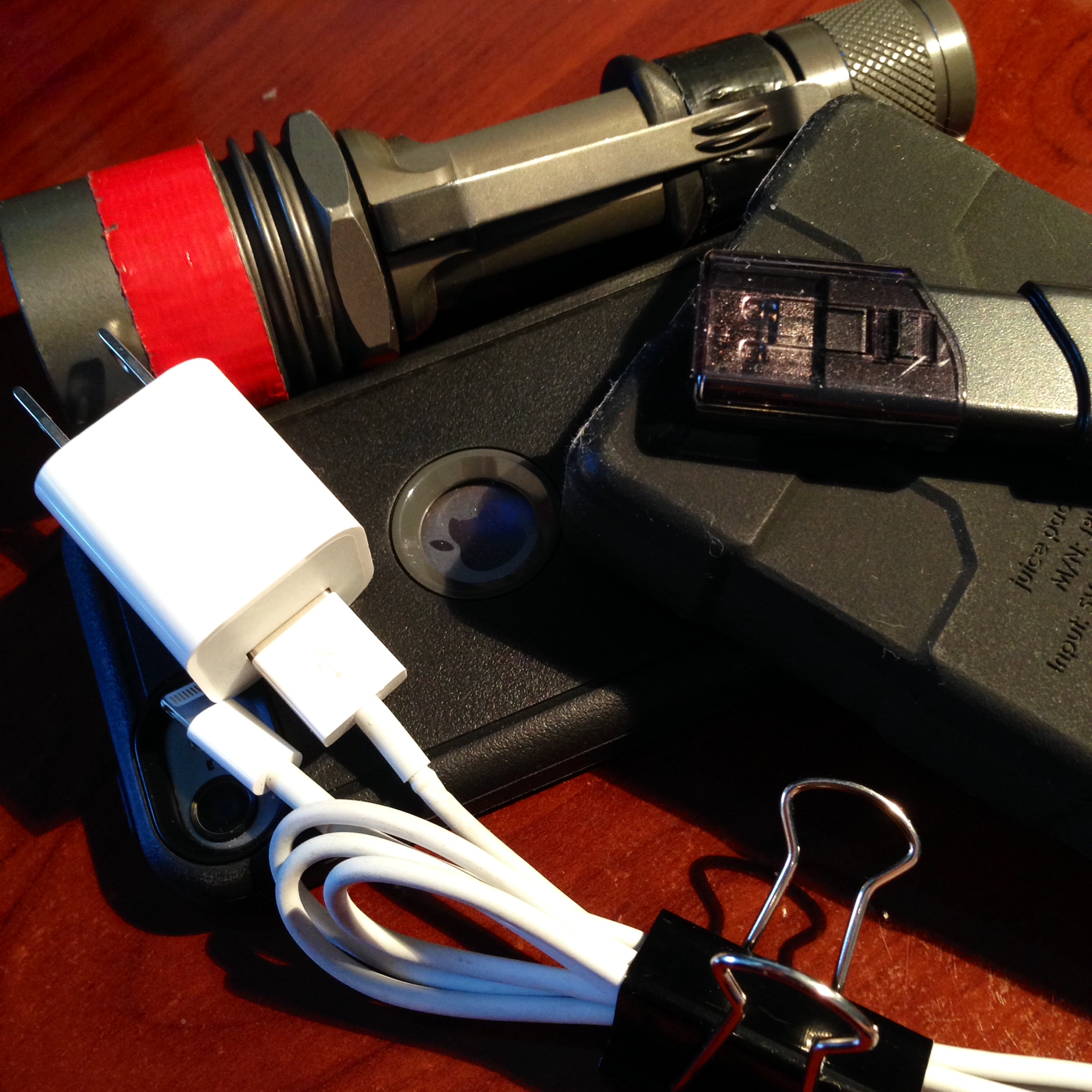
Pictured above is just one of the three flashlights that I keep in my everyday bag.

Reconnecting with my family after a disaster means that I have preparedness items for them too. It would be worth noting that each flashlight uses the same type of batteries and all operate/function the same (rear push button and twist-on action). This brand and similar power source compatibility allows everyone to have the same gear.

2 is 1 and one is none right? Well, I guess in this case, it’s 3 is 1 and one is none.

For those inquiring on my equipment specifics, I have a Surefire M2 Centurion, a Surefire A2 Aviator, and a Surefire G2 Nitrolon.

Also, a simple red tape marking allows us to easily identify what equipment is ours.

At night, a great flashlight allow you to quickly identify your family members amongst the sea of cheap weaker flashlights in the neighborhood. Trust me, at night, you want the best most powerful flashlights around.

mass_blaster_flashlight

So have flashlights and batteries ready for all members of your family.

Keeping tools ready for your family is another important parts of keeping your family together during and after a disaster.
@rusnivek

Free tips: When Thunder Roars, Go Indoors #NWS #Lightning #safety

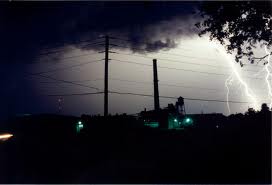
This week is National Lightning Safety Week.

It is everyone’s responsibility to be safe especially during thunder and lightning

imagesCA942DFB

Here’s a few free tips you can use to prepare for severe weather like lightning:

  • At any hint of thunder and/or lightning, move quickly to a safe shelter area. Remember the phrase: When Thunder Roars, Go Indoors!
  • Immediately postpone all outdoor activities for everyone…including adults!
  • Secure outdoor objects that could blow away or cause damage.
  • Break out your emergency preparedness kit and see if all flashlights are working. If not, get them in working order.
  • Charge all of your mobile devices including your cell phone now before the power goes out.

To get up to the minute updates during the Thunderstorm:

  • Use your battery operated NOAA Weather Radio for updates from the National Weather Service.

And after the storm passes, take these precautions as you survey the damage around your house:

  • Do NOT touch downed power lines. Assume all lines are charged and dangerous. Call your emergency services to handle safe removal of lines.
  • Power out? Check the power company’s website from your mobile smart phone to see who else doesn’t have power here.

Feel free to share these tips with your neighbors throughout the year.

@rusnivek

Is this flooded roadway safe? You tell me…. #TADD #Prepared2014

This week is National Flood Safety Awareness Week (March 16 – 22, 2014).

To help clarify some misconceptions about water and flooding, let me make it very clear – NEVER drive through flooded roads. Here’s a great example. We were dispatched after a few reported calls of a flooded roadway. Looks innocent enough right?

OLYMPUS DIGITAL CAMERA

Just because it’s downhill does NOT mean it is any safer…in fact, it is more dangerous.

  1. Gravity will move/flow the water faster.
  2. More water will cause you to lose control of your vehicle or possibly sink your vehicle and/or drown you.
  3. More water will remain at the bottom of the hill will definitely cause damage to your vehicle.

So how can you share this safety message with others?

  • Continue to share the message of Turn Around, Don’t Drown = #TADD (National safety campaign phrase)
  • Flash flooding can occur anywhere – even within metropolitan and urban areas.
  • Avoid areas that are frequently flooded.
  • Always follow instructions from your local emergency service professionals.
  • Report any flooded roadways to the proper authorities.
  • NEVER drive through flooded roads.

It’s really bad news if we have to meet like this…

DVC00088

If you were wondering, that’s me on the right

Do your part in #Prepared2014 by being safe this year.

@rusnivek

2014 National Flood Safety Awareness Week #TADD #Prepared2014

This week is National Flood Safety Awareness Week (March 16 – 22, 2014).

Did you know that floods are the #1 natural disaster in the US? Just within the past five years, all 50 states have experienced floods or flash floods.

No%20Drowning

How can you help?

Share these easy safety tips with your constituents on flood safety:

  • Turn Around, Don’t Drown = #TADD (National safety campaign phrase)
  • Flash flooding can occur anywhere. If there is a possibility of a flash flood, move to higher ground. Always follow instructions from your local emergency service professionals.
  • NEVER drive through flooded roads.
  • Use local alerts and warning systems (like iPAWS and WEAs) which can send localized information about your immediate area.
  • Stay away from damaged areas unless your assistance has been specifically requested by police, fire, or relief organization.
  • Just a few inches of water from a flood can cause thousands of dollars in damages.
  • Do you know if you live in a flood zone? Find out here for free.

FloodSafety_poster_date

So check your emergency preparedness kits and make sure you are ready!

10012615_10100544482624277_989186021_n

@rusnivek

Snow in the streets? Be careful or else this could happen to your kids #OHWX

It’s 2014 National Severe Weather Awareness Week from March 2nd through March 8th.

Do you have snow shovels and snow removal equipment in your emergency preparedness kit?

Do you have adequate clothing and blankets to keep warm?

How are the batteries in your NOAA Weather Radio so you can get immediate updates from the National Weather Service (NWS)?

During severe weather, minimize your travel. If travel is necessary, always keep a disaster supplies kit in your vehicle.

Bring pets/companion animals inside during winter weather. Move other animals or livestock to sheltered areas with non-frozen drinking water.

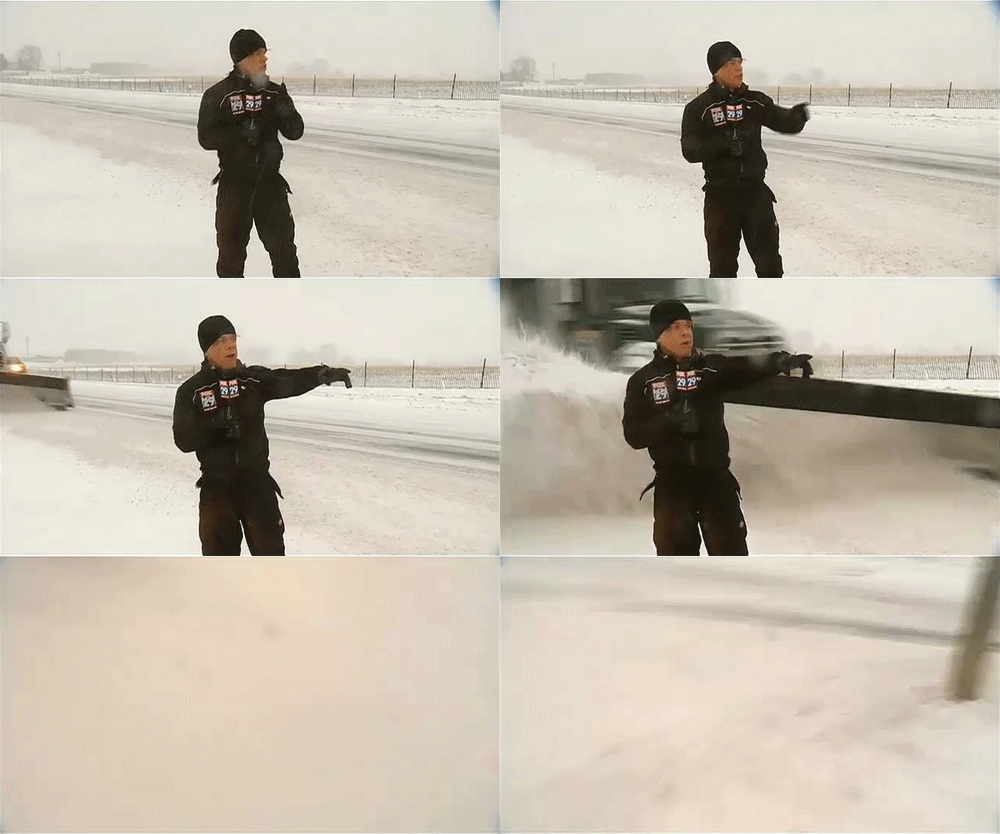
Snow day? Do not let kids play for long periods of time. Most everyone should stay away from the roads during severe weather. A great demonstration of why you should stay indoors by Fox29’s Steve Keeley.

841902328

Thanks Steve….In other news…

photo 1

@rusnivek

No matter how much your pets beg… #Preparedness2014

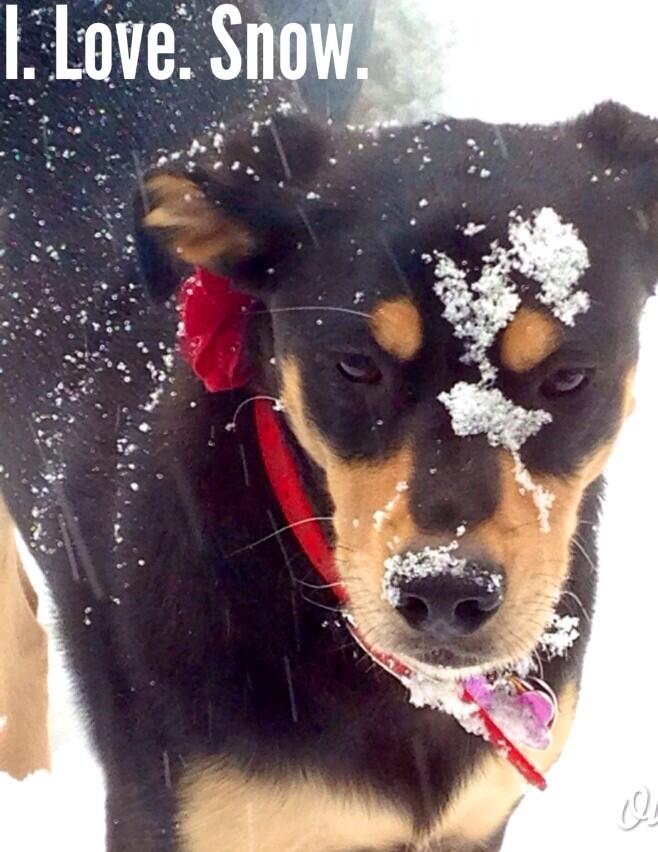
No matter how much they beg, minimize the amount of time your pets spend outside in severe winter weather #OHWX #Preparedness2014

KacySnow

@rusnivek

Check your vehicle preparedness kit now before this happens to you…

How is your vehicle emergency preparedness kit?

Check it out BEFORE you leave home today!

Be14RkOCIAApv1w

Need some help or ideas in assembling your emergency preparedness kits? Don’t know what to put into your emergency preparedness kits? Check out these free checklists.

Stay safe peeps!

@rusnivek

Winter Storm Watch vs. Warning vs. Blizzard Warning

Avoid overexertion when shoveling snow.

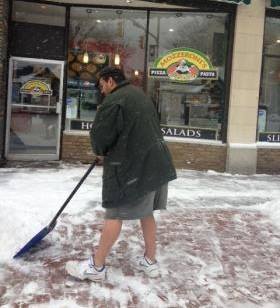
Consider stretching before you begin shoveling….and PLEASE wear long pants!!!!!

1601551_410331389069705_161838067_n

Do you know the differences between Winter Storm Watch vs. Winter Storm Warning vs. Blizzard Warning?

Winter Storm Watch: There is a possibility of a storm occurring.

Winter Storm Warning: A storm is already taking place or is expected.

Blizzard Warning: Sustained winds or frequent gusts to 35 miles per hour or greater and considerable amounts of falling or blowing snow (reduced visibility to less than a quarter mile) are expected to prevail for a period of three hours or longer.

Listen to your NOAA Weather Radio for the latest news and weather reports.

@rusnivek

Time to check your NOAA weather radio

Bad weather? Cold Weather? Want to know the weather?

Good time to check the latest #OHWX via your NOAA Weather Radio now

1525468_410241235745387_1550359728_n

And if you happen to be in the Cleveland area = 162.550mHz     SAME#039035


The National Weather Service (NWS) provides local weather broadcasts via NOAA Weather Radio from more than 700 transmitters nationwide. NOAA Weather Radios provide continuous broadcasts of the latest weather information from local NWS offices. Weather messages are repeated every 4 to 7 minutes, or more frequently in rapidly changing local weather, or if a nearby hazardous environmental condition exists. This service operates 24 hours a day.

@rusnivek

Can you use the oven to warm your house?

NEVER use your oven as a source of heat during the severe winter weather.

1512333_410211429081701_1375666232_n

If you do not have heat, contact your local Red Cross chapter for a list of open warming stations/shelters.

Be smart and be safe!

@rusnivek