FireChat – First look 

FireChat – First Look
There has been lots of discussion about mobile message apps using MESH networks. Just like my deployment to Hurricane Katrina/Rita in Louisiana’s Lower 9th Ward, we had no cell service which means no internet. Common in disasters, many startups are looking to bridge that gap using Bluetooth/MESH networking for any type of mobile technology.


MESH networks literally work by using other devices in your general vicinity to relay/transmit data to any available network. Devices can automatically network with each other via flood technique (overwhelming) or routing technique (hardware hoping). To put it into terms that we in government are more used to hearing, this type of networking is considered a mobile ad-hoc network that can operate independently with little or no internet connection.

Some advantages include internet use with at least one actual connection, increasing local networking by locality through mobile hardware, and of course an automatic mobile-to-mobile network.

Some dangers include lack of security, mobile device protection, connection reliability, and as the MESH network grows the more prolonged data delays occur.

Soooooooooooo, just like when ello was released, I downloaded the app and started using it. I engaged with various users over the course of the last 4 weeks. Here’s my notes.

  • GPS data is incorrect. I was in Dallas’ airport and it pegged me in Natchitoches, LA.
  • Bluetooth is another way for MESH networks to communicate but strength of mobile-mobile connections is fleeting/passing in an airport
  • Hyperlinks do work.
  • When you upload a picture, FireChat does NOT give a confirmation message or pop-up that your picture is uploaded (I found this out because I uploaded my picture six times before I realized what was happening). #whoopsies
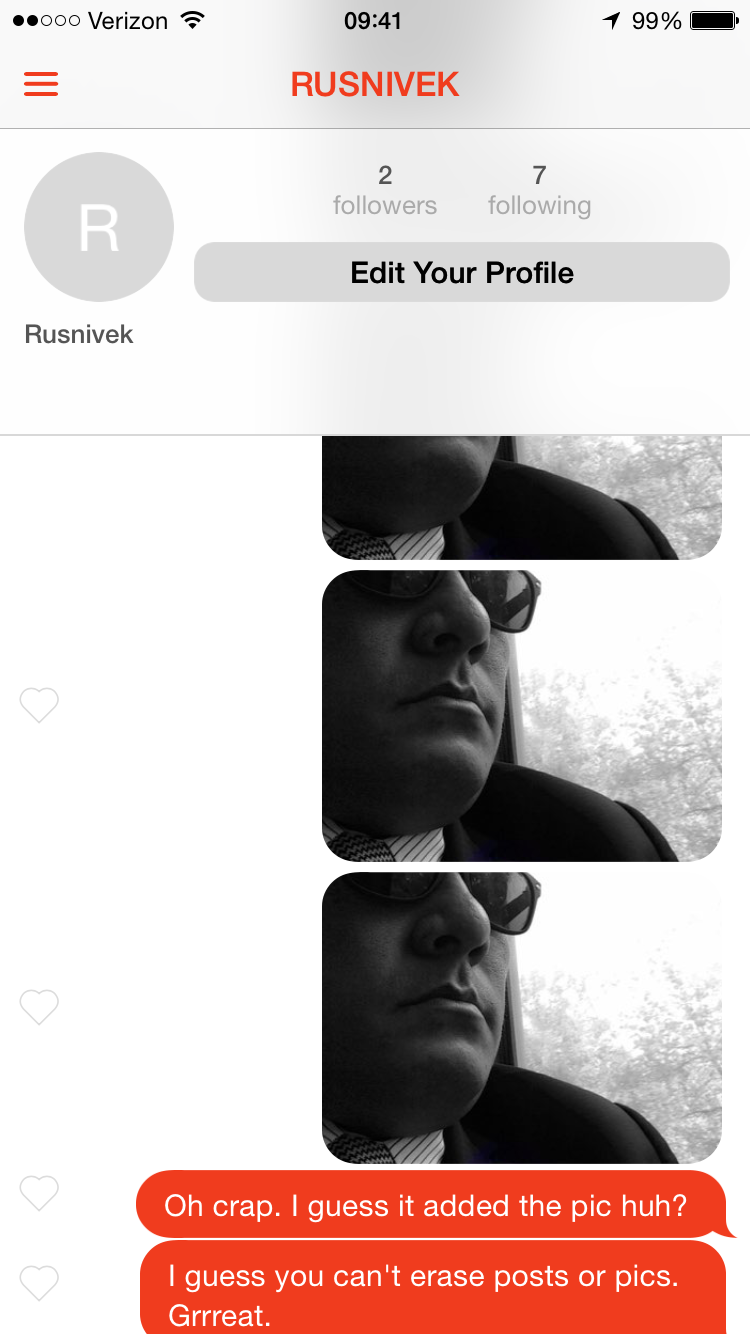
  • Aaaaand you cannot erase pictures.
  • Users cannot erase comments.
  • Hashtags help users identify topic and discussion.
  • Hashtags are hyperlinked in FireChat to those specific groups.
  • Twitter handles do NOT hyperlink to Twitter accounts
  • Phone numbers hyperlink to phone app (list using xxx-xxx-xxxx). It also works using the xxxxxxxxxx format but it looks cleaner and easier to recite w/ natural “-” breaks.
  • FireChat does not allow cut/paste function.
  • GPS coordinates do not hyperlink to any maps (Apple Maps or Google Maps)
  • USNG does not work either.
  • Refresh rate is slow (when compared to Twitter’s network refreshes faster and is more streaming).
  • In a known dead spot for cell service, MESH network was slow and did not connect to internet.
  • Trolls are rampant and uncontrolled in the main chatroom.
  • Main chatroom has various and NSFW topics.
  • Many users do not identify themselves with a profile picture or descriptor.
  • Many users are using this service as a social network for personal PERSONAL reasons.
  • Bad words are censored on FireChat with “*****”. Unknown what those specific terms are.
  • You can like a comment from others or about yourself. Other users can see that someone has liked the comment/content by the red heart displayed. No amount is quantified. Just one lonely red heart.

If Emergency Management was to use FireChat, designate a specialist to monitor to observe and engage pertinent conversation in main chat room directing them to distinct #group in FireChat.

At this time, I only use FireChat when I’m bored and want to see if they have developed other functionality tools.

Just a few initial thoughts on FireChat.

@rusnivek

Building relationships now will only increase successes

We must continue to work closely with our partners in all emergency services because the safety of the public is of the utmost concern.


I am proud of the work I am asked to do because it brings agencies closer together and ultimately in times of crisis, agencies will seamlessly showcase their skills together and find success together.

Slow is smooth and smooth is fast. Because 6/6 is good numbers.


I hope your agency is building stronger relationships BEFORE any major emergency or disaster. By strengthening partnerships with a wide swath professionals, we can only become smarter and more successful.

 Call it “Increasing Situational Awareness/Common Operating Picture” or “All-hazards planning” – IDGAF.

Make it your prerogative to build relationships now. Right now.

Don’t make me step on your face. Do it!

This is the marker of many successful agencies.

@rusnivek

Another brand new social media engagement presentation at FSU

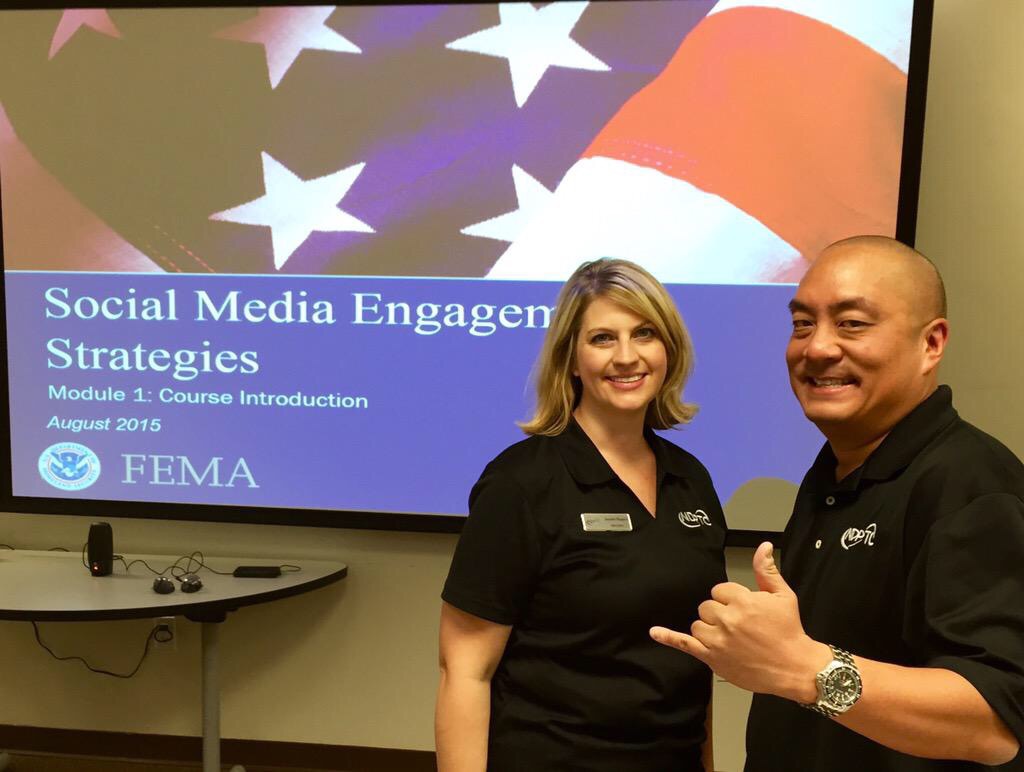
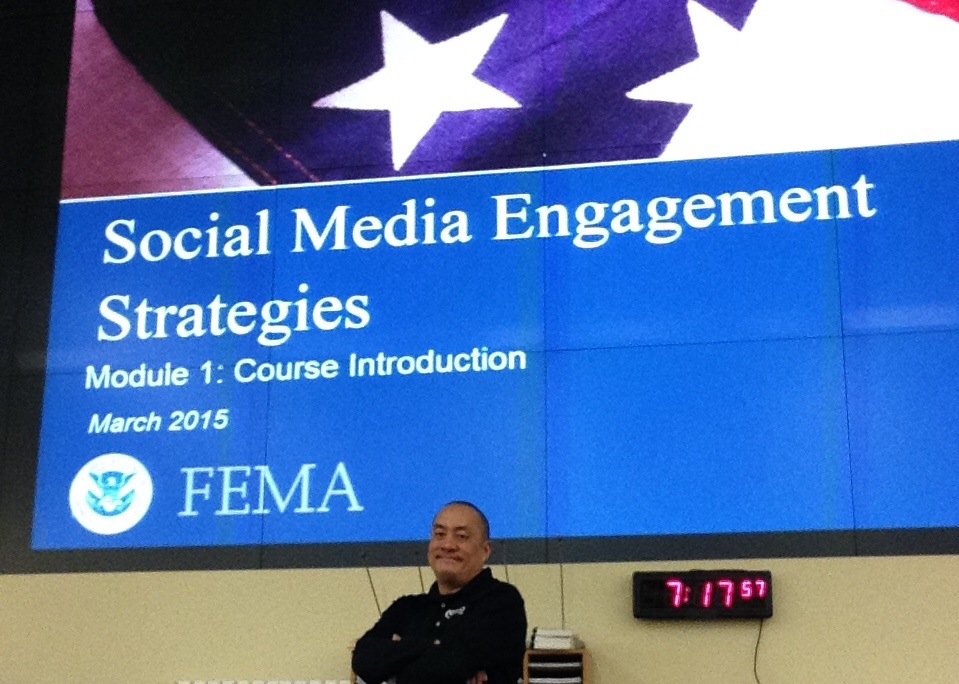
Also had a chance to be one of the first instructors to deliver the new social media engagement presentation for FEMA/NDPTC.


Florida State University uses social media heavily to engage and inform their entire student body, faculty, as well as alumni of events ongoing on campus at Tallahassee.


FSU have a great social media presence. Consider following them @KeepFSUSafe @FSUAlerts @FloridaState #LifeAtFSU


Not only on a computer but from various mobile platforms and public warning systems too! Well done FSU!

A very special thanks to my awesome co-instructor Jennifer aka call sign: “other”.


Such a great adventure! Very proud of the work I’ve been assigned.

Reporting live from FEMA Region-4!

@rusnivek

Created and designed and now piloting the new SM

I rolled out my new FEMA presentation for FEMA Region-4 peeps at Florida State University in Tallahassee, FL.


At this time, this course is the semi-final pilot so I’m almost there!

Obvs, I had to incorporate a great preparedness campaign from my friends at the CDC.  Have you heard of their preparedness campaign before? It costed the CDC a killer $87 (Get it? I’m so punny).


How about them Zombies?


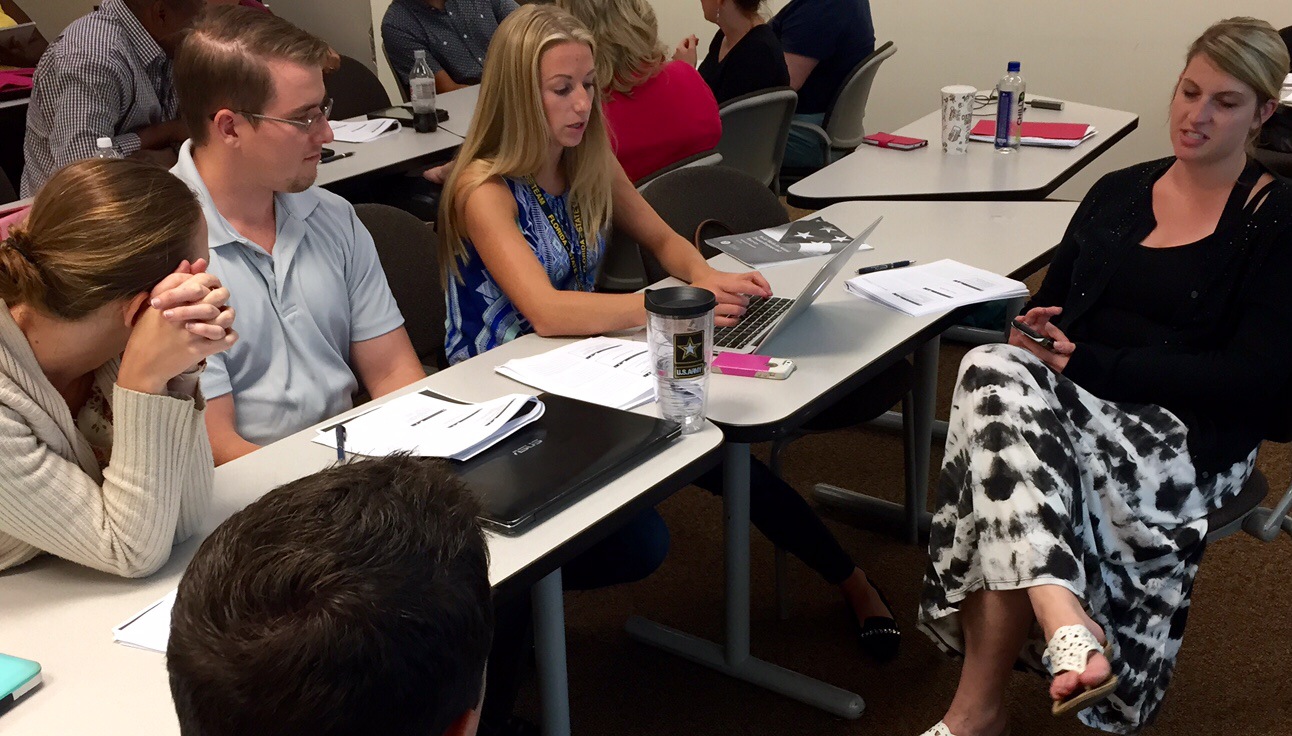
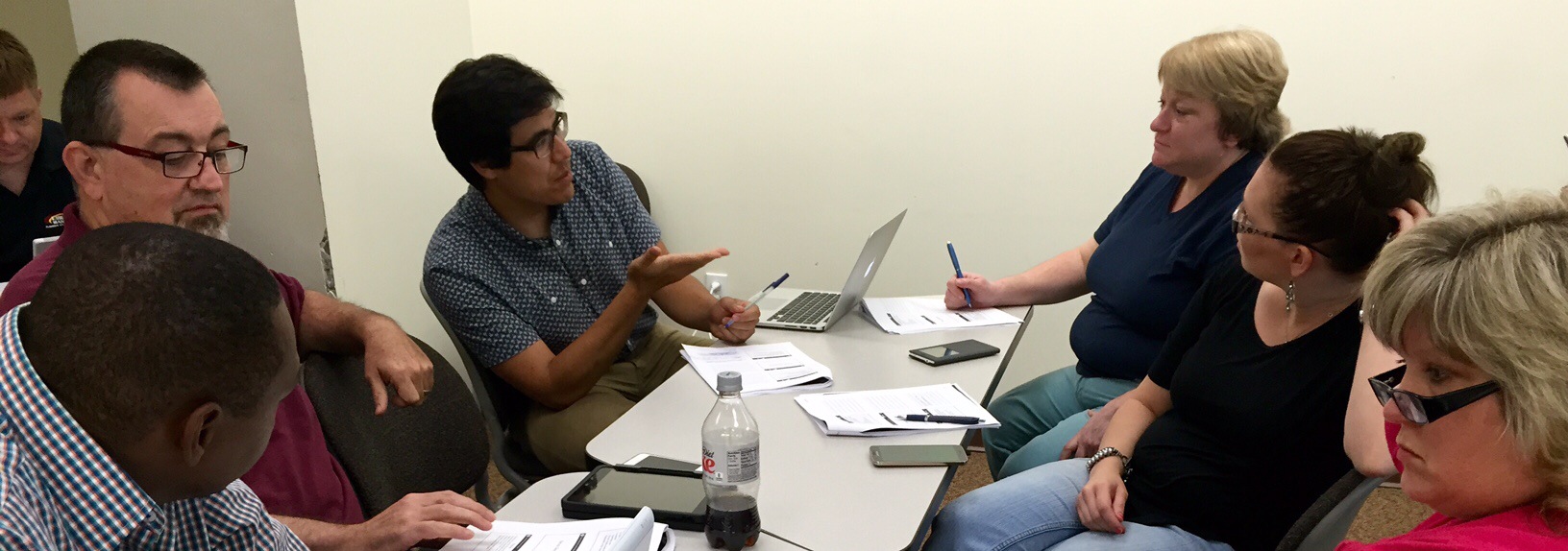
Classroom activities make it easier for our all-hazards partners to come up with good messaging during preparedness, response, and recovery.


Shared experiences and open discussion amongst public safety providers allows for solid social media solutions to be developed for many common issues.


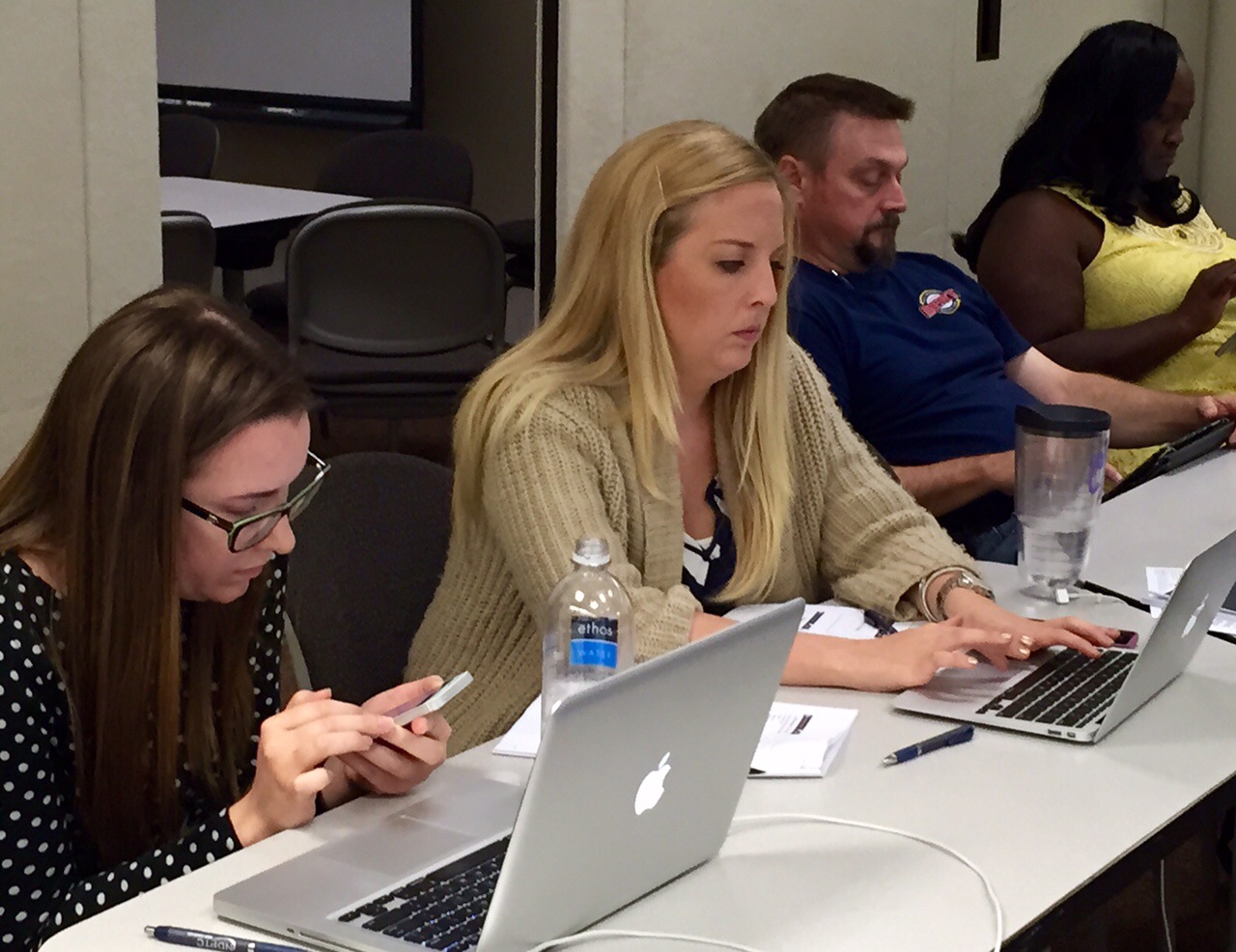
Participants use various hardware and software platforms to complete each assigned performance-based task. This showcases the spectrum of social media that spans hardware and software differences.


Final will be presented for certification in August in FEMA Region-9 at the State of California Emergency Operations Center located in Sacramento.


So nervous! But seriously, I’m so excited for this project, I can’t even…

@rusnivek

Even more South Dakota Alohas!

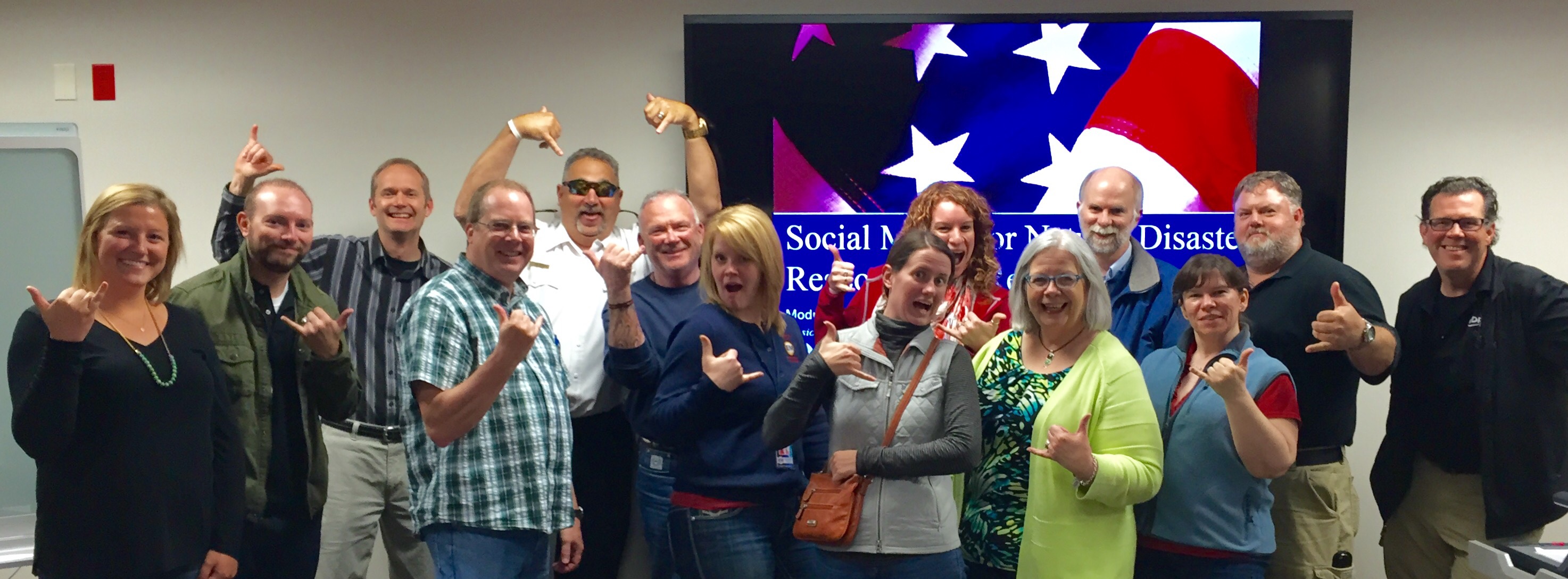
Did someone say more cowbell? How about even more Aloha in South Dakota!


Not to be outdone, today’s class had to show more Aloha than the previous class.


What do you think?

IMHO, I think there is a ton more Aloha in South Dakota this week.

Mahalos to the Pennington County Emergency Management Agency Director Willett and Deputy Director White for hosting. Looking forward to the next class!

@rusnivek

A little Aloha in South Dakota!

Bringing a little Aloha to South Dakota – great class today at Pennington County Emergency Management Agency.


Now use your SM/PIO skills for good!

Looking forward to today’s class.

@rusnivek

All-Hazards participants in today’s class in South Dakota

Here for the class today. Numerous all-hazards responders including US Department of Interior, Bureau of Land and Natural Resources (BLNR), US Forestry Service, FireAttack T-1/2 AHIMTs, local law enforcement, infrastructure, utilities, public safety comms, PIOs, healthcare, Tribal agencies, and Emergency Management professionals from South Dakota.


Nothing gets in the way of good training!


In breaking for lunch just now, participants asked if the fella over there with the hella good hair had any Taylor Swift.

Yes, I’m a very accommodating instructor – no problem!


Reporting live from the EOC…FEMA Region-8 baby!
@rusnivek

Merick named Executive Director of Ohio Emergency Management Agency #OEMA

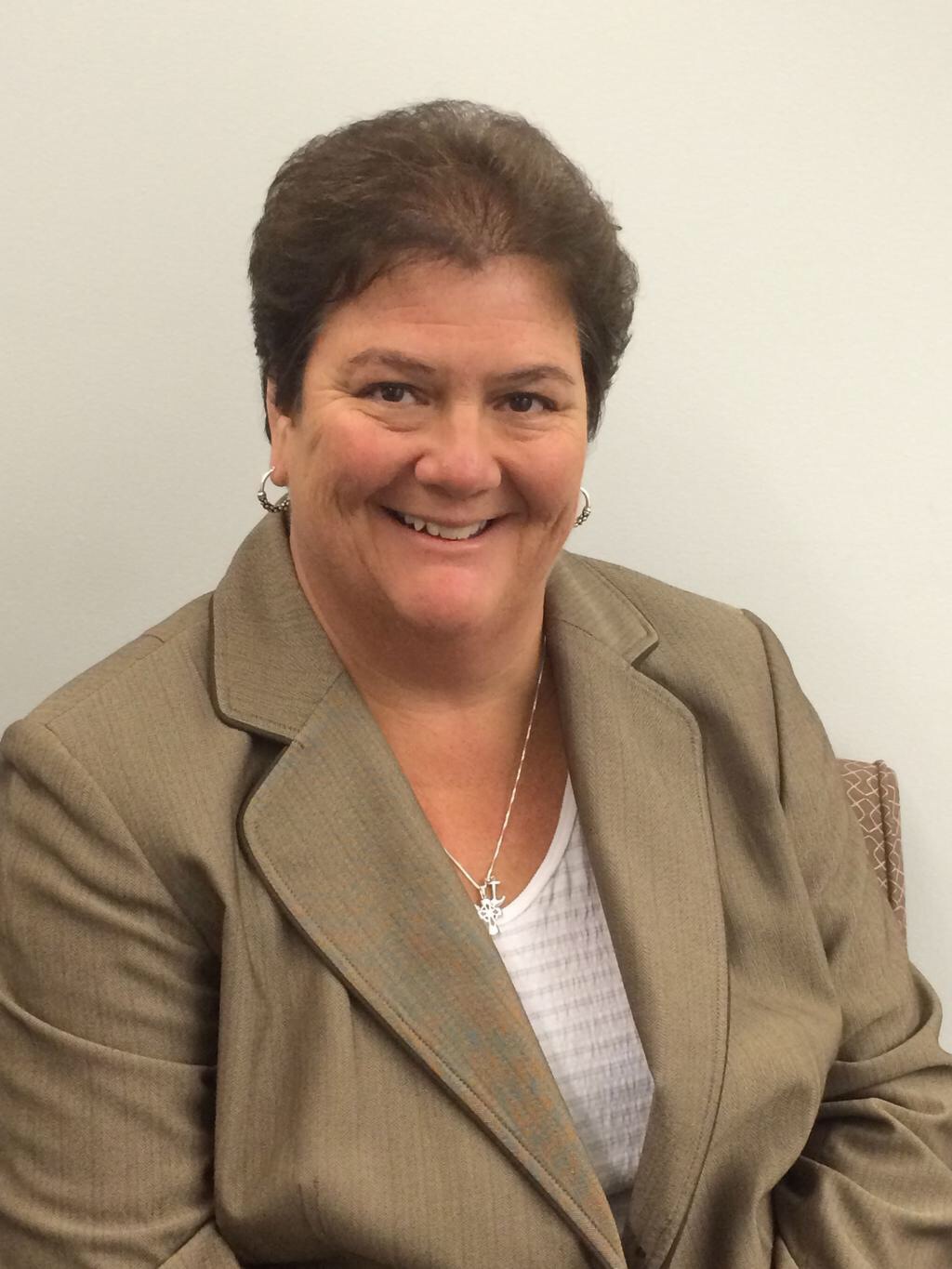
Sima Merick was named as the Executive Director of the Ohio Emergency Management Agency.

  
Previous Executive Director Evan Schumann now serves as the Deputy Director of OEMA.

The primary mission of the Ohio Emergency Management Agency is to coordinate activities to mitigate, prepare for, respond to and recover from disasters. This mission is carried out by closely interfacing with local, state and federal agencies in an effort to bring resources of recovery and support to Ohioans impacted by the disaster. In addition to disaster response and recovery, Ohio EMA agency activities include: education, training, planning and preparedness – strengthening Ohio’s first responder capabilities and improving communication across the state.
@rusnivek