Technical jargon and giving actionable information Safety-PIO-SM-14-006

14-006: Technical jargon and giving actionable information
Agency: Chicago Fire Department Topic(s): Industry codes / Actionable info
Date: Fall 2014 Platform: Twitter

Industry speak or technical jargon is part of what we do every day. But using technical terms on a social media platform will be confusing to those who are NOT in the fire service. That’s what the Chicago Fire Department did yesterday at their big 3-alarm fire when they tweeted technical jargon.

imageaimage

The use of technical jargon is rampant in emergency services but when speaking to the media or the general public, we need to remember that everyone did not grow up with a VOX alarm or SCU tones. In this case, a “311” or 3-11 alarm means that there are 11 engines, 5 Trucks, 2 Tower Ladders, 6 Battalion Chiefs, 1 Rescue Squad, 2 Ambulances, 2 Paramedic Chiefs, Deputy District Chief, Deputy Fire Commissioner, and the 1st Deputy Fire Commissioner are onscene. There is no way to include all that information in a tweet, but using more simple terms will help your audience understand the scale of your ongoing incident.

Before you post images, make sure your pictures are rotated correctly. I know accuracy is sometimes overlooked in lieu of speed, but it takes less than 5 seconds to orientate/rotate a picture (In this case, it was going to be a long operation). And note, by just rotating a picture does not equate that you are “doctoring up” photos. But a correctly posted photo will help media repost and format your information quicker to the masses.

During an emergency situation, your constituents need the information pushes to be actionable and specific to your audience. Not only inform them of the danger, but tell them what they can do about it.

A more effective tweet could have read:

Chicago Fire: Large 3-alarm fire at Harrison St x Fifth Ave. Traffic delays-avoid the area. (insert two pictures)

By phrasing it this way:

  1. You cite the authority having jurisdiction and established incident command presence.
  2. You generally described the size/category of the ongoing incident and critical information to media.
  3. You identify the exact location of the incident.
  4. You describe the delays in the area and give actionable information to your constituents.
  5. You still have lots of room to push properly orientated pictures with your informational tweet.


Time is valuable, so tweet good stuff.

@rusnivek

***To download this as a single-page printable format, click this file:

TechnicalJargonAndGivingActionableInformation-Safety-PIO-SM-14-006

LODD Captain Bowen’s Story by Randy Mantooth #Firefighter

Definitely a worthwhile video to watch pertaining to the Asheville Fire Department Captain Jeff Bowen Line Of Duty Death (LODD) in 2011.

http://vimeo.com/101231318

*Personal note: Capt Bowen was one of my students in my Firefighter class.

IMG00441-20110603-1208

Video produced by Randy Mantooth and sponsored by Masimo.

Jeff: Keep an eye out for all of us at the elevated IC.

@rusnivek

Sutphen recall #Firefighter

FYI-Sutphen announced a recall on their ladder trucks.

@rusnivek


Press Release – Five-Section Aerials

Dublin, OH **For Immediate Release**

Date: July 22, 2014

RE: Sutphen Voluntarily Removing 5-Section Aerial Devices From Service

Sutphen Corporation has announced that the Company is instructing customers to remove all SPH 100, SP 110, SPI 112, and SAI 110 Aerial devices from service, until further notice, effective immediately. The Company states that customers are instructed to use the affected apparatus in the capacity of an engine or support vehicle only. The Company will stay in close contact with its customers to report details and when the units may be place back in service. “At this time, our priority is the safety of our firefighters,” says Drew Sutphen, President of the Company. “In light of the recent incidents, we recognize there is an immediate need to take precautionary action. I would rather take every precaution necessary than to put firefighters at risk.” The Company states that it will be contacting customers with the affected units personally to inform them of the events that have occurred and the steps that are being taken to get the units back in to service in a timely manner. “We feel the need to personally assure our customers that we are working to investigate and correct the situation,” Drew continues. Sutphen Corporation is an Ohio based privately held, family owned business that manufactures custom built emergency response vehicles. The company’s headquarters are located in suburban Dublin, Ohio northwest of Columbus. For more information contact the sales office.

Hold the phone…literally!

Hold the phone…literally!

20140718-152648-55608581.jpg

With the weekend upon us, this should serve as your Friday public safety message to start the weekend.

#smem #socialmedia #safety #ems #emt #paramedic #ema #emergency #management #fire #firefighter #police #law #dept #rescue

@rusnivek

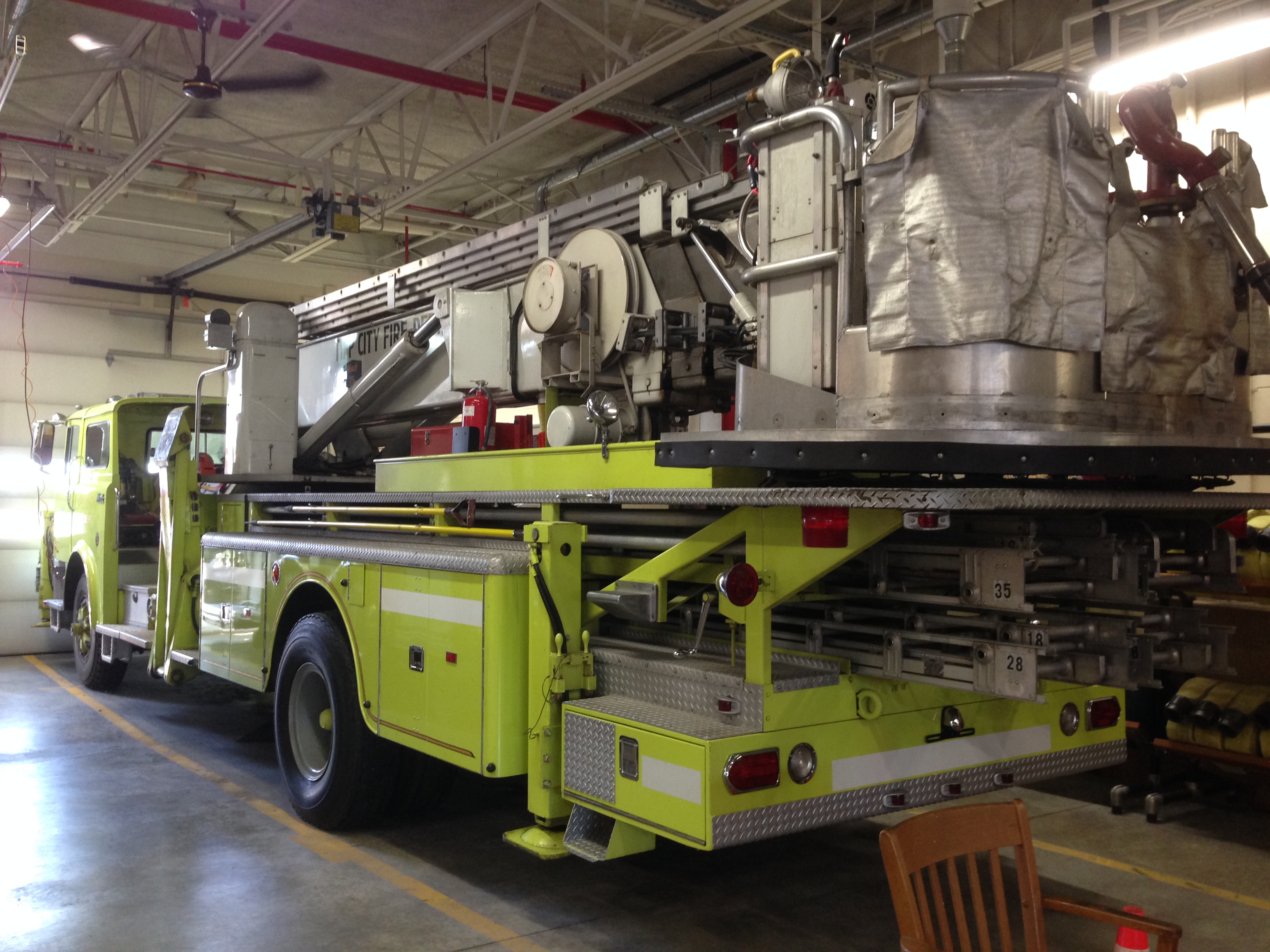
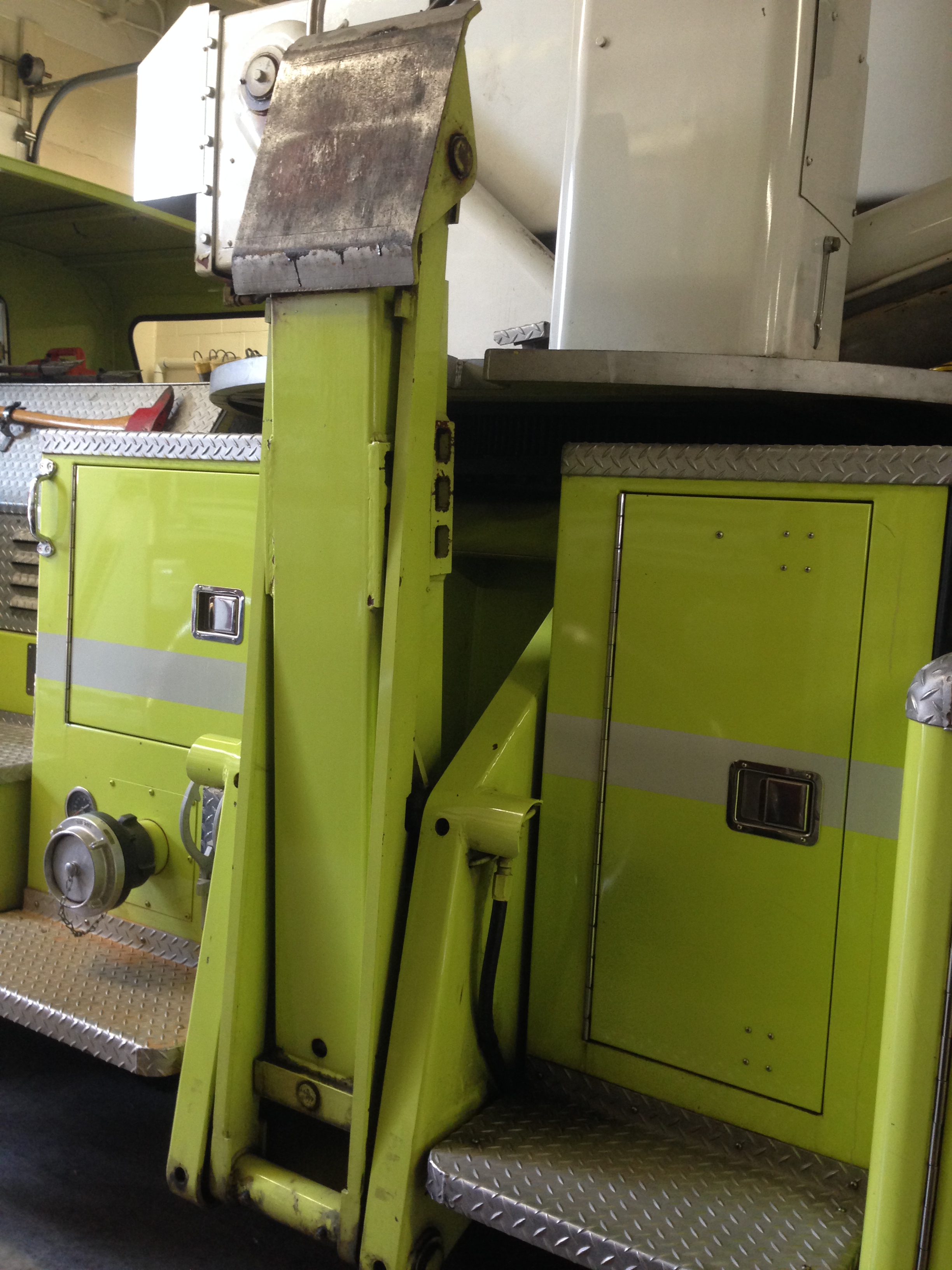
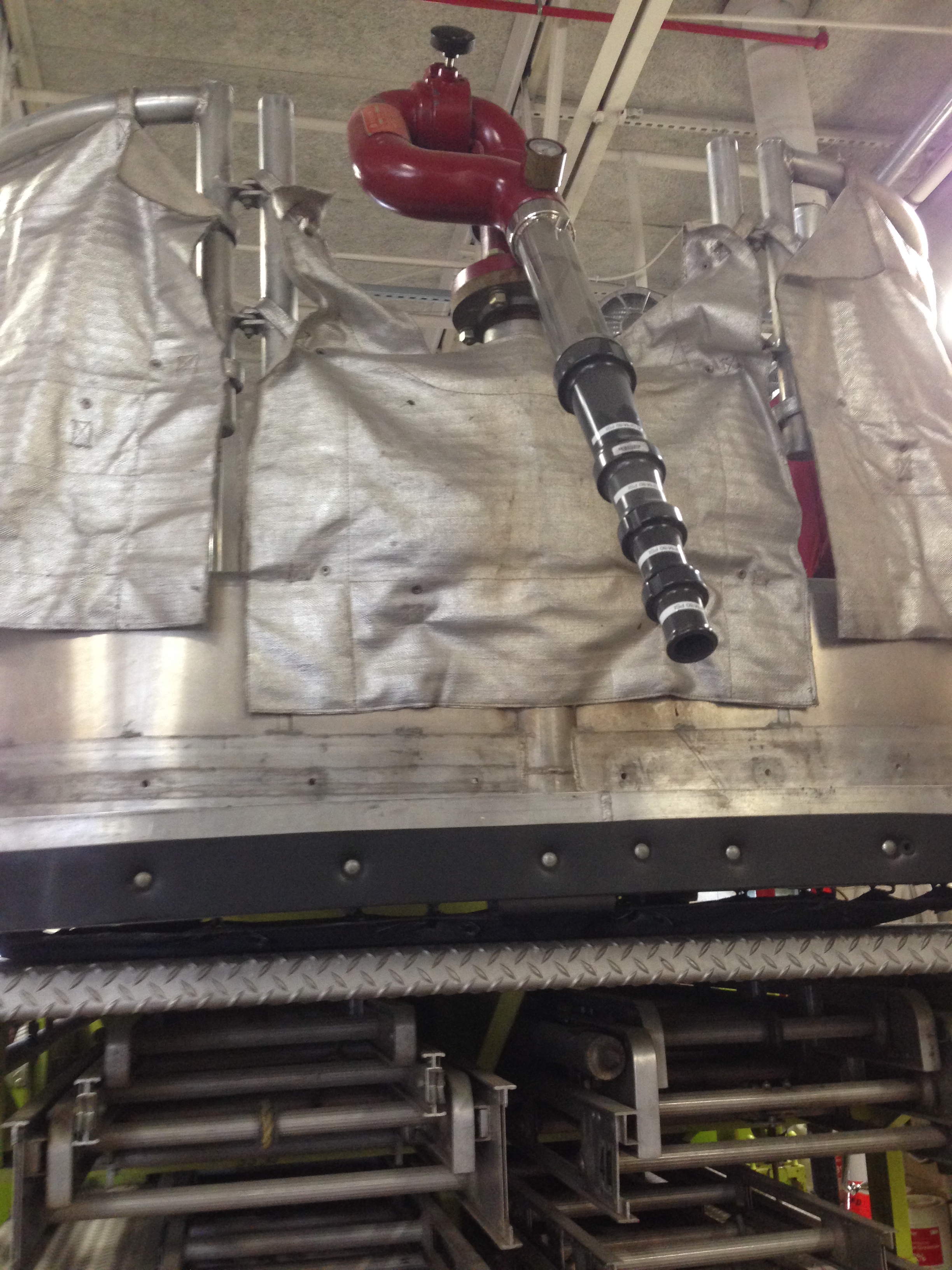
Gawking at a beautiful Mack Baker Aerialscope #Fire #Truck

Hold the phone…is that a Mack Baker Aerialscope?

IMG_3760

I think I’m in love. Check out those stabilizers!

IMG_3766

I would say that this is pretty much pristine condition.

IMG_3761

Bonus points for the gold bulldog too! (Note: The company’s trademark is the bulldog. It can be found on the front of almost all Mack trucks. A Mack truck with a gold-plated bulldog indicates that the entire truck is made of Mack components. Trucks with another manufacturer’s transmission, engine, rear axles or suspension are given the chrome-plated bulldog.)

IMG_3770

So Chief-when you get your new engine/tanker in, let me know and I’ll be happy to take this off of your hands…you know, make room on your bay floors. I’d also be happy to bring it back anytime you needed it for a parade and stuff too.

Phleeeeeezzzzzeeeee!

Ahem.

Special thanks to Tipp City Fire Chief Steve Kessler and crews – Outstanding job to all of Tipp City Fire Department on preserving a true gem of fire service history.

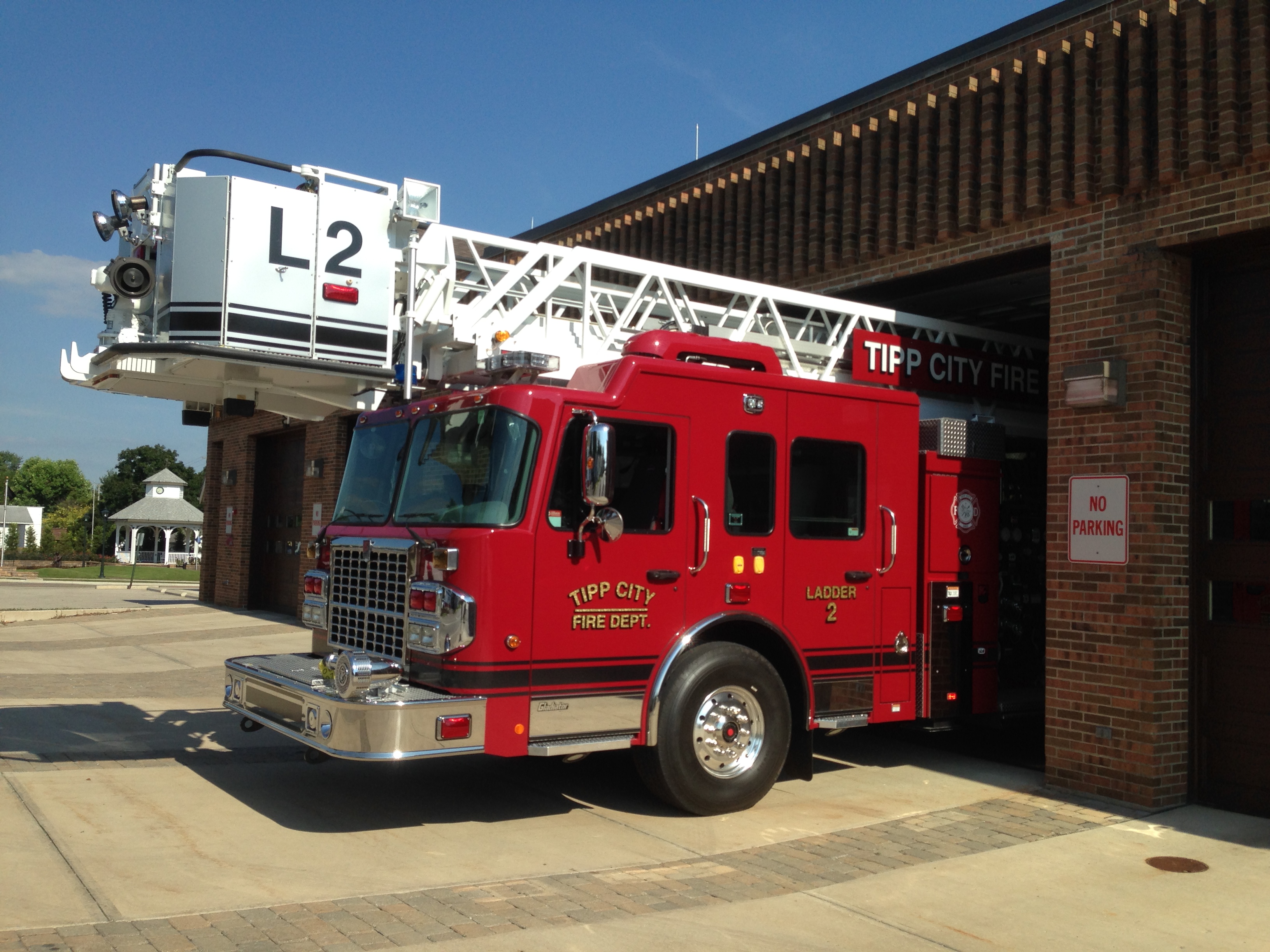
BTW-here’s their new Ladder that replaced it.

IMG_3728

It’s really nice.

IMG_3754


@rusnivek

Outstanding save by Cleveland Police – all caught using body cam technology

Great story by Fox 8 Cleveland Anchor/Reporter Mark Zinni.

20140715-181546-65746271.jpg

OUTSTANDING save by Cleveland Police all caught on camera thanks to the new body camera technology

20140715-181548-65748213.jpg

Great job Cleveland Police Officer Ismael Quintana!

20140715-181547-65747337.jpg

http://fox8.com/2014/07/15/cleveland-officers-body-cam-captures-amazing-rescue-of-child/


@rusnivek


Last Alarm Memorial Service for 2 Toledo Firefighters #LODD

Last Alarm memorial service for two Toledo Firefighters who died in the line of duty.

Toledo Fire Department Engine-3, Firefighter Stephen Machcinski

Toledo Fire Department Engine-3, Firefighter James Dickman

Thursday January 30, 2014 starting at 1900

SeaGate Convention Center

401 Jefferson Ave in Toledo


Donations can be made at any PNC bank branch.

@rusnivek

You should know about the Worcester-6 Cold Storage Warehouse Fire #W6

Take a few moments to learn about the now infamous Cold Storage Warehouse Fire in Worcester, Massachusetts.

fire1

Honor your fallen Firefighters who gave their life on December 3, 1999.

  • Worcester Fire Rescue-1 Firefighter Paul Brotherton
  • Worcester Fire Rescue-1 Firefighter Jeremiah Lucey
  • Worcester Fire Rescue-1 Lieutenant Thomas Spencer
  • Worcester Fire Ladder-2 Firefighter Timothy Jackson
  • Worcester Fire Engine-3 Firefighter James Lyons
  • Worcester Fire Engine-3 Firefighter Joseph McGuirk

***In my opinion, this fire is a defining moment in fire service history***

All Firefighters should know about this fire by heart.

Well, even if you don’t read the entire NIOSH report, at LEAST read the summary below.

SUMMARY

On December 3, 1999, six career fire fighters died after they became lost in a six-floor, maze-like, cold-storage and warehouse building while searching for two homeless people and fire extension. It is presumed that the homeless people had accidentally started the fire on the second floor sometime between 1630 and 1745 hours and then left the building. An off-duty police officer who was driving by called Central Dispatch and reported that smoke was coming from the top of the building. When the first alarm was struck at 1815 hours, the fire had been in progress for about 30 to 90 minutes. Beginning with the first alarm, a total of five alarms were struck over a span of 1 hour and 13 minutes, with the fifth called in at 1928 hours. Responding were 16 apparatus, including 11 engines, 3 ladders, 1 rescue, and 1 aerial scope, and a total of 73 fire fighters. Two incident commanders (IC#1 and IC#2) in two separate cars also responded.

Fire fighters from the apparatus responding on the first alarm were ordered to search the building for homeless people and fire extension. During the search efforts, two fire fighters (Victims 1 and 2) became lost, and at 1847 hours, one of them sounded an emergency message. A head count ordered by Interior Command confirmed which fire fighters were missing.

Fire fighters who had responded on the first and third alarms were then ordered to conduct search-and-rescue operations for Victims 1 and 2 and the homeless people. During these efforts, four more fire fighters became lost. Two fire fighters (Victims 3 and 4) became disoriented and could not locate their way out of the building. At 1910 hours, one of the fire fighters radioed Command that they needed help finding their way out and that they were running out of air. Four minutes later he radioed again for help. Two other fire fighters (victims 5 and 6) did not make initial contact with command nor anyone at the scene, and were not seen entering the building. However, according to the Central Dispatch transcripts, they may have joined Victims 3 and 4 on the fifth floor. At 1924 hours, IC#2 called for a head count and determined that six fire fighters were now missing. At 1949 hours, the crew from Engine 8 radioed that they were on the fourth floor and that the structural integrity of the building had been compromised. At 1952 hours, a member from the Fire Investigations Unit reported to the Chief that heavy fire had just vented through the roof on the C side. At 2000 hours, Interior Command ordered all companies out of the building, and a series of short horn blasts were sounded to signal the evacuation. Fire fighting operations changed from an offensive attack, including search and rescue, to a defensive attack with the use of heavy-stream appliances. After the fire had been knocked down, search-and-recovery operations commenced until recall of the box alarm 8 days later on December 11, 1999, at 2227 hours, when all six fire fighters’ bodies had been recovered. NIOSH investigators concluded that, to minimize the risk of similar occurrences, fire departments should

    • ensure that inspections of vacant buildings and pre-fire planning are conducted which cover all potential hazards, structural building materials (type and age), and renovations that may be encountered during a fire, so that the Incident Commander will have the necessary structural information to make informed decisions and implement an appropriate plan of attack

  • ensure that the incident command system is fully implemented at the fire scene

  • ensure that a separate Incident Safety Officer, independent from the Incident Commander, is appointed when activities, size of fire, or need occurs, such as during multiple alarm fires, or responds automatically to pre-designated fires

  • ensure that standard operating procedures (SOPs) and equipment are adequate and sufficient to support the volume of radio traffic at multiple-alarm fires

  • ensure that Incident Command always maintains close accountability for all personnel at the fire scene

  •  use guide ropes/tag lines securely attached to permanent objects at entry portals and place high-intensity floodlights at entry portals to assist lost or disoriented fire fighters in emergency escape

  • ensure that a Rapid Intervention Team is established and in position upon their arrival at the fire scene

  • implement an overall health and safety program such as the one recommended in NFPA 1500, Standard on Fire Department Occupational Safety and Health Program

  • consider using a marking system when conducting searches

  • identify dangerous vacant buildings by affixing warning placards to entrance doorways or other openings where fire fighters may enter

  • ensure that officers enforce and fire fighters follow the mandatory mask rule per administrative guidelines established by the department

  • explore the use of thermal imaging cameras to locate lost or downed fire fighters and civilians in fire environments


worc six


@rusnivek