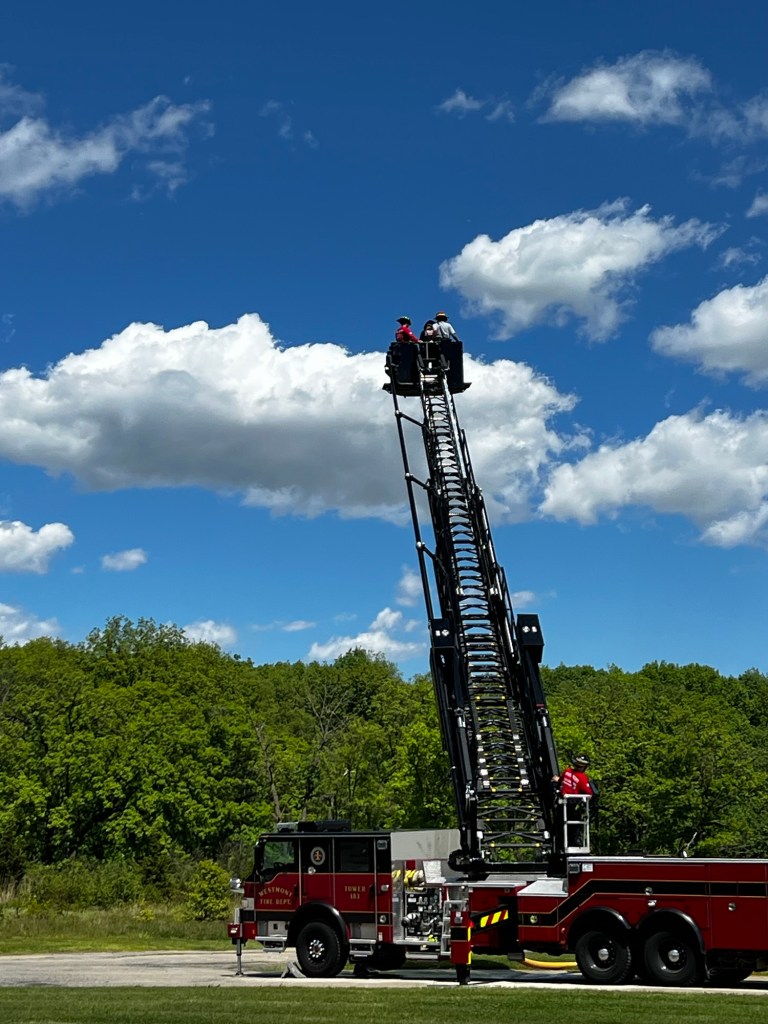
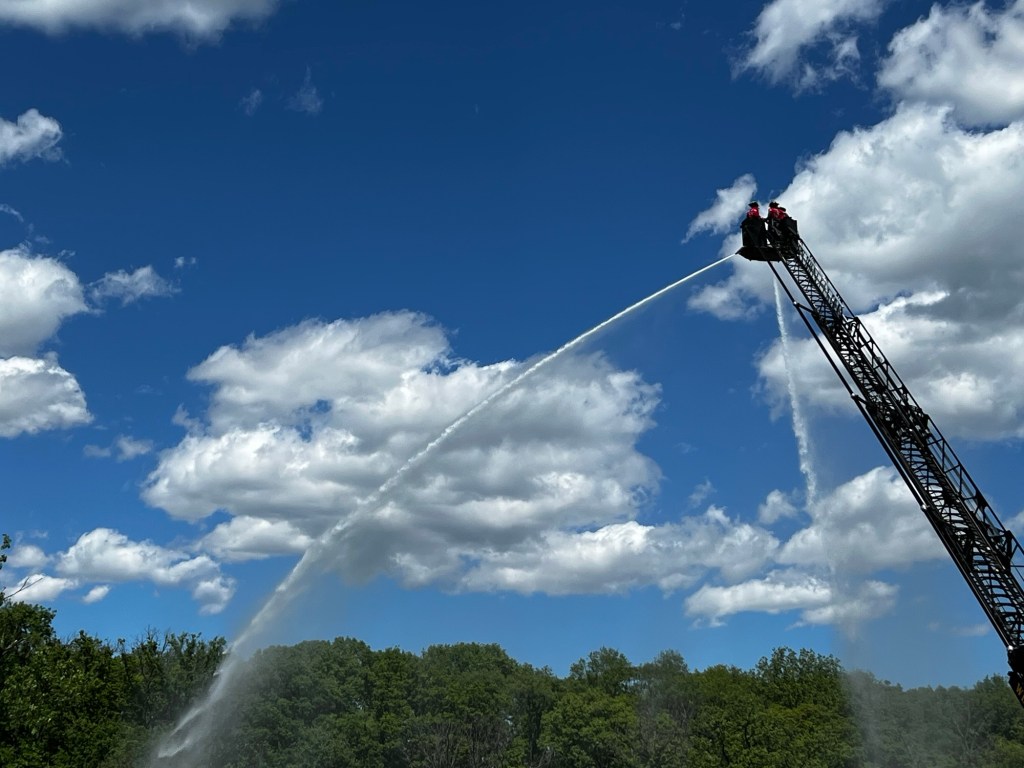
Cross training for operational rescue at Argonne

Ladder trucks are an important part of any Fire Rescue operation.

So cross training with specialized equipment is critical to the success of any response/recovery. So today, our FD got to hang with Westmont Fire Tower 183.

Even got a chance to get my Hazard Analysts in the bucket too.

All smiles as we start the long weekend.

Be safe out there!

@rusnivek

Technical jargon and giving actionable information Safety-PIO-SM-14-006

14-006: Technical jargon and giving actionable information
Agency: Chicago Fire Department Topic(s): Industry codes / Actionable info
Date: Fall 2014 Platform: Twitter

Industry speak or technical jargon is part of what we do every day. But using technical terms on a social media platform will be confusing to those who are NOT in the fire service. That’s what the Chicago Fire Department did yesterday at their big 3-alarm fire when they tweeted technical jargon.
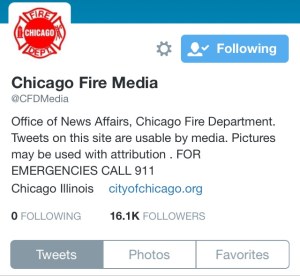
imageaimage

The use of technical jargon is rampant in emergency services but when speaking to the media or the general public, we need to remember that everyone did not grow up with a VOX alarm or SCU tones. In this case, a “311” or 3-11 alarm means that there are 11 engines, 5 Trucks, 2 Tower Ladders, 6 Battalion Chiefs, 1 Rescue Squad, 2 Ambulances, 2 Paramedic Chiefs, Deputy District Chief, Deputy Fire Commissioner, and the 1st Deputy Fire Commissioner are onscene. There is no way to include all that information in a tweet, but using more simple terms will help your audience understand the scale of your ongoing incident.

Before you post images, make sure your pictures are rotated correctly. I know accuracy is sometimes overlooked in lieu of speed, but it takes less than 5 seconds to orientate/rotate a picture (In this case, it was going to be a long operation). And note, by just rotating a picture does not equate that you are “doctoring up” photos. But a correctly posted photo will help media repost and format your information quicker to the masses.

During an emergency situation, your constituents need the information pushes to be actionable and specific to your audience. Not only inform them of the danger, but tell them what they can do about it.

A more effective tweet could have read:

Chicago Fire: Large 3-alarm fire at Harrison St x Fifth Ave. Traffic delays-avoid the area. (insert two pictures)

By phrasing it this way:

  1. You cite the authority having jurisdiction and established incident command presence.
  2. You generally described the size/category of the ongoing incident and critical information to media.
  3. You identify the exact location of the incident.
  4. You describe the delays in the area and give actionable information to your constituents.
  5. You still have lots of room to push properly orientated pictures with your informational tweet.


Time is valuable, so tweet good stuff.

@rusnivek

***To download this as a single-page printable format, click this file:

TechnicalJargonAndGivingActionableInformation-Safety-PIO-SM-14-006

Sutphen recall #Firefighter

FYI-Sutphen announced a recall on their ladder trucks.

@rusnivek


Press Release – Five-Section Aerials

Dublin, OH **For Immediate Release**

Date: July 22, 2014

RE: Sutphen Voluntarily Removing 5-Section Aerial Devices From Service

Sutphen Corporation has announced that the Company is instructing customers to remove all SPH 100, SP 110, SPI 112, and SAI 110 Aerial devices from service, until further notice, effective immediately. The Company states that customers are instructed to use the affected apparatus in the capacity of an engine or support vehicle only. The Company will stay in close contact with its customers to report details and when the units may be place back in service. “At this time, our priority is the safety of our firefighters,” says Drew Sutphen, President of the Company. “In light of the recent incidents, we recognize there is an immediate need to take precautionary action. I would rather take every precaution necessary than to put firefighters at risk.” The Company states that it will be contacting customers with the affected units personally to inform them of the events that have occurred and the steps that are being taken to get the units back in to service in a timely manner. “We feel the need to personally assure our customers that we are working to investigate and correct the situation,” Drew continues. Sutphen Corporation is an Ohio based privately held, family owned business that manufactures custom built emergency response vehicles. The company’s headquarters are located in suburban Dublin, Ohio northwest of Columbus. For more information contact the sales office.

Firefighter self-rescue / bailout course in North Charleston SC

Back at it on the fireground for three days of teaching Firefighter bailout instructor class to North Charleston Fire (SC).

IMG_6365

I’m glad to be working with these professionals for over 7 years now.

IMG_6528

Also, it appears they got some new equipment as well….Boy oh boy did they spec this thing out well – I’m impressed!

IMG_6530

Train like you fight was the mantra for all instructors who participated in classroom and then the hands on portion part in several training evolutions.

IMG_6491

Looking forward to seeing them again very soon.

IMG_6541

Also looks like we will be doing phase-2 and phase-3 training too.

Awesome.

@rusnivek


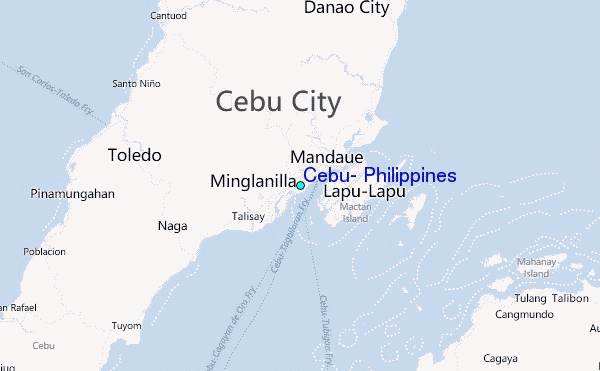
7.2 Earthquake in Philippines – here’s some free tips to stay safe after an earthquake #Cebu #Mindanao #Boljoon #Bohol

For those in and around the Philippines, take caution in all activities.

Cebu-Philippines_10

Here are some tips that you can use as you recover from your large earthquake.

  • When the shaking stops, look around to make sure it is safe to move. Then exit the building.
  • Expect aftershocks. These secondary shockwaves are usually less violent than the main quake but can be strong enough to do additional damage to weakened structures and can occur in the first hours, days, weeks, or even months after the quake.
  • Help injured or trapped persons. Remember to help your neighbors who may require special assistance such as infants, the elderly and people with access and functional needs. Give first aid where appropriate. Do not move seriously injured persons unless they are in immediate danger of further injury. Call for help.
  • Look for and extinguish small fires. Fire is the most common hazard after an earthquake.
  • Listen to a battery-operated radio or television for the latest emergency information.
  • Be aware of possible tsunamis if you live in coastal areas. These are also known as seismic sea waves (mistakenly called “tidal waves”). When local authorities issue a tsunami warning, assume that a series of dangerous waves is on the way. Stay away from the beach.
  • Use the telephone only for emergency calls.
  • Go to a designated public shelter if your home had been damaged and is no longer safe.
  • Stay away from damaged areas. Stay away unless your assistance has been specifically requested by police, fire, or relief organizations. Return home only when authorities say it is safe.
  • Be careful when driving after an earthquake and anticipate traffic light outages.
  • After it is determined that its’ safe to return, your safety should be your primary priority as you begin clean up and recovery.
  • Open cabinets cautiously. Beware of objects that can fall off shelves.
  • Put on long pants, a long-sleeved shirt, sturdy shoes and work gloves to protect against injury from broken objects.
  • Clean up spilled medicines, bleaches, gasoline or other flammable liquids immediately. Leave the area if you smell gas or fumes from other chemicals.
  • Inspect the entire length of chimneys for damage. Unnoticed damage could lead to a fire.
  • Check for gas leaks. If you smell gas or hear blowing or hissing noise, open a window and quickly leave the building. Turn off the gas at the outside main valve if you can and call the gas company from a neighbor’s home. If you turn off the gas for any reason, it must be turned back on by a professional.
  • Look for electrical system damage. If you see sparks or broken or frayed wires, or if you smell hot insulation, turn off the electricity at the main fuse box or circuit breaker. If you have to step in water to get to the fuse box or circuit breaker, call an electrician first for advice.
  • Check for sewage and water lines damage. If you suspect sewage lines are damaged, avoid using the toilets and call a plumber. If water pipes are damaged, contact the water company and avoid using water from the tap. You can obtain safe water by melting ice cubes.

For more up to the minute information, consider following @philredcross for more details.

Stay safe everyone.

@rusnivek