Multi-purpose binder clips help a lot #NatlPrep #Prepared2014

Rounding the corner through the first week of 2014 National Preparedness Month!

“Be Disaster Aware, Take Action to Prepare”

Of course you need to be prepared right?!?!? My goal is to provide actionable information so that you can better prepare you and your family.

This week’s theme is consistent with FEMA’s National Preparedness Campaign: Reconnect with Family After a Disaster.

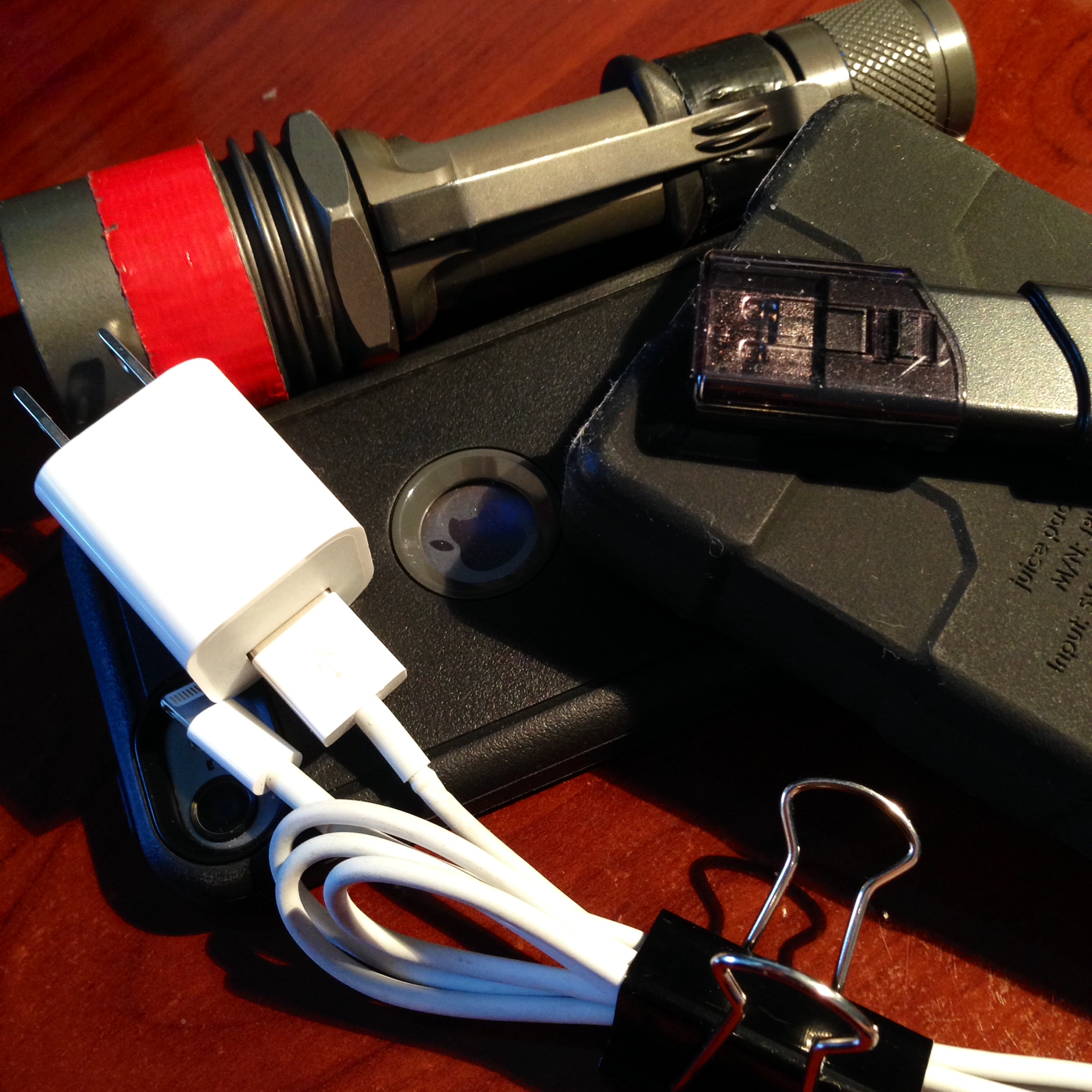
#4: Multi-purpose binder clips help keep wires organized for easy visual access to connection points #NatlPrep #Prepared2014
Week-01-Reconnect-CommunicationsGear

These office binder clips allow me to keep things organized, clean, stowed neatly, and tied down as I travel around. Additionally, I am able to pair the ends of the cables together so I can immediately see the end attachment points.

(And who doesn’t love binder clips right?)

I have assessed my entire family’s cell phones and mobile devices and found that this lightning cable is needed by everyone. We are an iPhone 5 & 5s family.

Not pictured above, are my micro USB cables which charge other mobile devices. Everyone should plan on supporting power needs for the family’s mobile devices (tablets) and accessories (keyboards).

tablets

Assessing the entire family’s cell phone power needs before a disaster can ensure that your family will remain connected through and after a disaster.

Family first peeps!

@rusnivek

NPM_thunderclap_hero_v2


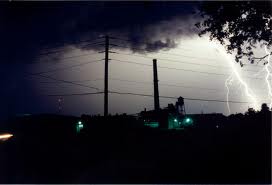
Free tips: When Thunder Roars, Go Indoors #NWS #Lightning #safety

This week is National Lightning Safety Week.

It is everyone’s responsibility to be safe especially during thunder and lightning

imagesCA942DFB

Here’s a few free tips you can use to prepare for severe weather like lightning:

  • At any hint of thunder and/or lightning, move quickly to a safe shelter area. Remember the phrase: When Thunder Roars, Go Indoors!
  • Immediately postpone all outdoor activities for everyone…including adults!
  • Secure outdoor objects that could blow away or cause damage.
  • Break out your emergency preparedness kit and see if all flashlights are working. If not, get them in working order.
  • Charge all of your mobile devices including your cell phone now before the power goes out.

To get up to the minute updates during the Thunderstorm:

  • Use your battery operated NOAA Weather Radio for updates from the National Weather Service.

And after the storm passes, take these precautions as you survey the damage around your house:

  • Do NOT touch downed power lines. Assume all lines are charged and dangerous. Call your emergency services to handle safe removal of lines.
  • Power out? Check the power company’s website from your mobile smart phone to see who else doesn’t have power here.

Feel free to share these tips with your neighbors throughout the year.

@rusnivek

Free Wireless Emergency Alerts from @FEMA #OHWX #Prepareness2014

It’s 2014 National Severe Weather Awareness Week from March 2nd through March 8th.

Today, we will focus in on wireless mobile notification alerts!

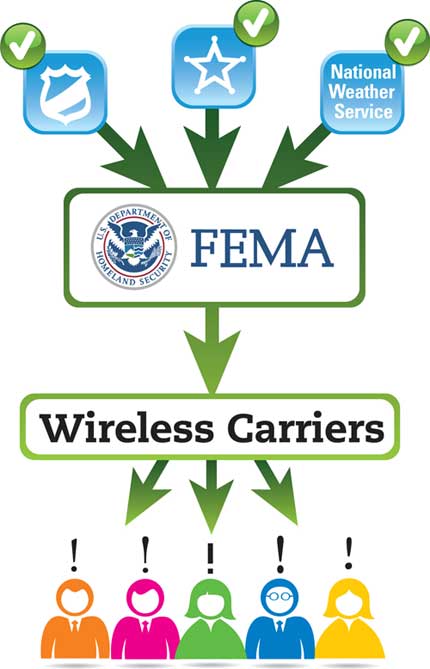
Have you heard of Wireless Emergency Alerts (WEAs)?

  • Alerts received at the right time can help keep you safe during an emergency. With WEA, warnings can be sent to your mobile device when you may be in harm’s way, without need to download an app or subscribe to a service.
  • You can receive important lifesaving alerts no matter where you are – at home, at school, or at work. Numerous public safety officials use reliable systems to alert you and your family in the event of natural or man-made disasters. Many communities also offer emergency alert notifications through their own systems.

fema-wireless-emergency-alert-procedure

Do you know what the Emergency Alert System (EAS) is used for?

  • The Emergency Alert System (EAS) is a national public warning system that requires broadcasters, satellite digital audio service and direct broadcast satellite providers, cable television systems, and wireless cable systems to provide the President with a communications capability to address the American people within 10 minutes during a national emergency.

IMG_3311 copy

Meshing all technologies together, do you know how the Integrated Public Alert & Warning System (IPAWS) is already helping everyone?

  • The Integrated Public Alert and Warning System (IPAWS), is a modernization and integration of the nation’s existing and future alert and warning systems, technologies, and infrastructure.
  • IPAWS’ EAS is the message dissemination pathway that sends warnings via broadcast, cable, satellite, and wireline services. EAS may be used by state and local authorities, in cooperation with the broadcast community, to deliver important emergency information, such as weather information, AMBER alerts, and local incident information targeted to specific areas.
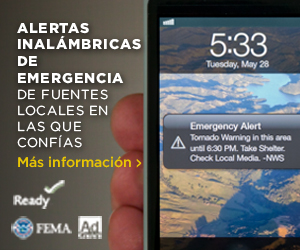
  • The Emergency Alert System (EAS) is a national public warning system that requires broadcasters, satellite digital audio service and direct broadcast satellite providers, cable television systems, and wireless cable systems to provide the President with a communications capability to address the American people within 10 minutes during a national emergency.300by250_Spanish_5

At this time in Ohio, the Integrated Public Alert & Warning System (IPAWS) authorities who have completed the authentication steps are:

1. Ashtabula County

2. Clark County

3. Delaware County

4. Fairfield County

5. Geauga County

6. Lucas County

7. Ohio Emergency Management Agency

8. Tuscarawas County

ant

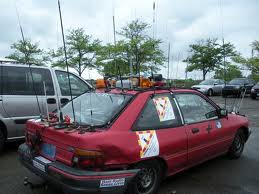
Hope you are paired with one of these local agencies to receive better information during severe weather or major emergency…otherwise, you’ll be left out in the dark.

photo 2

@rusnivek

No matter how much your pets beg… #Preparedness2014

No matter how much they beg, minimize the amount of time your pets spend outside in severe winter weather #OHWX #Preparedness2014

KacySnow

@rusnivek

Check your vehicle preparedness kit now before this happens to you…

How is your vehicle emergency preparedness kit?

Check it out BEFORE you leave home today!

Be14RkOCIAApv1w

Need some help or ideas in assembling your emergency preparedness kits? Don’t know what to put into your emergency preparedness kits? Check out these free checklists.

Stay safe peeps!

@rusnivek

Winter Storm Watch vs. Warning vs. Blizzard Warning

Avoid overexertion when shoveling snow.

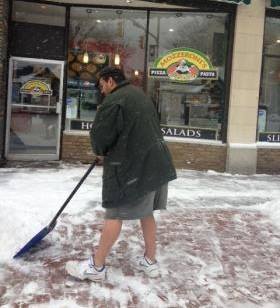
Consider stretching before you begin shoveling….and PLEASE wear long pants!!!!!

1601551_410331389069705_161838067_n

Do you know the differences between Winter Storm Watch vs. Winter Storm Warning vs. Blizzard Warning?

Winter Storm Watch: There is a possibility of a storm occurring.

Winter Storm Warning: A storm is already taking place or is expected.

Blizzard Warning: Sustained winds or frequent gusts to 35 miles per hour or greater and considerable amounts of falling or blowing snow (reduced visibility to less than a quarter mile) are expected to prevail for a period of three hours or longer.

Listen to your NOAA Weather Radio for the latest news and weather reports.

@rusnivek

Time to check your NOAA weather radio

Bad weather? Cold Weather? Want to know the weather?

Good time to check the latest #OHWX via your NOAA Weather Radio now

1525468_410241235745387_1550359728_n

And if you happen to be in the Cleveland area = 162.550mHz     SAME#039035


The National Weather Service (NWS) provides local weather broadcasts via NOAA Weather Radio from more than 700 transmitters nationwide. NOAA Weather Radios provide continuous broadcasts of the latest weather information from local NWS offices. Weather messages are repeated every 4 to 7 minutes, or more frequently in rapidly changing local weather, or if a nearby hazardous environmental condition exists. This service operates 24 hours a day.

@rusnivek

Can you use the oven to warm your house?

NEVER use your oven as a source of heat during the severe winter weather.

1512333_410211429081701_1375666232_n

If you do not have heat, contact your local Red Cross chapter for a list of open warming stations/shelters.

Be smart and be safe!

@rusnivek

Mom! Can we play outside in the snow…please?!?!!?

Monitor/limit the amount of time kids spend outside in severe weather.

I know they think it’s fun, but do NOT let them play for hours in the cold.

Bundle up!

1555310_410186692417508_456455657_n


Do you know the differences between frostbite and hypothermia?

Frostbite: loss of feeling and white or pale appearance in extremities such as fingers, toes, ear lobes, and the tip of the nose. Get medical help immediately.

Hypothermia: uncontrollable shivering, memory loss, disorientation, incoherence, slurred speech, drowsiness, and apparent exhaustion. If symptoms of hypothermia are detected, get the victim to a warm location, remove wet clothing, warm the center of the body first and give warm, non-alcoholic beverages if the victim is conscious. Get medical help as soon as possible.


@rusnivek

I don’t care how much you love winter weather, WALK slowly!


I don’t care how much you love winter weather – WALK carefully and slowly on snowy icy walkways!!!!

BdRzqmuCUAAJSeU

NEVER run.

Seriously, it’s OK to shuffle along too.

@rusnivek