And this is why we can’t be BFFs Facebook…
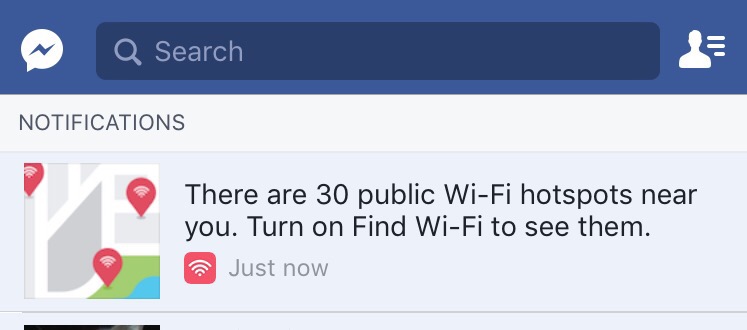
Those in the industry should understand the seriousness of this aggressive notification.
Stop being so creepy Facebook.


And this is why we can’t be BFFs Facebook…
Those in the industry should understand the seriousness of this aggressive notification.
Stop being so creepy Facebook.
2017 new year includes a few new things.
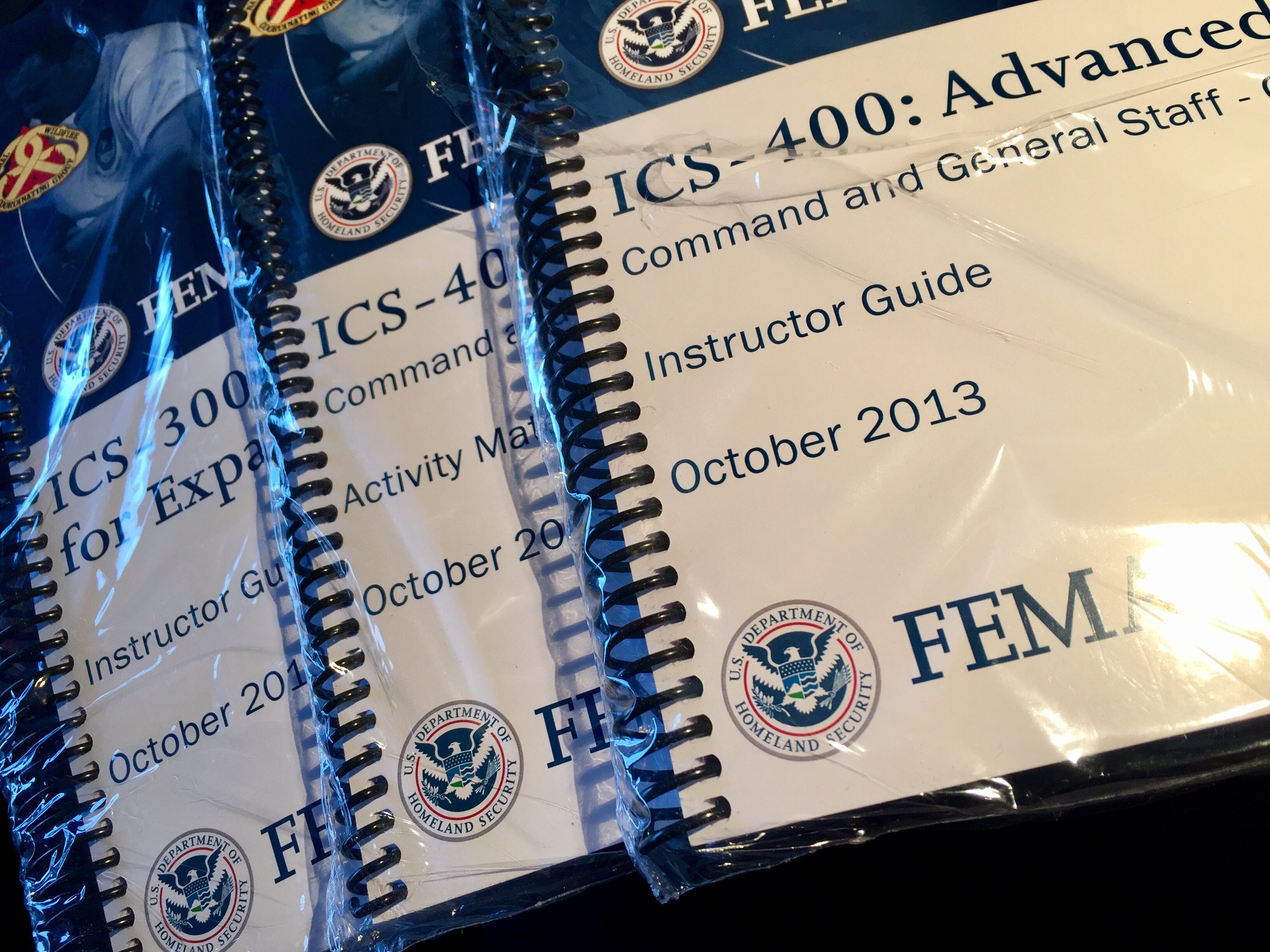
New year = “new” instructor manuals. #excited
Now to transfer all my instructor notes from my old ones to the new ones.
Yep-I’m Captain Exciting!
Since it’s quiet in the office today, I’ve been assessing a few new kid preparedness and teaching tools.

Do you think Melissa has one on “Hurricane Warning” too?
Teach your kids about being safe and heeding all warnings from your local National Weather Service (NWS) office, Emergency Management officials, and public safety professionals.
December was relatively busy but say hello to January 2017!
In the first week, its paperwork mania! As usual, we have yearly update classes that needs to be completed and mandatory inservice training.
Second week, I’ll be headed to the State of New Mexico’s Department of Heath to teach Social media. For my friends in Region-6, I also need to figure out if I’m a green or red. Hmmm.
Third week, I’ll be presenting at the huge PIO Conference in Franklin County (Columbus), Ohio. Working the PIO magic with Jennifer Ciaccia and Erica Creech. It’s a huge conference with tons of participants. Do you want to attend? Just email Xenia (xeniapalus@franklincountyohio.gov ) for more deets.
Fourth week, I head back to St. Clair County Michigan to teach social media. If you remember, these are my peeps who participated in the big Cause IV experiment with the Department of Homeland Security Federal Emergency Management Agency, and Canada’s Public Safety on a cross-border full scale exercise in 2016. Excited to see my peeps again!

2017 is here. Bring it!
Stuck inside this New Years? Working?
Maybe this will brighten your shift a little.
Continue keeping your public safe and thank you for your dedication to your community.
They are incredibly valuable to operations and administration and are often considered the voice of calm during an emergency.
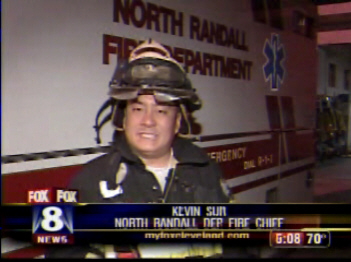
I completely support emergency response agencies to identify Public Information Officers (PIOs) or Public Affairs Officers (PAOs) for the specific function of External Affairs (ESF-15).
Why we need fire department PIOs
Once upon a shift, there was a newly promoted captain. Hearing the tones for a bicycle accident, he moved to the rig, confident in himself and his crew.
On arrival, the scene moved like ballet — firefighters on the victim dislodging legs and arms from twisted tubing with medics patching an apparent wound to the head. The patient chose to firmly fasten her helmet to the rear of the bike’s frame instead of to the prescribed area.
As the ambulance headed toward the hospital and firefighters cleaned the accident area, the newly promoted and somewhat proud captain drifted toward wandering civilians. From the crowd came the obvious retort, “What happened?”
The officer, flushed with relief, quickly replied in a commanding voice, “She’s fine, just a bump on the head.”
Next day, the phone rang in the duty office of the newly promoted and somewhat sleepy captain.
“Good morning, Station Two, Captain Smith speaking.”
“Who the hell made you a neurosurgeon?”
“Hello, who is this?”
“This is Dr. Brooking your medical director and I just want to ask, what were you thinking?”
“What do you mean, Doctor?”
“Read the headline in today’s paper. I assume you can read,” the phone clicking silent.
Walking outside to the nearby newspaper box, he grabbed the top paper and unfolded it: “Fire Captain Sites Extensive Head Trauma to World Champion Mountain Biker.”
It is the public information officer’s job to protect firefighters and get one unified story to where it needs to be. While occasionally rewarding, it is an extremely stressful, sometime hazardous and at no time a celebrated occupation.
For their part, PIOs are critical first responders, educated in communications and experienced in the ways of media, beginning with the local outlets and ending with national press releases and incident action plan reviews.
They are comfortable in the world of emergency scenes, incident command and disaster protocol. They understand the public demand for information and how to balance it with departmental interests.
In the short-term, they can be counted on to corral the press, deflect questions away from working firefighters and act as a buffer for officers on scene.
On extended incidents, PIOs conduct press briefings at regular intervals and serve much like reporters themselves. The what, who, where, when, how and why of the scene are gathered and disseminated at the appropriate time and place by an operational PIO.
A PIO arriving on scene will be concerned with documenting the following:
1. Time and date of the incident.
2. Nature of the call.
3. Names and addresses of those involved, locations affected and related items.
4. Type and size of buildings or vehicles.
5. Number of alarms and resources used.
6. Actions taken.
7. Determined cause if available.
8. Information for immediate release.
9. Confirmed lives saved, causalities and injuries to civilians and firefighters and the status of pets.
10. Damage estimates, persons displaced and property saved.
11. Next briefing time for media.
While many departments realize the value of PIOs, much of what they do is lost on line firefighters. Journalism is very competitive, something firefighters may not expect during an incident. As firefighters, our instinct is to cooperate and be a team.
Sometimes we extend this cooperative approach to anyone on scene, including a reporter looking for a scoop. Letting our guard down for whatever reason makes us vulnerable.
Pressed for time and needing the story first, reporters may grab any sound bite or picture in order to make a headline and a deadline. A tired, frustrated and careless firefighter can make for tantalizing, but inaccurate copy.
Line officers, in the course of their duties, can be curt with media types, seeing them as a dangerous intrusion into their job. A poor attitude, however justified, can damage an already stressful situation.
Whether tired, impolite, impatient or angry, a firefighter can put their career, their department, and even their community in a bad light with one wrong sentence.
Visually, the public doesn’t understand 20 firefighters standing around after a knockdown or one firefighter advancing toward the camera with an ax.
An effective PIO directs the media away from such misrepresentations by giving the press a substantive story and access to good pictures and informative interviews.
And like our fictional Capt. Smith learned, members of the media aren’t always obvious. Gone are the days of fedoras with “press” credentials tucked in the band.
In fact, gone are the days of defining media as someone who works for a media outlet. Anyone in the crowd with a phone, a social media account and drive to share is potential “media” — and that’s pretty much everyone.
The job of PIO isn’t for everyone and candidates must be properly trained to be effective. Just because someone takes good pictures does not make them qualified to speak on behalf of the department.
Such an occupation requires classes in English, organization, culture and communication — communication and communication theory and strategy are the most important.
It takes training in courses specific to the challenges of the job. Outside these required training sessions, there are many videos, certified classes and even private companies geared toward instructing firefighters on the role of PIO in the fire service.
If you doubt the importance of such training, take the time to read NFPA 1035, Standard for Professional Qualification for Fire and Life Safety Educator, Public Information Officer and Juvenile Fire Setter Intervention Specialist, 2010 edition.
The job of PIO is designed to protect firefighters, the fire department they serve and the community at large by focusing on the facts and delivering correct information at the appropriate time, hence their inclusion in NFPA’s 1000 series.
If a PIO is not immediately on scene, here are clear-cut actions a firefighter can take.
1. Direct all media inquiries to officers or designated press location if possible.
2. Never exaggerate or speculate.
3. Never assume anything you say or do is off the record.
4. Never give out names or details.
5. Never give an opinion or state your feelings.
6. “Under investigation” and “I do not know” are acceptable answers.
7. Be polite, but be careful.
Since we are talking about winter preparedness today, I am reminded about this meme created in 2015.

Yes, I said meme. It looks like a screen grab from a national news station, but it has been doctored up a bit. Obviously.
While I cannot support all the bullet points, I can tell you that first bullet point definitely on my list.
BTW-it’s Hoard water, SPAM, and bacon.
Long live the Oxford comma!
I was cleaning out a few older files from my cabinet and I came across an old gem from (now retired) Lt. Chris Goldsworth and his love for his water can.
This short video from Bellerose Terrace in New York exemplifies the effectiveness of a water can.
Aside from the 1 3/4, think about the lonely water can which sits poised to do some work.
“Never underestimate the power of your water can.” – Lt. Chris Goldsworth
Stay safe!

 Where is @rusnivek?