Quick lists with go packs and a few checklists #NatlPrep

Since we are in September aka 2015 National Preparedness month, here’s a quick rundown of all checklists, go packs, preparedness kits, and other assorted items on preparedness. Those items marked with a (*) and bold are to me the most critical ones.

Checklists for Family Preparedness Kit: checklist_2014

Family Communications plan (kids to complete) FEMA_plan_child_508_071513

*Family Communications plan (Parents to complete) FEMA_plan_parent_508_071513

*How much water do I need to prep: https://whereisrusnivek.com/2014/09/16/one-gallon-of-water-per-day-per-person-48-bottles-natlprep-prepared2014/

Distilled down, here’s the most essential parts of my preparedness kit: https://whereisrusnivek.com/2014/09/15/important-parts-of-my-emergency-preparedness-kit-natlprep-prepared2014/

MREs? Here’s what they are: https://whereisrusnivek.com/2014/09/14/3-days-of-food-per-person-for-your-emergency-preparedness-kit-natlprep-prepared2014/

*My tech disaster kit: https://whereisrusnivek.com/2014/09/20/tech-kit-how-geeky-or-nerdy-is-yours-natlprep-prepared2014/

*Have a pet? Here’s what’s in my Pet Emergency Preparedness Kit:  https://whereisrusnivek.com/2014/09/19/your-pet-needs-an-emergency-preparedness-kit-too-check-out-the-one-i-have-ready-to-go-prepared2014-natlprep-woof/

Everyone always asks, what is readily in all my disaster kits – DuckTape: https://whereisrusnivek.com/2014/09/18/this-emergency-preparedness-kit-multipurpose-item-literally-sticks-to-everything-prepared2014-natlprep-tbt/

Better IRL whistle for attention? Horn me: https://whereisrusnivek.com/2014/09/17/a-better-whistle-for-your-emergency-preparedness-kit-natlprep-prepared2014/

*Enable EAS Alerts to all your mobile devices (turn your GPS location on).

*On Twitter, follow @FEMA and your state’s Emergency Management Agency for good preparedness lists and more emergency response information.

On Facebook, follow your local National Weather Service Office for updates on current weather conditions.

Subscribe to your local Emergency Management’s informational pushes on their respective mass notification system.

*Print out a list of your immediate and extended family’s home and cell phone numbers (I nerd it out and happen to use the DHS/FEMA ICS-205 form).

*Keep your mobile devices and cell phones charged up.

988590_590153534420822_5999888092306596524_n

Stay safe peeps!

@rusnivek

How frequent are hurricanes in the US? #NatlPrep #hurrycaine

Third Saturday in the 2015 National Preparedness Month! Last day/chance for hurricanes.

Do you want to have a better understanding of the hurricane risk you and your community face? Below is a map of the United States and the frequency of hurricane and tropical storm activity by county. Atlantic data dates back to 1851, while Pacific data includes storms since 1949.

hurricanemap750w

Map Information: This area is a map of the continental United States, Puerto Rico, Alaska, and Hawaii including state boundaries. It is entitled “Frequency of Hurricane and Tropical Storm Activity by County: 1851-2012”. It includes data from NOAA NHC HURDAT2 database; all classified hurricanes and tropical storms which made landfall within the 50 states, the District of Columbia, or Puerto Rico; paths by county within a 125 mile band of the center point, based on longitude. Atlantic data from 1851-2012, Pacific data from 1949-2012.Map Description: The frequency of hurricane and tropical storms are represented by a four point scale. The first group with the highest frequency of hurricanes and tropical storms includes between 65-141 occurrences of a hurricane or tropical storm. The area of states for this level of the scale includes the coastal edges of Texas, Louisiana, Mississippi, Alabama, Georgia, South Carolina, North Carolina, Virginia, and Delaware, as well as all of Florida. The second group with the second highest frequency of hurricanes and tropical storms includes between 29-64 occurrences of a hurricane or tropical storm. The area of states for this level includes inland portions of states in the first group, as well as Maryland, New Jersey, New York, Connecticut, Rhodes Island, Massachusetts, New Hampshire and Maine, as well as all of Puerto Rico. The third group with the lowest frequency of hurricanes and tropical storms includes between 1-29 occurrences of a hurricane or tropical storm. This area of states covers a large portion of the United States, and extends from Vermont in the east to southern California in the west, and from central Texas in the south to all of Michigan in the north, as well as Hawaii. The last group in the scale represents no occurrences of a hurricane or tropical storm. This area of states covers all of Alaska, Washington state, Oregon, Idaho, Montana, Wyoming, Colorado, North Dakota, South Dakota, Minnesota, all of Utah excluding the southwestern tip, and parts of California, Nevada, New Mexico, Kansas, Nebraska, Iowa, and Wisconsin. In all about two-thirds of the US are within one of the first three frequency groups. Federal Emergency Management AgencyORR Mapping and Analysis Center, Washington, D.C., March 13, 2014. Sources: ESRI, USGS.

It’s only a matter of time before you are affected by a hurricane.

Don’t wait. Communicate. Make your emergency plan today.

CKYhdyqUMAQdNj1

#Hurrycaine Hurricanes are dangerousso get Ready by starting here

(#Hurrycaine <==get it?)

@rusnivek

Packed September for 3 different regions with #NatlPrep

August was quite the month of new stuff, and in true form, September will be just as exciting.

I am sure know that September is my most favorite month right? September is National Preparedness month where I’ll be featuring a whole bunch of different preparedness plans and you can participate and better prepare you and your family for disasters or emergencies. All of it…totally free!

But for the rest of the month, here’s the plan:

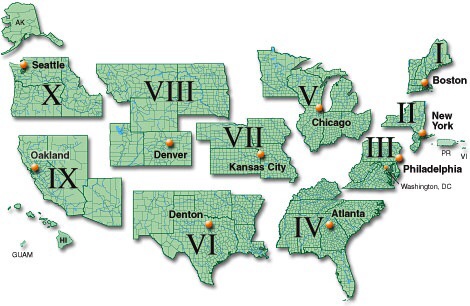
First week: I’ll be presenting at the Nebraska Infrastructure Protection Conference on Social Media intelligence and disasters. On day-2 of the conference, I’ll be giving the my national keynote presentation: Task Force Deployment to St. Bernard Parish Louisiana – Lower 9th Ward. Region-7 boom!

Second week: I’ll be presenting at the State of Kentucky Governor’s Emergency Management Workshop rolling out the brand new G-270.4 Recovery from Disaster course. Two days of critical recovery classes in Region-4…with me!

Third week: I’ll be in Columbus doing some Mass Fatality TtT classes with Ohio EMA and then delivering another Social Media course to Franklin County EMA. Back in Region-5.

Fourth week: We have the Ohio Department of Public Safety’s PIO Symposium (Friday September 25th, 2015) in Columbus.

And the Fifth week: I just might have some time to do some paperwork. Sigh.

IMG_1909

This will be a tough first few weeks, but looking forward to the various regions.

And remember: Make your emergency plan today.

CKYhdyqUMAQdNj1

@rusnivek

#NatlPrep Month – Don’t Wait. Communicate. #PrepareAthon

I know it’s only July, but National Preparedness Month is right around the corner.

FEMA’s Ready.Gov just announced the 2015 theme: Don’t Wait. Communicate: Make an emergency plan today.

Groovy huh?

Here’s the logo to use.

CKYhdyqUMAQdNj1

Weekly themes will be done according to these identified topics:

  • Week 1:  September 1-5th            Flood
  • Week 2:  September 6-12th          Wildfire
  • Week 3:  September 13-19th        Hurricane
  • Week 4:  September 14-26th        Power Outage
  • Week 5:  September 27-30th        Lead up to National PrepareAthon! Day on September 30, 2015

I’m looking forward to hearing your plans on how you intend to share preparedness efforts this year.

Are you Ready?

@rusnivek

Your emergency USB drive #NatlPrep #Prepared2014

It’s the first Friday, the first week of 2014 National Preparedness Month!

“Be Disaster Aware, Take Action to Prepare”

Easy right? My goal is to provide actionable information so that you can better prepare you and your family.

This week’s theme is consistent with FEMA’s National Preparedness Campaign: Reconnect with Family After a Disaster.

#5: Use a small USB drive includes all key emergency documents & family communications plan #NatlPrep #Prepared2014

Week-01-Reconnect-CommunicationsGear

These ubiquitous USB drives (aka thumb drives, jump drives, memory sticks, etc…) are so easy to find. Best part? These things are cheap! You can easily find 16G for $2…which is WAY more storage that you’d ever need to store your documents in an emergency.

1000recoveredflashdrives

What to keep stored on this jump drive? Scanned or digital copies of your:

  • Family Communication Plan (that also includes an out-of-state contact)
  • Driver’s License/State Identification card
  • Passport
  • Social security card
  • Birth Certificates
  • Home Insurance card
  • Auto Insurance card
  • Credit card(s)
  • Copies of a recent bank statements
  • High resolution pictures of your family and individual pictures.

As you pack your one ounce USB drive, don’t forget to put it in an airtight freezer ziplock type bag. Your electronic equipment does not like getting wet.

The cost of these USB drives are so low, that it behooves you to use easy technology now to better leverage your position in a disaster. Because you won’t have time to copy/transfer these documents during a rapid evacuation, now is the time to be prepared.

harddrivefailureusb_prime-100029780-medium

Keeping good documentation for your family is one of the most important parts of reconnecting with family during and after a disaster.

@rusnivek

NPM_thunderclap_hero_v2


Multi-purpose binder clips help a lot #NatlPrep #Prepared2014

Rounding the corner through the first week of 2014 National Preparedness Month!

“Be Disaster Aware, Take Action to Prepare”

Of course you need to be prepared right?!?!? My goal is to provide actionable information so that you can better prepare you and your family.

This week’s theme is consistent with FEMA’s National Preparedness Campaign: Reconnect with Family After a Disaster.

#4: Multi-purpose binder clips help keep wires organized for easy visual access to connection points #NatlPrep #Prepared2014

Week-01-Reconnect-CommunicationsGear

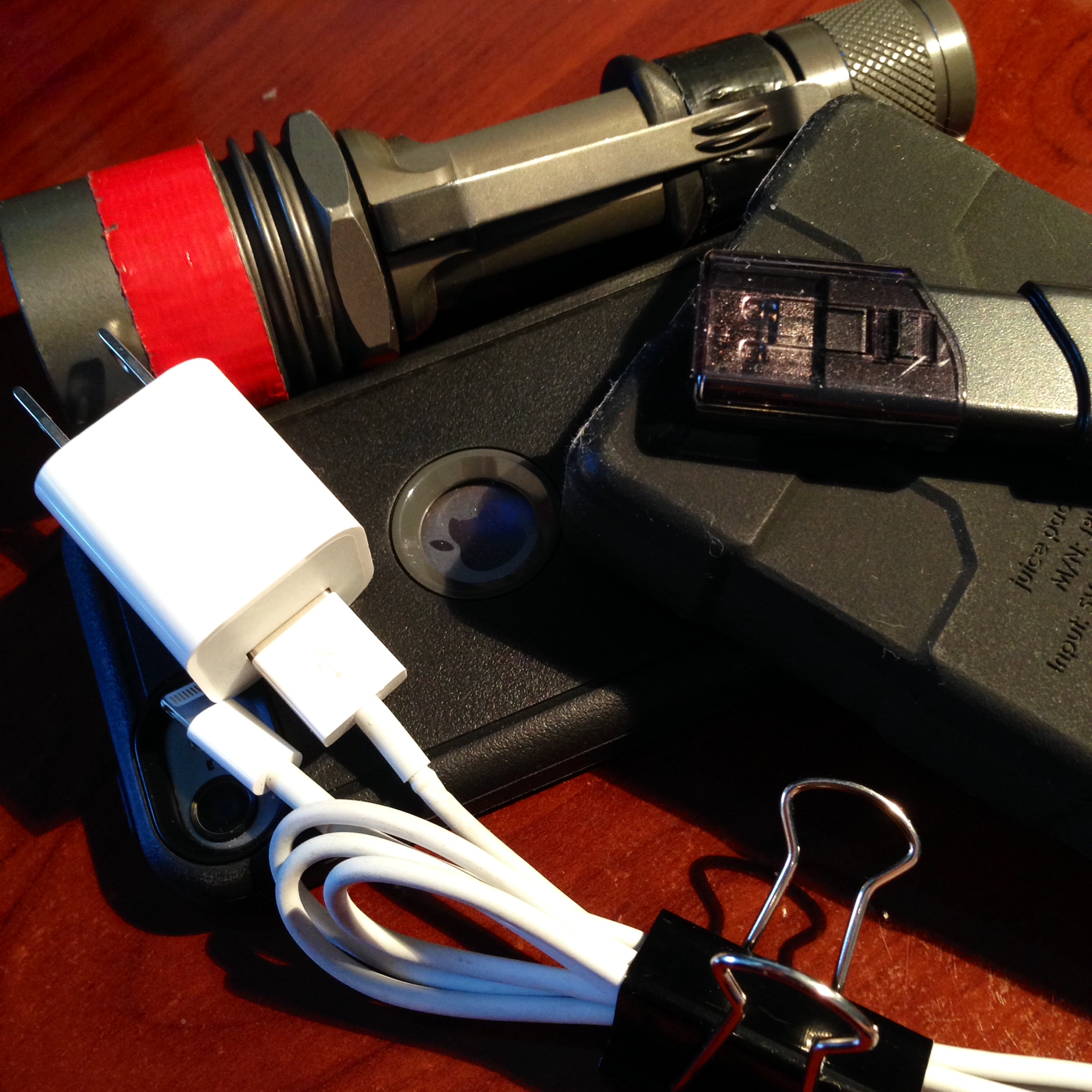
These office binder clips allow me to keep things organized, clean, stowed neatly, and tied down as I travel around. Additionally, I am able to pair the ends of the cables together so I can immediately see the end attachment points.

(And who doesn’t love binder clips right?)

I have assessed my entire family’s cell phones and mobile devices and found that this lightning cable is needed by everyone. We are an iPhone 5 & 5s family.

Not pictured above, are my micro USB cables which charge other mobile devices. Everyone should plan on supporting power needs for the family’s mobile devices (tablets) and accessories (keyboards).

tablets

Assessing the entire family’s cell phone power needs before a disaster can ensure that your family will remain connected through and after a disaster.

Family first peeps!

@rusnivek

NPM_thunderclap_hero_v2


Cell phone WITH cables and external power supply #NatlPrep #Prepared2014

Half way through the first week of 2014 National Preparedness Month!

“Be Disaster Aware, Take Action to Prepare”

Lots to do…just be prepared!

This week’s theme is consistent with FEMA’s National Preparedness Campaign: Reconnect with Family After a Disaster.

#3: Have extra cables w/ multi-option external power supply for charging your cell phone. #NatlPrep #Prepared2014

Week-01-Reconnect-CommunicationsGear

Because we use/push more information and data, our power consumption has skyrocketed. I find that having extra cables in various lengths will make life easier when charging your phone. Keeping your family informed before/during/after a disaster is so important – so keep your mobile devices charged!

Additionally, my extra battery pack has gets used almost daily. Busy lifestyles call for travel or remote working options so choose one that has a USB connection(s) so you can charge your various mobile devices.

Because you never want to be *that guy* or *that girl* who hides in the corner next to a smelly garbage can to use the lonely random plug because of this…

screen-image-low-battery

@rusnivek

NPM_thunderclap_hero_v2

Use ALL your tools to communicate during a disaster #NatlPrep #Prepared2014

Hello from the first week of 2014 National Preparedness Month!

“Be Disaster Aware, Take Action to Prepare”

Just a reminder, throughout this month, I’ll be pushing preparedness stuff…for free! No fuss – no muss!

This week’s theme is consistent with FEMA’s National Preparedness Campaign: Reconnect with Family After a Disaster.

Mobile-267x300

#2: Have at least two (2) ways to communicate with your family before & during & after an emergency. Cell phone, text msg, Tweets, Email, Post, Pin, Snaps…use it all!

Yep, I’ll be revisiting my family’s communications plan tonight. Will you?

@rusnivek

NPM_thunderclap_hero_v2

Welcome to 2014 National Preparedness Month #NatlPrep #Prepared2014

Welcome to 2014 National Preparedness Month.

IMG_4934


Throughout this month, I’ll be pushing preparedness stuff…for free!

Best news on Monday huh?

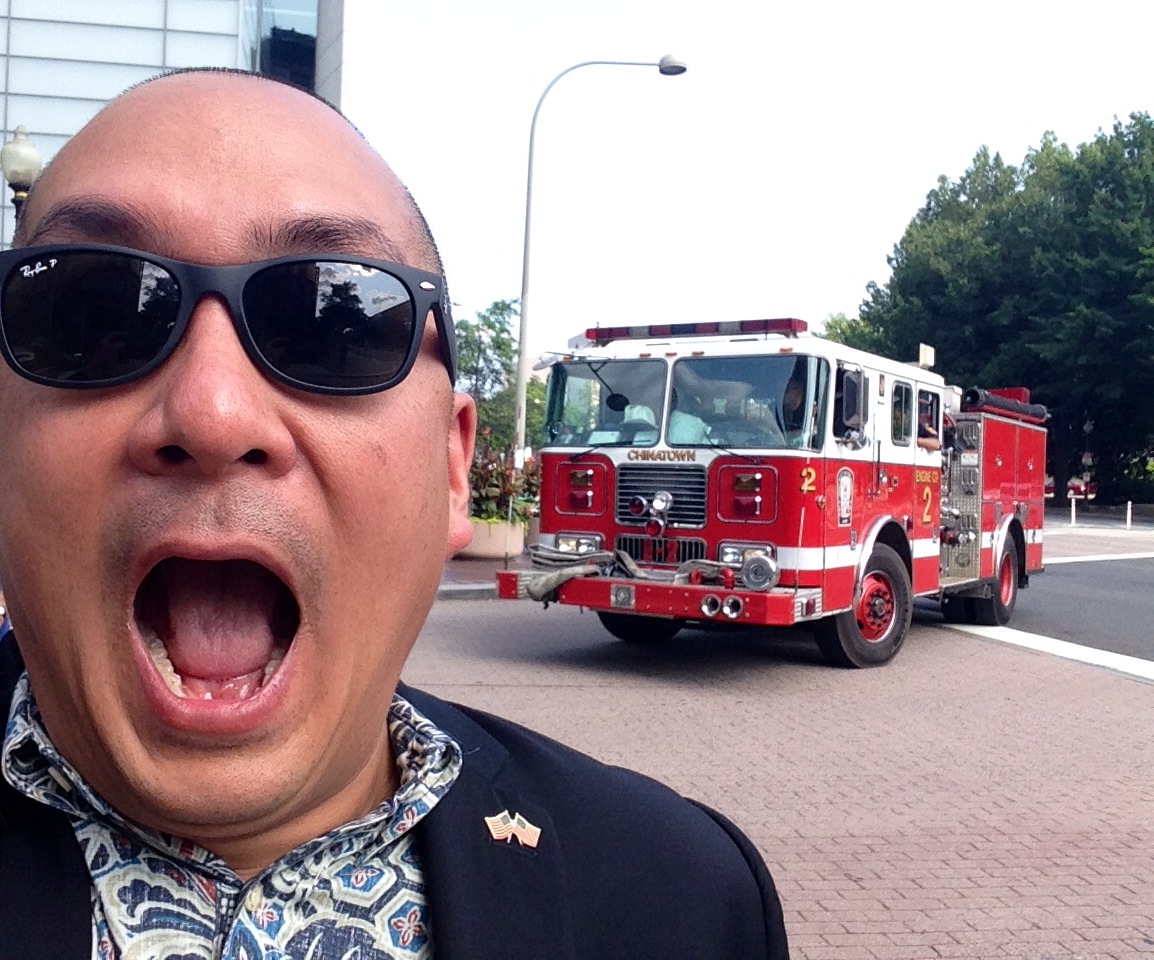
#1: Allow ample room for all emergency services to do their job

@rusnivek

September assignments to R5 & R3 – Also #NatlPrep #Prepared2014

After hopping around Region V in August, I’ll be able to stretch out a bit and swing east into Region-3. The September intel training class in DC will be rescheduled and (hoping that it’ll) get moved to the Pentagon.

At this time, it is Pennsylvania, Maryland, and back in Ohio for September.

20140501-083012.jpg

The outlook for October has a wider spread as I have been assigned to Region-V, Region-IV, and Region-III.

Keep smiling because it’s 2014 National Preparedness Month! (MY FAVORITE MONTH)

@rusnivek