Annual interface training today

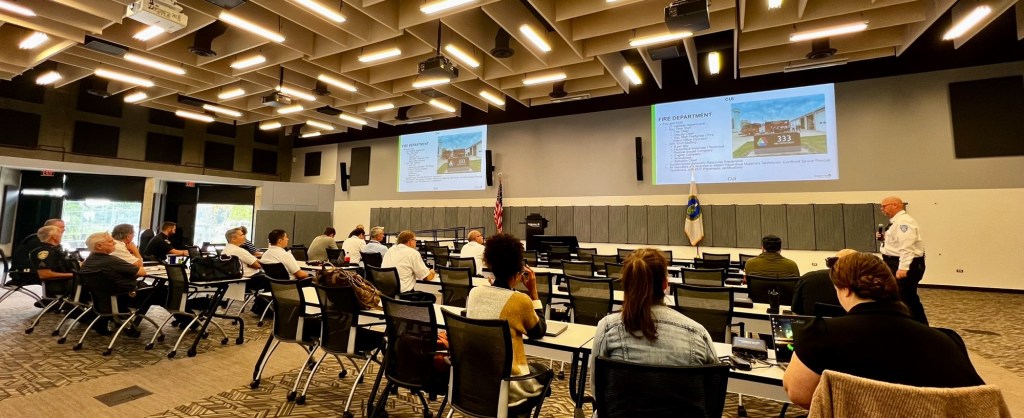
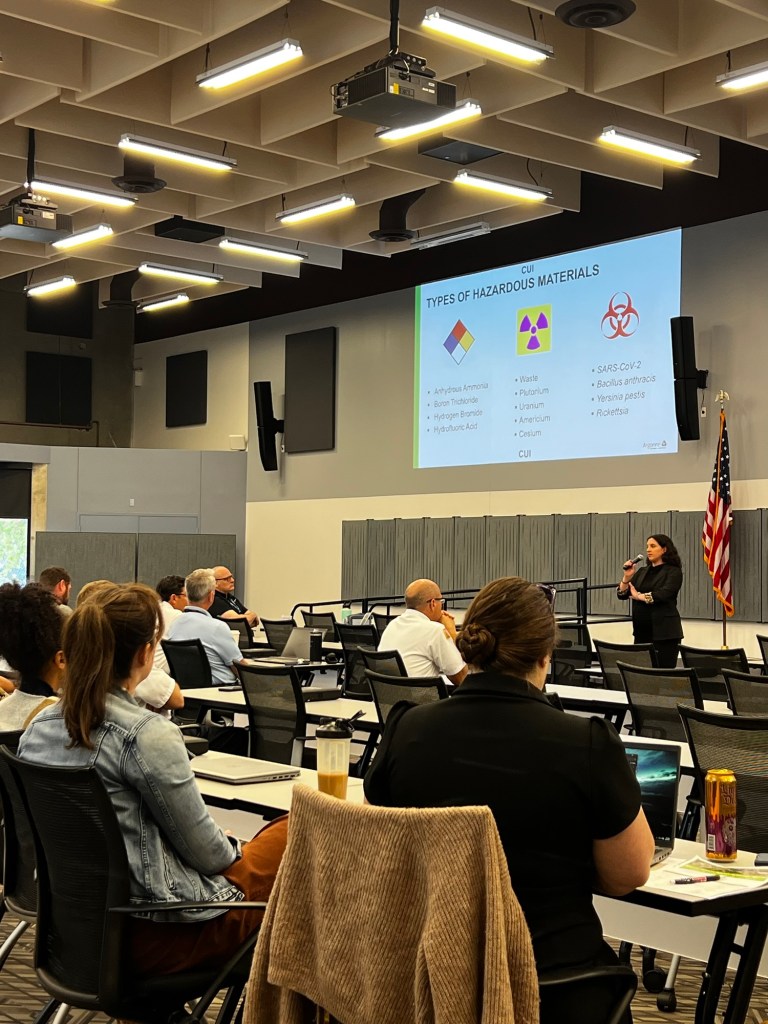
To better acclimate our public safety partners to our operations, we hosted our annual off-site agency interface training today.

Fire, EMS, Emergency Management, Law Enforcement, and key players from state and Federal were also on hand to make sure we are a well oiled machine when it comes to inbound resources.

Glad to see so many familiar faces on site today.

Just another way Emergency Management leads the way to collaborate with our most trusted partners in response and recovery.

Reporting live from today’s sesh…

@rusnivek

Hanging with the aF1 today

2025 Big City Emergency Managers in Chicago this week!

Along with all these pros from all over, I got a chance to meet the FEMA acting Administrator Tony Robinson

Nice guy!

Tony normally plays the role of the FEMA Region 6 Regional Administrator that covers Arkansas, Louisiana, New Mexico, Oklahoma, Texas, and 68 federally recognized tribal nations.

Welcome to Chicago!

Reporting live from the Chicago OEMC’s EOC….

@rusnivek

Your 2024 Democratic National Convention Joint Information Center team!

I am honored to lead this Joint Information Center (JIC) with the US Secret Service.

I am incredibly thankful for everyone who participated with us from local, county, state, and Federal partners. Welcome to Illinois and the City of Chicago!

2024 Democratic National Convention Joint Information Center

Lots of dangers with these types of National Special Security Events (NSSEs), but through a well coordinated system with highly trained individuals,

Trust me, it took many months of introductions, planning, networking, scheduling, coordinating, and of course collaborating with our most trusted partners from across the country.

I’ve said it before, but it takes a certain skillset to be the agency’s PIO. No day is ever alike.

And no incident or event will ever be the same. Nothing is ever the same.

Proud of the work that was done this week to keep everyone safe.

Reporting live from the 2024 DNC’s Joint Information Center…

@rusnivek

At the Dunk: Here’s how FEMA stepped up in RI, ready to give 3,000 COVID vaccines a day

At the Dunk: Here’s how FEMA stepped up in RI, ready to give 3,000 COVID vaccines a day

Mark Reynolds, The Providence Journal

Richard Scott was in Georgia. Other emergency workers like him were scattered across the United States.

But they were just a phone call away in late February as Rhode Island officials analyzed their options for ramping up vaccinations and saving lives one year into the pandemic.

On March 1, they asked the Federal Emergency Management Agency to deploy a team that would reinforce the legions of local vaccinators who were already on the job.

That’s how Scott, a 73-year-old police instructor from Brunswick, Georgia, ended up on the floor of The Dunk, playing for a team that, as of Tuesday morning, was capable of vaccinating 3,000 people per day.

Scott was among 135 emergency workers deployed to the downtown venue, which more typically hosts rowdier crowds late March as NCAA hockey and basketball teams pursue national championships. Another group, also coordinated by FEMA, staffs a vaccination center in Middletown.

FEMA’s largest-ever disaster relief effort in RI

Overall, FEMA has brought in a force of 201 workers to support Rhode Island’s vaccination effort this month, drafting personnel from more than 20 different federal agencies.

They are in Rhode Island for 45 days, putting a face on FEMA’s largest-ever disaster relief effort in Rhode Island.

“Everyone here that I’m working with is looking to make a difference,” Scott said. “A positive difference. On our end a positive difference is to get as many people through here safely vaccinated as quickly as we possibly can to make the country that much better.

Rhode Island was the first New England state to ask for federal help with the job of vaccinating its population, says Emily Martuscello, a FEMA manager from New Hampshire who has coordinated staffing at both vaccination sites.

“It’s the biggest emergency everyone’s ever been a part of,” she said. “It’s ginormous.”

Scott’s background is in law enforcement. He’s an instructor with the Federal Law Enforcement Training Centers.

The Surge Capacity Force

His 48 years in police work encompass stints at the New York Police Department serving with the training branch of the FBI.

He is part of the U.S. Department of Homeland Security’s Surge Capacity Force.

If an emergency exceeds the capacity of FEMA’s disaster workforce, the secretary of the Department of Homeland Security activates the surge force to help.

“We have members of the Surge Capacity Force deployed all over this country right now,” says Martuscello “It’s the biggest deployment I think we’ve ever had.”

Scott’s emergency work has taken him to Puerto Rico and the U.S. Virgin Islands after Hurricane Maria.

Now in Rhode Island for his first time, his job is greeting patients as they arrive on the floor of The Dunk and head toward registration.

“As the people come down and once they hit this floor, we try to move them through the process in a timely but safe manner.”

Biolab technicians from the U.S. Department of Agriculture handle vaccine supply.

Two commissioned officers from the U.S. Public Health Service, both of them in combat-style blue fatigues, are on the scene, too.

“We have very rigorous quality control in place to make sure the right person gets the right vaccine at the right time,” says Martuscello.

Emergency medical technicians and paramedics from the U.S. Forestry Service are among the vaccinators.

All of them are licensed and received training from both the National Guard and the Rhode Island Department of Health, says Martuscello. The preparation, she says, included competency tests.
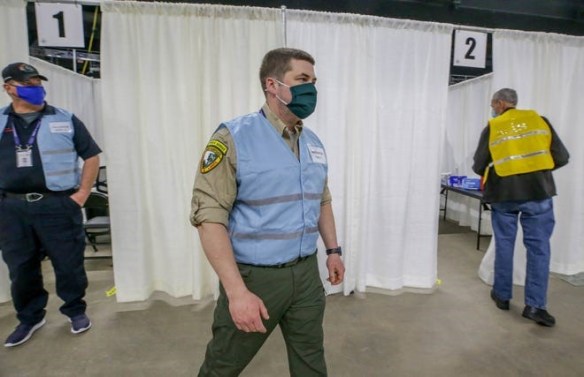
Tom Trask, 32, a U.S. Forest Service Ranger, is wearing his forest ranger uniform under a vest that says vaccinator on the back.

Typically, Trask, of Conway, N.H., inspects timber operations and manages wildland fires.

As an EMT, he has experience with certain types of injections, such as epinephrine for allergic reactions, but this is his first time administering vaccines, he says.

“We’re pretty much an all-hazard resource,” Trask says. “We do anything and everything we can to help people.”

A husband-wife team of U.S. Forest Service workers, Robert and Judy Beanblossum of Pisgah Forest, North Carolina, are among staff who watch over people just after they receive the vaccine. They are versed on different signs of allergic reaction to look out for.

In 45 days, the Rhode Island tour of the Beanblossums and others on the team is expected to end, says Martuscello. At that point, an ongoing hiring effort should be ready to fill those jobs with locals.

Joseph Wendelken, spokesman for the Rhode Island Department of Health, says the state had requested “human resources” from FEMA so it would be prepared to administer increased volumes of vaccine.

‘Federally supported, state managed and locally executed’

The state also requested the help “to meet the new federal and state accelerated vaccination timelines” and its request was “encouraged” by FEMA officials, Wendelken said in a statement.

“COVID-19 vaccination saves lives,” he said.

While FEMA has staffed the two sites, the agency does not manage them, which lines up with a comment made by Martuscello: “We have a mantra here at FEMA that things are federally supported, state managed and locally executed.”

The support from FEMA is among “critical pieces” that have made it possible for the state to put resources into tasks such as vaccine outreach, providing geographically dispersed vaccination sites and vaccinating some of the hardest-hit communities. That includes communities of color and people who are homebound, he says.

Tuesday marked a full year since then-President Donald Trump declared the coronavirus to be a disaster in Rhode Island.

As of March 24, FEMA had committed $456 million in disaster-relief aid, according to a FEMA spokesman, Kevin Sur.

That aid works through a reimbursement process.

By last Thursday, FEMA had supplied: 3,710,926 gloves, 586,847 face shields, 220,407 surgical gowns, 586,303 surgical masks, 1,152,600 N95 respirators and 100 ventilators.

Those flows of aid represent another level of support beyond the extra staffing for the vaccination clinics this spring, says Armand Randolph, who heads up the recovery branch of the Rhode Island Emergency Management Agency.

Randolph was struck by the meals that FEMA has provided  — more than 505,000 box meals. Randolph says those meals went to residents, including people who could not leave their homes for medical reasons.

Randolph says that assistance isn’t as valuable as the diverse emergency workers who came to southern New England this month, “willing to deploy from their loved ones to come here and assist with saving the lives of Rhode Islanders.”

By the numbers

Cases in R.I.: 136,765 (346 reported Tuesday)

Negative tests in R.I.: 3,333,621 (12,963 reported Tuesday, 2.7% positive rate)

R.I. COVID-related deaths: 2,618 (5 reported Tuesday)

Rhode Islanders hospitalized with COVID: 123 (15 in intensive care)

Fully vaccinated in R.I.: 214,764 (334,878 at least partially vaccinated)

Cases in Mass.: 631,031

Mass. COVID-related deaths: 17,130

Cases in U.S.: 30,378,955

U.S. COVID-related deaths: 550,727

Detailed warning information on upcoming weather threats and other hazards

Welcome to the third week of 2020 National Preparedness Month! This week, we will be addressing how to prepare for specific disasters.

Compared to other weeks where we talk about general topics, plans, and maybe some things in your kit, we will be talking about how you can get stuff ready for each type of emergency or disaster.

So to start out, let’s talk about information about upcoming disasters.

A solid tool that is almost indispensable is…..your cell phone!

That’s right, that little computer/smart phone in your pocket is a GREAT way that you can discern information and better respond to the emergency.

One easy way is to download the FEMA app.

See the source image

https://www.fema.gov/about/news-multimedia/app

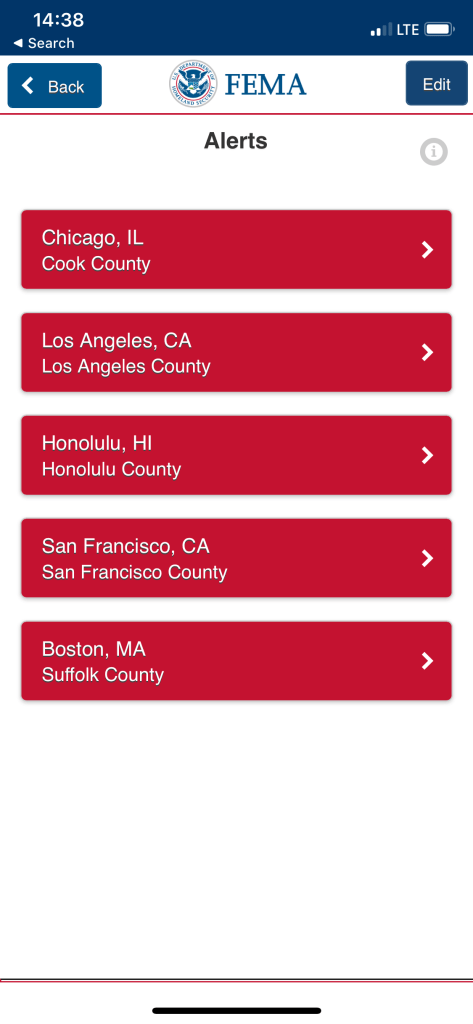
The FEMA app has a ton of features that could be beneficial to your specific area. Specifically in the notification for five of your identified cities/county.

This feature provides the ability to see what’s going on in a certain area of the country. And since I travel, I always have the first slot in my list for home. This allows me to get any notification on stuff that could be happening at home.

The second, third, and fourth slot are for my family in Los Angles, Honolulu, and San Francisco. Gotta keep an eye on the family no matter where they are. Plus an extra set of eyes from another part of the country is beneficial esp if they are sleeping at 0300 and it’s 0800 here.

Since I travel a fair amount, I usually reserve slot #5 (the last slot) for my work travel. Even though I may not be from Central City, I will always know the latest in dangers in my travel city.

See the source image

From critical tornado warnings or immediate evacuation tsunami warnings – I know I’ll be prepared for my location(s) specific disaster or emergency.

All of the information provided to you….FREE. That’s right-all the details are available to you for free. App is free. No charge from FEMA to download the app. No monthly fee. No recurring administrative charges.

See the source image

Ahhhh, safety for free.

I got your back.

More free tips tomorrow addressing specific hazards.

Reporting live from the third week!

@rusnivek

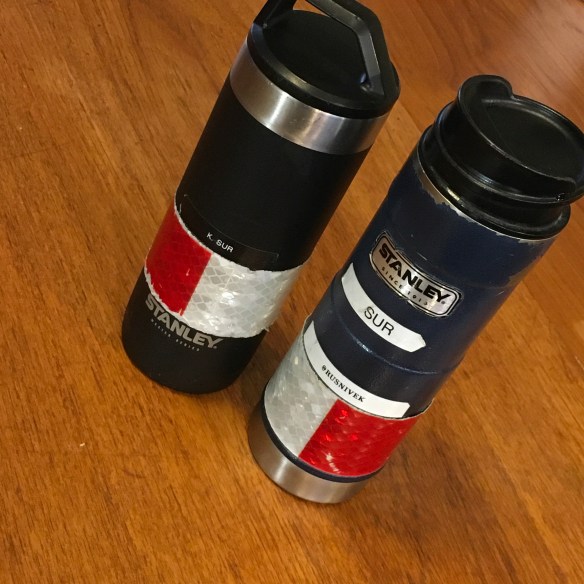
My well labeled mugs for coffee and hydration

Last and final day of 2020 National Preparedness Month. All the best time to talk about your kits and stuff you gotta have in case of an emergency/disaster.

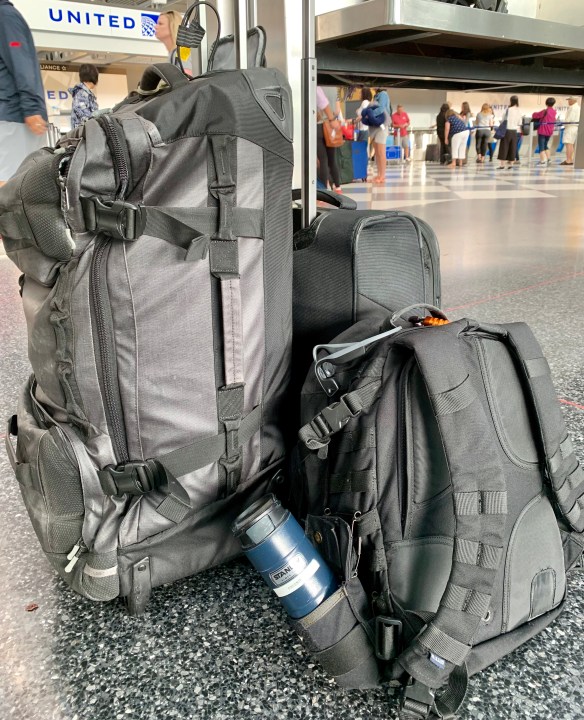
If you’ve been following me for a while, you know that I am a staunch supporter of good travel mugs. My oldest mug is a Nissan Stainless mug from Japan that is about 25 years old and yes, it still keeps the coffee hot. However, I needed something that is spill proof as I usually keep things in my bellows pockets.

And the last thing I needed was to spill coffee in/on my pants.

See the source image


Stanley mugs that have been traveling and deploying out with me for the past 5 years. I usually carry two – one for my black coffee and the other for my water (also backup for coffee).

Best part? They have a lifetime warranty. LIFETIME BABY!  I can attest that if something breaks, Stanley has committed to replacing things for free. I’ve had several tops of the travel mugs mechanically fail from normal use. Stanley has replaced each of them immediately and for free. No question from me that they definitely stand behind their product.

It is worth noting that you should consider labeling all of your stuff. ALL of your stuff. Something that is easy to spot in a large area and unique.

Stuff gets lost or acquired or stolen….so make sure your stuff is labeled and easily identified.

I can spot my things from across a large room…even in the dark.

Hope this week’s tips helped you plan out a better kit and equipment.

Reporting live with my favorite preparedness kit…

@rusnivek

Enhance your kit with these individually wrapped things

Almost done with the 2nd week of 2020 National Preparedness week – so let’s enhance your preparedness kit a little more.

As you know, this week has been dedicated to your prep kits and diving into several avenues of that works and of course ways you can enhance your kit to make you more agile/nimble…give you a better chance.

Want an easy one for today?

Utensils.

In this day of trying to find better ways to be a bit more clean (thanks COVID), we need to be more aware of our hands and the things we touch. Therefore we should act like an advanced society and really use our utensils to max capacity.

Why You Should Let Your Baby Get Messy While Eating

Since all of us are doing our part and eating out a bit more (hopefully more local), take a moment and utilize those plastic utensil sets for your kits. Don’t decline or throw them away, USE THEM!

Most of them come individually wrapped and often are filled with a knife, fork, spoon, napkin, salt, and pepper. In fact, the fancier ones come with a wet-nap of some sort to help clean you up a bit.

(hint wing joints usually send their to-go orders with wet naps.

Now, let’s step up to the big leagues. Check this out from my friends at Mount Prospect Emergency Management (Illinois).

Handy dandy AND reusable. Legit sturdy utensil set that all packs up nicely in a ready to go pouch.

Look closely, you can see Mount Prospect EM subscribes to the Built a Kit – Make a Plan mantra.

Look, however you want to do it, having an extra set(s) of utensils could be a lifesaver for your preparedness kit. (FYI-the Mount Prospect EM utensil set legit lives in my preparedness kit)

Heck, if you use chopsticks, that’s totes fine with me too.

IntereSTING...: Goodbye, Mr. Miyagi

So get those extra utensils in play and enhance your kit!

Reporting live from the Village of Spork…HA!

@rusnivek

What does HumpDay have to do with your kit?

As we are in the middle of the second week of 2020 National Preparedness month, we should continue to talk about your preparedness kits. While yesterday’s kit was part of my deployment loadout, there are similarities between personal preparedness kit and professional deployment kits.

How timely of a topic since today is HUMP DAY!

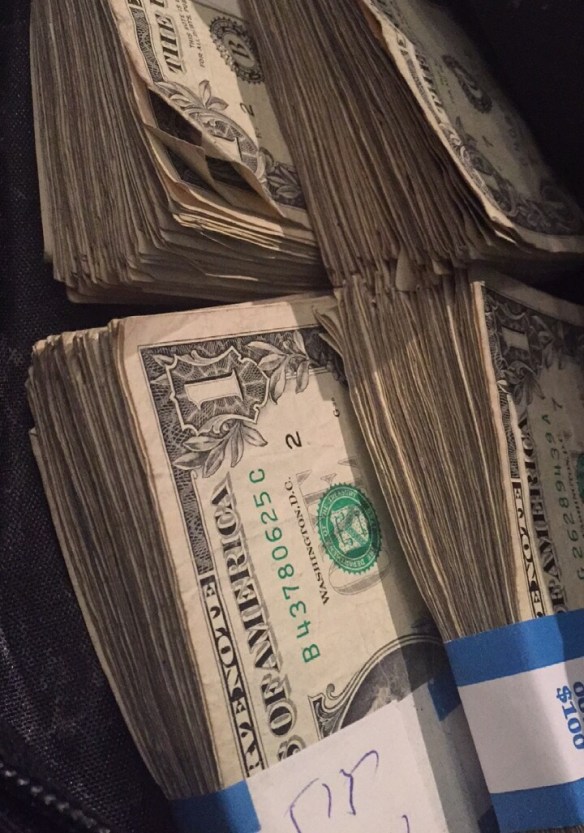
One such item that is replicated in all of my kits is cash.

That’s right, dolla holla yo!

And quite literally, it’s specifically dollar bills y’all. All dollar bills! Look, before you start asking about the singles that are ready to mingle, think about it like this:

During the first outsets of a disaster where infrastructure is non-existent, power is not working, and cell service is out…all your precious credit cards, debit cards, and touchless pay methods will not work. Period.

So tried and true, cash talks. I deploy out with at least $200 in cash to supplement our operations.

Additionally, businesses may not have the capability to provide change so dollar bills will allow you to provide close monetary values for most products.

My esteemed colleague MaryJo Flynn is right, $2 bills would be good because it reduces your weight by 50%…aka 6 ounces. But regardless (or irregardless-eek), small bills/denominations are critical when prepping your kit.

Most definitely, don’t carry two $100 bill and expect change.

Some parts of the country still prefer cash so take that into consideration as you plan on the safety of your family and being able to provide for them during the first 72 hours of a disaster.

Now would be an excellent time to go to the bank and get your singles.

More easy tips tomorrow on your prep kit.

Reporting live and making it rain…..

@rusnivek