Hurricane: Watch vs Warning #NatlPrep #Hurricane

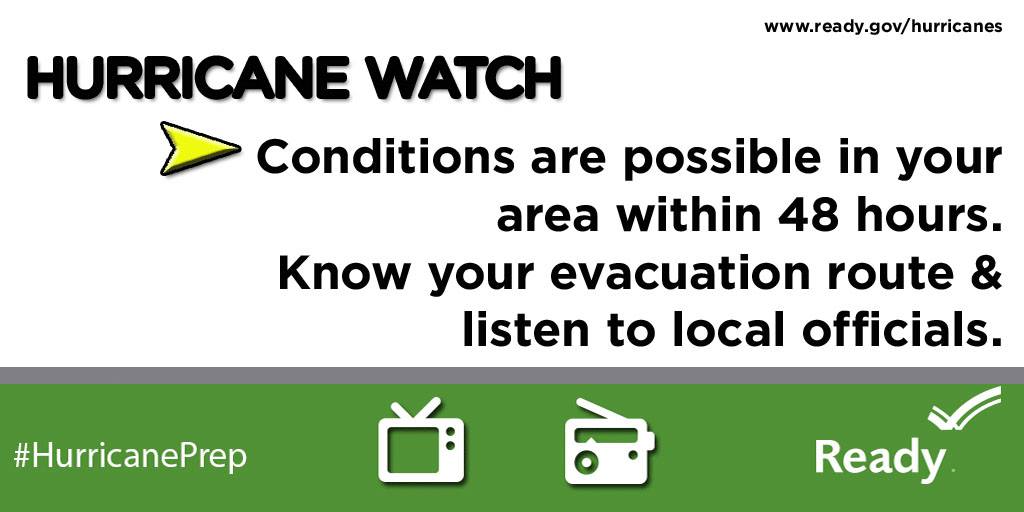
For hurricanes, do you know the difference between Watch vs Warning?

1559250_845215625565125_4829780281827812212_o

and

10478706_845214062231948_8337736483761113188_o

Simple huh?

For more information, check out FEMA’s Ready.Gov program.

And be prepared for the next hurricane!

Don’t wait. Communicate. Make your emergency plan today.

CKYhdyqUMAQdNj1

Awwww yeah, I’m talking about hurricanes on a Windsday.

@rusnivek

Precise Emergency Messaging Safety-PIO-SM-14-002

14-002: Precise Emergency Messaging
Agency: Indianapolis Motor Speedway Topic(s):         Emergency Messaging
Date: Summer 2014 Platform:        General

Mass notification and public messaging about dangerous inbound weather is the latest hot button topic in emergency management because no matter the location, everyone is susceptible. This year has been especially deadly with numerous tornadoes.

You can argue the use of automatic Emergency Alert System (EAS), Integrated Public Alert & Warning System’s (iPAWS) messages, and public address systems are good enough, but successful delivery still comes down to basic messaging.

On May 25, 2014, this message was put up on the main billboard on the field during the Indianapolis 500, which had 300,000+ fans during race time. The National Weather Service (NWS) declared a Tornado Warning before the start of the race.

5

Race Fans? C’mon, you have a captive audience at the motor speedway. And you are addressing everyone there, not just race fans. Most likely, your audience is saying “Great, now what is a Tornado Warning?

Clear and concise messaging is incredibly important because seconds will matter in an immediate evacuation or leading others to shelter…especially with large, open, and unprotected public venues. This particular message was unclear, poorly worded, and definitely not concise.

A more effective messaging and follow-up post should have read:

DANGER! TORNADO WARNING NOW – SEEK SHELTER IMMEDIATELY!

Safe SHELTERS are located at AREA X and GATE X

By phrasing it this way:

1. Your message is short, sweet, and to the point.

2. Capital letters will grab the attention of your audience and convey urgency.

3. Have clearly identified safe locations IN CAPITAL LETTERS will assist those reading your message.

4. Shorter messaging could allow your followers to retweet/repost and amplify your emergency messaging.

5. It is still tornado season so make sure you are prepared by having pre-scripted messages on “what is a tornado warning” and messaging on how to “shelter-in-place”.


All concurrent Tweets, Facebook posts, Instagram posts, etc. should reflect this messaging. If a Tornado warning is issued, timing is of the essence. Do not be lax when it comes to emergency messaging because you don’t want to ruin the fun. For the sake of your constituents, it is better to error on the side of safety.

Time is valuable, so post good stuff.

@rusnivek


***To download this as a single-page printable format, click this: Safety-PIO-SM-14-001

The made up #hashtag Safety-PIO-SM-14-001


14-001: The made up #hashtag
Agency: Bath Township Fire Topic(s):         Prevention and engagement
Date: Spring 2014 Platform:        Twitter

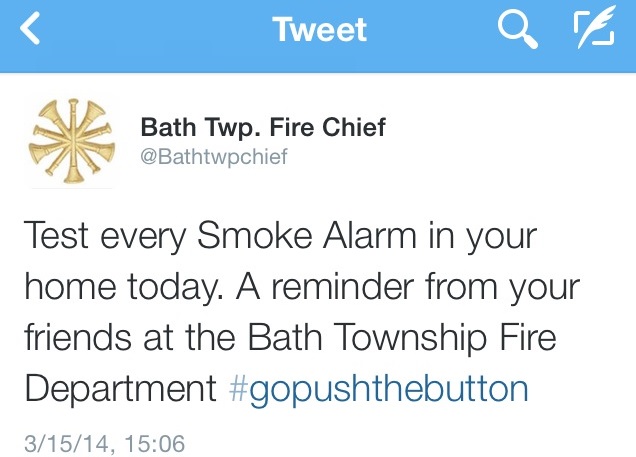
Twice a year, moving our clocks ahead/behind one hour for daylight savings time provides all of us public safety the opportunity to push an easy fire safety tip to our constituents. It’s a good time to remind folks to test their smoke alarms. That’s what BTFD FC did when they posted this message on twitter, which included the #gopushthebuttton hashtag.

photo 1

Keep in mind that Twitter’s mantra is short concise messaging limited to 140 characters. The idea behind a hashtag is to pair your tweet with other tweets out in the twittersverse. So I did a quick search for #gopushthebutton and found only one tweet from BTFD FC. With no other tweets using that hashtags, using #gopushthebutton was just wasted characters.

photo 2

If you use irrelevant or made up hashtags, all you end up doing is wasting valuable space. Long tweets do not allow your followers the room to retweet your valuable content to their followers because of 140 maximum character counts.

A more effective tweet could have read:

Test every smoke alarm & CO detector in your home today. An easy safety reminder from XXFD. More info? www.XXFD.org


By phrasing it this way:

1. You have more visibility by reminding your followers test both smoke and CO detectors.

2. Twitter shows your twitter handle and name with the tweet, so don’t waste space by repeating information already in plain sight.

3. Do not use a made up hashtag as it will confuse your followers. In a serious tweet, use a serious hashtag.

4. Using the word “easy” will likely get your followers to complete a task because it’s easy.

5. Or consider using a more popular hashtag. In this case, #daylightsavings or #springforward

6. Reference your website for more information on detectors. Also you are establishing your agency as a trusted source with good information. And through analytics, you can also track how many people visited your tweeted website which could assist in quantifying your social media efforts.


Time is valuable, so tweet good stuff.

@rusnivek


***To download this as a single-page printable format, click this: Safety-PIO-SM-14-001

cropped-1235 - Copy


Free Wireless Emergency Alerts from @FEMA #OHWX #Prepareness2014

It’s 2014 National Severe Weather Awareness Week from March 2nd through March 8th.

Today, we will focus in on wireless mobile notification alerts!

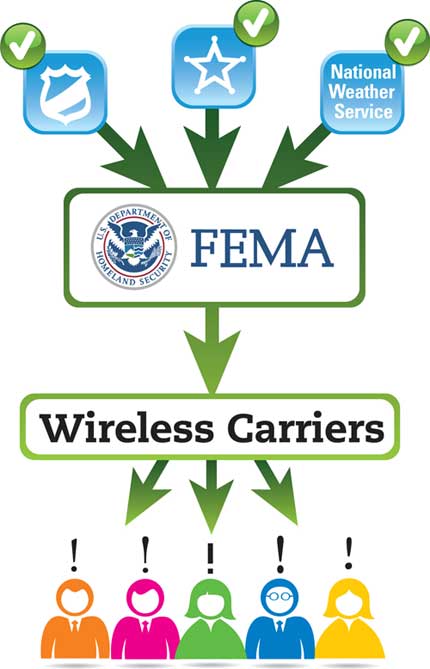
Have you heard of Wireless Emergency Alerts (WEAs)?

  • Alerts received at the right time can help keep you safe during an emergency. With WEA, warnings can be sent to your mobile device when you may be in harm’s way, without need to download an app or subscribe to a service.
  • You can receive important lifesaving alerts no matter where you are – at home, at school, or at work. Numerous public safety officials use reliable systems to alert you and your family in the event of natural or man-made disasters. Many communities also offer emergency alert notifications through their own systems.

fema-wireless-emergency-alert-procedure

Do you know what the Emergency Alert System (EAS) is used for?

  • The Emergency Alert System (EAS) is a national public warning system that requires broadcasters, satellite digital audio service and direct broadcast satellite providers, cable television systems, and wireless cable systems to provide the President with a communications capability to address the American people within 10 minutes during a national emergency.

IMG_3311 copy

Meshing all technologies together, do you know how the Integrated Public Alert & Warning System (IPAWS) is already helping everyone?

  • The Integrated Public Alert and Warning System (IPAWS), is a modernization and integration of the nation’s existing and future alert and warning systems, technologies, and infrastructure.
  • IPAWS’ EAS is the message dissemination pathway that sends warnings via broadcast, cable, satellite, and wireline services. EAS may be used by state and local authorities, in cooperation with the broadcast community, to deliver important emergency information, such as weather information, AMBER alerts, and local incident information targeted to specific areas.
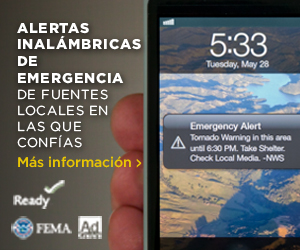
  • The Emergency Alert System (EAS) is a national public warning system that requires broadcasters, satellite digital audio service and direct broadcast satellite providers, cable television systems, and wireless cable systems to provide the President with a communications capability to address the American people within 10 minutes during a national emergency.300by250_Spanish_5

At this time in Ohio, the Integrated Public Alert & Warning System (IPAWS) authorities who have completed the authentication steps are:

1. Ashtabula County

2. Clark County

3. Delaware County

4. Fairfield County

5. Geauga County

6. Lucas County

7. Ohio Emergency Management Agency

8. Tuscarawas County

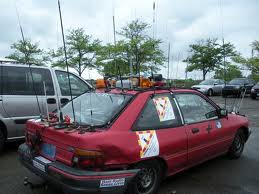
ant

Hope you are paired with one of these local agencies to receive better information during severe weather or major emergency…otherwise, you’ll be left out in the dark.

photo 2

@rusnivek

Statewide tornado siren test today at 0950. Find out what to do here #OHWX

It’s 2014 National Severe Weather Awareness Week from March 2nd through March 8th.

Today, the state of Ohio will be testing all emergency alert sirens at 9:50 a.m.

***Do not be alarmed, it is only a test.***

this-is-only-a-test

It would also be a good time to practice your emergency procedures if a tornado siren/warning goes off.

IMG_5948

Do you know the differences between a Tornado Watch vs a Tornado Warning?

Tornado Watch: Issued by the NWS when conditions are favorable for the development of tornadoes. Be prepared to move to a safe place if weather conditions worsen. Stay tuned to weather updates.

Tornado Warning: Issued by the NWS when a tornado is imminent or occurring. A warning may be issued when a tornado is indicated by Doppler radar or sighted by trained spotters. Seek safe shelter immediately.

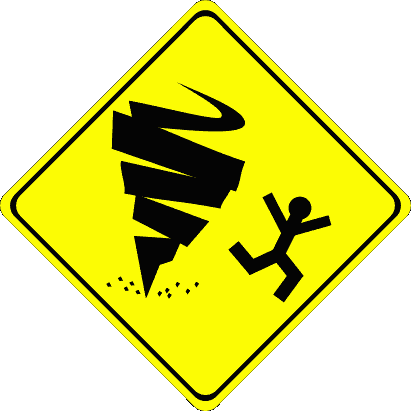
tornado_warning

  • If a tornado has been spotted, seek shelter immediately. If a tornado warning is issued for your area, do not stop to take pictures or shoot video. Continue to listen to a NOAA Weather Radio or local media newscasts for up-to-date weather and emergency information.
  • NEVER touch downed power lines or objects in contact with downed power lines and report electrical hazards to the utility company.
  • Check for injuries. Do not attempt to move seriously injured people unless they are in immediate danger of further injury.
  • Be careful of debris such as damaged structures, exposed nails and broken glass.

photo 1

Stay safe out there peeps!

@rusnivek

No matter how much your pets beg… #Preparedness2014

No matter how much they beg, minimize the amount of time your pets spend outside in severe winter weather #OHWX #Preparedness2014

KacySnow

@rusnivek

Check your vehicle preparedness kit now before this happens to you…

How is your vehicle emergency preparedness kit?

Check it out BEFORE you leave home today!

Be14RkOCIAApv1w

Need some help or ideas in assembling your emergency preparedness kits? Don’t know what to put into your emergency preparedness kits? Check out these free checklists.

Stay safe peeps!

@rusnivek

Winter Storm Watch vs. Warning vs. Blizzard Warning

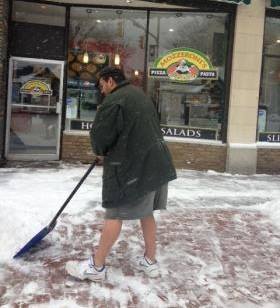
Avoid overexertion when shoveling snow.

Consider stretching before you begin shoveling….and PLEASE wear long pants!!!!!

1601551_410331389069705_161838067_n

Do you know the differences between Winter Storm Watch vs. Winter Storm Warning vs. Blizzard Warning?

Winter Storm Watch: There is a possibility of a storm occurring.

Winter Storm Warning: A storm is already taking place or is expected.

Blizzard Warning: Sustained winds or frequent gusts to 35 miles per hour or greater and considerable amounts of falling or blowing snow (reduced visibility to less than a quarter mile) are expected to prevail for a period of three hours or longer.

Listen to your NOAA Weather Radio for the latest news and weather reports.

@rusnivek

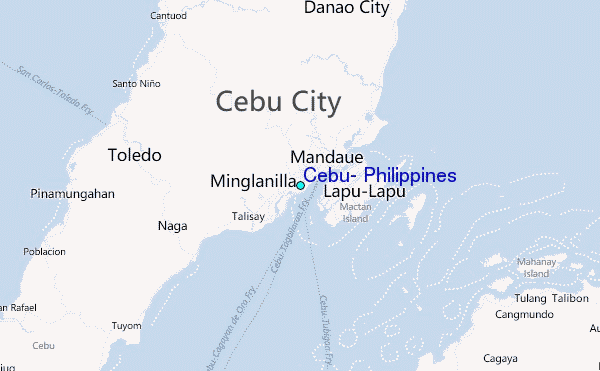
7.2 Earthquake in Philippines – here’s some free tips to stay safe after an earthquake #Cebu #Mindanao #Boljoon #Bohol

For those in and around the Philippines, take caution in all activities.

Cebu-Philippines_10

Here are some tips that you can use as you recover from your large earthquake.

  • When the shaking stops, look around to make sure it is safe to move. Then exit the building.
  • Expect aftershocks. These secondary shockwaves are usually less violent than the main quake but can be strong enough to do additional damage to weakened structures and can occur in the first hours, days, weeks, or even months after the quake.
  • Help injured or trapped persons. Remember to help your neighbors who may require special assistance such as infants, the elderly and people with access and functional needs. Give first aid where appropriate. Do not move seriously injured persons unless they are in immediate danger of further injury. Call for help.
  • Look for and extinguish small fires. Fire is the most common hazard after an earthquake.
  • Listen to a battery-operated radio or television for the latest emergency information.
  • Be aware of possible tsunamis if you live in coastal areas. These are also known as seismic sea waves (mistakenly called “tidal waves”). When local authorities issue a tsunami warning, assume that a series of dangerous waves is on the way. Stay away from the beach.
  • Use the telephone only for emergency calls.
  • Go to a designated public shelter if your home had been damaged and is no longer safe.
  • Stay away from damaged areas. Stay away unless your assistance has been specifically requested by police, fire, or relief organizations. Return home only when authorities say it is safe.
  • Be careful when driving after an earthquake and anticipate traffic light outages.
  • After it is determined that its’ safe to return, your safety should be your primary priority as you begin clean up and recovery.
  • Open cabinets cautiously. Beware of objects that can fall off shelves.
  • Put on long pants, a long-sleeved shirt, sturdy shoes and work gloves to protect against injury from broken objects.
  • Clean up spilled medicines, bleaches, gasoline or other flammable liquids immediately. Leave the area if you smell gas or fumes from other chemicals.
  • Inspect the entire length of chimneys for damage. Unnoticed damage could lead to a fire.
  • Check for gas leaks. If you smell gas or hear blowing or hissing noise, open a window and quickly leave the building. Turn off the gas at the outside main valve if you can and call the gas company from a neighbor’s home. If you turn off the gas for any reason, it must be turned back on by a professional.
  • Look for electrical system damage. If you see sparks or broken or frayed wires, or if you smell hot insulation, turn off the electricity at the main fuse box or circuit breaker. If you have to step in water to get to the fuse box or circuit breaker, call an electrician first for advice.
  • Check for sewage and water lines damage. If you suspect sewage lines are damaged, avoid using the toilets and call a plumber. If water pipes are damaged, contact the water company and avoid using water from the tap. You can obtain safe water by melting ice cubes.

For more up to the minute information, consider following @philredcross for more details.

Stay safe everyone.

@rusnivek

Pants down during a disaster? #NATLPREP #BreakingBad

Getting caught w/ your pants down during a disaster isn’t funny. Be Prepared! #NATLPREP #BreakingBad

imagesCA4Q8BHP

@rusnivek