Surviving catastrophic flooding and key USAR numbers deployed

A few home safety tips on surviving catastrophic flooding.


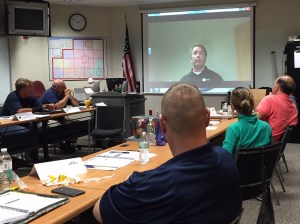
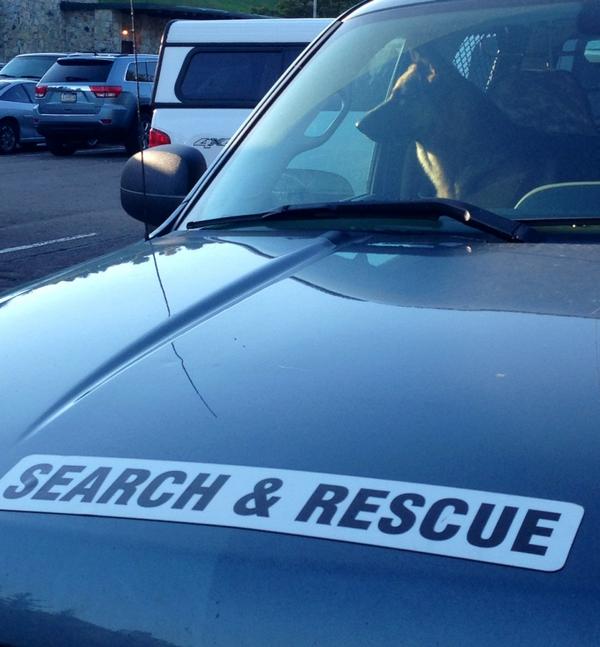
Some key USAR facts (from this morning’s brief):

  • 6 type-1 FEMA USAR Task Force Teams deployed.
  • 8 type-3 FEMA USAR Task Force Teams deployed.
  • 13 Water Rescue Teams from FEMA USAR Teams deployed.
  • Over 900 USAR personnel working.

Stay safe out there.

@rusnivek

JumpSeatRadio in 3..2..1… #JumpSeatTraining #JumpSeatViews

Whut. Is. Happening.

img_6141

Is that Ryan Pennington…that famous JumpSeatViews Firefighter from Charleston Fire?

jumpseattrainingbanner

Yeppers-that’s JumpSeatTraining.

Oh yes, let’s crash this podcast party.

img_6139#famous in 3…2..1…

img_6145

Listen in here.

Jumpseat Radio 057 PIO with Kevin Sur

In this week’s edition of Jumpseat Radio host, Ryan Pennington welcomes his good friend, and PIO Master, Kevin Sur.  Kevin travels around the world serving in multiple roles with local, state, and federal government agencies preparing for emergencies. Kevin is a Social Media Master that teaches the benefits and uses of the multiple platforms to different agencies. 

Mahalos to Ryan for letting me crash his party!

Reporting live from behind the JumpSeatMic…

@rusnivek

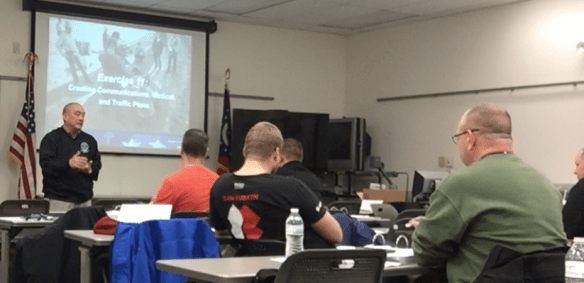
Final day of the AH #IMT #Logistics Section Chief course w/ OH-TF-01

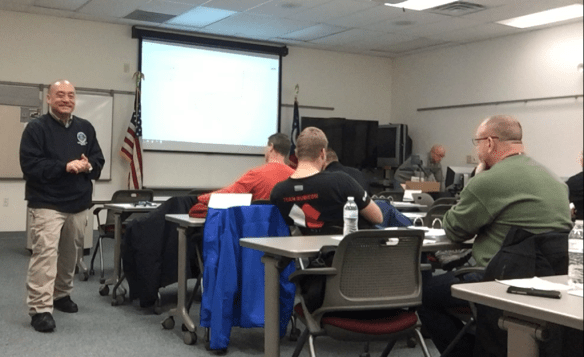
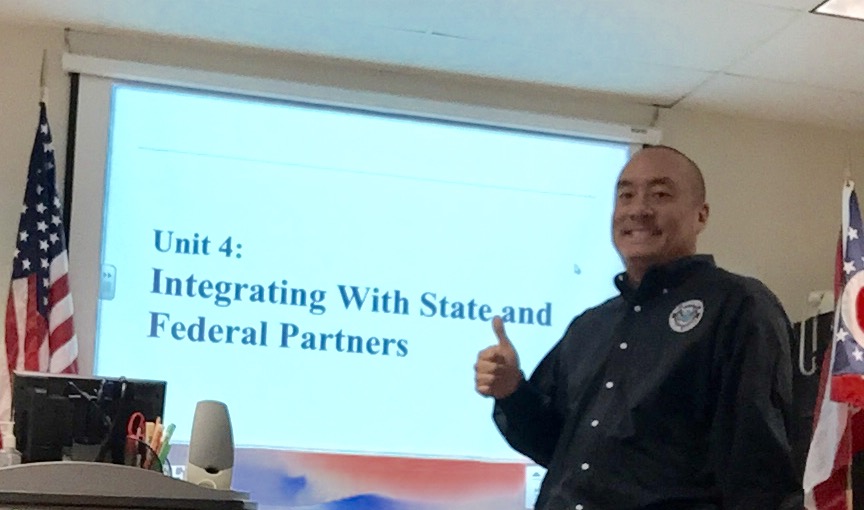
Day-5: Final day of the DHS/FEMA Ohio EMA All-Hazards Incident Management Team Logistics Section Chief course.

img_5825

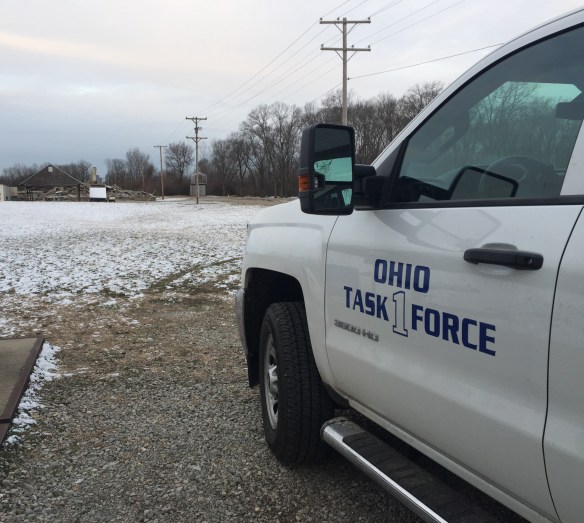
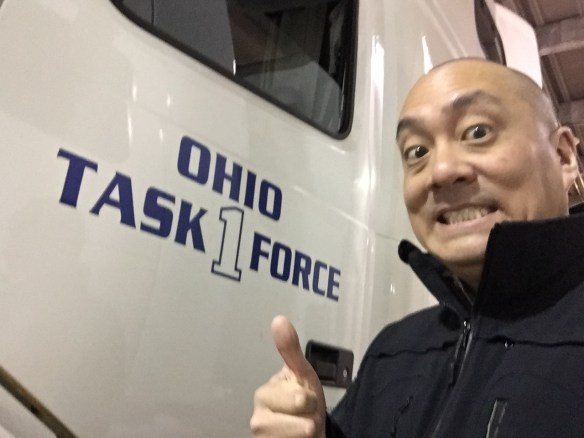
Again, special thanks to FEMA USAR Ohio Task Force-1 for hosting this week.

Solid morning as we talked about how the LSC frequently meets with the PSC well before much of the action happens.

c4t8bmcwaaahwbi

In fact, it is likely that the LSC is at least 5 steps ahead of the OSC – to plan to supply and equip our tactical operations with the stuff they need.

img_5834

Ohio EMA LSC Phil Johnson brief the class on how county agencies interact with our activated State EOC focusing in on resource ordering and task assignments.

img_6494

Like good Logistics Section Chiefs, we debated the merits of pre-staging resources before they are needed for faster deployments and anticipating needs (leaning in).

img_5833

Lots of discussion on EMAC and the success that the State of Ohio had with 2016 events including the 2016 Republican National Convention which was classified as a NSSE.

img_5911

We discussed demobilization plans as well as factors that could contribute to delayed demob. As always, we emphasize on the safe return of all crews from disaster deployment.

img_5828

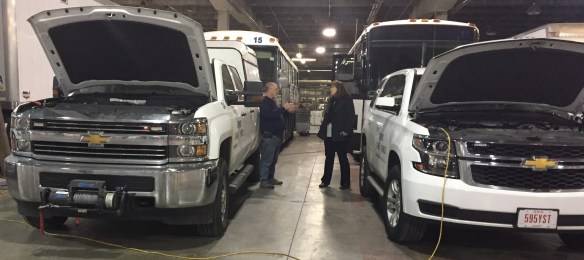
At the end of the day, we were able to tour the DHS/FEMA USAR OH-TF-1 facility.

img_5849

Amazing stuff!

img_5843

Logistics plays a HUGE part of daily operations as they have thousands and thousands of pieces of deployable items needed for disaster operations.

img_5852

So as you can see, LSCs have an insurmountable task of keeping order during non-disaster times.

img_5848

For those in the military and are truly Logistics pees, I believe this is an amazing piece of equipment.

img_5851

If you are a pro, and like to sling load your stuff, you should consider getting a few.

Special thanks to all the pros from DHS/FEMA Ohio USAR Task Force-1.

Yes it's Friday. That is an Aloha Shirt.

Yes it’s Friday. Look closely. That is an Aloha Shirt.

Superb ending of class with participants from numerous states on this #AlohaFriday!

Proud to serve my country and train other IMT LSCs from across this great nation.

@rusnivek


#AlohaFriday for paperwork and meetings at OhioEMA

On this #AlohaFriday – I report to the OEMA mother ship!

img_9229

I had to take care of some TPSReports for ICS classes. Talked about upcoming October/November schedules with both SAAs on a few ICS-300 and ICS-400 about registration issues as well as my packed IMT class for FEMA’s USAR Ohio Task Force-1 (OH-TF-1).

I was fortunate to visit with good friends Jerry and Sima. Hilarious!

Lots of discussion on the RNC as well as National Preparedness Month.

And yes, all done with the Aloha Shirt on.

@rusnivek


Local Fire Department does EMS too! #EMSWeek2016 #EMSStrong

Happy EMS week peeps.

In many parts of the country, local Fire Departments also run all the EMS calls too.

CFDRescue

Whether Emergency First Responder (EMR), Emergency Medical Technician (EMT), Advanced Emergency Medical Technician (AEMT), or Paramedic – they are ALL a part of the safety in our jurisdictions

Thank your local Emergency Medical Services Professionals for a job well done!


What is EMS Week?

Since President Gerald Ford first recognized EMS Week in 1973, communities, hospitals, healthcare organizations, survivors and EMS agencies spend a week every year in May recognizing the lifesaving work of EMS professionals. AROUND THE COUNTRY, EMS Week is celebrated with a variety of events.

2016 EMS Week: Sunday May 15 through Saturday May 21

emsweek

What is EMS Strong?

The EMS Strong campaign seeks to celebrate, unify and inspire the men and women of our nation’s emergency medical services. Created by the American College of Emergency Physicians (ACEP) in partnership with the National Association of Emergency Medical Technicians (NAEMT), EMS Strong brings together associations, EMS services, sponsors and national media to honor the dedication of EMS practitioners nationwide.

@rusnivek

JIS – JIC planning class for Tribal State and local PIOs

A fine day to teach the Ohio Emergency Management Agency’s JIS / JIC Planning for Tribal, State, and Local PIOs (G-291) course in Medina County!

1

A classic start with The Who.

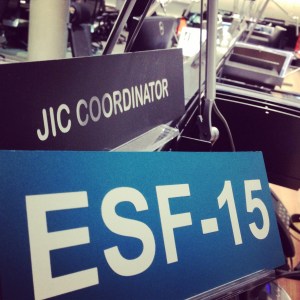
One of the big points emphasized in this class is the differences between a Joint Information Center (JIC) and a Joint Information System (JIS). Both have merits in daily operations and each have strengths and weaknesses in disaster operations.
IMG_6533

Sometimes PIOs don’t understand that a JIC or JIS activation is just like a normal activation. If you can’t figure out the differences between the two, take the class from those who have actually worked a JIC or a JIS.

IMG_6546

On Tuesday/Wednesday in the Basic Public Information Officers’ Course (G-290), we talked about training and readiness efforts for any PIO. Go Kits were a hot button topic as everyone’s PIO kit would most likely be different. Resource manuals are great to have, but difficult to keep updated. Just maintaining a PIO contact list is a tedious task.

Much discussion about food in the kit. This was obviously NOT a good example of what you should be eating during an JIC activation.

2

Prob not the best lunch.

Healthy body = Healthy mind. Period.

As the day progressed, we facilitated several in-depth discussions on teamwork, joint efforts in responses as well as some pre-scripted messages that can be used by everyone. Planning now will reduce the amount of white hair during an incident.

Establish relationships now with local health departments, local and regional hospitals, local Hazardous Materials (HAZMAT) Teams, Special Technical Rescue Teams. Easily rely on your state staff and resources to support your actions. A great wealth of information is available to bring to the table. Just establish that connection before that awkward 0300 hit.

Additionally, tapping into local resources from other Federal Agencies like the Federal Bureau of Investigations (FBI), Bureau of Alcohol Tobacco, Firearms, and Explosives(ATF), National Weather Service (NWS), Environmental Protection Agency (EPA)Immigration and Customs Enforcement (ICE), Customs Border Patrol (CBP), National Transportation Safety Board (NTSB), Federal Aviation Administration (FAA), etc…so many options to establish relationships!

3

“Building relationships now can only increase our response effectiveness during a disaster.” – K. Sur

Looking outside government agencies, public and private partnerships can support our safety and response initiatives – so we need to make a concerted effort to make those connections now. Build relationships before a disaster!

4

Sur and Mo!

So how can you bring all these resources together? Consider these actions to explore in your jurisdiction:

  • Train. Train. Train.
  • Open discussions with various providers.
  • Invite your all-hazards partners to meetings.
  • Meet regularly. Maintain contact.
  • Take classes together.
  • Share resource lists and contacts.
  • Support each other during operations.
  • Review After Action Reviews / Improvement Plans (AARs/IPs) together.

5

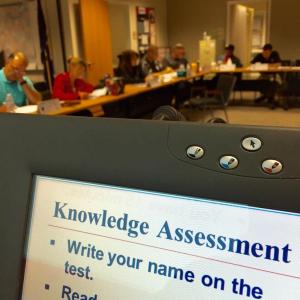
And if you were wondering, class participants did well on their post-tests.
6

Psssst…the answer is “C” #not

We had a great time teaching this week. Much thanks to the Medina County Emergency Management Agency and EM Director Christine Fozio for their hospitality. Super fun time.

7

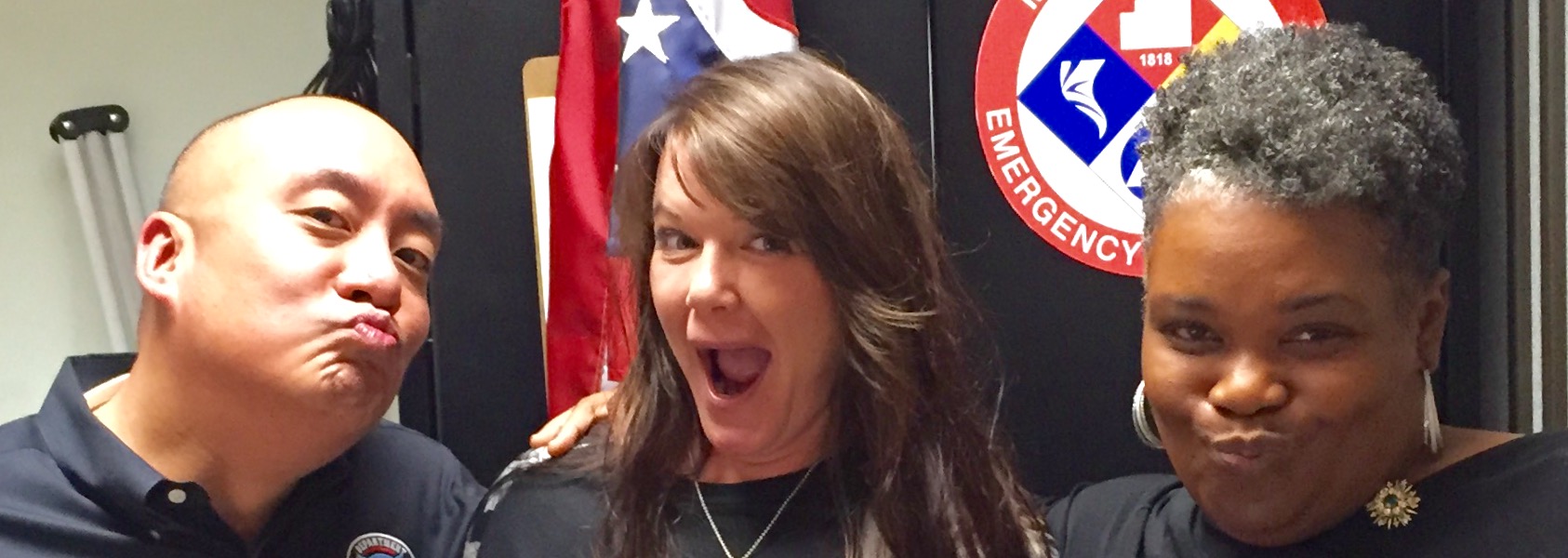
So much ducking fun (duck face reference)

Special thanks to the Ohio Emergency Management Agency for sponsoring this all-hazards class for our partners in public safety.
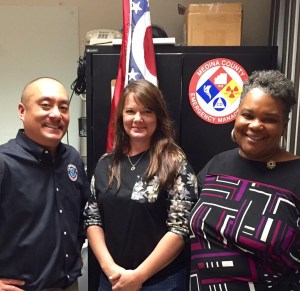
8

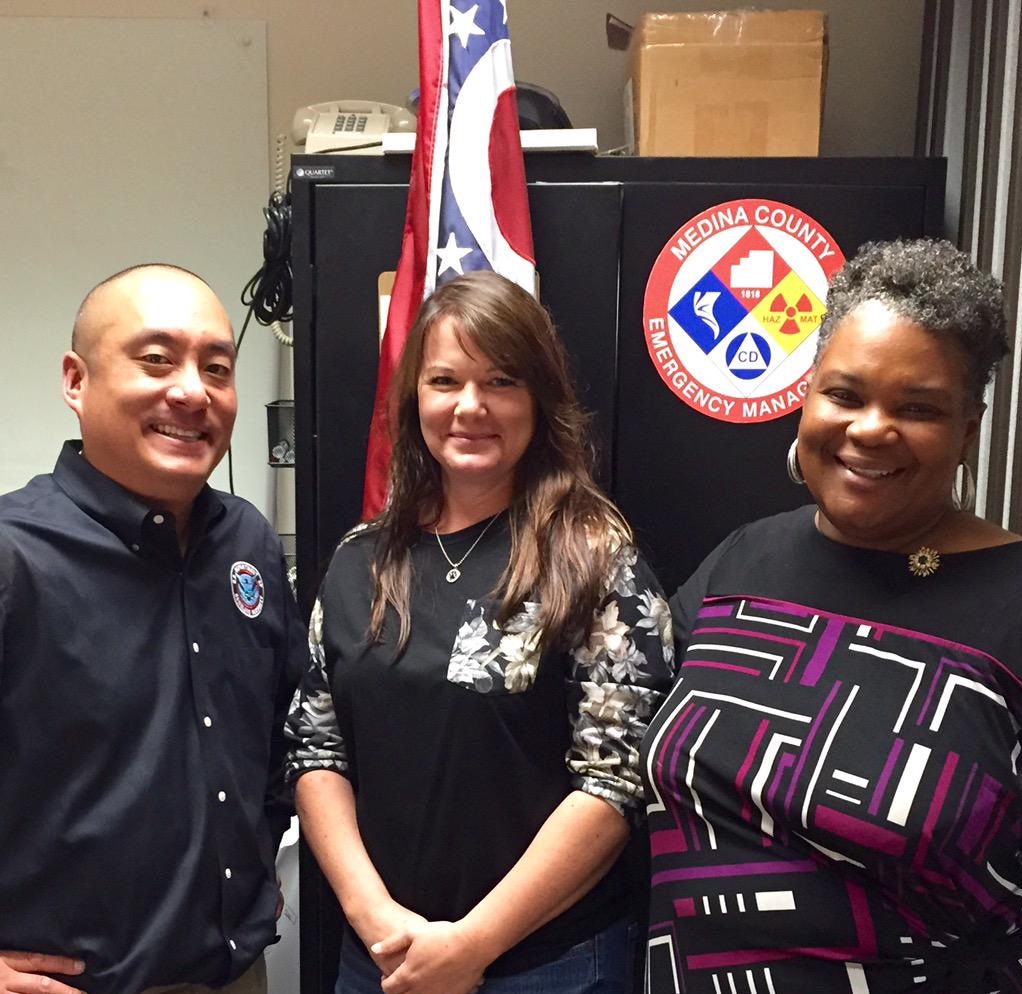
(L to R): PIO Instructor Kevin Sur, Medina County Emergency Management Director Christine Fozio, and PIO Instructor Monique Witherspoon.

If you are looking to attend OEMA’s free PIO courses:

  • Public Information Officers Awareness course (G-289)
  • Basic Public Information Officers’ course (G-290)
  • JIS / JIC Planning for Tribal, State, and Local PIOs course (G-291)

**coordinate through OEMA State Training Officer Susan Traylor.

SurPaperTowels

As always, I’m looking forward to the JIC / JIS activation calls. I am excited for these new PIOs to put their new acquired PIO skillz in place. And yes, I said skillz with a Z.

Time is short so do good stuff!

@rusnivek

Final day of instructing Ohio EMA’s Basic Public Information Officers Course

Final day of the Ohio Emergency Management Agency’s Basic Public Information Officer Course (G-290). Kaboom!

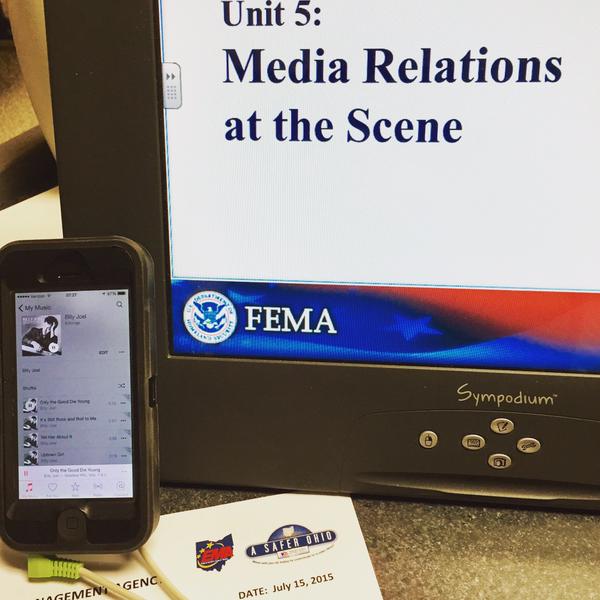
Before class started, we pumped a little Billy Joel through the ECC&C speakers.

CJ9Vo8mUkAAIEAf

We talked about what kind of information needs to be disseminated including categorizing messages by priority. Obviously, we discussed various social media platforms and a few publishing options to maximize visibility.

CJ-bUKTWEAA9tNl

Basically, it still comes down to maximizing our efforts during a disaster or emergency.

Working in groups, all participants formulated action items to implement at their agencies. Incidentally, this is truly the reason why so many ICS classes exercise in groups…is to help facilitate open dialogue. Building relationships is easier in an open classroom setting.

And yes, 0300 is NOT the time to be meeting fellow public safety professionals for the first time in the EOC.

As a group, we evaluated everyone’s TV PIO interview.

CJ-wTT-WEAAhI7G

Everyone shared constructive recommendations with the entire class. Everyone.

1

In fact, the private industry crew really enjoyed the training and wanted to work/train more closely with various public safety agencies (Hmmmm, I sense this could be the start of a public-private-partnerships-EEEK).

In the end, more group work and a secondary interview helped participants to become more comfortable in front of the camera.

Additionally, non-verbal actions including certain physical cues were shared to help PIOs take back control from an aggressive reporter and take control of the interview.

2

Remember, the important point to remember is….

3

Reporting live from FEMA Region-5, at the Medina County Emergency Coordination Center & Classroom…

SurPaperTowels

@rusnivek

Technical jargon and giving actionable information Safety-PIO-SM-14-006

14-006: Technical jargon and giving actionable information
Agency: Chicago Fire Department Topic(s): Industry codes / Actionable info
Date: Fall 2014 Platform: Twitter

Industry speak or technical jargon is part of what we do every day. But using technical terms on a social media platform will be confusing to those who are NOT in the fire service. That’s what the Chicago Fire Department did yesterday at their big 3-alarm fire when they tweeted technical jargon.

imageaimage

The use of technical jargon is rampant in emergency services but when speaking to the media or the general public, we need to remember that everyone did not grow up with a VOX alarm or SCU tones. In this case, a “311” or 3-11 alarm means that there are 11 engines, 5 Trucks, 2 Tower Ladders, 6 Battalion Chiefs, 1 Rescue Squad, 2 Ambulances, 2 Paramedic Chiefs, Deputy District Chief, Deputy Fire Commissioner, and the 1st Deputy Fire Commissioner are onscene. There is no way to include all that information in a tweet, but using more simple terms will help your audience understand the scale of your ongoing incident.

Before you post images, make sure your pictures are rotated correctly. I know accuracy is sometimes overlooked in lieu of speed, but it takes less than 5 seconds to orientate/rotate a picture (In this case, it was going to be a long operation). And note, by just rotating a picture does not equate that you are “doctoring up” photos. But a correctly posted photo will help media repost and format your information quicker to the masses.

During an emergency situation, your constituents need the information pushes to be actionable and specific to your audience. Not only inform them of the danger, but tell them what they can do about it.

A more effective tweet could have read:

Chicago Fire: Large 3-alarm fire at Harrison St x Fifth Ave. Traffic delays-avoid the area. (insert two pictures)

By phrasing it this way:

  1. You cite the authority having jurisdiction and established incident command presence.
  2. You generally described the size/category of the ongoing incident and critical information to media.
  3. You identify the exact location of the incident.
  4. You describe the delays in the area and give actionable information to your constituents.
  5. You still have lots of room to push properly orientated pictures with your informational tweet.


Time is valuable, so tweet good stuff.

@rusnivek

***To download this as a single-page printable format, click this file:

TechnicalJargonAndGivingActionableInformation-Safety-PIO-SM-14-006