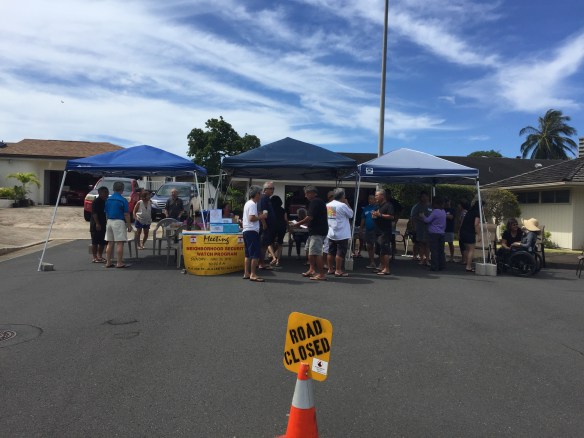
I’m proud of my Dad who setup his Neighborhood Watch Program.
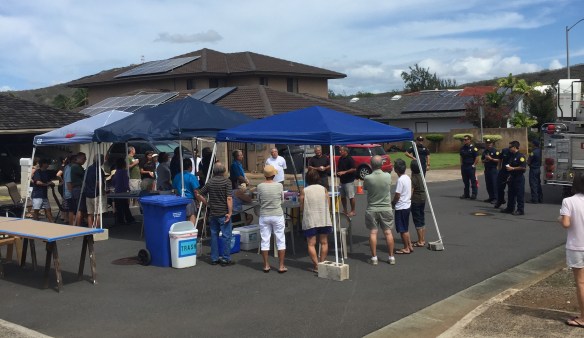
Dad has been planning this for months now and even posted signs to get everyone involved. Because inviting and talking with the entire neighborhood about safety related topics are the key points of the Neighborhood Watch program. Also, my Dad went big – he blocked off the entire cul-de-sac for his event!
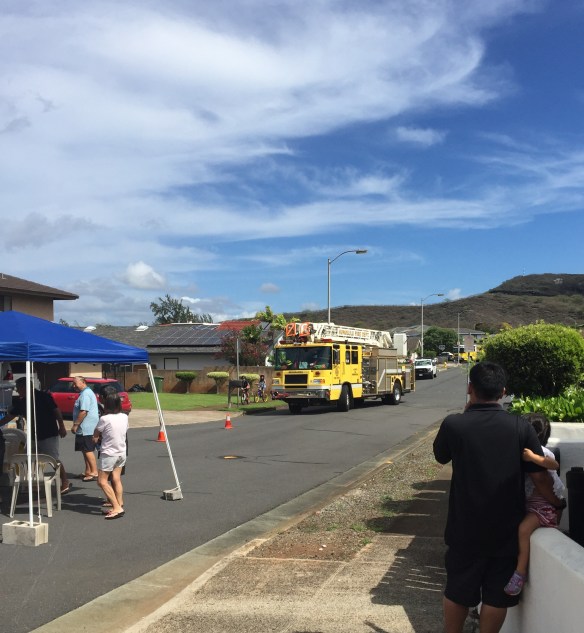
Honolulu Fire Station-30 (Engine-30 & Ladder-30) stopped by to share some safety tips and what to do during an emergency.
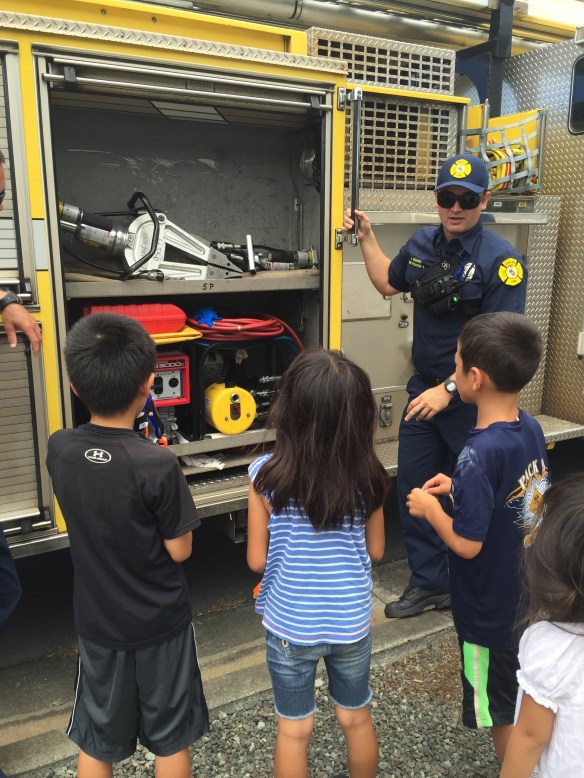
Ladder-30 showcased their equipment for everyone to see.
Talked about ventilation saws for trench cuts and vertical cuts for fires.
Also talked about extrication tools and generators for car accidents and confined space rescue.
All the kids in the neighborhood got a chance to try out the headsets used for communications in the apparatus.
Honolulu Police stopped by too.
Even a surprise flyby thanks to Honolulu Fire Air-1 Helicopter.
In the end, this kind of neighborhood program is truly the basis of a safer community.
Education, particularly teaching kids during an emergency, how to call 9-1-1 is crucial to a safe community.
My Dad volunteered to do this. Yep, not paid. Just doing his part to keep his neighborhood and community safe. LOVE IT!
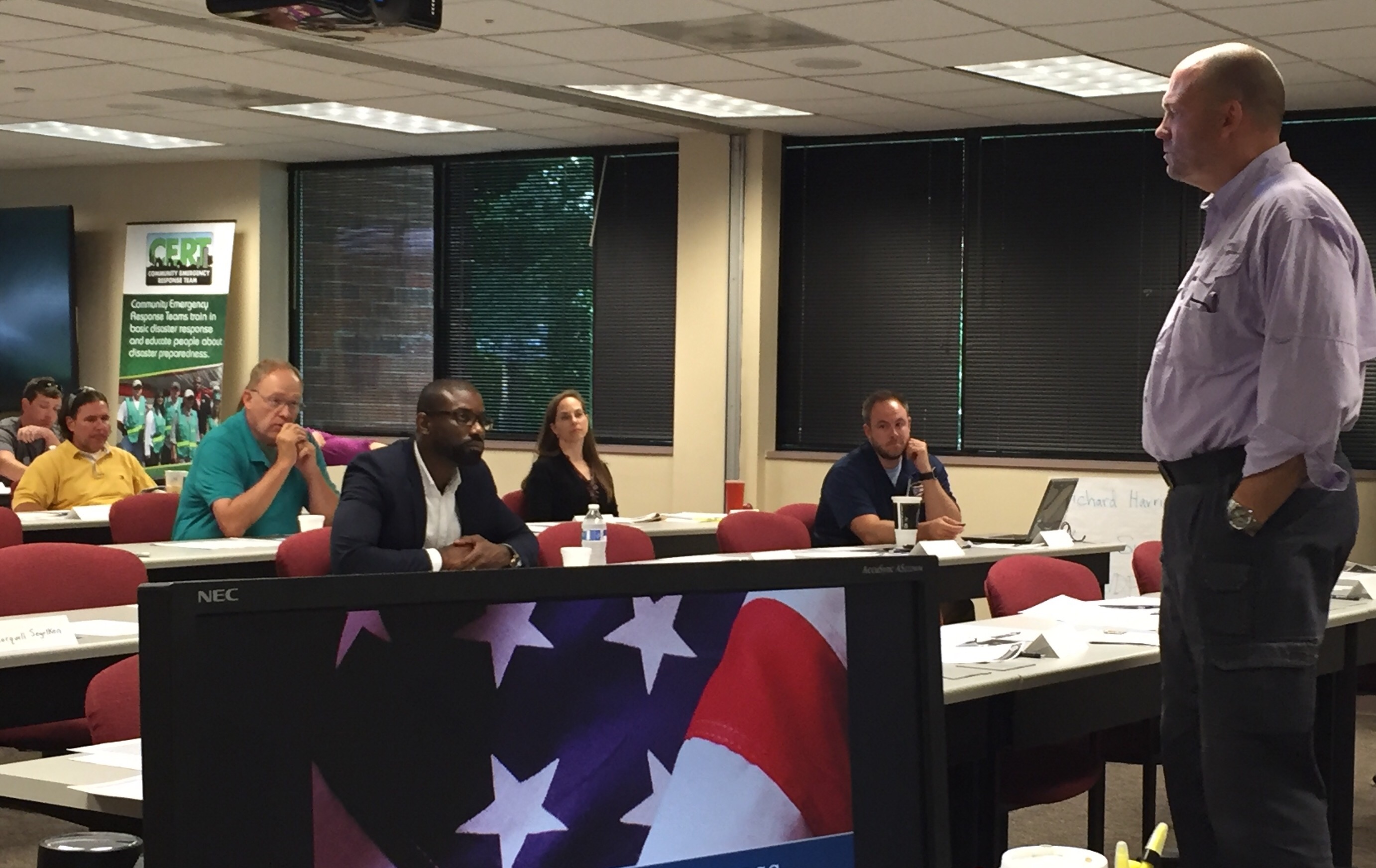
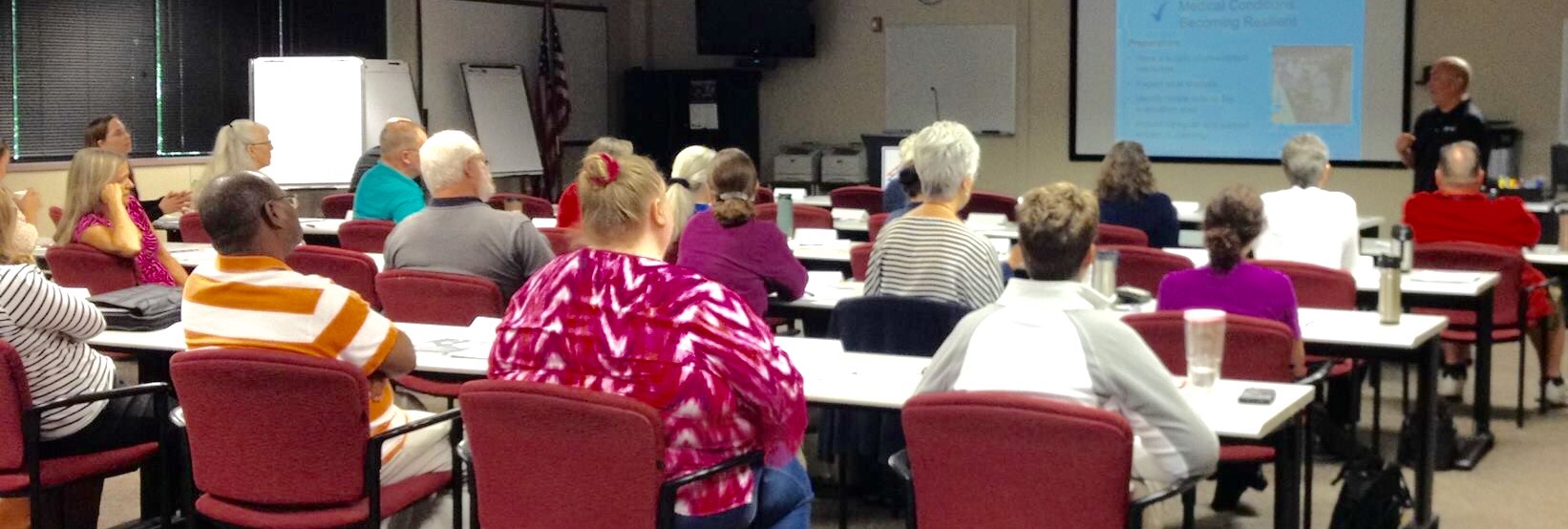
There are many other volunteer programs showcased by DHS/FEMA’s awesome Ready.Gov campaign on safety. Just like my Dad, I volunteer too with my community’s Community Emergency Response Team (CERT) aka RH-CERT.
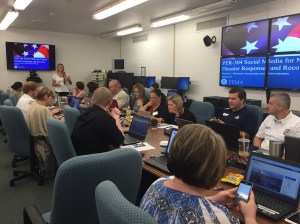
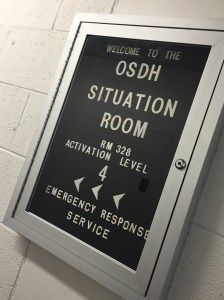
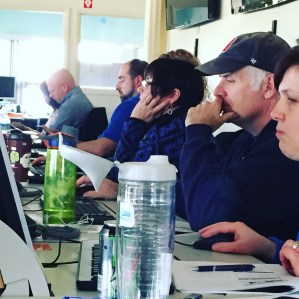
I was requested to support the Department of Homeland Security’s 2016 Science and Technology Cause-4 International Exercise between the United States and Canada today.
But crossing borders is more difficult than you think – esp when dealing with patient privacy, tactical operations, and coordinating efforts amongst ultra type-A personalities.
This is why training and exercising is so crucial to agencies who want to make a different in their communities they serve. This is also why Emergency Management is ideally a solid coordinating entity for this type of response.
In this particular international exercise, emergency response agencies are testing EMS response, transport information, sharing actionable data, social media, and a whole lots others stuff.
I’m just glad to be a small part of the work by so many people and agencies.
I am convinced that through joint exercises, we can build stronger core agencies and be better responsive to emerging threats and hazards.
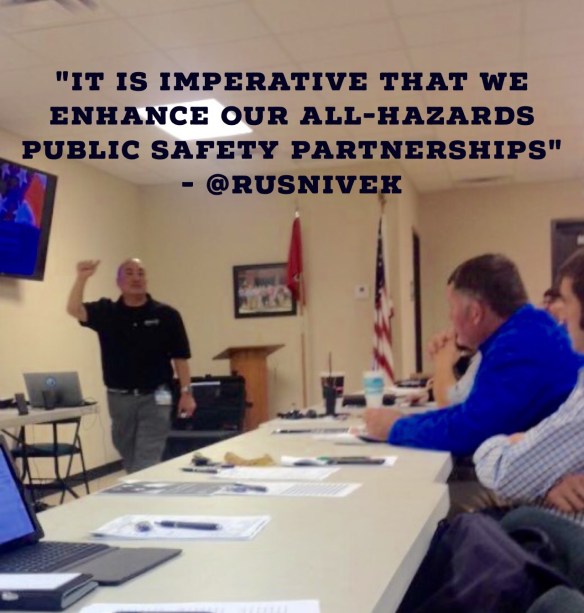
“It is imperative that we enhance our all-hazards public safety partnerships.” – Kevin Sur.
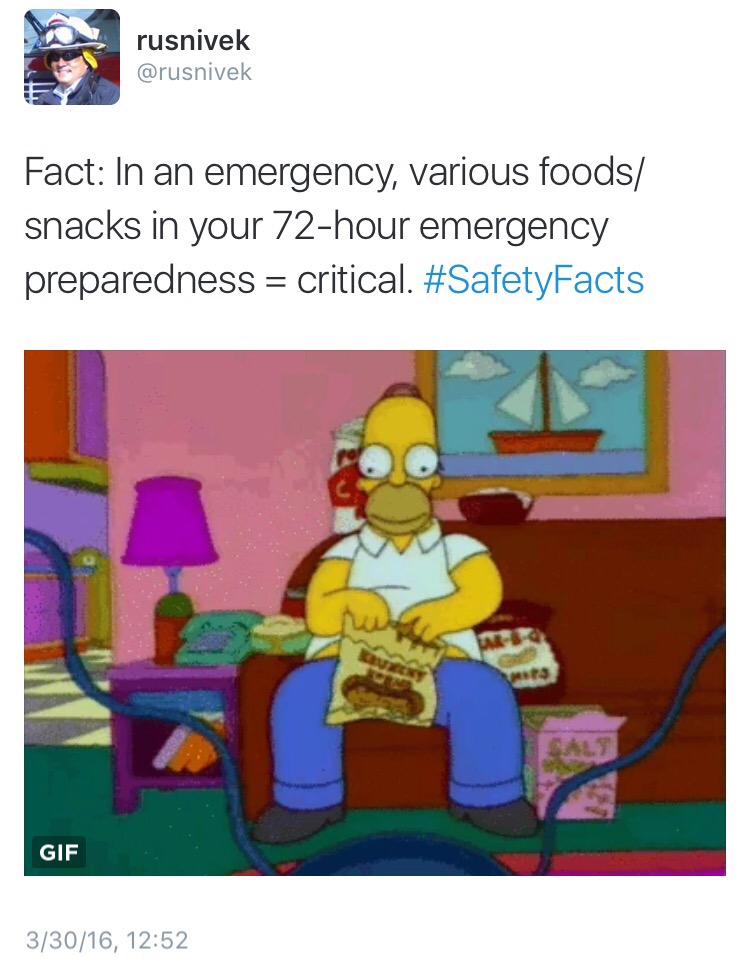
Using SnapChat for preparedness isn’t as easy as one would think.
So here is yesterday’s snap in sleet.
Few items that I have to ponder for next time:
1. Portrait vs landscape. Since MOST of our recipients will be viewing this on a mobile platform (vertical), we should shoot the videos in portrait mode. That makes “selfie” solo production a bit more difficult. Hint: You might want to stop making fun of that selfie-stick now and get one.
2. Outside conditions (esp in our line of work) necessitates an external lav mic. I have one and I totally forgot to use it.
3. Framing needs to be assessed because the shot needs to include room for text.
4. Remembering which side is up during landscape video shooting is important. (I purposely did it so I can see if viewers rewatched the video to get the full effect). But SnapChat’s analytics don’t show amounts on segments – it only shows who has initially watched.
5. My shot list should have included various parts of the vehicle. Similar to a news package, varied backgrounds would likely keep audiences more engaged and keep their interest.
6. Filming in sleet isn’t fun.
7. Clean your lens. A lot.
8. Turn off your engine. Ambient noise will affect your sound (esp being so close).
9. I should have used some sort of emoticons to appeal more to a younger demographic/audience.
10. Saving the snap to YouTube (in its entirety) so that it can be used for other preparedness efforts (including separated sections).
I know the 10 items are detailed and nerdy, but as PIO or PAO or Communications Pros, I feel we should regularly share our lessons learned with others so we can all improve our tactics and deliveries.