Assigned: 4420DR – NE
Tasked: FEMA PIO Incident Management, External Affairs Kevin Sur
Reporting to the JFO. (USNG: 14T PL 91778 25366)

See you in a few hours.

Assigned: 4420DR – NE
Tasked: FEMA PIO Incident Management, External Affairs Kevin Sur
Reporting to the JFO. (USNG: 14T PL 91778 25366)
See you in a few hours.
Day-2 of the new 2019 ICS-400 course! This morning, we start out talking about the deadly 2005 Hurricane Katrina/Rita response with the US Coast Guard.

Facilitated discussion allows our participants to openly discuss perceived issues. Lots of response actions from all of our participants that can contribute to a successful response. Glad we had fruitful discussion prior to the actual disaster.
Our class also acknowledged the national Emergency Alert System Test today for TV and radio.

Everyone in class knew about it…aka prepared leadership and pros. Love it!

Midmorning and afternoon class-time was spent on the capstone activity with heavy discussion on the use of area command and how we allocate resources for multiple jurisdictions.

And you are right if you said that the rotor wing options are high on the list of valuable recourses.
Channeling my best FEMA EMI Bob Ridgeway, “…and don’t worry sports fans” moment, we included the infamous State of Columbia!

This fictions town is always a disaster.
Great to see so many partners discuss overarching goals including challenges with the big three public safety providers. Like pros, they included a large bite into health intelligence, DoD assets, and of course addressing various audiences like the tribal nations. Solid!
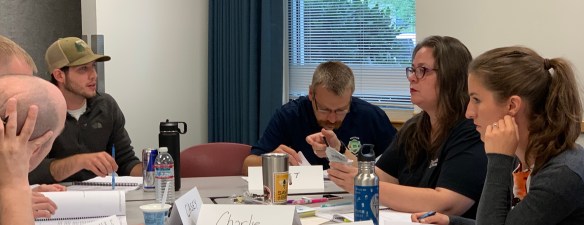
Proud to serve my fellow public safety pros from all professions this week in the ICS-400 course.
Good morning peeps – welcome to the new 2019 ICS-400: Advanced ICS!

Proud to be one of the first instructors to roll this course out to our public safety partners that popped in late July. This week’s class? We have a bunch of pros from all backgrounds including Fire, EMS, Police, Healthcare, Public Works, Communications, Health Department, National Guard, Civil Support Teams, State, VA, Intelligence, and Tribal nations. I’m proud to serve all these pros.

Lots of discussion on preparedness efforts esp with some of the projected large disasters from across the country. In fact, discussion on preparedness for Cascadia Rising, New Madrid Fault, and national infrastructure failures were consistently discussed through the day. Related note: Proud to hear of sooo many prepared pros in class this week.
Classically, lots to share as Emergency Management pros continues to coordinate response through training and exercises. Train like you fight right?

Aside from powerpoints, the new ICS-400 has a bunch of in class activities that talk about complex incidents, Unified Command, and area command. Productively discussing issues in class BEFORE a disaster can only help to understand challenges that many agencies face…which could be exacerbated during crisis/emergency.
Glad to have engaged professionals in class this week.

Get your ICS on!
One way we can teach our community (using Emergency Management concepts)…..is flooded roadways. Yep, that’s right, we often have the general public drive their cars through flooded roadways and get into trouble, injured, or die.

So lemme break it down in our five phases of Emergency Management
Statement: One of the common emergencies Emergency Management see during heavy rains is flooding.
Mitigation: In past flooding, Emergency Management have identified areas that are susceptible for flooding that is unsafe for any safe passage under this bridge.
Preparedness: Emergency Management has painted a highly visible ruler on the bridge pillar to help public safety (or anyone) to address and evaluate the water levels.
Protection: By identifying the dangers, Emergency Management is better able to coordinate resources used to protect the public as we can now focus our efforts on barriers, caution tape, road closures, etc…
Response: During terrible weather, Emergency Management can share critical safety messages with the public and allocate more resources used to rescue individuals who did NOT heed the warnings.
Recovery: Thanks to proper preplanning, Emergency Management can reference pictures of this flooded area that can be leveraged against non-disaster time pictures which can provide good background for windshield surveys and damage assessments for state, regional, and Federal partners.
Boom.
Good way to improve the safety of your municipality.
Great way to enhance your operational coordination and recovery efforts.
Outstanding way to improve the resilience of your community.
Can you do this in your community? You sure can, just contact your local Emergency Management Agency for more details.
As part of our ongoing efforts to help enhance the skills of the PIO across the country, here’s another #MediaMinutes interview w/ RTV6 Paris Lewbel!
For more information on Paris-
@Twitter: https://twitter.com/PLewbel
@Instagram: https://www.instagram.com/plewbel/
@Facebook: https://www.facebook.com/paris.lewbel
Happy Monday everyone!
Despite not wearing pink today, we got a solid start to a great response and recovery course here in Massachusetts today.
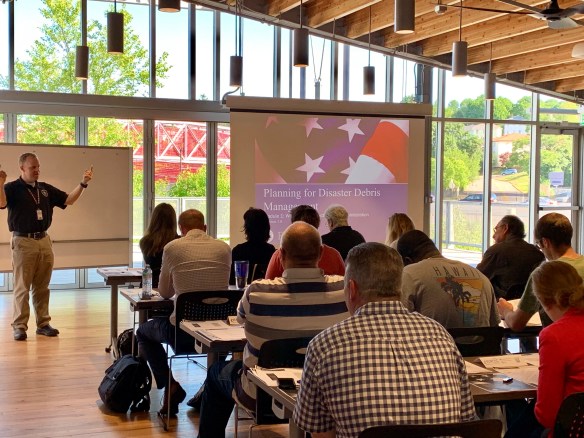
Great introduction to the DHS/FEMA/NDPTC Debris Management Planning class. Outstanding to work with the Emergency Management Pros again from MassEMA and FEMA Region 1.

Glad to share the same mission and goals as the MassDEP, all agencies need to work together as we decrease our response times in a disaster.
Often times, people believe Debris Management is only for recovery. It isn’t. Debris Management starts in the response phase with local public works resources supporting Fire, EMS, and Police in their initial response.

Yes that’s right, response phase.
Even more surprising is that public works pros (ESF-3) are an integral part of any response plan and should be included as agencies enhance their disaster plans.
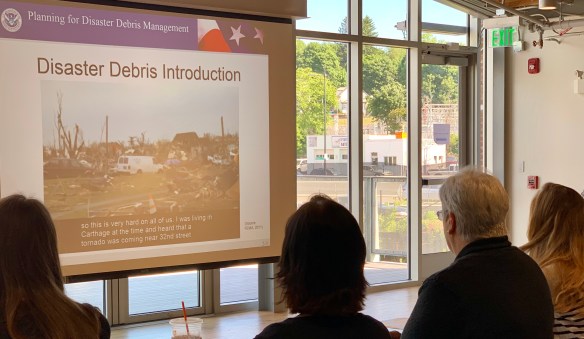
Funding is often a challenge as agencies continue to struggle w/ funding and maintaining resources for public works. But sharing ideas and resources could help mitigate deficiencies and increase capabilities for our partners in ESF-03.
As we continue to facilitate good conversation, we often talk about burn rates and projections to ensure that we are consistently bringing in resources to any disaster to best serve the communities that are affected.

We get laser focused on our top-3 primary response agencies from Fire, EMS, and Police. However, Emergency Management Professionals will tell you that we should include more into our preparedness and response phase to better serve our communities.
Coordination will enhance
These points are critical as communities deal with the initial hit of any disaster.
So no matter large or small, urban or rural, or even rich or poor – any community is vulnerable. Proper planning will help reduce the risk so that we can continue to serve those survivors who need it the most.

Also, glad to see participants getting a lot out of class and instructor enthusiasm on the importance of this Emergency Management topic.

I’d encourage you to look at your Emergency Operations Plan (EOP) and realistically look at the response from Public works as they are truly a partner in our preparedness, response, and recovery of any big event or disaster.
Early morning start to this Tuesday waiting for clearance from tower.

But before you know it, we are off heading 150 to the 2019 National Preparedness Symposium!
Awwwww yeah, training & exercises and all the FEMA peeps in one place here at the Center for Domestic Preparedness in Alabama!
Started off with a talk from the National Integration Center on the new National Response Framework and Community Lifelines.

Chad walked us through soooooo many programs that Doc talked about previously. Glad to see his work has carried through to inspire a new generation of Emergency Managers.
Continued with spirited discussion from my friends at FEMA EMI on the ongoing efforts for the Emergency Management Professional Program.

Lots of recs on what to take and complete as they could (hint hint) require this for EMPG grant funding employees. Yes that’s right, they can mandate these courses to qualify for grant funds.
So yeah, I’d suggest you get on those courses right away.
Then we hopped deep into a FEMA Region 5 meeting w/ our partners from Ohio, Indiana, Minnesota, Michigan, Wisconsin, and of course Illinois. Overview of exercises “Basically, June is going to be insane.”
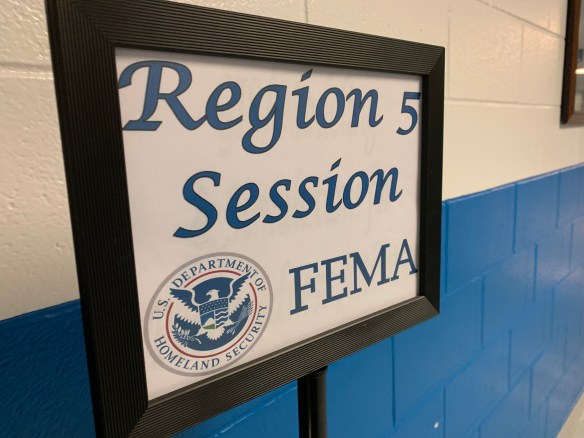
Grrrrreat.
Then, it happened. One of the Training & Exercise Managers called me out as “The Legend! We have a picture of you on our wall!”
Me: Blush
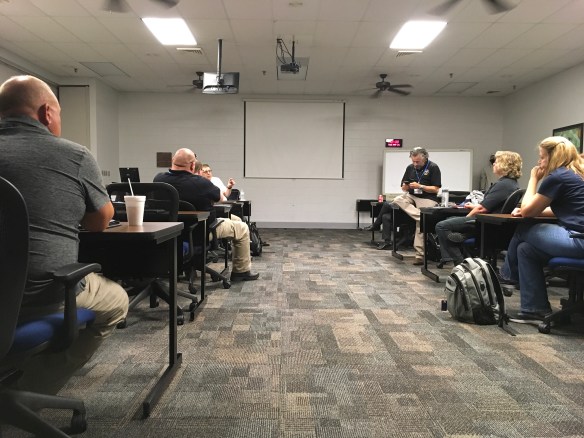
Joliet Fire Deputy Fire Chief gave us the biggest shoutout as they said to the entire region “Did you know DuPage trained all the Aurora Police PIOs? Their first day of the job was the day they had that shooting.”
Either way, it was good to report out for DuPage County OHSEM and their significant efforts in training for all provides from across Illinois.
And of course got a chance to see a few familiar faces in the crowd from Rhode Island, Vermont, Texas, California, Washington, Oregon, Nevada, Tennessee, New York, Kentucky, Louisiana, and of course Illinois.
Great to catch up to FEMA Region 8 James Taylor who served as my Disaster Recovery Center Manager during Hurricane Irma for the Florida Keys.

Glad to hear he is doing well.
Proud to see soooooooo many old disaster friends too.
Looking forward to hearing from Acting Administrator Pete Gaynor tomorrow morning as he will surely touch on our strategic mission objectives as well as building out a culture of preparedness.
Follow the hashtag used: #NPS19
Reporting live from the CDP….
And now starting the FEMA JIC/JIS Course with our class here at the Defiance County EMA Emergency Operations Center.
And yes, if you’ve been in a JIC/JIS class w/ me before, you know I talk about Voltron. In the FEMA Basic PIO Course, we teach you to be an individual PIO and function with limited options…however, the JIC/JIS course allows you to join forces with other PIOs and work the magic despite being from different backgrounds and different factions for the emergency or disaster. That’s right-we can all get along in the JIC.
Starting out the day with a cold reality check on expectations and capabilities as we assess our options and ready our agencies for disasters. It would be a good idea to have a clear understanding of the situation and build from there.

Additionally, we bring our all-hazards partners into the fold. Here’s Sister Michael Marie talking about the complexities of what appears as a simple emergency that could quite result in bringing soooooooooooooooooooooo many partners to respond to this typical emergency.

Drawing too simple for you?
You need more description?
NO SOUP FOR YOU!
The whole point of the exercise is to get your mind thinking about various options as well as partners to call early as likely, they have a dog in the fight to help any affected community recover from any disaster.
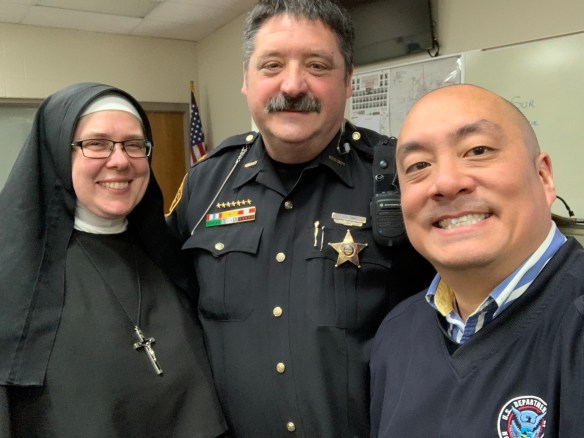
Look, it’s more than Fire, Police, and EMS – it’s the #WholeCommunity to build a culture of preparedness.
Proud of every single one of these participants as everyone walked away with a new understanding and respect for the PIO. While some have been on TV before w/ a few interviews, all of them realize the dangers of an unprepared interviewee.
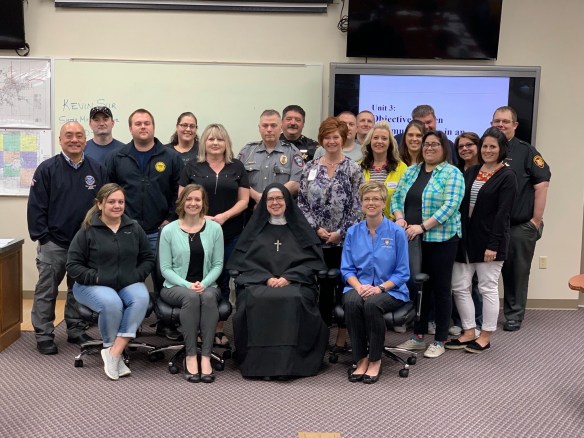
Looking forward to working with all of you on the next big one. And just think…in the midst of a disaster, you just might see these two smiling faces.
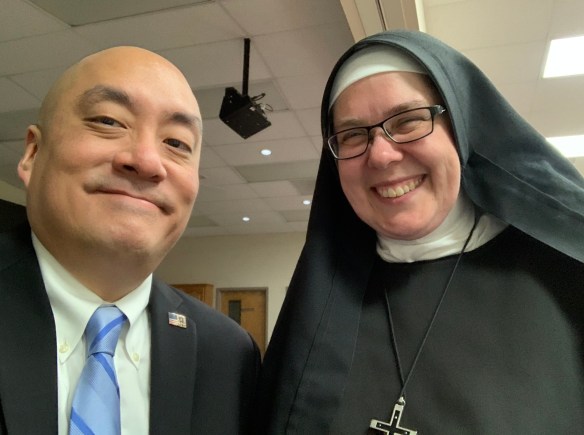
Now, go forth and use your new PIO powers for good!
Day-2 of the FEMA OEMA Basic Public Information Officer course here at Defiance County EMA.

As we start to expand the roles of the PIO, we gotta talk about social media and the impact it has on our every day tasks representing our brand…aka our agency.
Like all info on social media, there’s a ton of things to cover and we won’t be able to talk about ALL platforms. But we can talk about the primary ones that make a difference for any public safety agency.

Also a good time to share one thoughts with you too:
“I don’t care how many followers you have, I care about how you engage all of the followers you do have.” – @rusnivek
Much like Shania Twain, the volume of followers don’t impress me much. What makes a really good social media-er, is how that agency engages with their followers they do have.
I often get asked about in class mock interviews. We still do them as they are incredibly important for participants in a safe learning environment.

But ask any of my participants. They will tell you that it’s pretty real.

Additionally, how I facilitate that part of class nurtures and allows for self-reflection amongst all participants. This ain’t my first rodeo. My peeps are good as we prep them for a really bad day.
Mock press conferences allow our participants to put together a few skills they learned just yesterday.
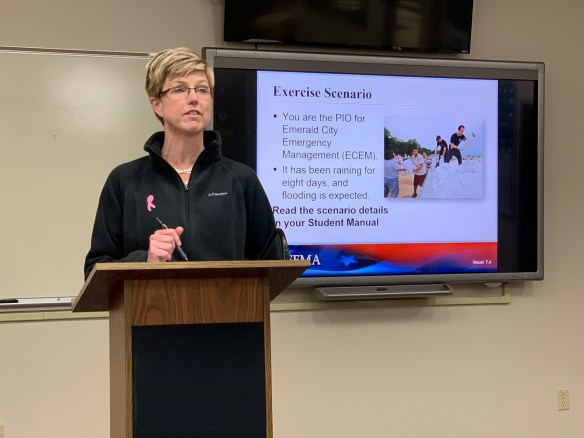
Just like real press conferences, mock reporters are able to ask questions and test some techniques on running a successful press conference.

The best part?
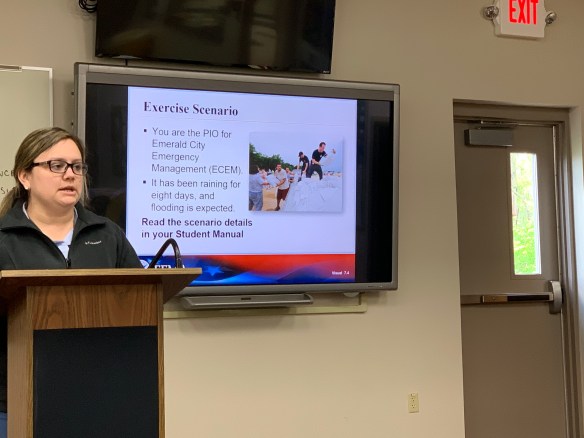
Participants worked it like pros and did an excellent job in running the pressers! NOOICE!!!!!
Great teamwork and collaboration with everyone here. Strong support network, solid coordination, and nice weather – always a winner!
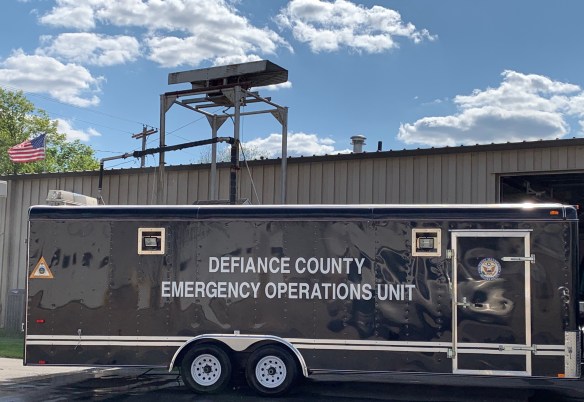
Proud of the work from everyone in class today.
I’m totes looking forward to tomorrow’s course – FEMA JIC/JIS Course
It’s just another Manic Monday as we start another FEMA OEMA Basic PIO Course here at Defiance County Emergency Management Agency (Ohio). Cue the Guns n Roses intro music!
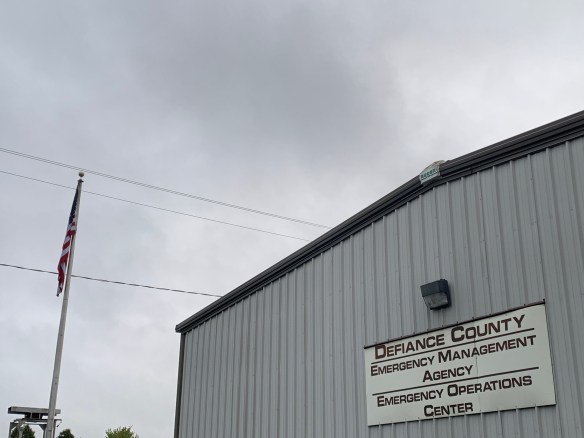
Not going to lie, all signs point to a large contingent from our law enforcement community here today.

Lots of new PIOs in the audience today as we try to share the good word from so many agencies. Almost every ESF is represented!
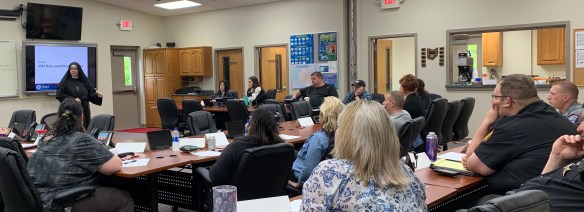
All-hazards coolio on Monday!
As an added instructor bonus, we get a chance to see what campaigns that Ohio EMA has worked for previous outreach activities in Ohio. Hi Nancy!!!!!

My lunch time views include a few red fire trucks.

Ahhhhh, I feel better now.
And in classic fashion, we are most definitely doing on-camera interviews.

While seemingly insignificant, this is the part of the class that participants find is the most valuable for their ongoing career.
Me? I’d rather you have that experience and training and never use it vs never having that training and then being thrown to the wolves in a crisis or emergency.
Train like you fight right?
Reporting live from the EOC as I ask those challenging media-esque questions…

