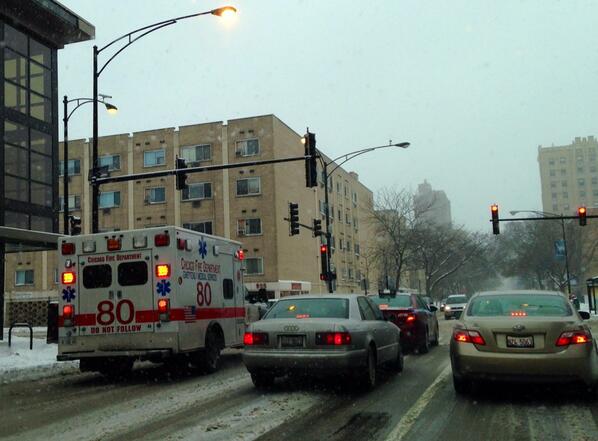
Always yield to all responding emergency vehicles

No matter how bad the weather, always yield (to the right) for all responding emergency vehicles.

IMG_3559

Doesn’t matter Fire or Police or EMS…..”Move right for lights”

@rusnivek

Always yield to all responding emergency vehicles #Firefighter #Paramedic

No matter how bad the weather, always yield (to the right) for all responding emergency vehicles.
BdAHZECCEAAukEe

@rusnivek

Follow the law: Never park in front of a hydrant!

No matter how bad it snows, never park in front of a hydrant. Help out your local Fire Department

Per the Ohio Revised Code 4511.68 Parking – Prohibited acts: No person shall stand or park a trackless trolley or vehicle, within ten feet of a fire hydrant.

Bc3EDQfIEAE5SYs

@rusnivek

Know the differences between frostbite and hypothermia

Know the differences between frostbite and hypothermia. Keep warm!

Frostbite: loss of feeling and white or pale appearance in extremities such as fingers, toes, ear lobes, and the tip of the nose. Get medical help immediately.

Hypothermia: uncontrollable shivering, memory loss, disorientation, incoherence, slurred speech, drowsiness, and apparent exhaustion. If symptoms of hypothermia are detected, get the victim to a warm location, remove wet clothing, warm the center of the body first and give warm, non-alcoholic beverages if the victim is conscious. Get medical help as soon as possible.

BcQXSA_CAAASGSA

Just because it’s clear and sunny, does not mean it is warm outside.

Bundle up peeps!

@rusnivek

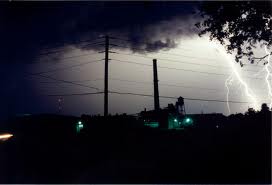
Free safety tips for today’s severe weather inbound #OHWX

Got some bad weather heading to North East Ohio today.
imagesCA942DFB

Here’s a few free tips you can use to prepare for today severe weather:

  • Remove dead or rotting trees and branches that could fall and cause injury or damage during a severe thunderstorm.
  • Consider postponing outdoor activities.
  • Secure outdoor objects that could blow away or cause damage.
  • Break out your emergency preparedness kit and see if all flashlights are working. If not, get them in working order.
  • Charge all of your mobile devices including your cell phone now before the power goes out.

To get up to the minute updates during the Thunderstorm:

  • Use your battery operated NOAA Weather Radio for updates from the National Weather Service.
  • Cordless and wireless phones not connected to wall outlets are safe to use.

And after the storm passes, take these precautions as you survey the damage around your house:

  • Do NOT touch downed power lines. Assume all lines are charged and dangerous. Call your emergency services to handle safe removal of lines.
  • Wear log sleeved shirts and long pants with gloves and boots. Debris from storms are usually sharp and dangerous.
  • Power out? Check the power company’s website to see who else doesn’t have power here.
  • Never drive through a flooded roadway. Remember: Turn Around, Don’t Drown! #TADD

Feel free to share these tips with your neighbors too.

@rusnivek

@rusnivek’s Top-6 Public Safety / PIO social media tip-2 …for free

@rusnivek’s Top-6 Public Safety / PIO Social Media tips…for free

Again, I need to provide you more public safety social media tips. And since you have very little time in the day to spare, maybe you can read this while going down the elevator. Again, I’ll keep it short.

Here’s part-2 of my top 6 SM tips for public safety professionals / Public Information Officers (PIOs). And yes, it’s still free for you.

@rusnivek Social Media Tip-2: Every post, every avenue, every audience…anytime.

With so many different avenues of social media, one person cannot conceivably keep up with every emerging new program.

Pick a few platforms that work for you and that your audience mainly uses and post. Make it pertinent to your mission, make those posts reflect your organization’s objectives and goals, but most importantly, feed it.

Don’t be such a stickler about posting every day at the same bat time, at same bat place, on the same bat things. Change it up make your audience crave your info and make them check your feed incessantly for information they need.

1454805_1430462643835849_892712016_n

During an emergency, don’t just decide “Oh now is the time we should start to…”

STOP <SMH>  cause you are already dead in the water. #FAIL

So feed it anytime. It only takes a few minutes to feed it. Do it now.

Tip-2: Every post, every avenue, every audience…anytime.

@rusnivek

@rusnivek’s Top-6 Public Safety / PIO social media tips…for free

I had a thought this AM..I need to provide you more public safety social media tips. And since you only have 30 seconds to spare, maybe less, I’ll keep it very short.

SO, here’s part-1 of my top 6 SM tips for public safety professionals / Public Information Officers (PIOs). And yes, it’s free for you.

@rusnivek Social Media Tip-1: Post it first (because they don’t interview the runner-up).

If you don’t post it first, someone else will be first to tell your story.

And that’s going to suck…because only you tell your story the best.

It only takes a few minutes to tell your story. 

It takes a TON of money and time to fix the wrong story, and then to tell it right.

To put things in perspective, “There are no points for second place.”

425_topgun_cruise_tom_lc_042710

Tip-1: Post it first (because they don’t interview the runner-up).

@rusnivek

Free safety tips for all your Halloween shenanigans …I mean fun #trickortreat

Halloween is here in NE Ohio, and safety is still the most important part of the Halloween operation.
Halloween-Safety-Tips

To aid in your shenanigans I mean Halloween activities, here are some tips for you and your family to use during trick-or-treat fun:

  • Check your local newspaper, municipality’s website, or social media feed to get updates on times for trick-or-treating.
  • Make sure you have several working flashlight and so that everyone traveling in your party can be seen.
  • Only visit houses with porch lights that are turned on.
  • Be vigilant while crossing the street – look both ways before you cross and ALWAYS company children.
  • Stay in groups and keep an eye out for each other while trick-or-treating.
  • Hopefully your costumes are bright and reflective. If not, consider affixing reflective stickers or buttons to your costume to make you more visible to motorists.
  • Your costumes accessories should be made from soft pliable materials.
  • Do not eat any candy until you return home to your parents.
  • All parents should inspect and review all candy collected before allowing children to consume.
  • Discard any candy that show signs of tampering and throw away any candy that is not sealed or in the original packaging.
  • After you eat a ton of candy, don’t forget to brush your teeth.

halloween_costume

If you are driving this Halloween season, DRIVE SLOWLY! Never text while driving – it is a distraction and likely illegal in many cities. Children will be out and about – so keep a sharp eye for everyone on the street.

Hope you have a fun Halloween this year.

@rusnivek

Free tips and reminders for dealing with snow today

Hello snow!

NE Ohio had its first dose of snow last night. Started at about midnight, various reports have 2-8 inches on the ground.

IMG_8436 - Copy

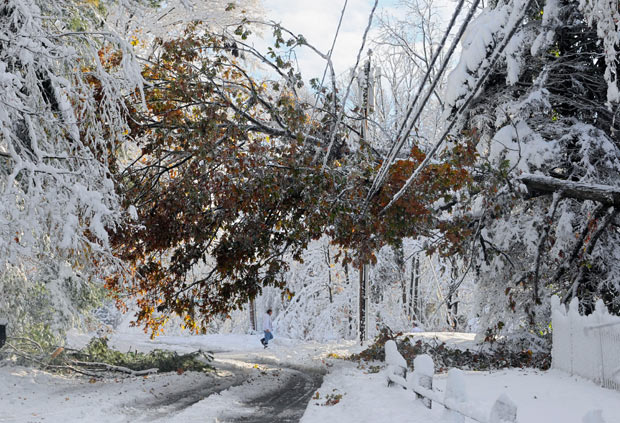
At this time, the National Weather Service Cleveland Office has issued a lake effect snow advisory in effect until 1300 EST (aka 1:00pm EST). Snow will be heavy with high water content. This can cause damage to trees and power lines.
conn-power-line_2041792i

There are some dangers associated with wintry weather. Here are a few free tips to keep in mind while dealing with snow.

  • Walk carefully on snowy, icy walkways.
  • Avoid overexertion when shoveling snow. Overexertion can bring on heart attack – a major cause of death in the winter. If you must shovel snow, stretch before going outside.
  • Keep dry. Change wet clothing frequently to prevent a loss of body heat. Wet clothes loses all of its insulating value and transmits heat rapidly.
  • Heavy snow will bring down trees and power lines. NEVER touch any downed power lines…even if you think they are safe, they are usually not. Keep everyone far away from downed lines.
  • Heavy snow will make trees sag and collapse. Be careful with trees are old or frail, they tend to collapse under the weight of the snow and have killed unknowing children.
  • Watch for signs of frostbite. These include loss of feeling and white or pale appearance in extremities such as fingers, toes, ear lobes, and the tip of the nose. If symptoms are detected, get medical help immediately.
  • Watch for signs of hypothermia. These include uncontrollable shivering, memory loss, disorientation, incoherence, slurred speech, drowsiness, and apparent exhaustion. If symptoms of hypothermia are detected, get the victim to a warm location, remove wet clothing, warm the center of the body first and give warm, non-alcoholic beverages if the victim is conscious. Get medical help as soon as possible.
  • And of course, don’t eat yellow snow.

heavy_ice_snow_NOAA_small

Use these tips to keep you and your family safe this fall….er….snowy season.

@rusnivek

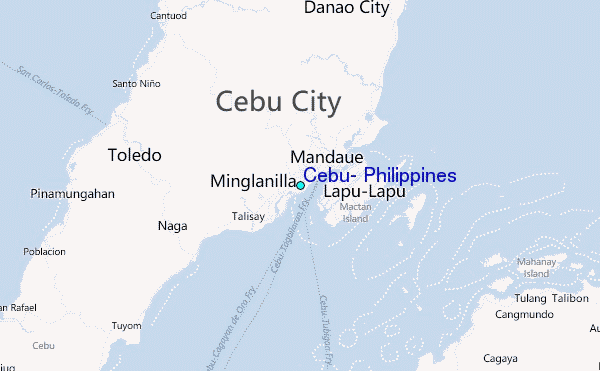
7.2 Earthquake in Philippines – here’s some free tips to stay safe after an earthquake #Cebu #Mindanao #Boljoon #Bohol

For those in and around the Philippines, take caution in all activities.
Cebu-Philippines_10

Here are some tips that you can use as you recover from your large earthquake.

  • When the shaking stops, look around to make sure it is safe to move. Then exit the building.
  • Expect aftershocks. These secondary shockwaves are usually less violent than the main quake but can be strong enough to do additional damage to weakened structures and can occur in the first hours, days, weeks, or even months after the quake.
  • Help injured or trapped persons. Remember to help your neighbors who may require special assistance such as infants, the elderly and people with access and functional needs. Give first aid where appropriate. Do not move seriously injured persons unless they are in immediate danger of further injury. Call for help.
  • Look for and extinguish small fires. Fire is the most common hazard after an earthquake.
  • Listen to a battery-operated radio or television for the latest emergency information.
  • Be aware of possible tsunamis if you live in coastal areas. These are also known as seismic sea waves (mistakenly called “tidal waves”). When local authorities issue a tsunami warning, assume that a series of dangerous waves is on the way. Stay away from the beach.
  • Use the telephone only for emergency calls.
  • Go to a designated public shelter if your home had been damaged and is no longer safe.
  • Stay away from damaged areas. Stay away unless your assistance has been specifically requested by police, fire, or relief organizations. Return home only when authorities say it is safe.
  • Be careful when driving after an earthquake and anticipate traffic light outages.
  • After it is determined that its’ safe to return, your safety should be your primary priority as you begin clean up and recovery.
  • Open cabinets cautiously. Beware of objects that can fall off shelves.
  • Put on long pants, a long-sleeved shirt, sturdy shoes and work gloves to protect against injury from broken objects.
  • Clean up spilled medicines, bleaches, gasoline or other flammable liquids immediately. Leave the area if you smell gas or fumes from other chemicals.
  • Inspect the entire length of chimneys for damage. Unnoticed damage could lead to a fire.
  • Check for gas leaks. If you smell gas or hear blowing or hissing noise, open a window and quickly leave the building. Turn off the gas at the outside main valve if you can and call the gas company from a neighbor’s home. If you turn off the gas for any reason, it must be turned back on by a professional.
  • Look for electrical system damage. If you see sparks or broken or frayed wires, or if you smell hot insulation, turn off the electricity at the main fuse box or circuit breaker. If you have to step in water to get to the fuse box or circuit breaker, call an electrician first for advice.
  • Check for sewage and water lines damage. If you suspect sewage lines are damaged, avoid using the toilets and call a plumber. If water pipes are damaged, contact the water company and avoid using water from the tap. You can obtain safe water by melting ice cubes.

For more up to the minute information, consider following @philredcross for more details.

Stay safe everyone.

@rusnivek