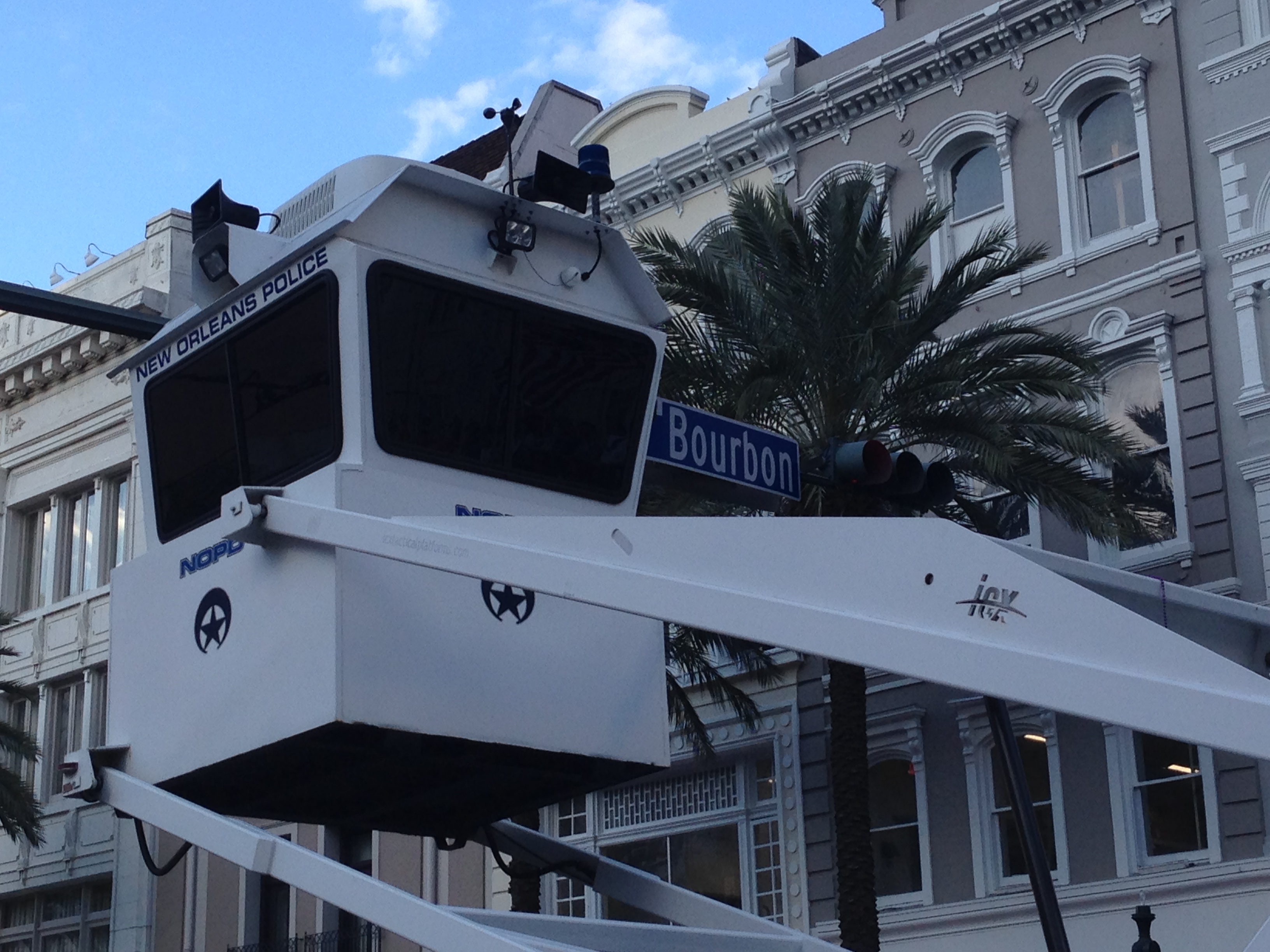
Definitely an all-hazards approach to events in NOLA

Good to see so much emphasis put on event planning and pre-staged apparatus for events ongoing in NOLA.

IMG_5212

Just the sheer number of agencies involved is a clear sign that emergency agencies here truly believe in the all-hazards mantra.

IMG_5214

Well done to all visible and unmarked agencies involved in providing public safety.

@rusnivek


Here’s my top 5 commercials from the Superbowl #SB49

In reviewing all the commercials from yesterday’s Superbowl – here’s my top 5.

Targeting their audience, Chevrolet knows how to play off manly pickup trucks. I would buy one if I wasn’t already going to buy a Chevrolet SUV.

http://www.youtube.com/watch?v=s9sa2iHRB-k


I also found myself assessing my home safety measures after Nationwide made me question my ability as a parent. However, it did pull at a different target audience that is normally not addressed during sporting events.

http://www.youtube.com/watch?v=dKUy-tfrIHY


Who doesn’t love a dog! But thanks to a mediocre beer conglomerate, we are all reminded that iconic horses that pull beer will save a lost dog. Thanks Budweiser.

http://www.youtube.com/watch?v=xAsjRRMMg_Q


The world is full of amazing gadgets and technology. In 2015, we need to dedicate more of our efforts to making sure these get implemented into everyday life. Thanks Microsoft and keep up the good work Braylon.

http://www.youtube.com/watch?v=wLXRt-qRBfU


Good to see PIerce Brosnan again. Not what I expected…especially playing off his former life as 007. I would still not purchase a Kia.

http://www.youtube.com/watch?v=rSqqCI0LNHs


Bonus-1: Thanks to my new job as a Dad, my daughter will definitely know that #LikeAGirl will mean amazing things. Thanks Always.

http://www.youtube.com/watch?v=q3GpXgFwWmk


I’d love to hear your thoughts or your favorite commercials.

@rusnivek

My first tiller response

I was just talking about my first tiller ride…

Speaking of Tillers, here’s a great example of the communications between Driver and Tillerman to get through light traffic.

Me? My first Tiller ride? I was lucky. Reported working fire!

Thanks to the crews at Hyattsville Fire Truck-1, Engine-1, and Rescue-1.

@rusnivek

New Ohio EMA Director named

FOR IMMEDIATE RELEASE: January 8, 2015

Contact: Joe Andrews, ODPS Communications Director, (614) 466-4344

NEW OHIO EMA DIRECTOR NAMED

(COLUMBUS) – Evan W. Schumann was named Executive Director of the Ohio Emergency Management Agency (EMA) today by Ohio Department of Public Safety (ODPS) Director John Born. He will replace Sima Merick who was named interim director in December.

Mr. Schumann is currently the Program Manager for Ohio Task Force 1 (OH-TF1) which is the State of Ohio’s Urban Search and Rescue (US&R) Task Force stationed in Dayton and also one of the 28 US&R Task Forces in FEMA’s National US&R System. Under Mr. Schumann’s leadership, OH-TF1 personnel have responded to many disasters such as Hurricanes Katrina and Sandy, the Haiti earthquake, mudslides in Washington and flooding in Colorado. Mr. Schumann is well versed in all aspects of state and national emergency management systems.

“The State of Ohio is fortunate to be able to find an emergency management professional with Mr. Schumann’s qualifications here in our own state,” said ODPS Director John Born. “I look forward to working with him to make the state safer for all Ohioans.”

Among his duties, Mr. Schumann will be furthering the implementation of ODPS’s 4/72 Project that provides basic life needs for people impacted by a disaster within four hours of the incident and sustainable for 72 hours. He will also work with the Safer Ohio Teams concept to coordinate emergency response by local and state responders.

Mr. Schumann holds a Bachelor of Science Degree in Mathematics from Norwich University and Bachelor and Master Degrees in Civil Engineering from Michigan State University.

The Ohio Emergency Management Agency is the state’s coordinating agency for emergency response throughout the state. In the event of an emergency anywhere in the state, EMA can assemble state agencies at its headquarters near Columbus and coordinate assets available through these agencies in order to get supplies, personnel and equipment where it is needed in a timely manner.

###

298936f


Safety-PIO-SM-14-010-Appropriate-for-Social-Media ?

14-010: Appropriate for Social Media?
Agency: The back of the ambulance Topic(s):         Posting on SM
Date: Fall 2014 Platform:        Instagram

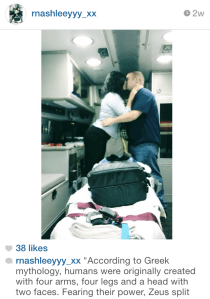
At times, social media is very emotional and many users like to share intimate moments with all their followers. The reality of social media is great…except when it is done inappropriately. That’s just what Instagram user rnashleeyyy_xx did in the back of an ambulance.
IMG_1752


“Love is in the air…” are great lyrics, however, I don’t believe this type of behavior is appropriate for an ambulance. This isn’t a hotel…real patient care occurs in the back of the ambulance! This is a professional environment. Keep it that way.


Also, I am fairly sure Zeus didn’t write that in his SOGs. No matter the justification, people will immediately judge and in the court of public opinion, these actions are not considered professional. And no, the caption/description will not deter or change focus as the visual image hits the news.


So basically, stop making out in the back of the ambulance.


The amount of stuff that happens back here is enough to scare an entire country. Infection control alone should be enough of a deterrent. Think about it.


Any agency on social media should have a social media strategy and a plan that includes guidelines on how employees should use social media and who they interact with. The plan can outline how members should conduct activities on social media as well as identify dangers on how, if used inappropriately, will reflect poorly upon the agency. No matter your threshold of acceptance or approval, monitor your employees use of social media. They are a direct reflection on your agency, your brand, and you.


General social media tips to keep in mind:

  1. Know what your employees are posting on social media platforms.
  2. Your employees are a direct representation of your brand/image on social media.
  3. The disclaimer “My views expressed here do not reflect my employer’s views” will NOT hold up in court.
  4. Regularly search for your agency’s name to monitor the online discussion(s).
  5. You work hard to build your brand on social media…Keep it that way.


Time is valuable, so tweet good stuff.

@rusnivek

***To download this as a single-page printable format, click this file:

Safety-PIO-SM-14-010-Appropriate-for-Social-Media-a


Well….that was fun

Well…that was fun.

Giving a few tips on Ebola safety/preparedness was quite…interesting.

ebolaaaa

I decided I couldn’t respond to the entire world’s Ebola concerns, but responding to those in the general vicinity would be more social because I’m local to the area in the geocode.

10-13-14at2330 - Copy

I did a simple geolocation on all the tweets, using DT Cleveland as center (N: 41.502715 x W: -81.695709) in a 62 mile circular radius that specifically used the term “ebola” in tweets/responses.

Easy Cheesey huh?

Wash your hands peeps.

@rusnivek

Your image on social by monitoring your name Safety-PIO-SM-14-007

14-007: Your image on social by monitoring your name
Agency: Lakewood Fire Topic(s):         Monitoring your name/branding
Date: Fall 2014 Platform:        Twitter

Monitoring your namesake has been debated for years. But with decreased staffing and less time to do more with less, many agencies are bypassing this critical piece of community relations and image/branding. A good example is when a citizen commented on Lakewood Fire’s SUV parking.

IMG_1372

Everyone has a camera these days. We use them not only to capture memories and precious moments, but also for documentation and shaming. I believe Todd was going for the public safety shaming factor here. I am unsure on the previous relationship between Todd and Lakewood, but there was never a response on Twitter back to Todd. Truth be told, these days, unanswered public questions are sometimes perceived as a government agency cover-ups/issues. Similar to the “No comment” – a non-response might even be worse.

How do you monitor your agency’s name or any derivatives? Try these free services: Google Alerts, search columns in TweetDeck or Hootsuite, or frequent basic vanity searches on any search engine or social media platforms.

While Todd’s use of hashtags is fairly standard social media malarkey, a swift response with a timely and direct reply to Todd’s tweet would help stop the perception that LFD is breaking the law or even setting a bad example. Remember, social media is about digital interaction.

The response could also be a teaching point so share with your audience some insight into your normal operations with a simple message on Fire Prevention activities – like hydrant testing. And using the hashtag #FirePrevention pulls up thousands of tweets about educating the public specifically in fire safety.

An effective @reply response to Todd’s tweet could have read:

@stwrs1974 During an emergency, it’s tough to find safe parking. FYI-we also check/flush hydrants twice a year too #FirePrevention 

By phrasing it this way:

  1. You immediately address the issue directly with the citizen citing the issue.
  2. You provide insight into scene safety during an emergency.
  3. You call attention to your normal operations (in this case-hydrant flushing).
  4. You use the hashtag #FirePrevention to call attention to…well…Fire Prevention.
  5. You show the general public you care about your image and want to get the story right.

Time is valuable, so tweet good stuff.

@rusnivek

***To download this as a single-page printable format, click this file:

YourImageOnSocialByMonitoringYourName-Safety-PIO-SM-14-007


Technical jargon and giving actionable information Safety-PIO-SM-14-006

14-006: Technical jargon and giving actionable information
Agency: Chicago Fire Department Topic(s): Industry codes / Actionable info
Date: Fall 2014 Platform: Twitter

Industry speak or technical jargon is part of what we do every day. But using technical terms on a social media platform will be confusing to those who are NOT in the fire service. That’s what the Chicago Fire Department did yesterday at their big 3-alarm fire when they tweeted technical jargon.

imageaimage

The use of technical jargon is rampant in emergency services but when speaking to the media or the general public, we need to remember that everyone did not grow up with a VOX alarm or SCU tones. In this case, a “311” or 3-11 alarm means that there are 11 engines, 5 Trucks, 2 Tower Ladders, 6 Battalion Chiefs, 1 Rescue Squad, 2 Ambulances, 2 Paramedic Chiefs, Deputy District Chief, Deputy Fire Commissioner, and the 1st Deputy Fire Commissioner are onscene. There is no way to include all that information in a tweet, but using more simple terms will help your audience understand the scale of your ongoing incident.

Before you post images, make sure your pictures are rotated correctly. I know accuracy is sometimes overlooked in lieu of speed, but it takes less than 5 seconds to orientate/rotate a picture (In this case, it was going to be a long operation). And note, by just rotating a picture does not equate that you are “doctoring up” photos. But a correctly posted photo will help media repost and format your information quicker to the masses.

During an emergency situation, your constituents need the information pushes to be actionable and specific to your audience. Not only inform them of the danger, but tell them what they can do about it.

A more effective tweet could have read:

Chicago Fire: Large 3-alarm fire at Harrison St x Fifth Ave. Traffic delays-avoid the area. (insert two pictures)

By phrasing it this way:

  1. You cite the authority having jurisdiction and established incident command presence.
  2. You generally described the size/category of the ongoing incident and critical information to media.
  3. You identify the exact location of the incident.
  4. You describe the delays in the area and give actionable information to your constituents.
  5. You still have lots of room to push properly orientated pictures with your informational tweet.


Time is valuable, so tweet good stuff.

@rusnivek

***To download this as a single-page printable format, click this file:

TechnicalJargonAndGivingActionableInformation-Safety-PIO-SM-14-006

Did you participate in National Child Passenger Safety Week? #NatlPrep #Prepared2014

It is the start of the fourth week of 2014 National Preparedness Month

“Be Disaster Aware, Take Action to Prepare”

For me, it’s Sunday in PA!

This week’s theme is consistent with FEMA’s National Preparedness Campaign: Practice for an emergency

#21: Did you get your child secured in your vehicle? National Child Passenger Safety Week – Thanks @UHRainbowBabies #Prepared2014 #NatlPrep

IMG_7912

September 13th through September 20th = National Child Passenger Safety Week. Various agencies are promoting in-vehicle safety for children across the country. In the United States, motor vehicle crashes are a leading cause of death among children. Data show that:

Risk Reduction for Every Age

Buckling children in age- and size-appropriate car seats, booster seats, and seat belts reduces the risk of serious and fatal injuries:

  • Car seat use reduces the risk for death to infants (aged <1 year) by 71%; and to toddlers (aged 1–4 years) by 54% in passenger vehicles.
  • Booster seat use reduces the risk for serious injury by 45% for children aged 4–8 years when compared with seat belt use alone.
  • For older children and adults, seat belt use reduces the risk for death and serious injury by approximately half. 

Scope of the Problem 

  • In the United States during 2011, more than 650 children ages 12 years and younger died as occupants in motor vehicle crashes,5 and more than 148,000 were injured.
  • One CDC study found that, in one year, more than 618,000 children ages 0-12 rode in vehicles without the use of a child safety seat or booster seat or a seat belt at least some of the time.
  • Of the children who died in a crash in 2011, 33% were not buckled up.

Risk Factors for Children and Teens

  • Of the children who died in a crash:
    • More black (45%) and Hispanic (46%) children were not buckled up compared with white (26%) children (2009-2010).
    • More of the older children (45% of 8-12 year olds) were not buckled up compared with younger children (one-third of 1-7 year olds; one-fourth of infants under 1) in 2011.
  • From 2001 to 2010, approximately 1 in 5 child passenger (<15 years old) deaths in the U.S. involved drunk driving; 65% of the time, it was the child’s own driver that had been drinking (BAC ≥ 0.08 g/dl).
  • Most child passengers (<15 years old) of drunk drivers (61%) were not buckled up in the fatal crash.
  • Restraint use among young children often depends upon the driver’s seat belt use. Almost 40% of children riding with unbelted drivers were themselves unrestrained.
  • Child restraint systems are often used incorrectly. One study found that 72% of nearly 3,500 observed car and booster seats were misused in a way that could be expected to increase a child’s risk of injury during a crash.

Preventing Motor Vehicle Injuries in Children

  • Based on strong evidence of effectiveness, the Community Preventive Services Task Force recommends car seat laws and car seat distribution plus education programs to increase restraint use and decrease injuries and deaths to child passengers.
  • Car seat distribution plus education programs are also recommended in a more recent review for increasing restraint use.
  • A recent study of five states that increased the age requirement to 7 or 8 years for car seat/booster seat use found that the rate of children using car seats and booster seats increased nearly three times and the rate of children who sustained fatal or incapacitating injuries decreased by 17%.

Read the recent Morbidity and Mortality Weekly Report (MMWR announcements) or the Centers for Disease Control and Prevention feature story, and CDC’s Vital Signs on child passenger safety to learn more about buckling the ones you love in age- and size-appropriate car seats, booster seats, or seat belts.


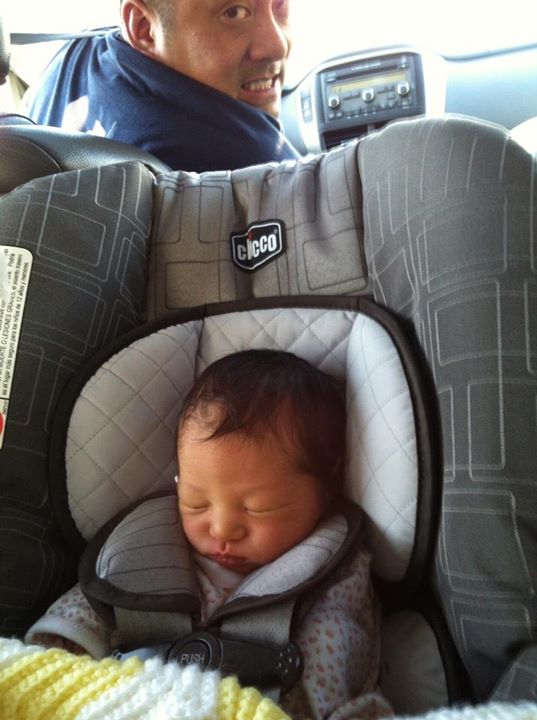
And you bet I got my munchkin secured in the seat!

387309_10151412919062297_656610723_n

Safety first for kids!

Special thanks to UH Rainbow Babies & Children’s Hospital for helping put my car seat in for FREE!

Right Arden?

tumblr_mw1xco5ek41s0yosqo1_1280

Oh munchkin!

@rusnivek