My Dad started his Neighborhood Watch Program!

I’m proud of my Dad who setup his Neighborhood Watch Program.

IMG_3973

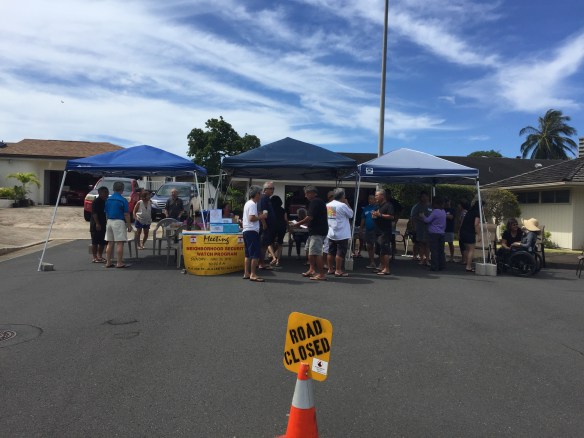
Dad has been planning this for months now and even posted signs to get everyone involved. Because inviting and talking with the entire neighborhood about safety related topics are the key points of the Neighborhood Watch program. Also, my Dad went big – he blocked off the entire cul-de-sac for his event!

IMG_3980

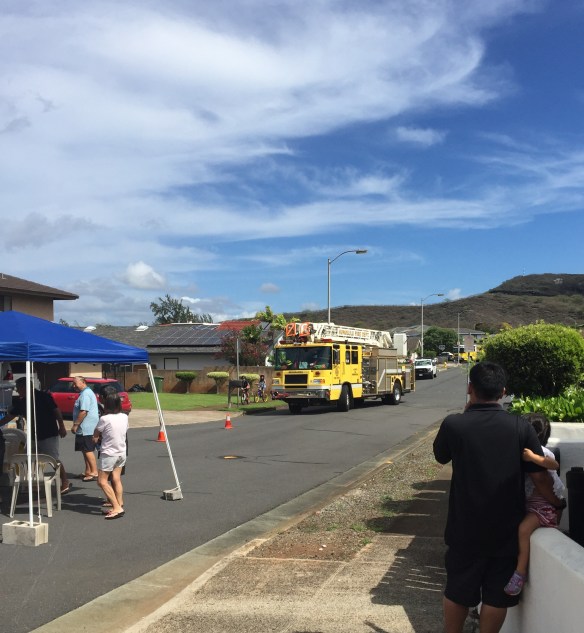
Honolulu Fire Station-30 (Engine-30 & Ladder-30) stopped by to share some safety tips and what to do during an emergency.

IMG_3975

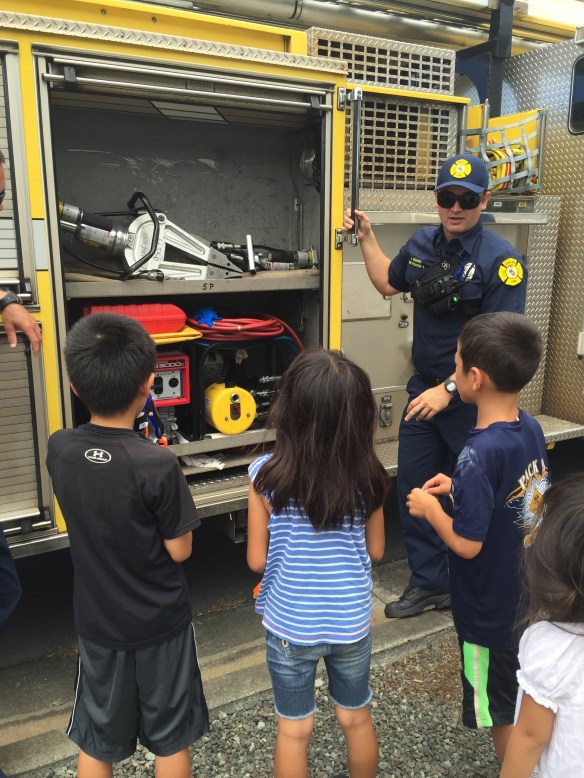
Ladder-30 showcased their equipment for everyone to see.

IMG_3982

Talked about ventilation saws for trench cuts and vertical cuts for fires.

IMG_3989

Also talked about extrication tools and generators for car accidents and confined space rescue.

IMG_3987

All the kids in the neighborhood got a chance to try out the headsets used for communications in the apparatus.

IMG_3986

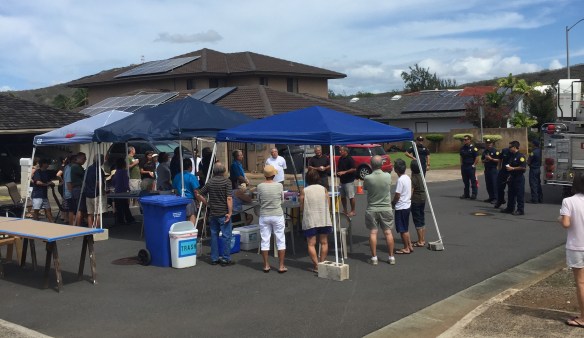
Honolulu Police stopped by too.

IMG_3984

Even a surprise flyby thanks to Honolulu Fire Air-1 Helicopter.

In the end, this kind of neighborhood program is truly the basis of a safer community.

IMG_3983

Education, particularly teaching kids during an emergency, how to call 9-1-1 is crucial to a safe community.

IMG_3979

My Dad volunteered to do this. Yep, not paid. Just doing his part to keep his neighborhood and community safe. LOVE IT!

There are many other volunteer programs showcased by DHS/FEMA’s awesome Ready.Gov campaign on safety. Just like my Dad, I volunteer too with my community’s Community Emergency Response Team (CERT) aka RH-CERT.

Whether you are a part of your own Neighborhood Watch Program, Community Emergency Response Team (CERT), Volunteers in Police Service (ViPS), Medical Reserve Corp (MRC), Fire Corps, Voluntary Organizations Active in Disaster (VOADs), etc…all of these civic based programs are so important to the fabric for the safety of our community across this great country.

So proud of my Dad!

@rusnivek

October has the big four: 3-9-5-NCAP #SURINDC

As National Preparedness Month closes, my October 2015 schedule is going to be very challenging. And as you know, I have to win. Here’s the plan:

First week: I’ll be in Carlisle, Pennsylvania presenting on Social Media in disasters. Pope out, Sur in! Glad to be back in Region-3.

Second week: I’ll be headed back to the Silicon Valley area presenting on social media specifically for large event planning and monitoring (because it’s all about the L right? Wait, it’s all about the 5-0 right?) I also hope to catch up to one of the VIPs at Intel. Since retiring from Emergency Management, his pro career intrigues me – so I believe some synergies could happen. Additionally, I get a chance to brainstorm with an extremely talented colleague from the NWS Sacramento office. I rant about “building relationships before an emergency” so I assure you that I am practicing what I preach. Love love LOVE me some Region-9!

Third week: I’ll be at Fairfield County (Ohio) Emergency Management Agency popping the G-290: Basic Public Information Officers Course and G-291: Joint Information Center / Joint Information System (JIC/JIS) courses. It will definitely be great to see my friend Director Kochis  and crews again – back in Region-5.

Fourth week: I’ll be presenting at FEMA HQ in Washington DC on social media. Yep, at the big house. OMG. This is a big presentation. Big. REALLY BIG. While at HQ, I am hoping to catch up with Lumpkins, Kamoie, FEMA’s Digital Engagement Team…and since we’re fresh off the heels of National Preparedness month grabbing a cup of coffee with my besties from ReadyGov and PrepareAthon. Love me some HQ preparedness action! Additionally, I am hoping to grab a few meetings with my friends at the Pentagon and NGA too. Special thanks to US Representative Fudge (OH-11) for some extra time with Congress and a stop at the White House. Yep. The White House. Again. #SURINDC NCAP region!

IMG_1909

It’s going to be a challenge month all October long.

Get it.

@rusnivek

Building new relationships on a Tuesday #NatlPrep

The last Tuesday in the 2015 National Preparedness Month!

Today, look to building new relationships.

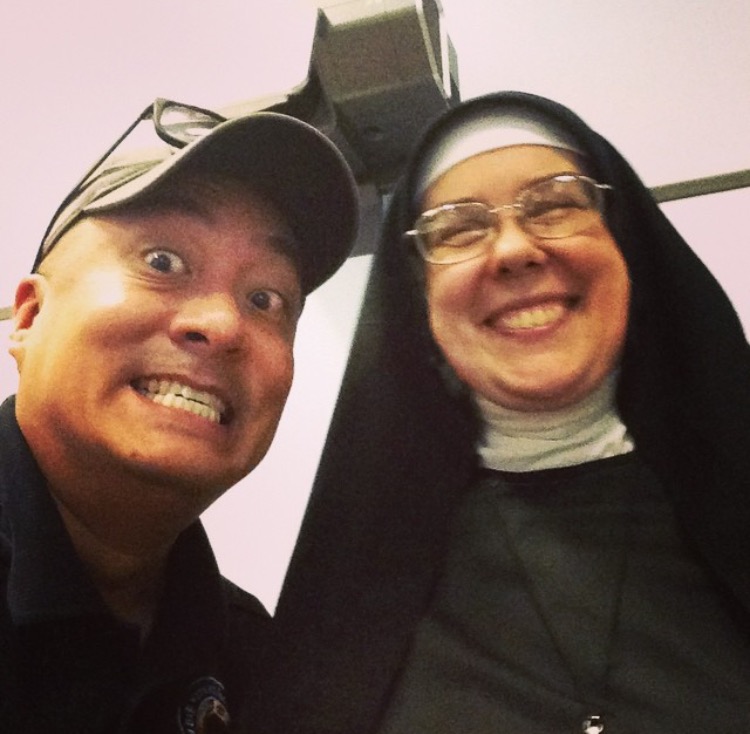
SurNun

Normally, we don’t look outside the realm of daily public safety. It’s easy to talk to Fire/EMS, Law Enforcement, or Public Works Professionals. However, new discussion needs to happen between individuals who can support our mission goals or some unmet needs.

Faith-based organizations are great groups to explore new activities to support your community. In varying degrees, faith-based organizations have the capabilities to support disaster response and recovery operations with food, shelter, and supportive measures. But again, the key is to open discussions BEFORE a disaster so you can evaluate their capability.

isaac-convoy-of-hope-slidelljpg-b4b56c6d18407313

Additionally, talk to your local politicians…esp if they are an active part of your Community Emergency Response Team (CERT). These civic-minded individuals have most likely gone through additional preparedness training and can be a great resource for anyone.

IMG_6252

Trust me, these are the kinds of people you want to be in close contact with before, during, or after an emergency/disaster.

Don’t wait. Communicate. Make your emergency plan today.

CKYhdyqUMAQdNj1

Get to know some new local peeps!

Tuesday is here – so get prepared by clicking here.

@rusnivek

JIS – JIC planning class for Tribal State and local PIOs

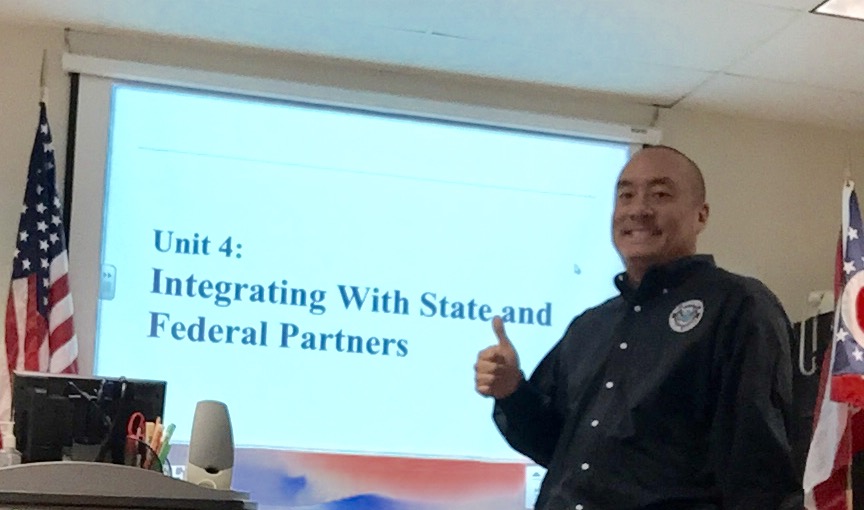
A fine day to teach the Ohio Emergency Management Agency’s JIS / JIC Planning for Tribal, State, and Local PIOs (G-291) course in Medina County!

1

A classic start with The Who.

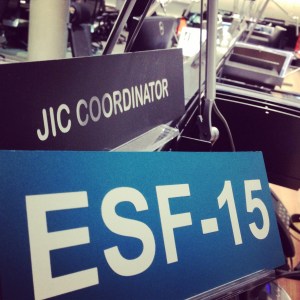
One of the big points emphasized in this class is the differences between a Joint Information Center (JIC) and a Joint Information System (JIS). Both have merits in daily operations and each have strengths and weaknesses in disaster operations.
IMG_6533

Sometimes PIOs don’t understand that a JIC or JIS activation is just like a normal activation. If you can’t figure out the differences between the two, take the class from those who have actually worked a JIC or a JIS.

IMG_6546

On Tuesday/Wednesday in the Basic Public Information Officers’ Course (G-290), we talked about training and readiness efforts for any PIO. Go Kits were a hot button topic as everyone’s PIO kit would most likely be different. Resource manuals are great to have, but difficult to keep updated. Just maintaining a PIO contact list is a tedious task.

Much discussion about food in the kit. This was obviously NOT a good example of what you should be eating during an JIC activation.

2

Prob not the best lunch.

Healthy body = Healthy mind. Period.

As the day progressed, we facilitated several in-depth discussions on teamwork, joint efforts in responses as well as some pre-scripted messages that can be used by everyone. Planning now will reduce the amount of white hair during an incident.

Establish relationships now with local health departments, local and regional hospitals, local Hazardous Materials (HAZMAT) Teams, Special Technical Rescue Teams. Easily rely on your state staff and resources to support your actions. A great wealth of information is available to bring to the table. Just establish that connection before that awkward 0300 hit.

Additionally, tapping into local resources from other Federal Agencies like the Federal Bureau of Investigations (FBI), Bureau of Alcohol Tobacco, Firearms, and Explosives(ATF), National Weather Service (NWS), Environmental Protection Agency (EPA)Immigration and Customs Enforcement (ICE), Customs Border Patrol (CBP), National Transportation Safety Board (NTSB), Federal Aviation Administration (FAA), etc…so many options to establish relationships!

3

“Building relationships now can only increase our response effectiveness during a disaster.” – K. Sur

Looking outside government agencies, public and private partnerships can support our safety and response initiatives – so we need to make a concerted effort to make those connections now. Build relationships before a disaster!

4

Sur and Mo!

So how can you bring all these resources together? Consider these actions to explore in your jurisdiction:

  • Train. Train. Train.
  • Open discussions with various providers.
  • Invite your all-hazards partners to meetings.
  • Meet regularly. Maintain contact.
  • Take classes together.
  • Share resource lists and contacts.
  • Support each other during operations.
  • Review After Action Reviews / Improvement Plans (AARs/IPs) together.

5

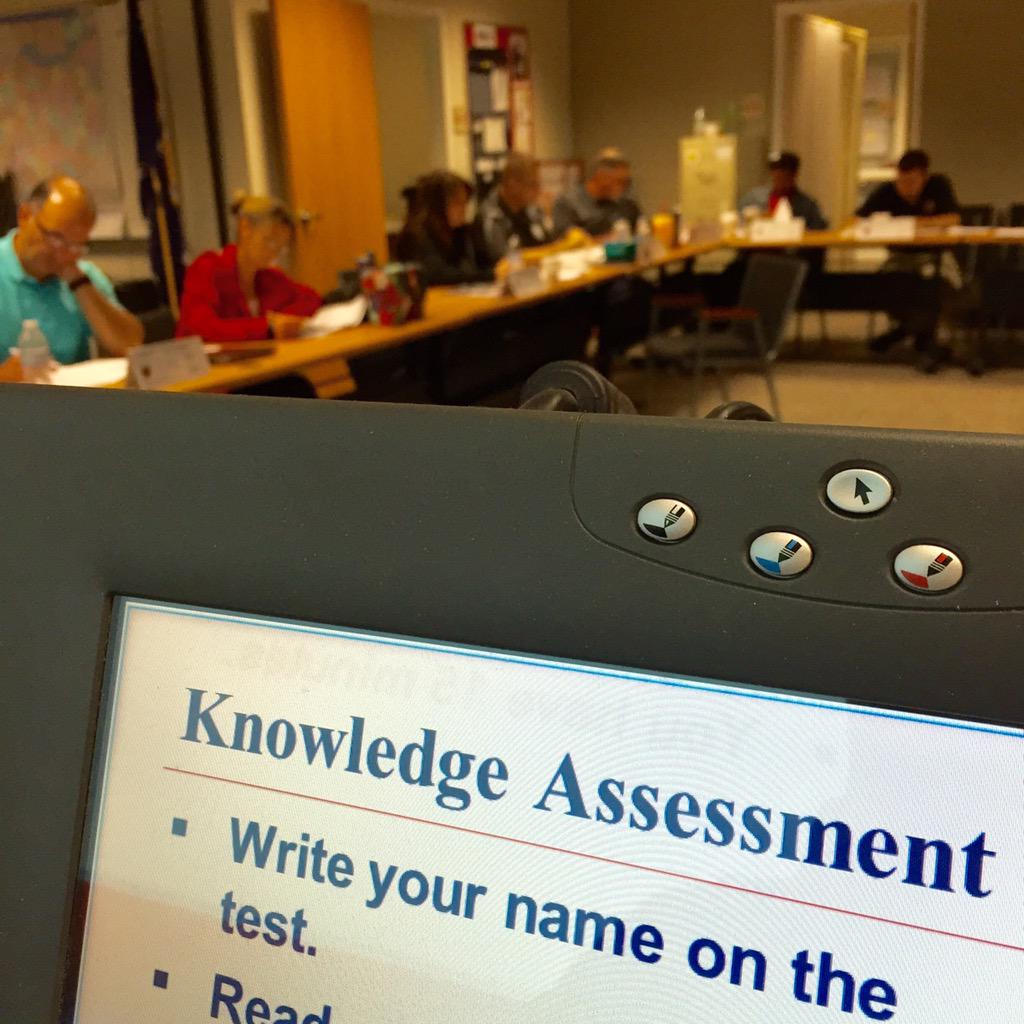
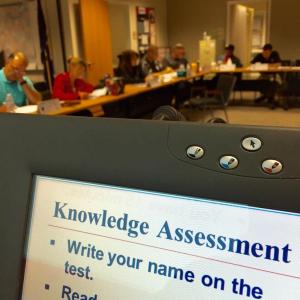
And if you were wondering, class participants did well on their post-tests.
6

Psssst…the answer is “C” #not

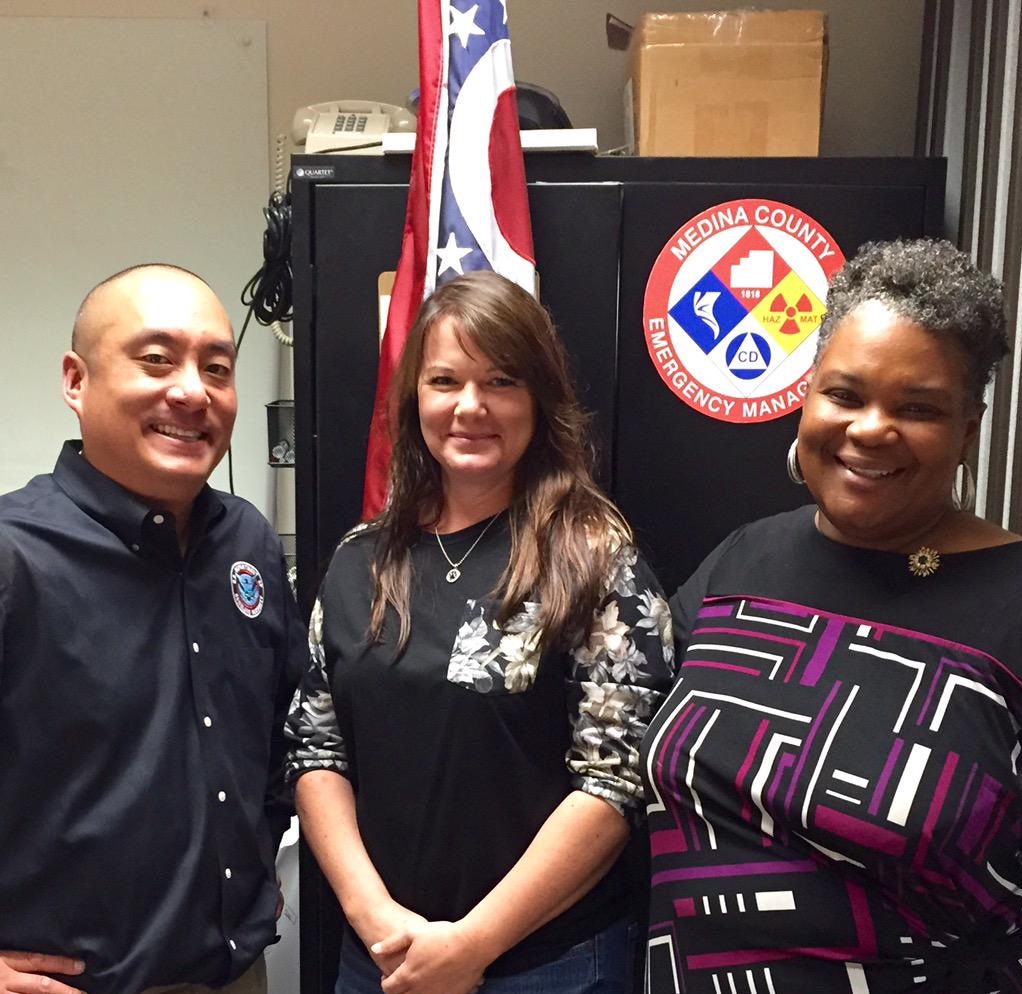
We had a great time teaching this week. Much thanks to the Medina County Emergency Management Agency and EM Director Christine Fozio for their hospitality. Super fun time.
7

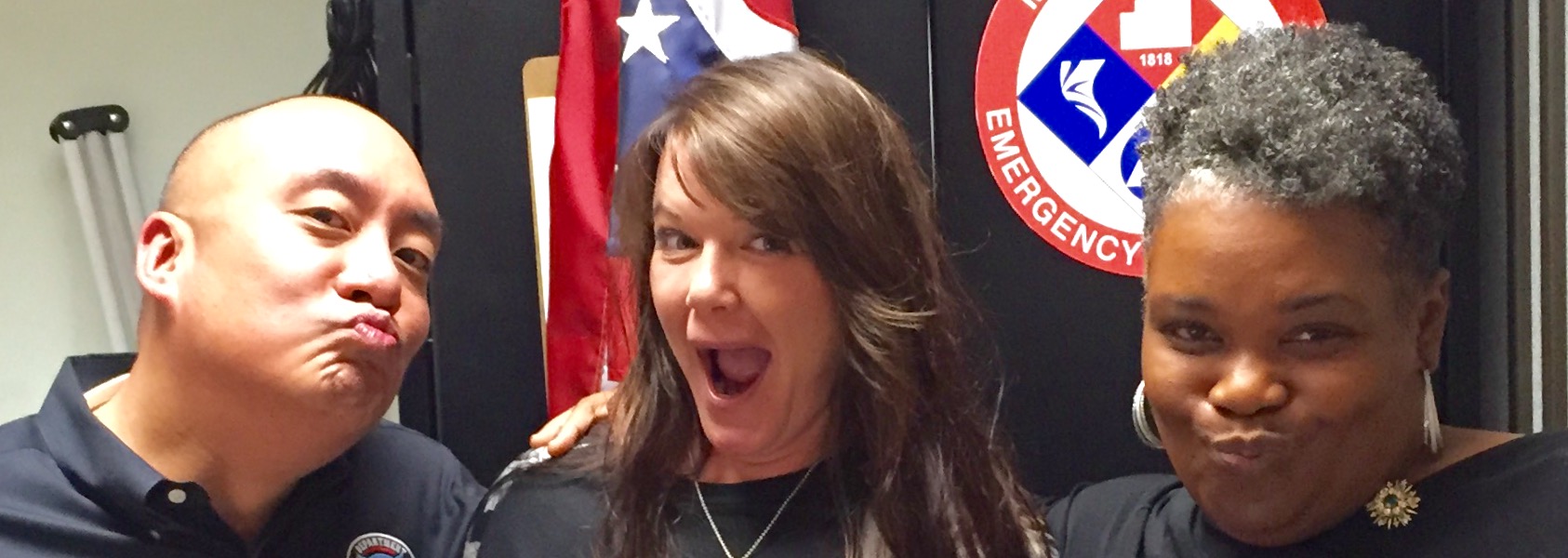
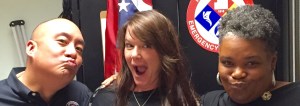
So much ducking fun (duck face reference)

Special thanks to the Ohio Emergency Management Agency for sponsoring this all-hazards class for our partners in public safety.
8

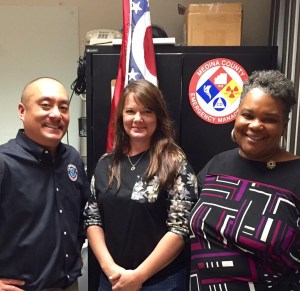
(L to R): PIO Instructor Kevin Sur, Medina County Emergency Management Director Christine Fozio, and PIO Instructor Monique Witherspoon.

If you are looking to attend OEMA’s free PIO courses:

  • Public Information Officers Awareness course (G-289)
  • Basic Public Information Officers’ course (G-290)
  • JIS / JIC Planning for Tribal, State, and Local PIOs course (G-291)

**coordinate through OEMA State Training Officer Susan Traylor.

SurPaperTowels

As always, I’m looking forward to the JIC / JIS activation calls. I am excited for these new PIOs to put their new acquired PIO skillz in place. And yes, I said skillz with a Z.

Time is short so do good stuff!

@rusnivek

Spent my day with my hometown CERT

Spent my day volunteering with my hometown Community Emergency Response Team (CERT).

On arrival, I thought I was going to get assigned a different task, but logistics and parking was the identified main concern and safety was an issue.

CJo4GxIUMAEgoPf

After I got briefed on the event, I discussed our situation with all the participants. As CERT, we coordinated our efforts so that our actions/tactics could best match the safety of our personnel as well as others who were there attending the event.

I briefed the Mayor on our ongoing operations and even looked at a few alternate plans.

IMG_6245

Of course we continued to assess our event and think about other safety measures.

IMG_6249

And of course we had a few moments to share a smile.

IMG_6240

Fun fact, our Council President and Safety Chair is also a proud founding member of my awesome CERT Team. Booya!

IMG_6252

Seriously, I love it when elected members of local government give back to their community.

We identified a few issues that will need to be made for the 2016 event (like a formal all-hazards traffic plan with maps, uniformed vests, pre-event plan dissemination/distribution, more participation, etc…). Maybe a formal Incident Action Plan (IAP). Fairly easy stuff that we would be happy to share w/ our constituents.

Wait….What? You have never heard of FEMA’s CERT program before? Community Emergency Response Team (CERT) Program educates people about disaster preparedness for hazards that may impact their area and trains them in basic disaster response skills, such as fire safety, light search and rescue, team organization, and disaster medical operations. Using the training learned in the classroom and during exercises, CERT members can assist others in their neighborhood or workplace following an event when professional responders are not immediately available to help. CERT members also are encouraged to support emergency response agencies by taking a more active role in emergency preparedness projects in their community.

More info can be found on FEMA’s website here.

Want to volunteer within your own community? Want to make a difference in your community? Click here to locate the closest CERT Team to you!

As always, I believe I can make a difference in my community. Fun fact: I’ve been volunteering with my CERT since 2007.

I hope you will do the same.

@rusnivek

Detailed on a special project for CPD

In the coming months, I’ll be working closely with Cleveland Police on a special project.

IMG_6101

Which divisions? I’ll be working closely with their Mounted Unit, K9 Teams, Airport Detail, Bomb Team, SWAT Team, and of course their Air unit (helo).

Awww yeah. All specialty teams!

So yes, you can expect these types of pictures.

11235283_596564103779765_4655348274642851281_n

Just trying to make a difference to a great community.

Reporting live…from…the barn…

@rusnivek

Immediate evac? Command decision? or Additional companies?

To my Firefighter peeps – Watch this video below. Few questions for you to ponder:

1. Just by observation, did the conditions necessitate the immediate evacuation from large residential structure?

2. Should Command have known of conditions in the 360/scene size-up to pull crews out?

3. Do Truck companies with tools and ladders or even a Rapid Intervention Team (RIT) exist in other municipalities?

https://www.youtube.com/watch?t=128&v=NrUFYseJwBE

Share with your duty crews.

And more importantly, to all the Dads out there, Happy Father’s Day!

@rusnivek

No complaining-offer solutions-Safety-PIO-SM-14-008

14-008: No complaining – offer solutions
Agency: Long Beach Fire Topic(s):         Public Perception and Solutions
Date: Fall 2014 Platform:        Twitter

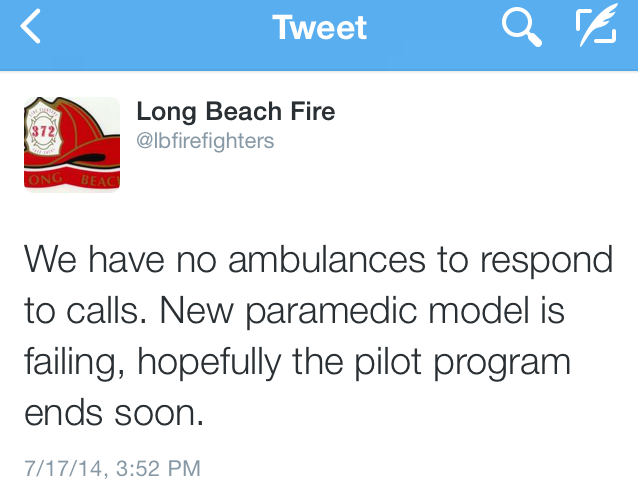
Complaining or venting on social media is fairly common. However, as an official agency, public displays of affliction does not portray the best image. Long Beach Fire expressed some displeasure on Twitter when discussing the their pilot program.

IMG_4353

After reading this tweet, the public’s perception is that if 9-1-1 is called, no ambulances will respond. This is irresponsible and wrong. (Almost all emergency services have mutual aid agreements or memorandum of understandings in place.)


Positioning your agency as a fear mongerer or the Harbinger of Evil will only further distance yourself from people who would be willing to help your cause. Inform them of dangers, but more importantly, engage them publically on social.


If there is internal displeasure with the new staffing models, be proactive and offer transparent solutions in the tweet. Cite websites that provide industry information. Publically share statistical data that supports changes with current programs. These online tactics will help direct and educate the general public on how to be better informed on other program and possible other options yet unexplored.


Additionally you can rally your constituents behind better initiatives by engaging with them publically via social media. It demonstrates that your department’s community involvement is a key part of a better solution.

As an official account, Twitter’s 140-character limit is really no place to moan/groan.

A more effective tweet could have read:

LBFD resources are maxed out. #Firefighters cannot provide adequate #Paramedic service to our communities. Help us find a solution <insert link here>

By phrasing it this way:

  1. You identify that resources are…well…maxed out.
  2. You use hashtags (#Firefighters and #Paramedic) that will help increase visibility in your tweets.
  3. You stress the importance of providing dedicated service to your community.
  4. You provide a traceable/measureable link that informs and helps bring visibility to this critical situation.

Time is valuable, so tweet good stuff.

@rusnivek
***To download this as a single-page printable format, click this file:

No complaining-offer solutions-Safety-PIO-SM-14-008

Write For Different Platforms-Safety-PIO-SM-14-003

14-003: Write for Different Platforms

Agency: Rocky Mountain Area IMT

Topic(s):         Social Media Platform Specific Messaging

Date: Summer 2014

Platform(s):    Press Release vs Twitter

Despite the message being essentially the same, every communications platform is different.

Speed is important, but correctly addressing your audience is critical in the world of public information.

On July 1, 2014, this tweet was posted on the Rocky Mountain Area Incident Management Team’s feed during the Eightmile Fire while deployed in Canon City, Colorado.

 IMG_3182

“FOR IMMEDIATE RELEASE” In all caps? All caps use on social media portrays yelling. Professionals should portray calm/control.

Twitter’s social media platform premise is a fast microblog service focusing on immediate information. This templated press release lingo (FOR IMMEDIATE RELEASE) is not necessary. Every tweet is automatically time/date stamped including matching the recipients’ time zone. Do not waste your valuable 140 characters.

To me, this was a cut-and-paste action, or even worse yet, they just linked the agency’s Facebook and Twitter accounts together. No time was spent in addressing the various platforms used to push this valuable information. Remember, PIO actions on each platform in social media are not generic, they are specific. We talk about safety to kids differently than we inform adults on safety right? Likewise, we should address our audiences on social media accordingly to the platform they use.

A more effective tweet could have read:

“Updated information & stats on the #Eightmile Fire ongoing in Colorado can be found here fb.me/6KArLmgFr

By phrasing it this way:

  1. The tweet is shorter and more concise.
  2. Tweet identifies where the Rocky Mountain Area Incident Management Team is deployed.
  3. The main point of contact is identified on the Facebook link provided if more specific information is needed.
  4. Shorter messaging will allow your followers to retweet/repost and amplify your information.
  5. The use of hashtags will help audiences find information about the #Eightmile Fire and identify the Rocky Mountain Area Incident Management Team as a trusted source of information.

Know the differences in mainstream social media platforms because what will work on one old platform (press release) will NOT work on newer platforms (Facebook, Twitter, Instagram, etc…) Know social media and use their amenities to your advantage.

 Time is valuable, so post good stuff.

@rusnivek

***To download this as a single-page printable format, click this: WriteForDifferentPlatforms-Safety-PIO-SM-14-003