Happy National Preparedness month! The focus during this second week is on preparing friends and family for different emergencies.
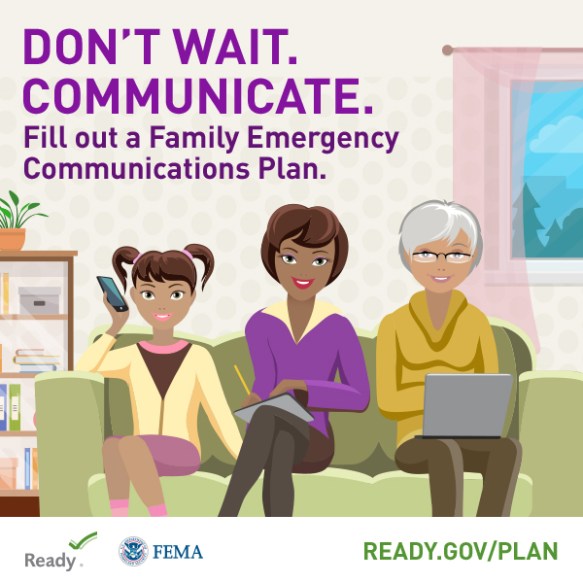
Showcasing the skills of local first responders are incredibly important to adults AND kids. And sharing important information (like a Family Emergency Communications Plan) with first responders is critical.
National Preparedness Month that promotes creating family emergency communications plans.
Often times, we overlook explaining what actually happens during an emergency.
So take the time to explain to your kids that during an emergency, ALL first responders are there to help. And of course, don’t forget to teach your children to dial 9-1-1.
Reminder: When teaching children to call 9-1-1, do not verbally say “Nine-Eleven” as there is not an eleven button on the phone.
Do it today!
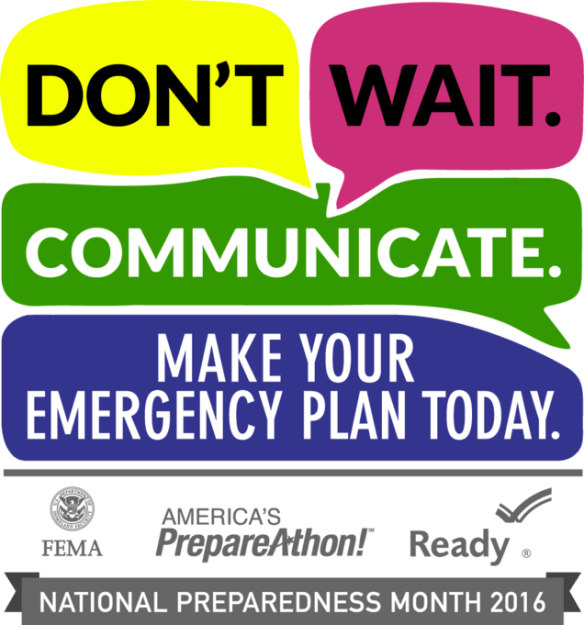
“Don’t Wait. Communicate. Make Your Emergency Plan Today.”
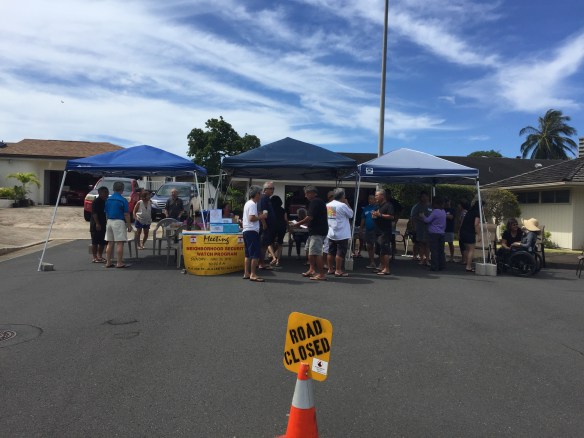
I’m proud of my Dad who setup his Neighborhood Watch Program.
Dad has been planning this for months now and even posted signs to get everyone involved. Because inviting and talking with the entire neighborhood about safety related topics are the key points of the Neighborhood Watch program. Also, my Dad went big – he blocked off the entire cul-de-sac for his event!
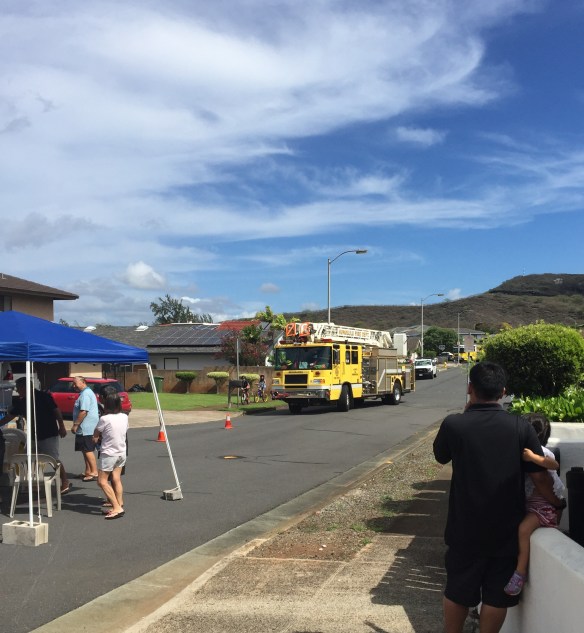
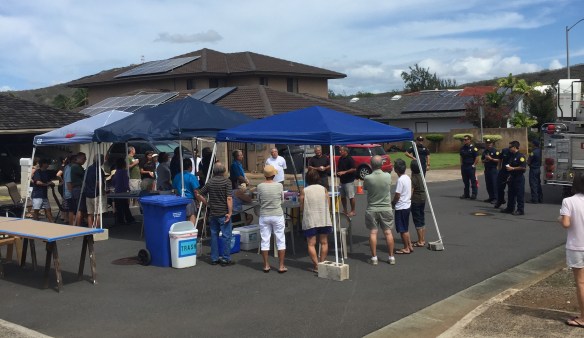
Honolulu Fire Station-30 (Engine-30 & Ladder-30) stopped by to share some safety tips and what to do during an emergency.
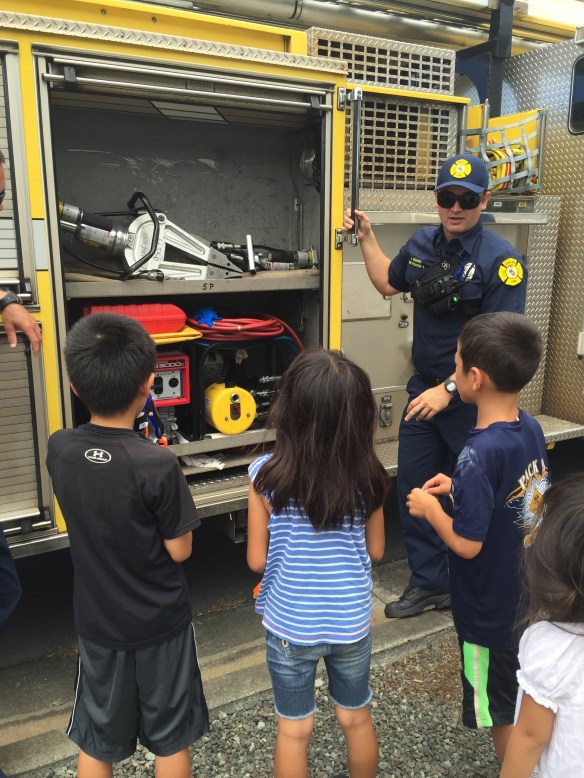
Ladder-30 showcased their equipment for everyone to see.
Talked about ventilation saws for trench cuts and vertical cuts for fires.
Also talked about extrication tools and generators for car accidents and confined space rescue.
All the kids in the neighborhood got a chance to try out the headsets used for communications in the apparatus.
Honolulu Police stopped by too.
Even a surprise flyby thanks to Honolulu Fire Air-1 Helicopter.
In the end, this kind of neighborhood program is truly the basis of a safer community.
Education, particularly teaching kids during an emergency, how to call 9-1-1 is crucial to a safe community.
My Dad volunteered to do this. Yep, not paid. Just doing his part to keep his neighborhood and community safe. LOVE IT!
There are many other volunteer programs showcased by DHS/FEMA’s awesome Ready.Gov campaign on safety. Just like my Dad, I volunteer too with my community’s Community Emergency Response Team (CERT) aka RH-CERT.
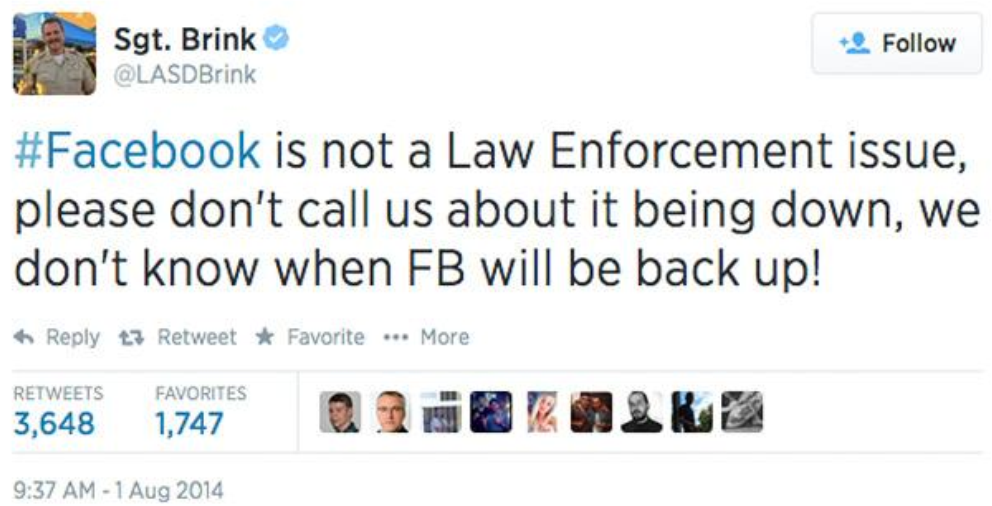
Just like any other service, social media platforms are bound to go down. And when that happens, a small amount of the population does NOT know how to react appropriately. Some residents of California decided that calling 9-1-1 was their only resort to getting logged back into Facebook.
Ahem. Clearly, this is NOT an emergency. Sgt Brink is right in making it very clear to his audience (on Twitter) that Facebook’s non-service is not a Law Enforcement issue. Common sense right?
Most agencies should have an easy contingency plan when this type of situation happens. Social Media postings and engagement will help decrease calls to various public safety agencies…including during non-emergency times. So having this type of canned responses ready to push out when a major social media platform has the hiccups, might help your constituents navigate their (loss of) digital life. Additional use of a trending hashtag will bring more visibility to your post by informing others of actions, or in this case, non-actions.
A more effective tweet could have read:
#Facebook is NOT a law enforcement issue. Pls don’t call us about it being down, we don’t know when FB will be back up #facebookdown
By phrasing it this way:
You sternly address that this social media platform is NOT a law enforcement matter (duh).
You use a hashtags that is trending (#Facebookdown) that will help increase visibility in your tweets.
You highlight the importance of being current and active on recent news/events.
You stress the importance of engaging with your social media users on various social media platforms.
14-006: Technical jargon and giving actionable information
Agency: Chicago Fire Department
Topic(s): Industry codes / Actionable info
Date: Fall 2014
Platform: Twitter
Industry speak or technical jargon is part of what we do every day. But using technical terms on a social media platform will be confusing to those who are NOT in the fire service. That’s what the Chicago Fire Department did yesterday at their big 3-alarm fire when they tweeted technical jargon.
The use of technical jargon is rampant in emergency services but when speaking to the media or the general public, we need to remember that everyone did not grow up with a VOX alarm or SCU tones. In this case, a “311” or 3-11 alarm means that there are 11 engines, 5 Trucks, 2 Tower Ladders, 6 Battalion Chiefs, 1 Rescue Squad, 2 Ambulances, 2 Paramedic Chiefs, Deputy District Chief, Deputy Fire Commissioner, and the 1st Deputy Fire Commissioner are onscene. There is no way to include all that information in a tweet, but using more simple terms will help your audience understand the scale of your ongoing incident.
Before you post images, make sure your pictures are rotated correctly. I know accuracy is sometimes overlooked in lieu of speed, but it takes less than 5 seconds to orientate/rotate a picture (In this case, it was going to be a long operation). And note, by just rotating a picture does not equate that you are “doctoring up” photos. But a correctly posted photo will help media repost and format your information quicker to the masses.
During an emergency situation, your constituents need the information pushes to be actionable and specific to your audience. Not only inform them of the danger, but tell them what they can do about it.
A more effective tweet could have read:
Chicago Fire: Large 3-alarm fire at Harrison St x Fifth Ave. Traffic delays-avoid the area. (insert two pictures)
By phrasing it this way:
You cite the authority having jurisdiction and established incident command presence.
You generally described the size/category of the ongoing incident and critical information to media.
You identify the exact location of the incident.
You describe the delays in the area and give actionable information to your constituents.
You still have lots of room to push properly orientated pictures with your informational tweet.
It’s #EMSWeek2014 – Stressing safety to everyone is an important part of our job.
We are seeing more car crashes due to distracted driving. Put down your phone and pay attention to the road. As emergency responders, I would hate to meet you for the first time like this…
Worse yet, we don’t want to get hit.
Distracted driving can injure and kill. Remember, don’t text and drive.
Please, share this message with others and stress the importance of roadway safety.
And again, thank all your first responders for their dedicated service.













 Where is @rusnivek?