You should know about the Worcester-6 Cold Storage Warehouse Fire #W6

Take a few moments to learn about the now infamous Cold Storage Warehouse Fire in Worcester, Massachusetts.

fire1

Honor your fallen Firefighters who gave their life on December 3, 1999.

  • Worcester Fire Rescue-1 Firefighter Paul Brotherton
  • Worcester Fire Rescue-1 Firefighter Jeremiah Lucey
  • Worcester Fire Rescue-1 Lieutenant Thomas Spencer
  • Worcester Fire Ladder-2 Firefighter Timothy Jackson
  • Worcester Fire Engine-3 Firefighter James Lyons
  • Worcester Fire Engine-3 Firefighter Joseph McGuirk

***In my opinion, this fire is a defining moment in fire service history***

All Firefighters should know about this fire by heart.

Well, even if you don’t read the entire NIOSH report, at LEAST read the summary below.

SUMMARY

On December 3, 1999, six career fire fighters died after they became lost in a six-floor, maze-like, cold-storage and warehouse building while searching for two homeless people and fire extension. It is presumed that the homeless people had accidentally started the fire on the second floor sometime between 1630 and 1745 hours and then left the building. An off-duty police officer who was driving by called Central Dispatch and reported that smoke was coming from the top of the building. When the first alarm was struck at 1815 hours, the fire had been in progress for about 30 to 90 minutes. Beginning with the first alarm, a total of five alarms were struck over a span of 1 hour and 13 minutes, with the fifth called in at 1928 hours. Responding were 16 apparatus, including 11 engines, 3 ladders, 1 rescue, and 1 aerial scope, and a total of 73 fire fighters. Two incident commanders (IC#1 and IC#2) in two separate cars also responded.

Fire fighters from the apparatus responding on the first alarm were ordered to search the building for homeless people and fire extension. During the search efforts, two fire fighters (Victims 1 and 2) became lost, and at 1847 hours, one of them sounded an emergency message. A head count ordered by Interior Command confirmed which fire fighters were missing.

Fire fighters who had responded on the first and third alarms were then ordered to conduct search-and-rescue operations for Victims 1 and 2 and the homeless people. During these efforts, four more fire fighters became lost. Two fire fighters (Victims 3 and 4) became disoriented and could not locate their way out of the building. At 1910 hours, one of the fire fighters radioed Command that they needed help finding their way out and that they were running out of air. Four minutes later he radioed again for help. Two other fire fighters (victims 5 and 6) did not make initial contact with command nor anyone at the scene, and were not seen entering the building. However, according to the Central Dispatch transcripts, they may have joined Victims 3 and 4 on the fifth floor. At 1924 hours, IC#2 called for a head count and determined that six fire fighters were now missing. At 1949 hours, the crew from Engine 8 radioed that they were on the fourth floor and that the structural integrity of the building had been compromised. At 1952 hours, a member from the Fire Investigations Unit reported to the Chief that heavy fire had just vented through the roof on the C side. At 2000 hours, Interior Command ordered all companies out of the building, and a series of short horn blasts were sounded to signal the evacuation. Fire fighting operations changed from an offensive attack, including search and rescue, to a defensive attack with the use of heavy-stream appliances. After the fire had been knocked down, search-and-recovery operations commenced until recall of the box alarm 8 days later on December 11, 1999, at 2227 hours, when all six fire fighters’ bodies had been recovered. NIOSH investigators concluded that, to minimize the risk of similar occurrences, fire departments should

    • ensure that inspections of vacant buildings and pre-fire planning are conducted which cover all potential hazards, structural building materials (type and age), and renovations that may be encountered during a fire, so that the Incident Commander will have the necessary structural information to make informed decisions and implement an appropriate plan of attack

  • ensure that the incident command system is fully implemented at the fire scene

  • ensure that a separate Incident Safety Officer, independent from the Incident Commander, is appointed when activities, size of fire, or need occurs, such as during multiple alarm fires, or responds automatically to pre-designated fires

  • ensure that standard operating procedures (SOPs) and equipment are adequate and sufficient to support the volume of radio traffic at multiple-alarm fires

  • ensure that Incident Command always maintains close accountability for all personnel at the fire scene

  •  use guide ropes/tag lines securely attached to permanent objects at entry portals and place high-intensity floodlights at entry portals to assist lost or disoriented fire fighters in emergency escape

  • ensure that a Rapid Intervention Team is established and in position upon their arrival at the fire scene

  • implement an overall health and safety program such as the one recommended in NFPA 1500, Standard on Fire Department Occupational Safety and Health Program

  • consider using a marking system when conducting searches

  • identify dangerous vacant buildings by affixing warning placards to entrance doorways or other openings where fire fighters may enter

  • ensure that officers enforce and fire fighters follow the mandatory mask rule per administrative guidelines established by the department

  • explore the use of thermal imaging cameras to locate lost or downed fire fighters and civilians in fire environments


worc six


@rusnivek

Look Chief, I’m not sure what happened, but…. #Firefighter

Look Chief, I’m not sure what happened, but…. #Firefighter

191283941064178_0


So the truck is reportedly new (2013). This kinda stuff happens. Plus, being a brand new truck, all areas in district should have been tested for response. I am hoping for no injuries. Perhaps this is a good time for everyone who are getting new apparatus, to test ALL areas (including mutual aid areas) for response and height clearances. EVERYONE should review their routes in response areas and bridge height clearances.


@rusnivek

Viewing and funeral information for slain Cleveland Fire Lieutenant William Walker

Viewing and funeral information for slain Cleveland Fire Lieutenant William Walker

DSC_4707

The viewings will be on Saturday, November 9th “B” from 1-5pm and Sunday, November 10th “C” from 10am-5pm at the EF Boyd and Son Funeral Home, 15357 Euclid Ave., East Cleveland 44112.

WilliamWalker

There will be a service on Monday, November 11th “A” at 2pm at the Cleveland Public Auditorium, 500 Lakeside Ave., Cleveland 44114. There will be a family hour starting at 1pm at the Public Auditorium.

MEMBERS WISHING TO PARTICIPATE IN THE FINAL SALUTE SHOULD BE IN FULL CLASS “A” (including caps) AND REPORT TO THE PUBLIC AUDITORIUM AT NOON ON MONDAY, NOVEMBER 11TH.

Reminder: The Association of Cleveland Fire Fighters has established the William Walker Family Assistance Fund to provide financial assistance to the surviving spouse and dependent children of the late William Walker. Contributions can be made directly at any branch of the Firefighters Community Credit Union.

**

Have any information in connection with the death of Cleveland Fire Lt. William Walker? Please contact Cleveland Police Homicide Unit at 216-623-5464.

**

@rusnivek

@rusnivek’s Top-6 Public Safety / PIO social media tip-2 …for free

@rusnivek’s Top-6 Public Safety / PIO Social Media tips…for free

Again, I need to provide you more public safety social media tips. And since you have very little time in the day to spare, maybe you can read this while going down the elevator. Again, I’ll keep it short.

Here’s part-2 of my top 6 SM tips for public safety professionals / Public Information Officers (PIOs). And yes, it’s still free for you.

@rusnivek Social Media Tip-2: Every post, every avenue, every audience…anytime.

With so many different avenues of social media, one person cannot conceivably keep up with every emerging new program.

Pick a few platforms that work for you and that your audience mainly uses and post. Make it pertinent to your mission, make those posts reflect your organization’s objectives and goals, but most importantly, feed it.

Don’t be such a stickler about posting every day at the same bat time, at same bat place, on the same bat things. Change it up make your audience crave your info and make them check your feed incessantly for information they need.

1454805_1430462643835849_892712016_n

During an emergency, don’t just decide “Oh now is the time we should start to…”

STOP <SMH>  cause you are already dead in the water. #FAIL

So feed it anytime. It only takes a few minutes to feed it. Do it now.

Tip-2: Every post, every avenue, every audience…anytime.

@rusnivek

@rusnivek’s Top-6 Public Safety / PIO social media tips…for free

I had a thought this AM..I need to provide you more public safety social media tips. And since you only have 30 seconds to spare, maybe less, I’ll keep it very short.

SO, here’s part-1 of my top 6 SM tips for public safety professionals / Public Information Officers (PIOs). And yes, it’s free for you.

@rusnivek Social Media Tip-1: Post it first (because they don’t interview the runner-up).

If you don’t post it first, someone else will be first to tell your story.

And that’s going to suck…because only you tell your story the best.

It only takes a few minutes to tell your story. 

It takes a TON of money and time to fix the wrong story, and then to tell it right.

To put things in perspective, “There are no points for second place.”

425_topgun_cruise_tom_lc_042710

Tip-1: Post it first (because they don’t interview the runner-up).

@rusnivek

Breaking news…get a chair and do this now #Fallback

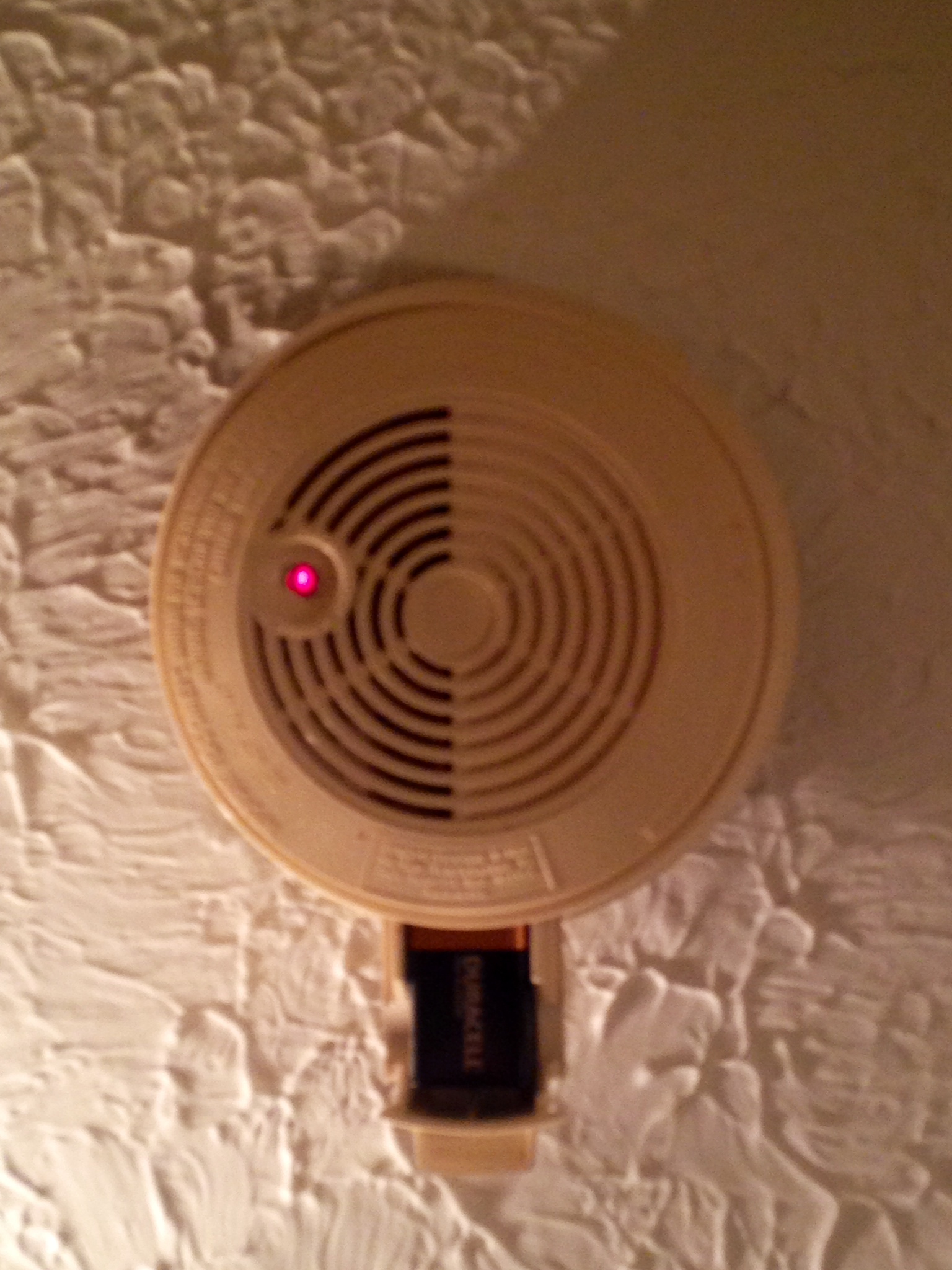
It takes less than 15 seconds…and you have to do this now.

battery

Seriously, do it now.

Fall back = Change your smoke detector batteries and set your clocks back.

Thank you for helping yourself in staying alive.

@rusnivek

My notes from the webinar today #PrepPartners

I had an hour this afternoon to listen/participate in a Webinar.

ohio-state-cheerleader-sarah20_display_image

What did I learn?

  • Physical equipment/barriers are great attention-getters for attendees.
  • Teach your participants to use simple objects to enact the most change (use during evacuation).
  • “See Something, Say Something” or “See Something, Do Something”.
  • Once temperatures reach certain thresholds, offer free cup water to anyone at any concession stand.
  • Buy-in from various All-Hazard agencies is key to working together. Even more important, having them attend your in-person briefings.
  • During a disaster: Safety agencies meeting for the first time = not so good.
  • During a disaster: Radio/phone to Radio/phone = OK.
  • During a disaster: Working together Face-to-face in the EOC = priceless.
  • Despite funny looking, Water Monsters (ie cooling stations) are VERY important.
  • At least 4 redundant radio communications needed for large scale pre-planned events. Amateur Radio is 5th line backup for regional comms.
  • No tailgaiting drinking at OSU games…I guess that’s why Browns fans don’t often attend OSU games early.
  • The timing of exercises is key and public perception and should always be considered.

Use the tips above to keep you and your peeps safe.

Special thanks to Columbus Public Health and Ohio State University for hosting.

@rusnivek

Your crisis response plan should not include spray paint #PIO

Thai Airways had a front landing gear failure upon landing at Bangkok.

As part of their crisis plan, they spray painted/blacked out their company logo from the aircraft.

Ahem…despite your vehicles, apparatus, aircraft, etc….getting into an accident, do not try to spray paint your logo off the rigs.

Here to help illustrate the point, check this short video out.

Kudos to those crazy Taiwanese animation folks.

@rusnivek