Too many needless MVAs this weekend.
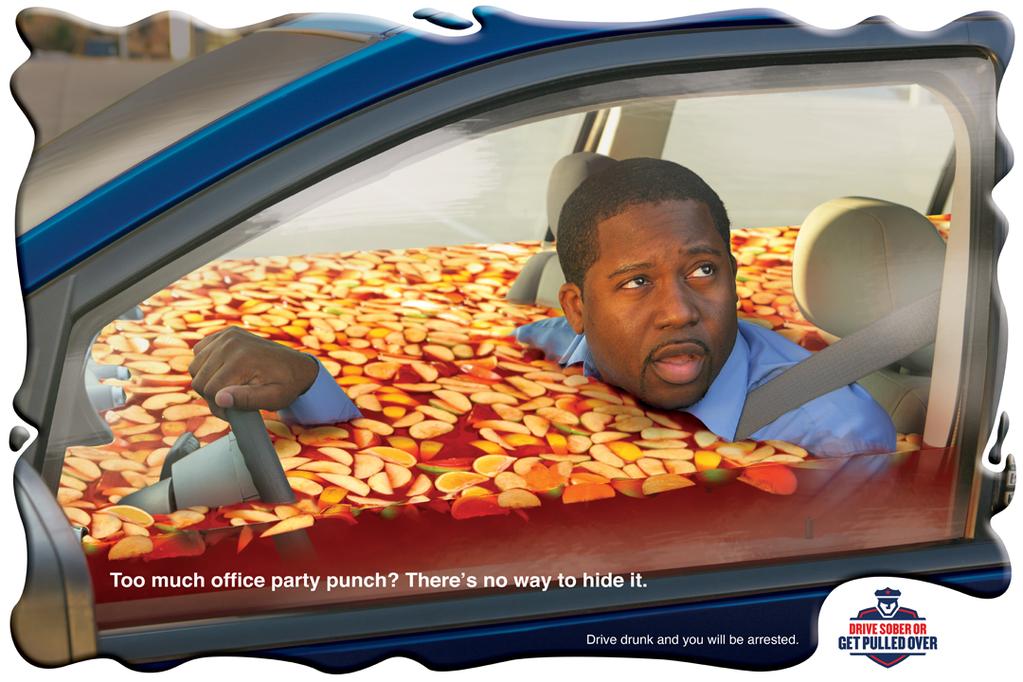
For the sake of all Public Safety and your family who loves you, please DO NOT DRINK AND DRIVE!
And feel free to continually share safety messages like this often.

Too many needless MVAs this weekend.
For the sake of all Public Safety and your family who loves you, please DO NOT DRINK AND DRIVE!
And feel free to continually share safety messages like this often.
#blizzardof2015 Power or not – NEVER TOUCH A DOWN POWER LINE!

Keep away from loose or dangling power lines and report them immediately to the power company.
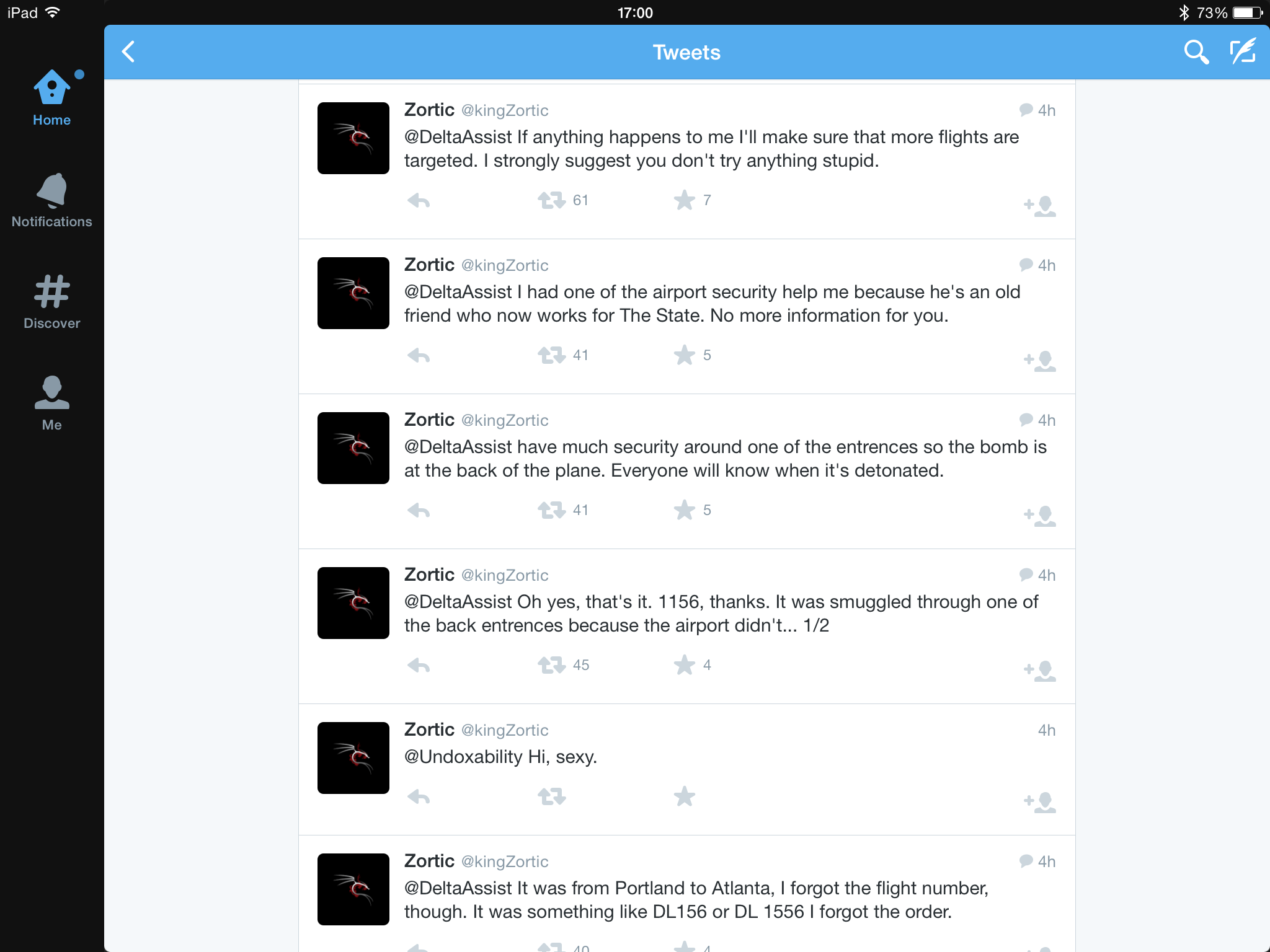
On Saturday, a user on Twitter posted threats about specific flights.

These terroristic tweets were taunting and often vulgar with careless disregard for the safety of numerous people. Authorities were contacted and an immediate investigation was started. Multiple flights were halted, Flights from Portland Portland and Milwaukee were identified and Atlanta Airport was checked for bombs.
Targeting various airlines, the threats moved on from Delta Airlines to Southwest Airlines.

Good practice – the verbiage used by Southwest is good communications/social media verbiage to use on Twitter when responding to immediate threats.
User cited supposedly specific information on how the plot was carried out.

Taunting the safety of passengers on a public forum is bad.

In the end, the person making the threats identified a specific address of location. Again, taunting law enforcement.
Easily found on Google Maps, Chicago Police was dispatched to this address to verify information.

As I predicted, the address did not yield the subject.
Sounds like “SWATTING” to me – http://www.fbi.gov/news/stories/2013/september/the-crime-of-swatting-fake-9-1-1-calls-have-real-consequences/the-crime-of-swatting-fake-9-1-1-calls-have-real-consequences
In my opinion (and how you should interpret this story is simple): It takes is 140-characters to send you to jail.
From the intel POV: Lots to glean from the info/data posted in these tweets.
From the safety POV: Lots of operational assets to mobilze.
From the Emergency Management POV: Lots to coordinate with various all-hazards public safety agencies in multiple places.
This would be a good time to remind you of DHS’ phrase – “If you see something, say something”.
Remain vigilant my friends.
| 14-006: Technical jargon and giving actionable information | |
| Agency: Chicago Fire Department | Topic(s): Industry codes / Actionable info |
| Date: Fall 2014 | Platform: Twitter |
Industry speak or technical jargon is part of what we do every day. But using technical terms on a social media platform will be confusing to those who are NOT in the fire service. That’s what the Chicago Fire Department did yesterday at their big 3-alarm fire when they tweeted technical jargon.


The use of technical jargon is rampant in emergency services but when speaking to the media or the general public, we need to remember that everyone did not grow up with a VOX alarm or SCU tones. In this case, a “311” or 3-11 alarm means that there are 11 engines, 5 Trucks, 2 Tower Ladders, 6 Battalion Chiefs, 1 Rescue Squad, 2 Ambulances, 2 Paramedic Chiefs, Deputy District Chief, Deputy Fire Commissioner, and the 1st Deputy Fire Commissioner are onscene. There is no way to include all that information in a tweet, but using more simple terms will help your audience understand the scale of your ongoing incident.
Before you post images, make sure your pictures are rotated correctly. I know accuracy is sometimes overlooked in lieu of speed, but it takes less than 5 seconds to orientate/rotate a picture (In this case, it was going to be a long operation). And note, by just rotating a picture does not equate that you are “doctoring up” photos. But a correctly posted photo will help media repost and format your information quicker to the masses.
During an emergency situation, your constituents need the information pushes to be actionable and specific to your audience. Not only inform them of the danger, but tell them what they can do about it.
A more effective tweet could have read:
| Chicago Fire: Large 3-alarm fire at Harrison St x Fifth Ave. Traffic delays-avoid the area. (insert two pictures) |
By phrasing it this way:
Time is valuable, so tweet good stuff.
***To download this as a single-page printable format, click this file:
TechnicalJargonAndGivingActionableInformation-Safety-PIO-SM-14-006
Mowing this week down as we are almost to the middle of the second week in 2014 National Preparedness Month!
“Be Disaster Aware, Take Action to Prepare”
Terriffic Tuesdays are here!
This week’s theme is consistent with FEMA’s National Preparedness Campaign: Know How To plan for specific needs before a Disaster.
#9: When planning alternate routes for work or evacuation, factor in adverse weather conditions #NatlPrep #Prepared2014
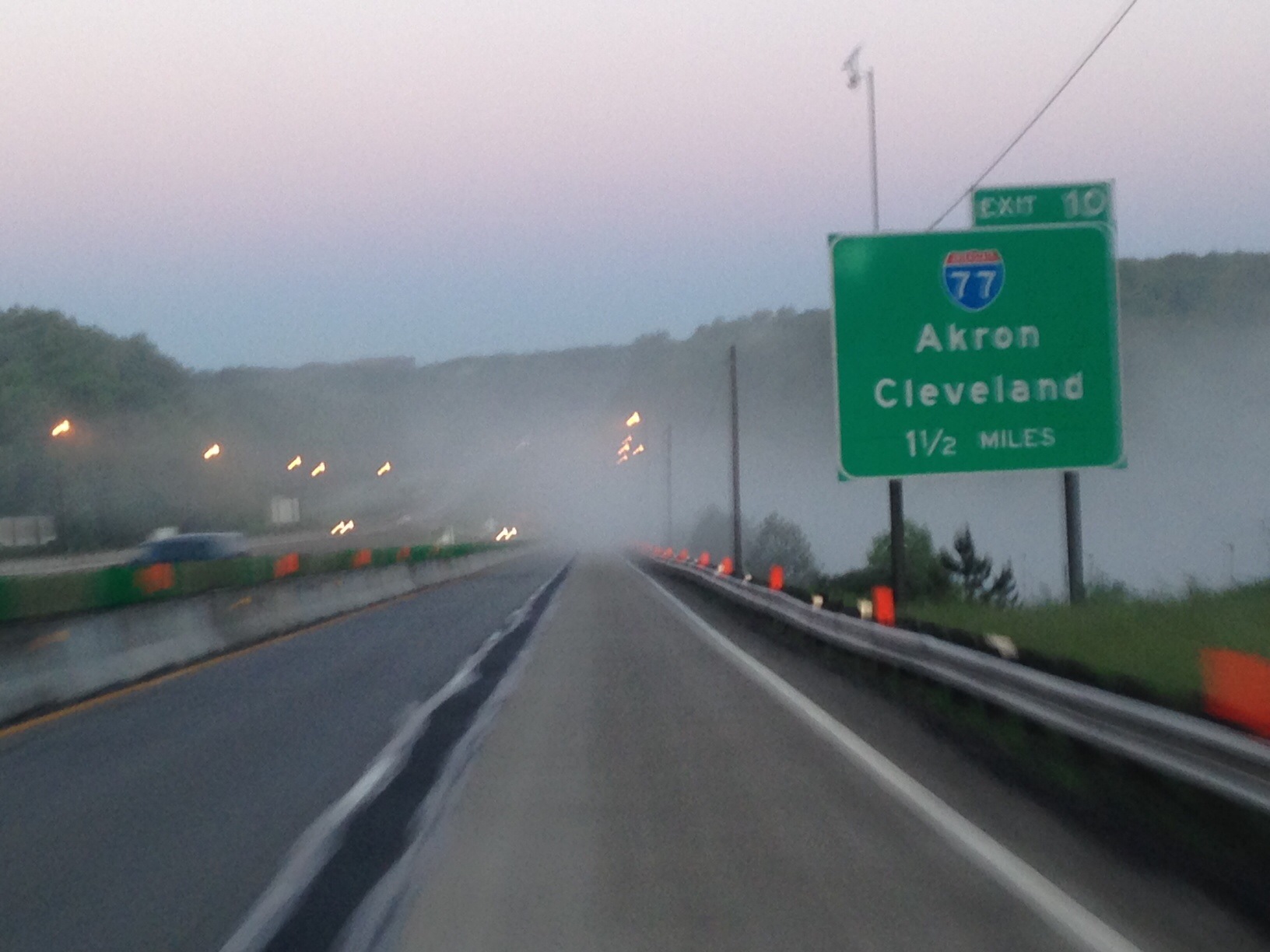
By carefully planning your routes, you can prepare you and your family for adverse weather before it rolls in. Additionally, the use of your NOAA NWS Weather Radio to avoid bad weather will help you safely navigate to your destination in a timely fashion. Consider printing out maps w/ clearly defined routes for everyone in your family.
You do NOT want to mess with Mother Nature – so plan your routes accordingly and drive them often so you aren’t surprised by major/minor construction. Make sure you and your family are safe!
“Planning is everything.” – US President Dwight D Eisenhower.
Quote for today by the US State Department:
“The State Department regards social media as a powerful recruitment tool for terrorist groups…”

Peeps! Know the power of social media and use your social media powers for good.
The latest offering from the US State Department – Think Again Turn Away
Counter bad stuff and show the truth about this evil group
Always remember DHS’ line, See Something, Say Something
How about them apples!
If you aren’t monitoring social media…
Now do you believe me?
Whoa whoa whoa – What about grill safety!?!??!?!?

C’mon peeps!
Now expecting a 9-1-1 call in 3…2…1…
@rusnivek
It’s 2014 National Severe Weather Awareness Week from March 2nd through March 8th.
Today, the state of Ohio will be testing all emergency alert sirens at 9:50 a.m.
***Do not be alarmed, it is only a test.***

It would also be a good time to practice your emergency procedures if a tornado siren/warning goes off.
Do you know the differences between a Tornado Watch vs a Tornado Warning?
Tornado Watch: Issued by the NWS when conditions are favorable for the development of tornadoes. Be prepared to move to a safe place if weather conditions worsen. Stay tuned to weather updates.
Tornado Warning: Issued by the NWS when a tornado is imminent or occurring. A warning may be issued when a tornado is indicated by Doppler radar or sighted by trained spotters. Seek safe shelter immediately.

Stay safe out there peeps!
@rusnivek
Hello snow!
NE Ohio had its first dose of snow last night. Started at about midnight, various reports have 2-8 inches on the ground.

At this time, the National Weather Service Cleveland Office has issued a lake effect snow advisory in effect until 1300 EST (aka 1:00pm EST). Snow will be heavy with high water content. This can cause damage to trees and power lines.
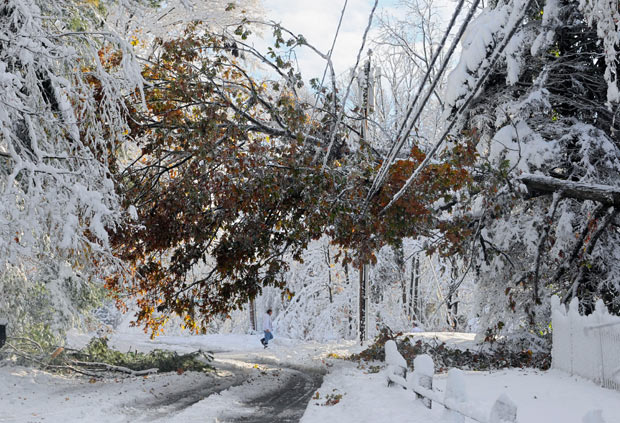
There are some dangers associated with wintry weather. Here are a few free tips to keep in mind while dealing with snow.

Use these tips to keep you and your family safe this fall….er….snowy season.
@rusnivek
 Where is @rusnivek?