Safety-PIO-SM-14-010-Appropriate-for-Social-Media ?

14-010: Appropriate for Social Media?
Agency: The back of the ambulance Topic(s):         Posting on SM
Date: Fall 2014 Platform:        Instagram

At times, social media is very emotional and many users like to share intimate moments with all their followers. The reality of social media is great…except when it is done inappropriately. That’s just what Instagram user rnashleeyyy_xx did in the back of an ambulance.

IMG_1752


“Love is in the air…” are great lyrics, however, I don’t believe this type of behavior is appropriate for an ambulance. This isn’t a hotel…real patient care occurs in the back of the ambulance! This is a professional environment. Keep it that way.


Also, I am fairly sure Zeus didn’t write that in his SOGs. No matter the justification, people will immediately judge and in the court of public opinion, these actions are not considered professional. And no, the caption/description will not deter or change focus as the visual image hits the news.


So basically, stop making out in the back of the ambulance.


The amount of stuff that happens back here is enough to scare an entire country. Infection control alone should be enough of a deterrent. Think about it.


Any agency on social media should have a social media strategy and a plan that includes guidelines on how employees should use social media and who they interact with. The plan can outline how members should conduct activities on social media as well as identify dangers on how, if used inappropriately, will reflect poorly upon the agency. No matter your threshold of acceptance or approval, monitor your employees use of social media. They are a direct reflection on your agency, your brand, and you.


General social media tips to keep in mind:

  1. Know what your employees are posting on social media platforms.
  2. Your employees are a direct representation of your brand/image on social media.
  3. The disclaimer “My views expressed here do not reflect my employer’s views” will NOT hold up in court.
  4. Regularly search for your agency’s name to monitor the online discussion(s).
  5. You work hard to build your brand on social media…Keep it that way.


Time is valuable, so tweet good stuff.

@rusnivek

***To download this as a single-page printable format, click this file:

Safety-PIO-SM-14-010-Appropriate-for-Social-Media-a


No complaining-offer solutions-Safety-PIO-SM-14-008

14-008: No complaining – offer solutions
Agency: Long Beach Fire Topic(s):         Public Perception and Solutions
Date: Fall 2014 Platform:        Twitter

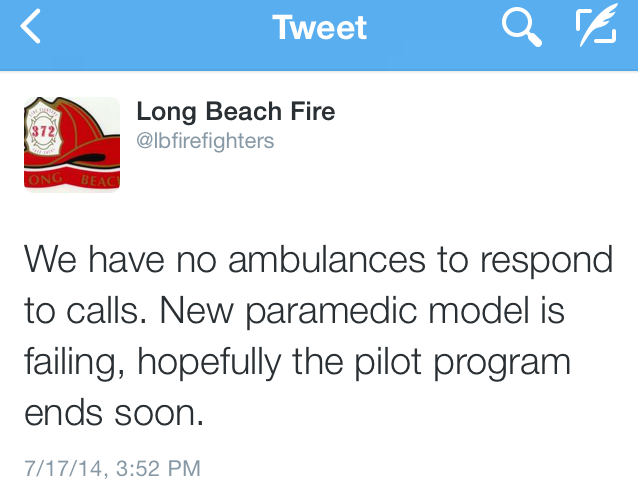
Complaining or venting on social media is fairly common. However, as an official agency, public displays of affliction does not portray the best image. Long Beach Fire expressed some displeasure on Twitter when discussing the their pilot program.

IMG_4353

After reading this tweet, the public’s perception is that if 9-1-1 is called, no ambulances will respond. This is irresponsible and wrong. (Almost all emergency services have mutual aid agreements or memorandum of understandings in place.)


Positioning your agency as a fear mongerer or the Harbinger of Evil will only further distance yourself from people who would be willing to help your cause. Inform them of dangers, but more importantly, engage them publically on social.


If there is internal displeasure with the new staffing models, be proactive and offer transparent solutions in the tweet. Cite websites that provide industry information. Publically share statistical data that supports changes with current programs. These online tactics will help direct and educate the general public on how to be better informed on other program and possible other options yet unexplored.


Additionally you can rally your constituents behind better initiatives by engaging with them publically via social media. It demonstrates that your department’s community involvement is a key part of a better solution.

As an official account, Twitter’s 140-character limit is really no place to moan/groan.

A more effective tweet could have read:

LBFD resources are maxed out. #Firefighters cannot provide adequate #Paramedic service to our communities. Help us find a solution <insert link here>

By phrasing it this way:

  1. You identify that resources are…well…maxed out.
  2. You use hashtags (#Firefighters and #Paramedic) that will help increase visibility in your tweets.
  3. You stress the importance of providing dedicated service to your community.
  4. You provide a traceable/measureable link that informs and helps bring visibility to this critical situation.

Time is valuable, so tweet good stuff.

@rusnivek

***To download this as a single-page printable format, click this file:

No complaining-offer solutions-Safety-PIO-SM-14-008

Your image on social by monitoring your name Safety-PIO-SM-14-007

14-007: Your image on social by monitoring your name
Agency: Lakewood Fire Topic(s):         Monitoring your name/branding
Date: Fall 2014 Platform:        Twitter

Monitoring your namesake has been debated for years. But with decreased staffing and less time to do more with less, many agencies are bypassing this critical piece of community relations and image/branding. A good example is when a citizen commented on Lakewood Fire’s SUV parking.

IMG_1372

Everyone has a camera these days. We use them not only to capture memories and precious moments, but also for documentation and shaming. I believe Todd was going for the public safety shaming factor here. I am unsure on the previous relationship between Todd and Lakewood, but there was never a response on Twitter back to Todd. Truth be told, these days, unanswered public questions are sometimes perceived as a government agency cover-ups/issues. Similar to the “No comment” – a non-response might even be worse.

How do you monitor your agency’s name or any derivatives? Try these free services: Google Alerts, search columns in TweetDeck or Hootsuite, or frequent basic vanity searches on any search engine or social media platforms.

While Todd’s use of hashtags is fairly standard social media malarkey, a swift response with a timely and direct reply to Todd’s tweet would help stop the perception that LFD is breaking the law or even setting a bad example. Remember, social media is about digital interaction.

The response could also be a teaching point so share with your audience some insight into your normal operations with a simple message on Fire Prevention activities – like hydrant testing. And using the hashtag #FirePrevention pulls up thousands of tweets about educating the public specifically in fire safety.

An effective @reply response to Todd’s tweet could have read:

@stwrs1974 During an emergency, it’s tough to find safe parking. FYI-we also check/flush hydrants twice a year too #FirePrevention 

By phrasing it this way:

  1. You immediately address the issue directly with the citizen citing the issue.
  2. You provide insight into scene safety during an emergency.
  3. You call attention to your normal operations (in this case-hydrant flushing).
  4. You use the hashtag #FirePrevention to call attention to…well…Fire Prevention.
  5. You show the general public you care about your image and want to get the story right.

Time is valuable, so tweet good stuff.

@rusnivek

***To download this as a single-page printable format, click this file:

YourImageOnSocialByMonitoringYourName-Safety-PIO-SM-14-007


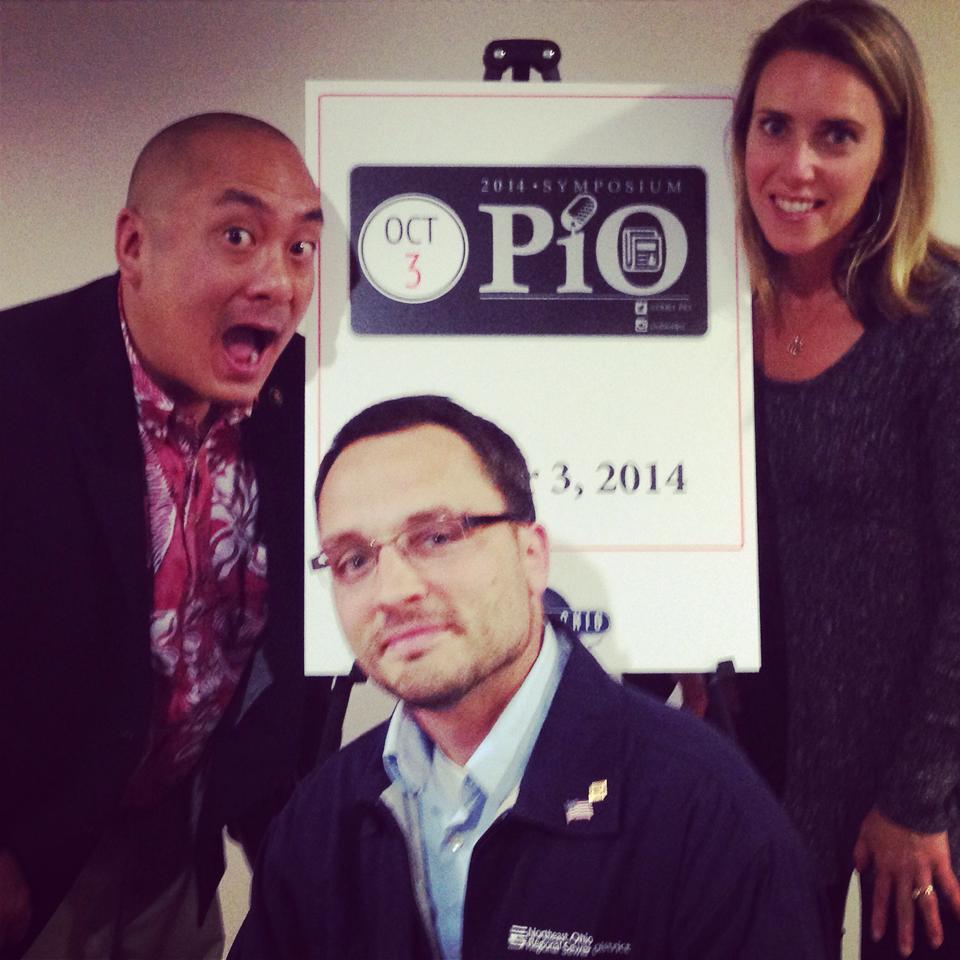
Fun day at the 2014 PIO Symposium

Had a great time on Friday at the Ohio PIO Symposium in Columbus.

Special thanks to all the PIOs from various disciplines in attending.

What did I learn? I posted my takeaways on Friday to twitter (@rusnivek). Hope you can pick up a few tips too.

10686959_499963756773134_8807176677323802907_n

I am confident that the more we work together, we will be able to function as a cohesive team.

@rusnivek

Technical jargon and giving actionable information Safety-PIO-SM-14-006

14-006: Technical jargon and giving actionable information
Agency: Chicago Fire Department Topic(s): Industry codes / Actionable info
Date: Fall 2014 Platform: Twitter

Industry speak or technical jargon is part of what we do every day. But using technical terms on a social media platform will be confusing to those who are NOT in the fire service. That’s what the Chicago Fire Department did yesterday at their big 3-alarm fire when they tweeted technical jargon.

imageaimage

The use of technical jargon is rampant in emergency services but when speaking to the media or the general public, we need to remember that everyone did not grow up with a VOX alarm or SCU tones. In this case, a “311” or 3-11 alarm means that there are 11 engines, 5 Trucks, 2 Tower Ladders, 6 Battalion Chiefs, 1 Rescue Squad, 2 Ambulances, 2 Paramedic Chiefs, Deputy District Chief, Deputy Fire Commissioner, and the 1st Deputy Fire Commissioner are onscene. There is no way to include all that information in a tweet, but using more simple terms will help your audience understand the scale of your ongoing incident.

Before you post images, make sure your pictures are rotated correctly. I know accuracy is sometimes overlooked in lieu of speed, but it takes less than 5 seconds to orientate/rotate a picture (In this case, it was going to be a long operation). And note, by just rotating a picture does not equate that you are “doctoring up” photos. But a correctly posted photo will help media repost and format your information quicker to the masses.

During an emergency situation, your constituents need the information pushes to be actionable and specific to your audience. Not only inform them of the danger, but tell them what they can do about it.

A more effective tweet could have read:

Chicago Fire: Large 3-alarm fire at Harrison St x Fifth Ave. Traffic delays-avoid the area. (insert two pictures)

By phrasing it this way:

  1. You cite the authority having jurisdiction and established incident command presence.
  2. You generally described the size/category of the ongoing incident and critical information to media.
  3. You identify the exact location of the incident.
  4. You describe the delays in the area and give actionable information to your constituents.
  5. You still have lots of room to push properly orientated pictures with your informational tweet.


Time is valuable, so tweet good stuff.

@rusnivek

***To download this as a single-page printable format, click this file:

TechnicalJargonAndGivingActionableInformation-Safety-PIO-SM-14-006