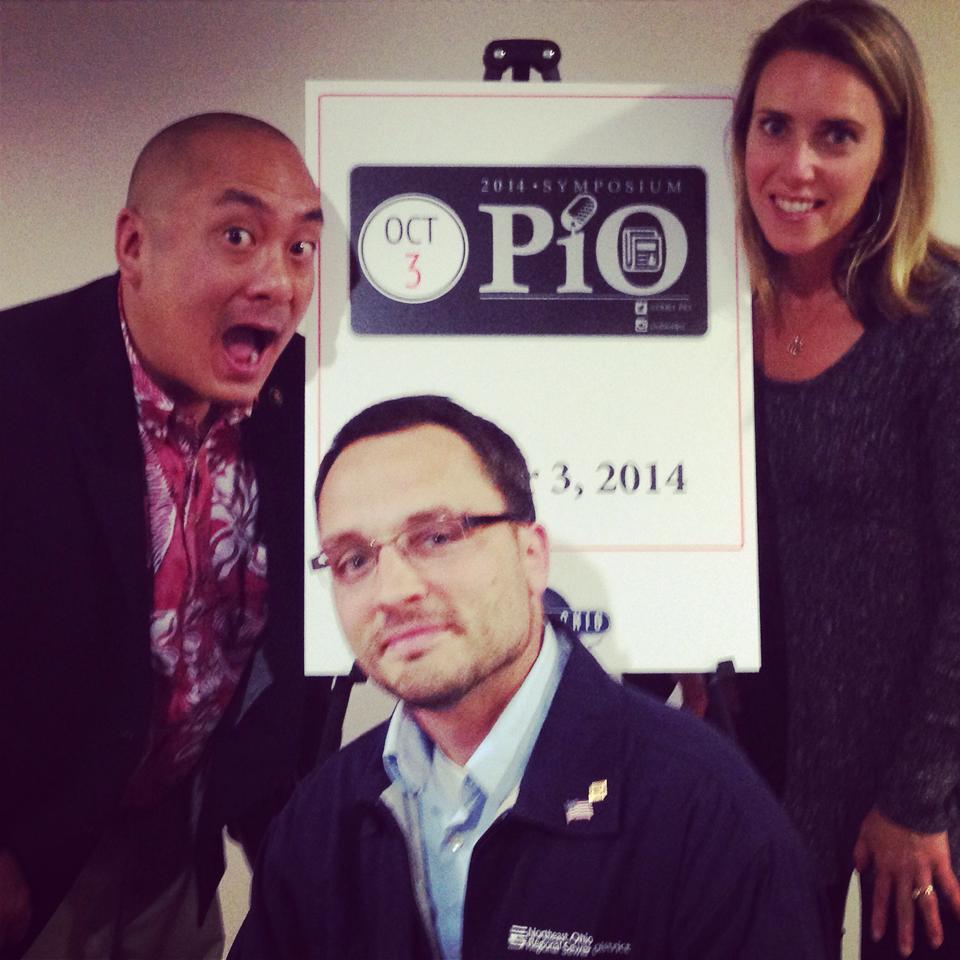
Fun day at the 2014 PIO Symposium

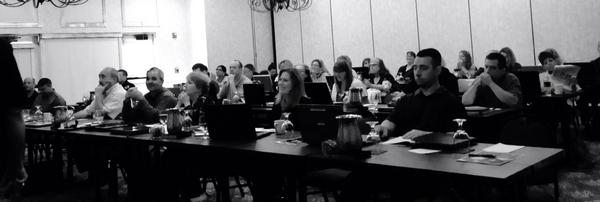
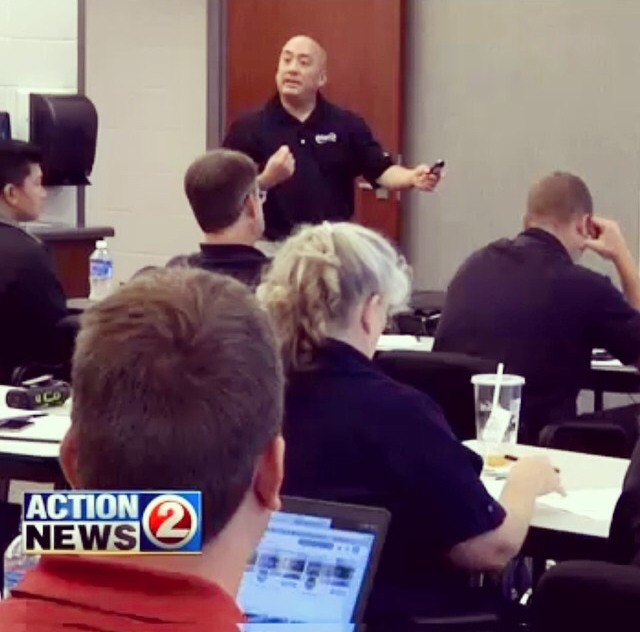
Had a great time on Friday at the Ohio PIO Symposium in Columbus.

Special thanks to all the PIOs from various disciplines in attending.

What did I learn? I posted my takeaways on Friday to twitter (@rusnivek). Hope you can pick up a few tips too.

10686959_499963756773134_8807176677323802907_n

I am confident that the more we work together, we will be able to function as a cohesive team.

@rusnivek

Technical jargon and giving actionable information Safety-PIO-SM-14-006

14-006: Technical jargon and giving actionable information
Agency: Chicago Fire Department Topic(s): Industry codes / Actionable info
Date: Fall 2014 Platform: Twitter

Industry speak or technical jargon is part of what we do every day. But using technical terms on a social media platform will be confusing to those who are NOT in the fire service. That’s what the Chicago Fire Department did yesterday at their big 3-alarm fire when they tweeted technical jargon.

imageaimage

The use of technical jargon is rampant in emergency services but when speaking to the media or the general public, we need to remember that everyone did not grow up with a VOX alarm or SCU tones. In this case, a “311” or 3-11 alarm means that there are 11 engines, 5 Trucks, 2 Tower Ladders, 6 Battalion Chiefs, 1 Rescue Squad, 2 Ambulances, 2 Paramedic Chiefs, Deputy District Chief, Deputy Fire Commissioner, and the 1st Deputy Fire Commissioner are onscene. There is no way to include all that information in a tweet, but using more simple terms will help your audience understand the scale of your ongoing incident.

Before you post images, make sure your pictures are rotated correctly. I know accuracy is sometimes overlooked in lieu of speed, but it takes less than 5 seconds to orientate/rotate a picture (In this case, it was going to be a long operation). And note, by just rotating a picture does not equate that you are “doctoring up” photos. But a correctly posted photo will help media repost and format your information quicker to the masses.

During an emergency situation, your constituents need the information pushes to be actionable and specific to your audience. Not only inform them of the danger, but tell them what they can do about it.

A more effective tweet could have read:

Chicago Fire: Large 3-alarm fire at Harrison St x Fifth Ave. Traffic delays-avoid the area. (insert two pictures)

By phrasing it this way:

  1. You cite the authority having jurisdiction and established incident command presence.
  2. You generally described the size/category of the ongoing incident and critical information to media.
  3. You identify the exact location of the incident.
  4. You describe the delays in the area and give actionable information to your constituents.
  5. You still have lots of room to push properly orientated pictures with your informational tweet.


Time is valuable, so tweet good stuff.

@rusnivek

***To download this as a single-page printable format, click this file:

TechnicalJargonAndGivingActionableInformation-Safety-PIO-SM-14-006

A lonely shortened Facebook link on Twitter – Safety-PIO-SM-14-004

14-004: A lonely shortened Facebook link on Twitter
Agency: South Central Sierra Interagency IMT Topic(s):         Shared information/update
Date: Summer 2014 Platform:        Twitter


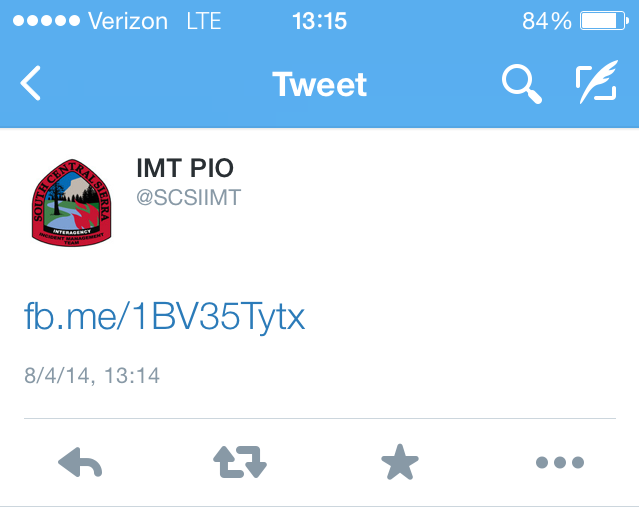
Speed is primarily the reason why everyone loves social media…especially Twitter. Many agencies use social media to provide updates and information when assigned to certain incidents. That’s what the South Central Sierra Interagency Incident Management Team did during the French Fire in California when they pushed this lonely shortened Facebook link out on Twitter.

IMG_5165


I get that 140 character max on Twitter is short…and you have lots to say…and you don’t have time…and blah blah blah. Everyone else doesn’t have time too. But pushing a non-descript link, does raise a concern that perhaps your account has been compromised by spam bots. Your agency has worked diligently to establish solid working relationships. During an emergency is the WORST time for your audience to question and/or ignore your official accounts with trusted reliable information.


If your social media plan calls for directing all efforts to Facebook as the primary source of information, a Public Information Officer (PIO) should still take the time to provide a little information (like a short description) on other platforms driving the traffic to that primary source. Providing just a link is not enough.

In the PIO business, we are forced to be precise, however just providing a link pertaining to a dangerous situation or disasters will not be enough to satiate the Twittersphere’s social interest.


Audiences change on various social media platforms, however, many agencies *think* they are all the same.

Knowing your audience is the hallmark of success. If you pair your Facebook and Twitter accounts to save time and to pass the exact same message – you should consider separating them now. Remember, you write/post/share information differently on various social media platforms.


A more effective tweet could have read:

Still assigned to the French Fire here in California-Check out pictures frm @BLMNational Interagency Fire fb.me/1BV35Tytx #CAWildfire

By phrasing it this way:

  1. You have more visibility by informing your followers that your team is still assigned to the incident.
  2. The link looks less spammy and readers know what the specific content is in the link.
  3. Your #hashtag will give more information about the current overall disaster/emergency.
  4. Your readers are likely to click on this hyperlink because it will take them to a picture. People love pictures.
  5. Your agency shows coordinated efforts with national response agencies when you use @mentions on twitter.


Time is valuable, so tweet good stuff.


@rusnivek


***To download this as a single-page printable format, click this: ALonelyShortenedFacebookLinkOnTwitter-Safety-PIO-SM-14-004a

cropped-1235 - Copy

Presenting some social media magic here in Ashtabula

Did someone say “social media magic”? Heck yeah…and it’s right here in Ashtabula: the use of social media during disasters!

BwIH5FDCMAA-zgU

Making sure we cover the entire state, we hit Columbus yesterday and today, we are setup in the farthest NE corner of Ohio, Ashtabula County.

BwIb8hyIgAATnxa

We are fortunate to have State of Ohio Emergency Management Agency (OEMA) PIO Tamara McBride (from Columbus) peek into the class and say hi to everyone.

Tamara

Leveraging our current technologies during non-emergency times will help concrete our actions and increase our communications during disasters.

Looking forward to seeing some great progress and interaction in social media.

BwJDGgNIUAELVMi

Additionally, it’s so nice to see old friends and colleagues from my past. Truly outstanding.

382656_2843865025909_395565793_n

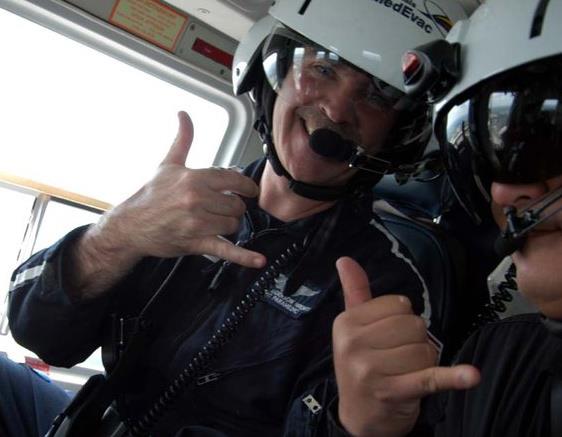
No matter wearing my flight helmet, my hospital shirt, my fire helmet, whatever….I’m just glad to see great friends again.

@rusnivek

Great start to today’s OEMA social media class

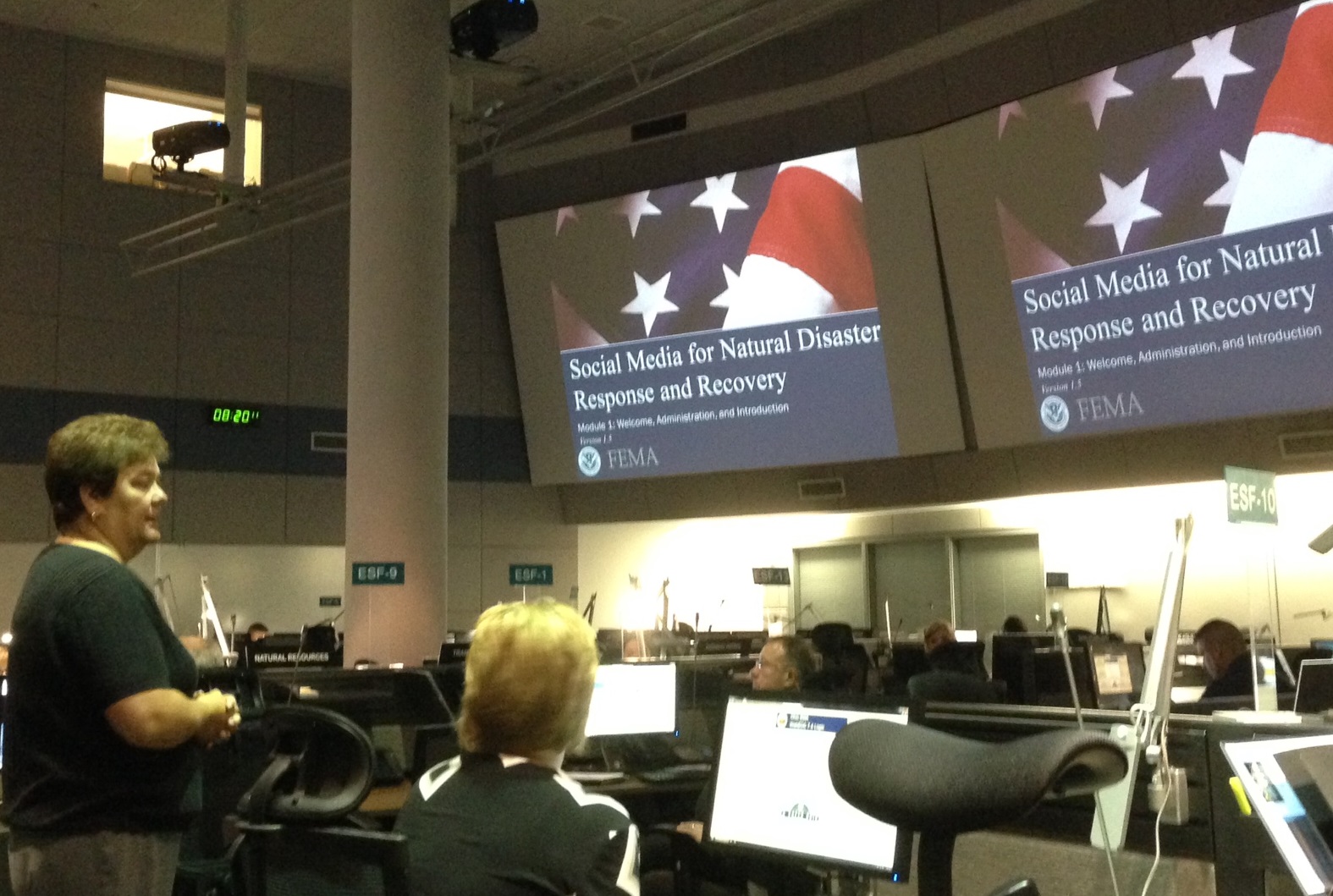
Another great morning here at the State of Ohio Emergency Operations Center.

Various agencies from all over the state in attendance at today’s social media class.

Special thanks to Ohio EMA Assistant Director Sima Merick for the welcome message.

OEMASima


Now to break down more info and tools on how effective PIOs (Public Information Officers) or PAOs (Public Affair Officers) engage on social media.

BwDcR5bIIAAsE9J

Excited to be instructing a bunch of PIOs today.

@rusnivek