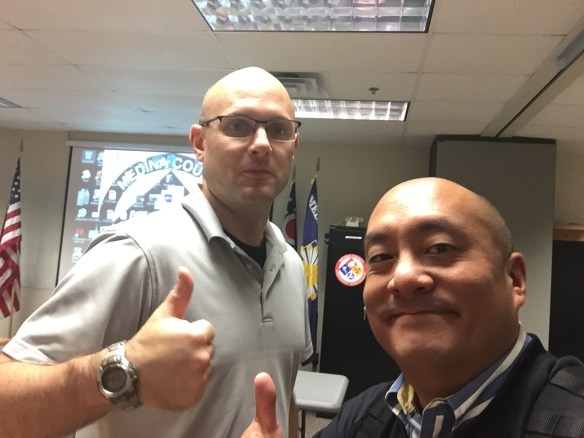
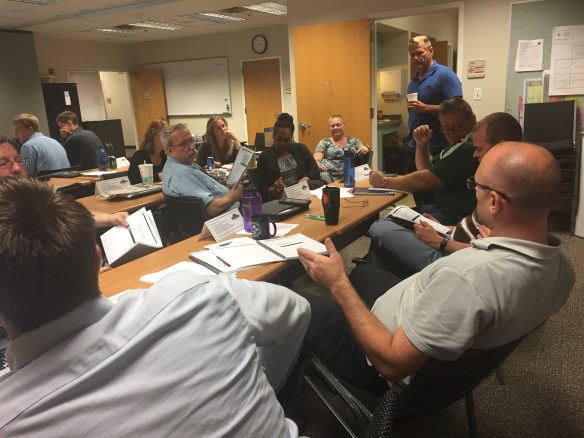
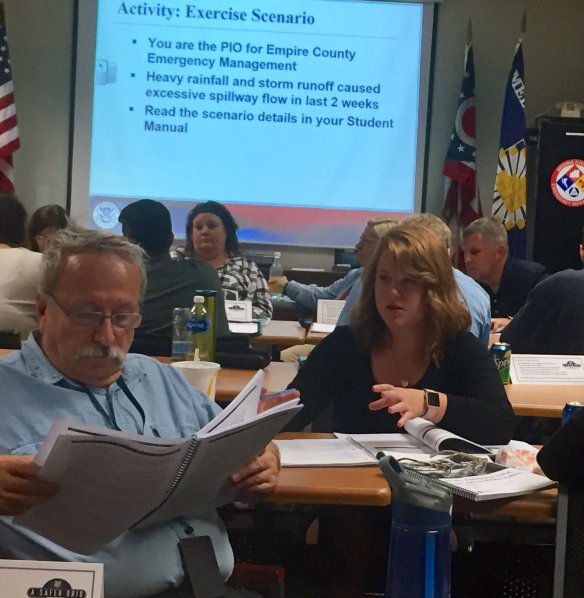
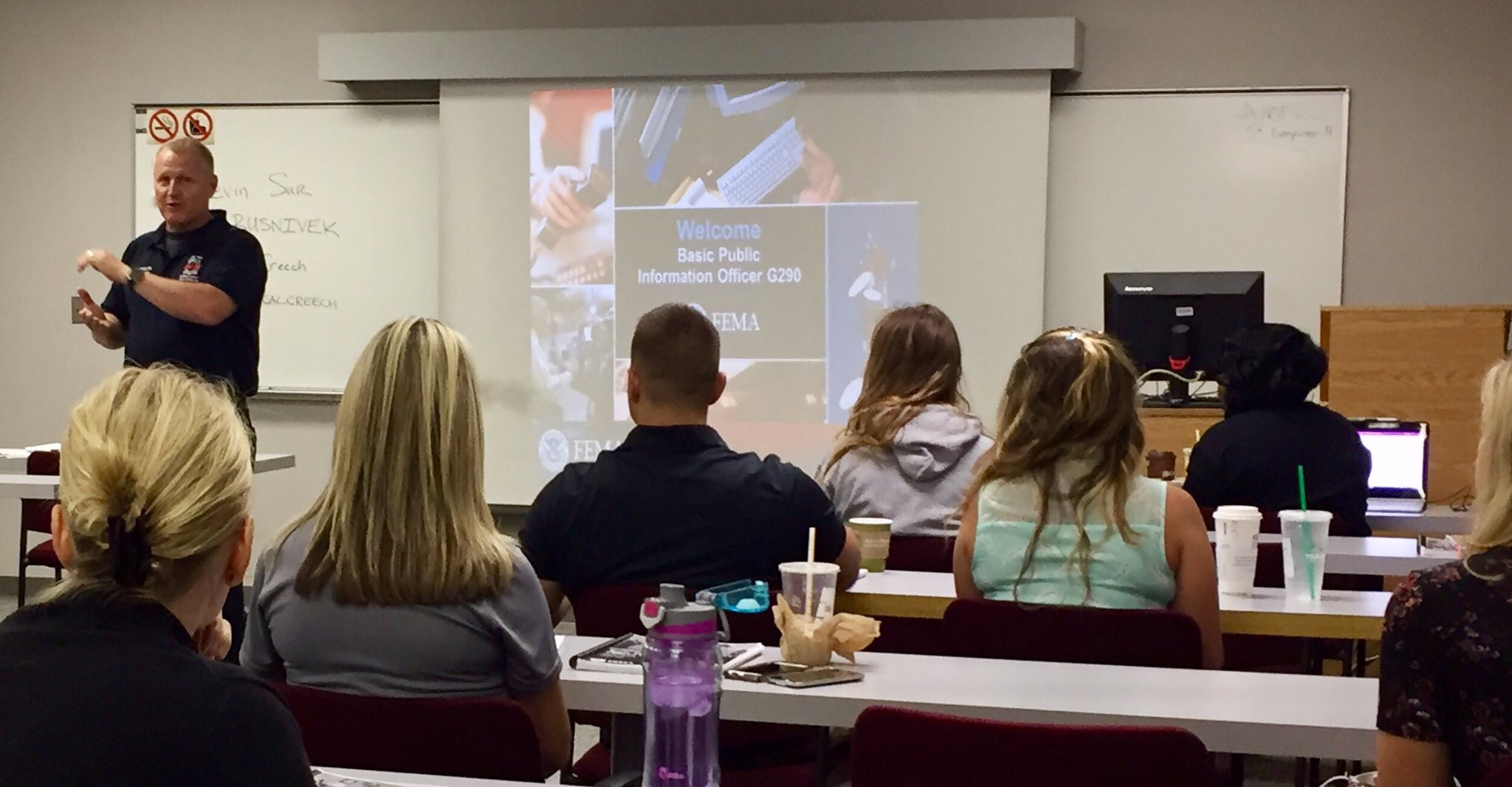
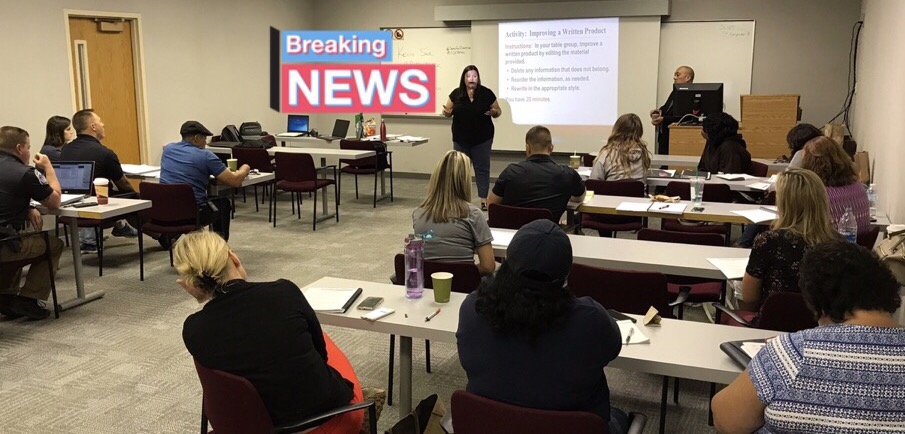
State of Ohio EMA G291 Joint Information Center / System class at Medina County EOC
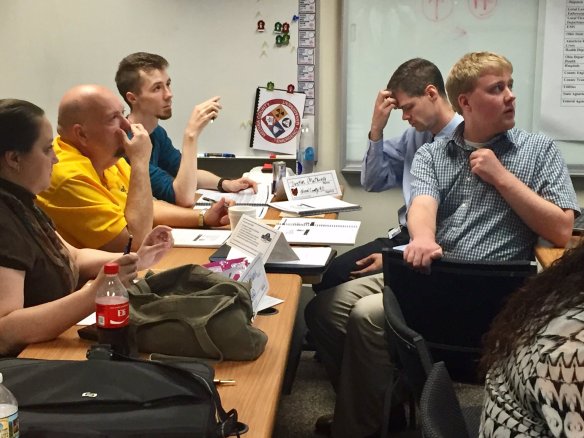
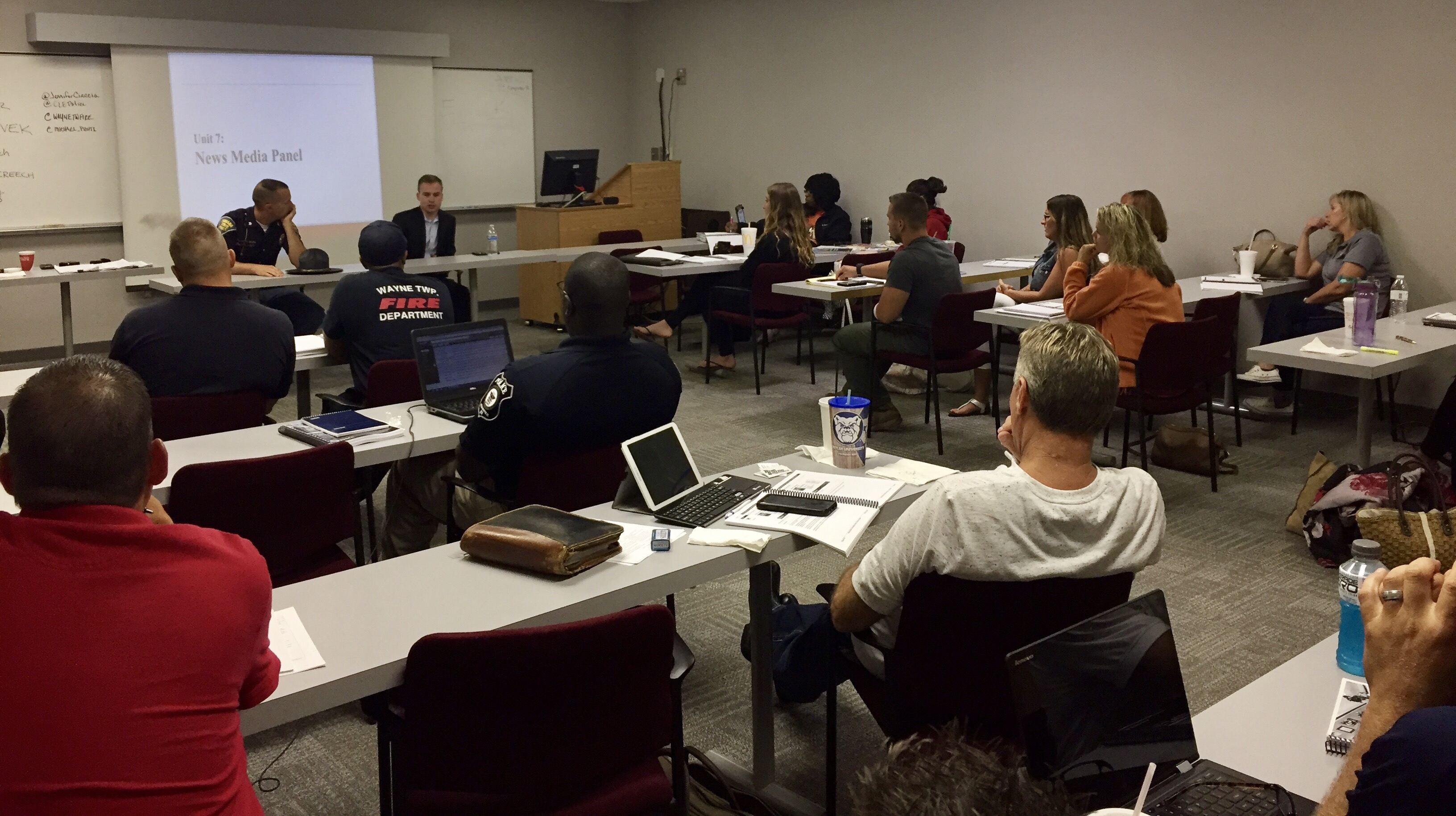
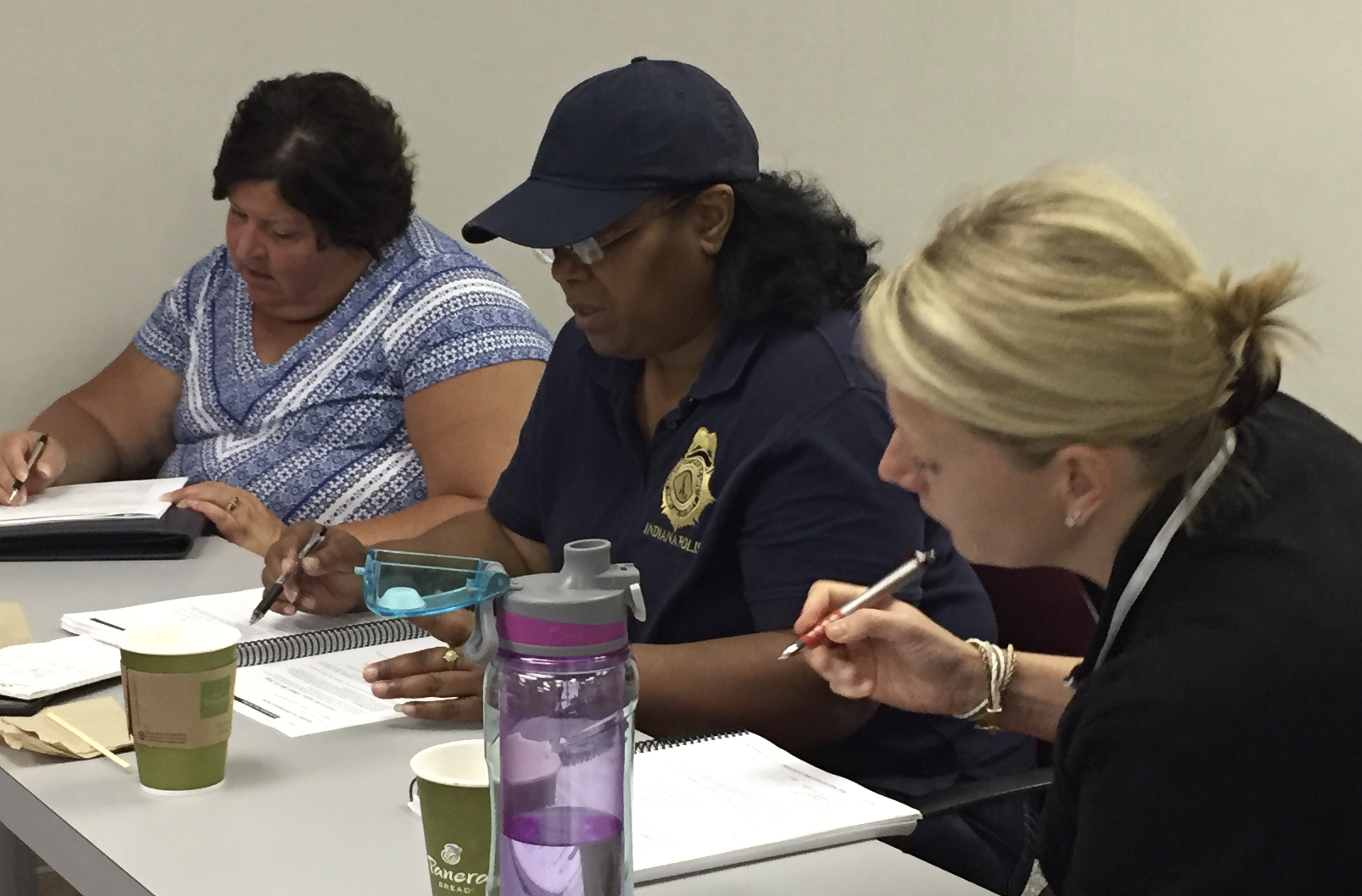
Packed State of Ohio EMA Joint Information Center / Joint Information System course today!

Started everyone into group work as well as ongoing discussion on the role of SMEs at a press conference.

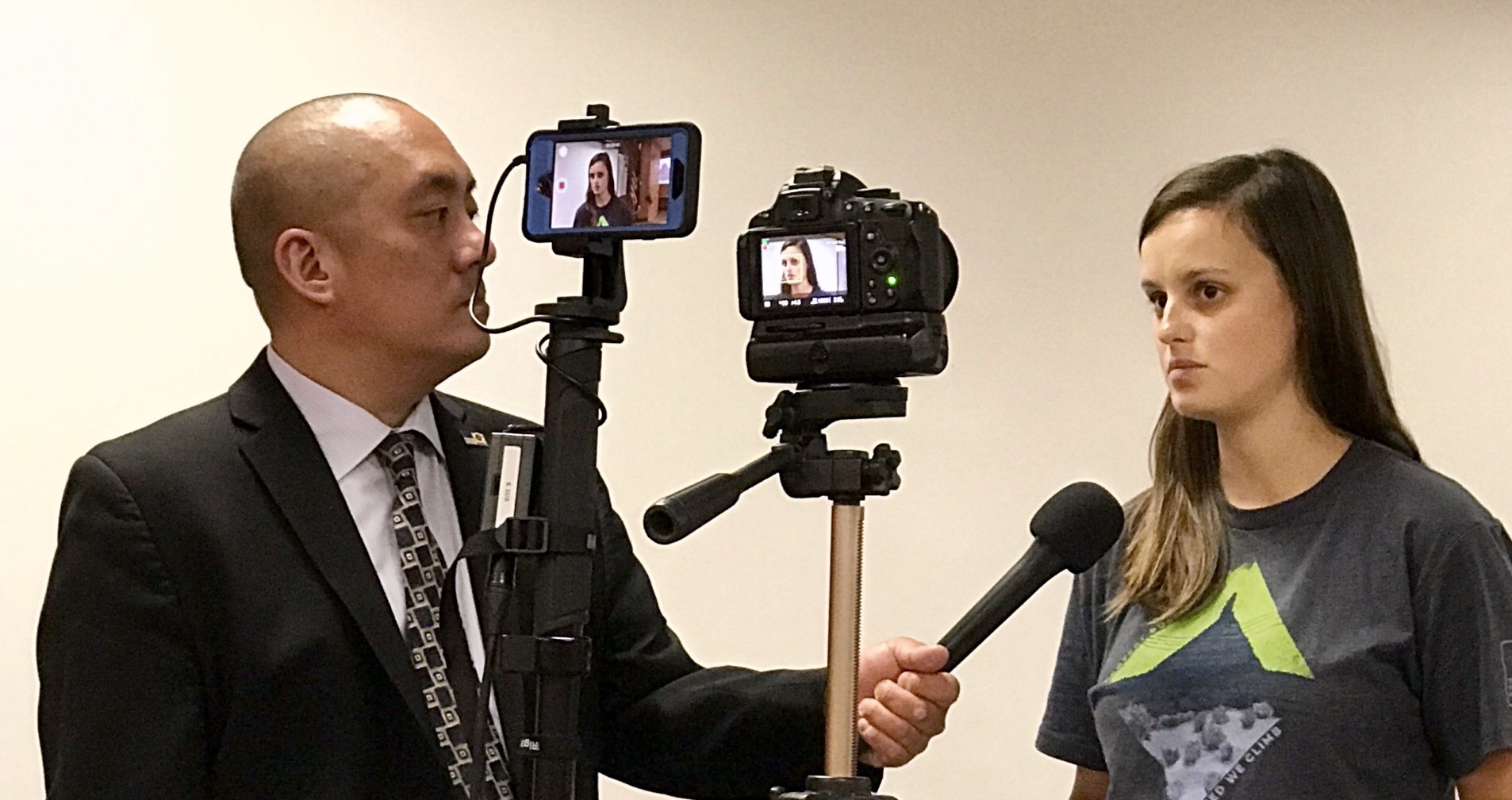
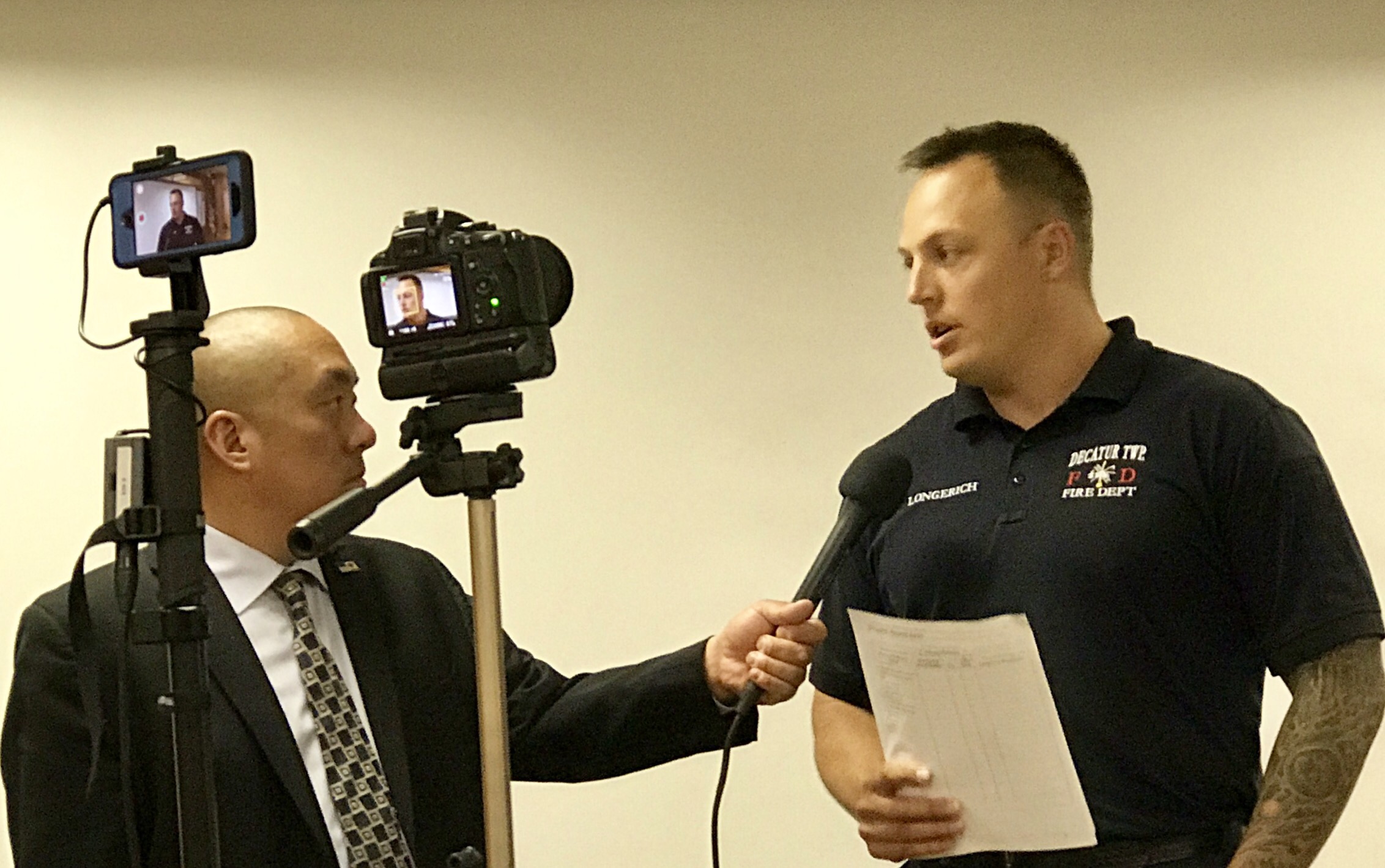
Just in case, we also tasked participants to start thinking about a policy/protocol for their agency on sneak attack aka ambush interviews.

We found as we leverages our strengths and capitalize on our skills, we as JIC Managers can better meet the needs of any situation – we just gotta find the right PIOs for the job.

As our groups collaborated, we found that despite crossing state lines, we still have the same problems as other areas – thus proving our point that we need to consistently train together and exercise our plans together.

Many of our participants enjoyed working in the JIC setting and were excited to work in a JIC during the next activation. Most excellent as we build a strong cadre of PIOs across this great state.

My Ohio Peeps!

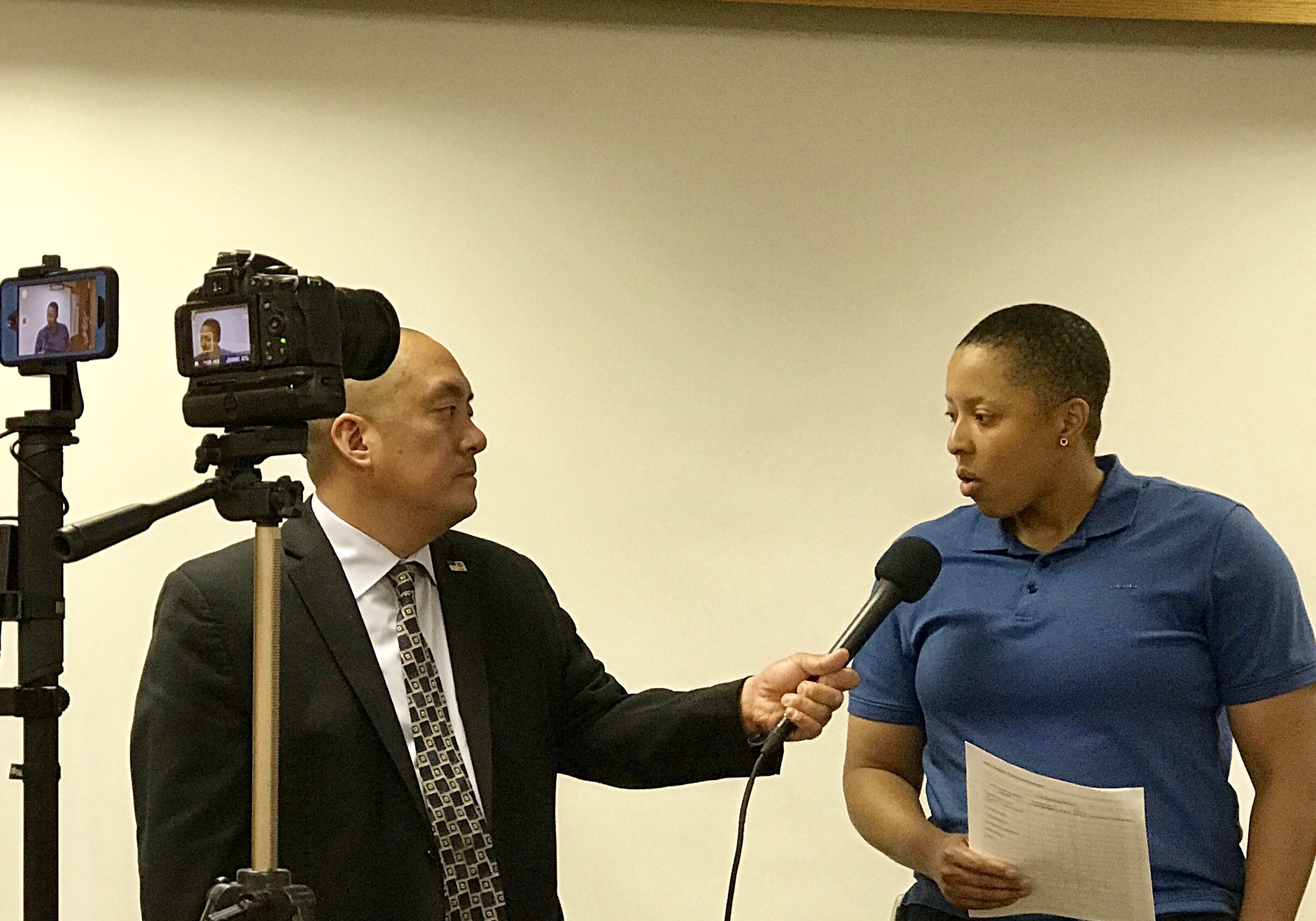
Reporting live from Medina County’s Emergency Operations Center….

@rusnivek

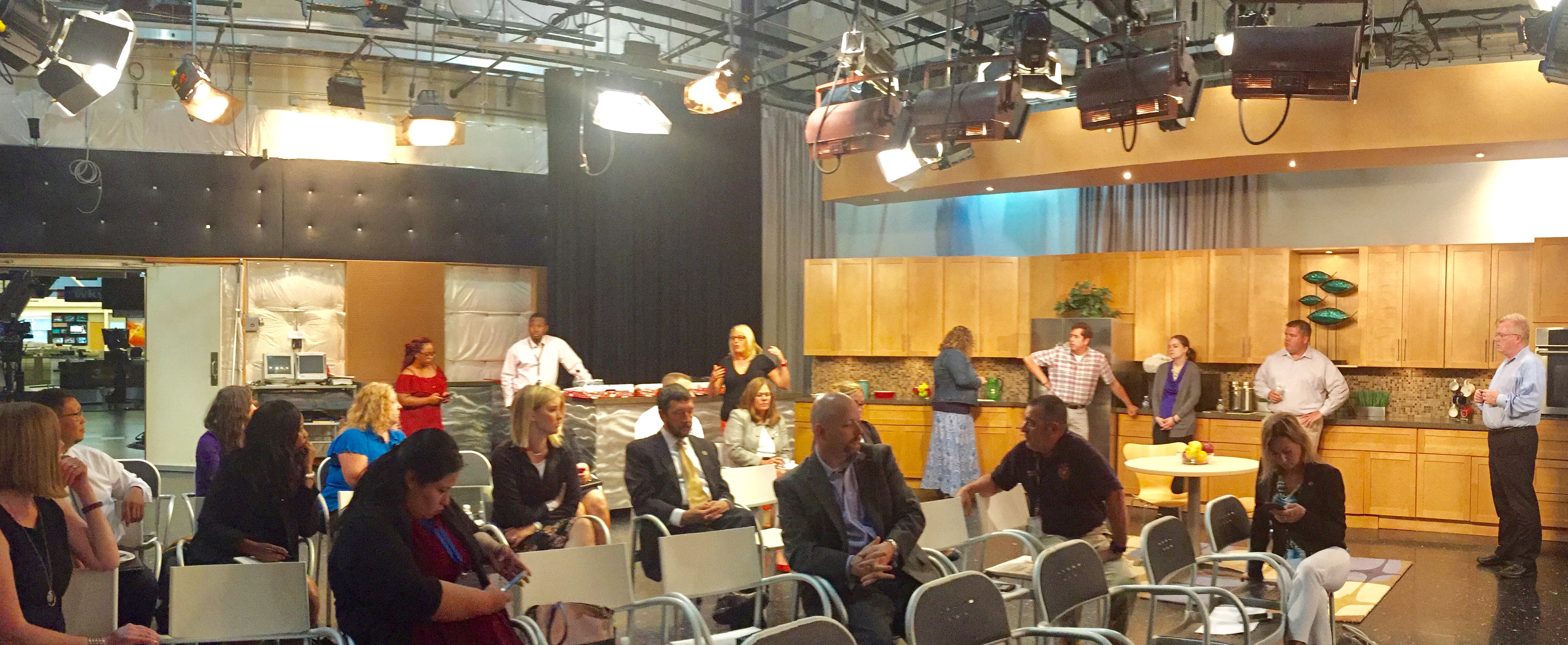
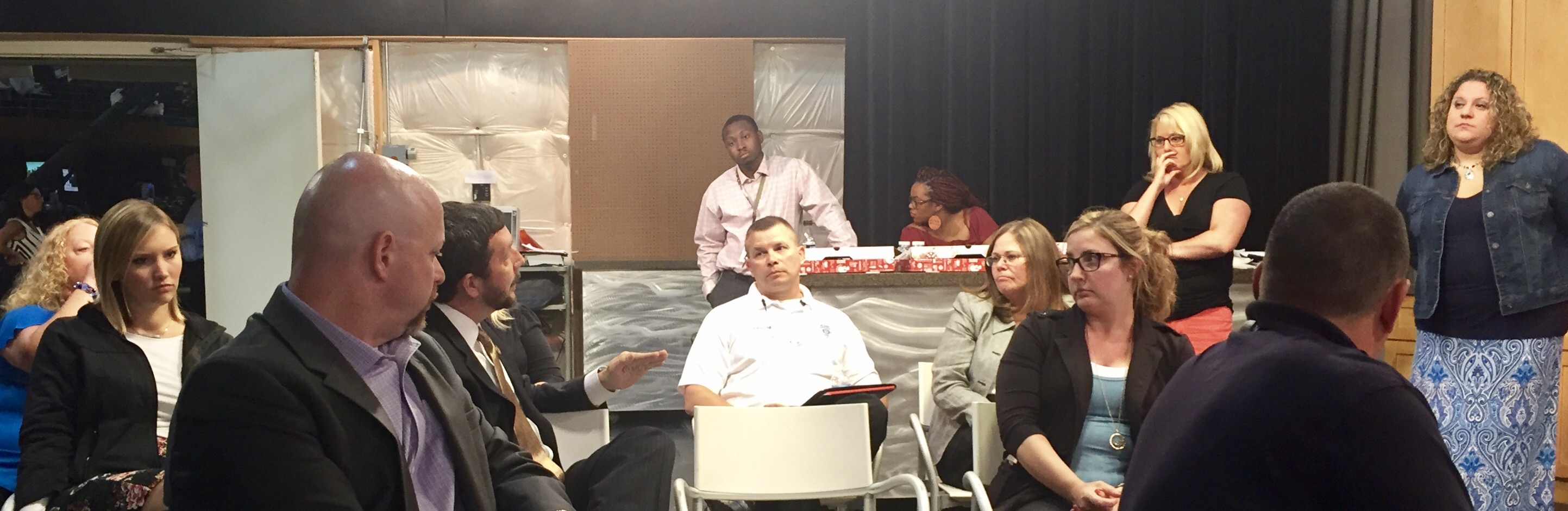
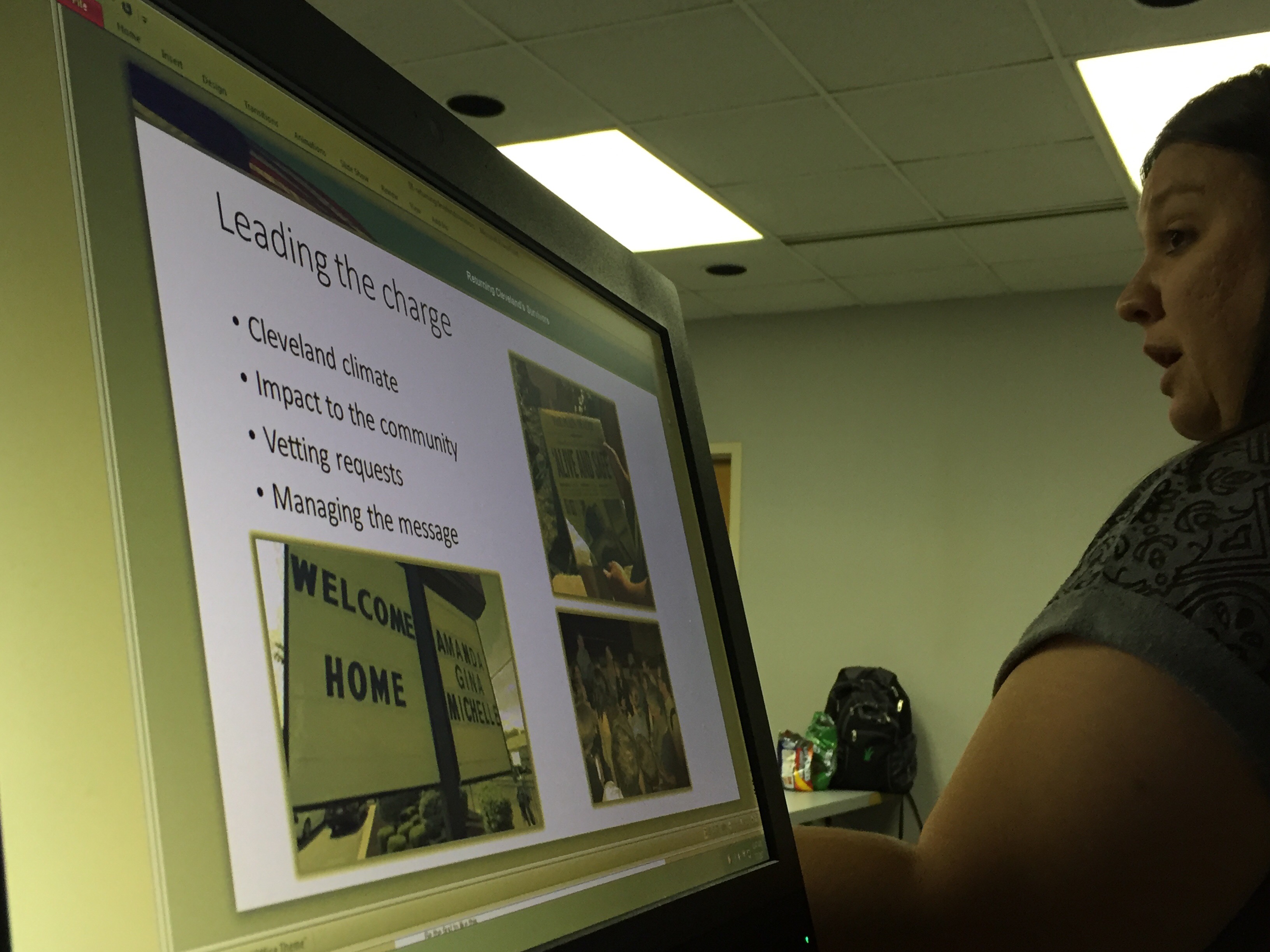
NEO Public Information Officer quarterly training with WKYC 

Great to see the leadership at WKYC (NBC affiliate) for hosting our quarterly NorthEast Ohio’s (NEO) Public Information Officer (PIO) training!

Photo credit: K. Hyson, Cincinnati Health Department

Lots of discussion based around media relations focusing on timely and accurate reporting. Additionally, lots of conversation with good stories vs bad stories – which challenges the typical paradigm of news media’s “If it bleeds, it leads!” mantra.


“Off the record” conversation as well as immediate notification of incident dominated the early part of our conversation.

We moved into how strategy sometimes gets in the way of real emergencies and of course how our PIO narratives sometimes conflicts with how the story is produced.


To me, I was also surprised at how many reporters wanted txt msgs as compared to phone calls. In fact, desk assignment editors wanted a mention as well as a follow-up txt or notification of ongoing emerging issue.


I am very greatful to be able to have candid conversation with our partners in the media. And yes, sharing success stories as well as challenges will allow us to do a better job with our local media to communicate our safety messages. Very glad to hear that getting the story right is still the main drive of our local news agencies.

Many thanks to the pros at WKYC (NBC affiliate) Cleveland for the hospitality and generosity.


Reporting live from WKYC…

@rusnivek

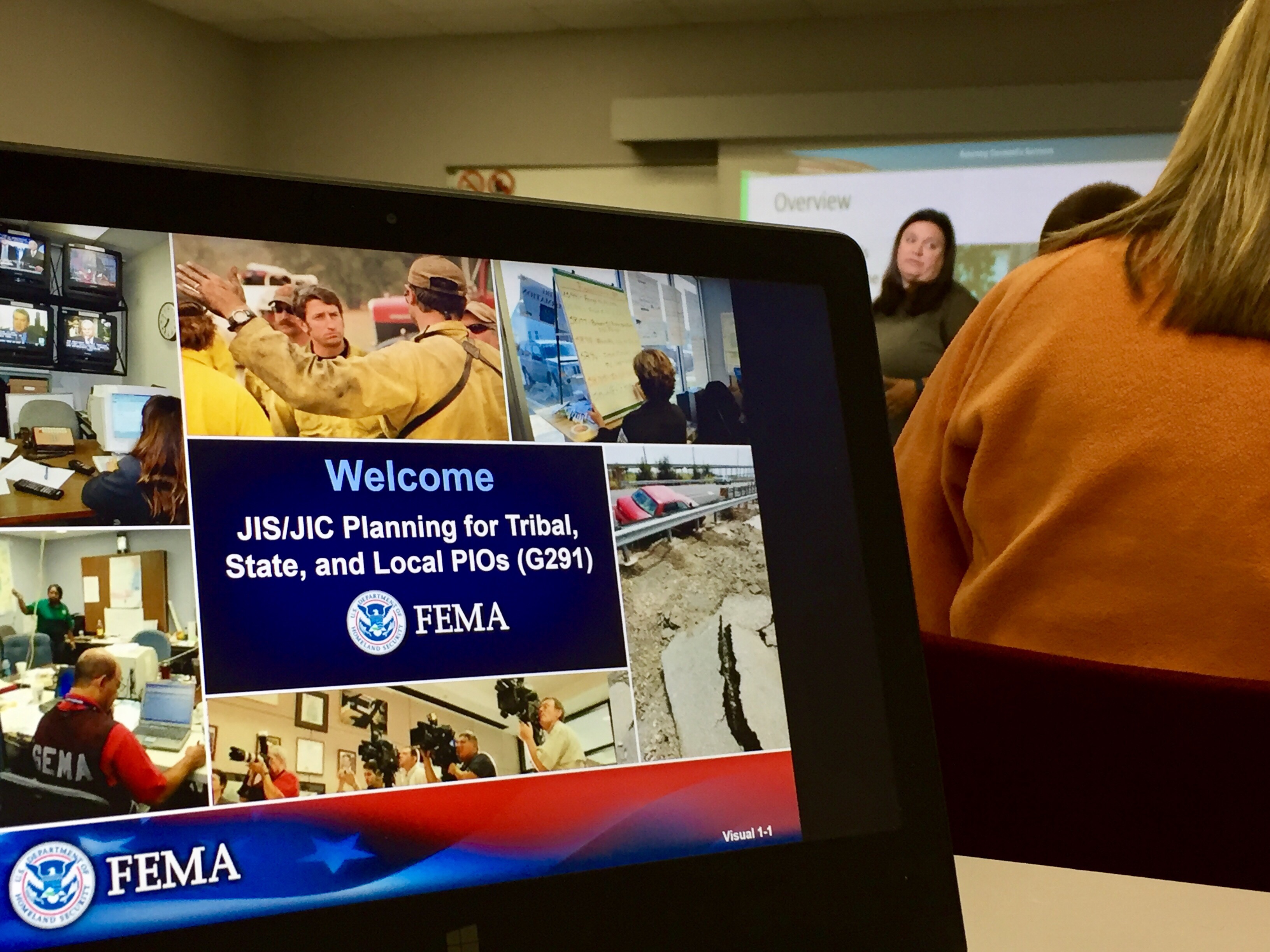
Another solid JIC JIS course on #AlohaFriday 

Today is DHS/FEMA’s G-291: JIC/JIS planning for Tribal, State, and Local PIOs!


Lots to talk about esp coordination with various all-hazards agencies.

Also glad to share a few PIO/JIC stories on 3-girls that were missing for 10+ years as well as the 2016 NBA Championships, Republican National Convention, 2016 World Series, and 2017 NBA Championships.


On top of that, our class wanted to know more about social media so I can indulge a bit. Not only on #s, geolocation, platforms, etc….but also lots on newer wearable technology too.


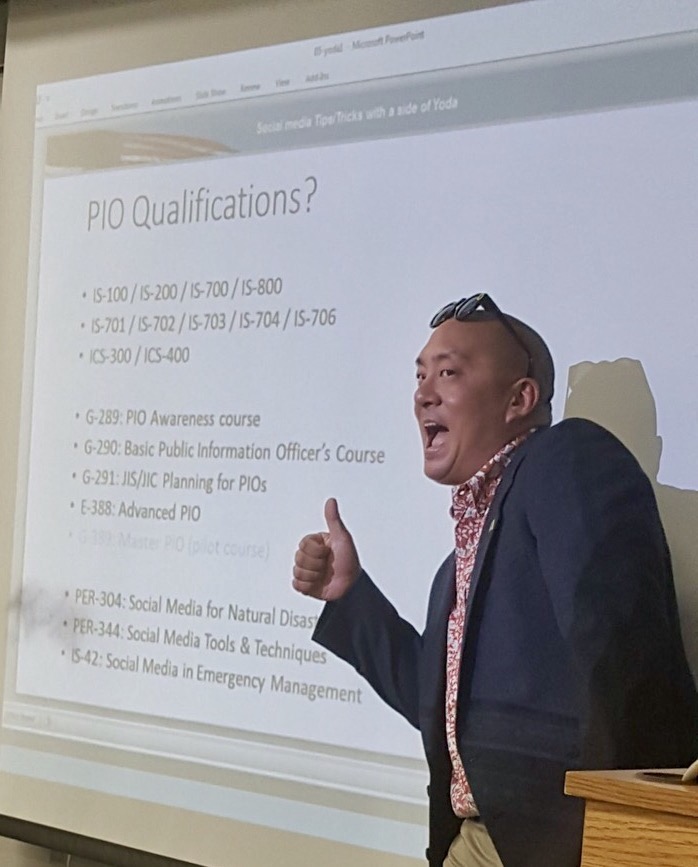
As always in any class we instruct, we try to make fun and exciting. And yes, thumbs up for PIOs!


Special thanks to WTFD Capt Mike Pruitt for the coordination and hospitality.. Glad to see so many new PIOs in the audience.

Happy Aloha Friday peeps!

@rusnivek

Day-2 of FEMA Basic Public Information Officer Program

Day-2 of FEMA’s Basic Public Information Officer Couse started out with reviews of all crisis interviews.


Collaborating on communications tactics with various agencies allows PIOs to craft the right message – esp in a disaster.


Erica had a chance to share JIC efforts from the Republican National Convention.


And you know I shared some tactics and tips on ascertaining open source info utilizing geolocation/metadata during a National Special Security Event. I also chatted briefly about tools field PIOs should use when deployed out.


After lunch we were fortunate enough to hear from a great panel discussion: Indiana State Police Sgt. John Perrine, the Information Officer for central Indiana and RTV6’s Investigative reporter Paris Lewbel.


Both panelists candidly shared information with everyone attending.


Side note: Sgt John Perrine is the brains behind the truly viral PSA hit on vehicles turn signals. Check it out here.

Great to work with so many pros today.

@rusnivek

This week, we are starting another G290…

Another great start to a solid G-290: Basic PIO Course with WTFD.


Greetings and welcome to everyone in Region-5 by Capt Mike Pruitt.


Started out the morning with building a base of core PIO principals including reviewing writing that targets a specific target audience.

Photo credit: M. Pruitt

Ahem. Press releases are almost dead.

Erica talked about how critical Incident Communications Analysis plays a big part in how our audience uses/digests information.


We started all the on-camera interviews after lunch. Lots of great interviews…

Photo credit: M. Pruitt

…and solid techniques showcased in the field interview exercises…

Photo credit: M. Pruitt

…many of the participants are already functioning as PIOs within their own communities.

Photo credit: M. Pruitt

Group work in the afternoon…


…with more discussion and reporting out of critical facts while writing talking points.


We are so fortunate to have such a diverse class of participants willing to share information.

Reporting live from the most funnest PIO class ever…

@rusnivek

Press credentials discussed

We talked a little about press credentials last week in our Ohio Emergency Management Agency (OEMA) Basic Public Information Officer (PIO) class. Here’s an example of Chicago’s press creds.

10641141_548741011894251_8860913954215809624_n

(Some of you may remember Erin Kennedy from WKYC 3 here in Cleveland).

PIO Pro Tip: Build trusted relationships w/ the media prior to an incident.

@rusnivek


A lonely shortened Facebook link on Twitter – Safety-PIO-SM-14-004

14-004: A lonely shortened Facebook link on Twitter
Agency: South Central Sierra Interagency IMT Topic(s):         Shared information/update
Date: Summer 2014 Platform:        Twitter


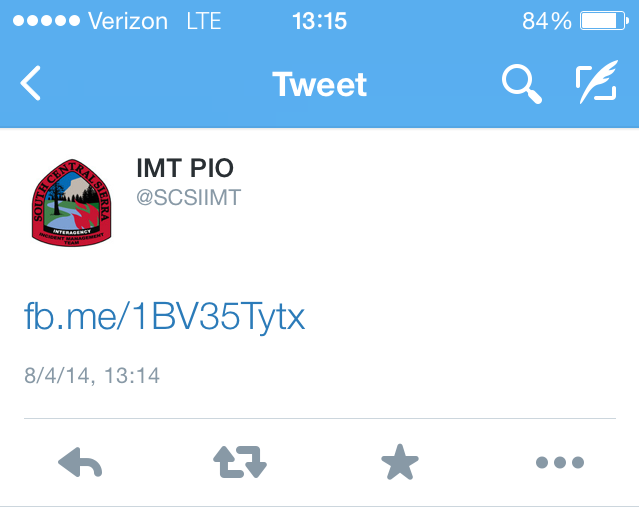
Speed is primarily the reason why everyone loves social media…especially Twitter. Many agencies use social media to provide updates and information when assigned to certain incidents. That’s what the South Central Sierra Interagency Incident Management Team did during the French Fire in California when they pushed this lonely shortened Facebook link out on Twitter.

IMG_5165


I get that 140 character max on Twitter is short…and you have lots to say…and you don’t have time…and blah blah blah. Everyone else doesn’t have time too. But pushing a non-descript link, does raise a concern that perhaps your account has been compromised by spam bots. Your agency has worked diligently to establish solid working relationships. During an emergency is the WORST time for your audience to question and/or ignore your official accounts with trusted reliable information.


If your social media plan calls for directing all efforts to Facebook as the primary source of information, a Public Information Officer (PIO) should still take the time to provide a little information (like a short description) on other platforms driving the traffic to that primary source. Providing just a link is not enough.

In the PIO business, we are forced to be precise, however just providing a link pertaining to a dangerous situation or disasters will not be enough to satiate the Twittersphere’s social interest.


Audiences change on various social media platforms, however, many agencies *think* they are all the same.

Knowing your audience is the hallmark of success. If you pair your Facebook and Twitter accounts to save time and to pass the exact same message – you should consider separating them now. Remember, you write/post/share information differently on various social media platforms.


A more effective tweet could have read:

Still assigned to the French Fire here in California-Check out pictures frm @BLMNational Interagency Fire fb.me/1BV35Tytx #CAWildfire

By phrasing it this way:

  1. You have more visibility by informing your followers that your team is still assigned to the incident.
  2. The link looks less spammy and readers know what the specific content is in the link.
  3. Your #hashtag will give more information about the current overall disaster/emergency.
  4. Your readers are likely to click on this hyperlink because it will take them to a picture. People love pictures.
  5. Your agency shows coordinated efforts with national response agencies when you use @mentions on twitter.


Time is valuable, so tweet good stuff.


@rusnivek


***To download this as a single-page printable format, click this: ALonelyShortenedFacebookLinkOnTwitter-Safety-PIO-SM-14-004a

cropped-1235 - Copy